Germany Propane Market: Import Trend Analysis
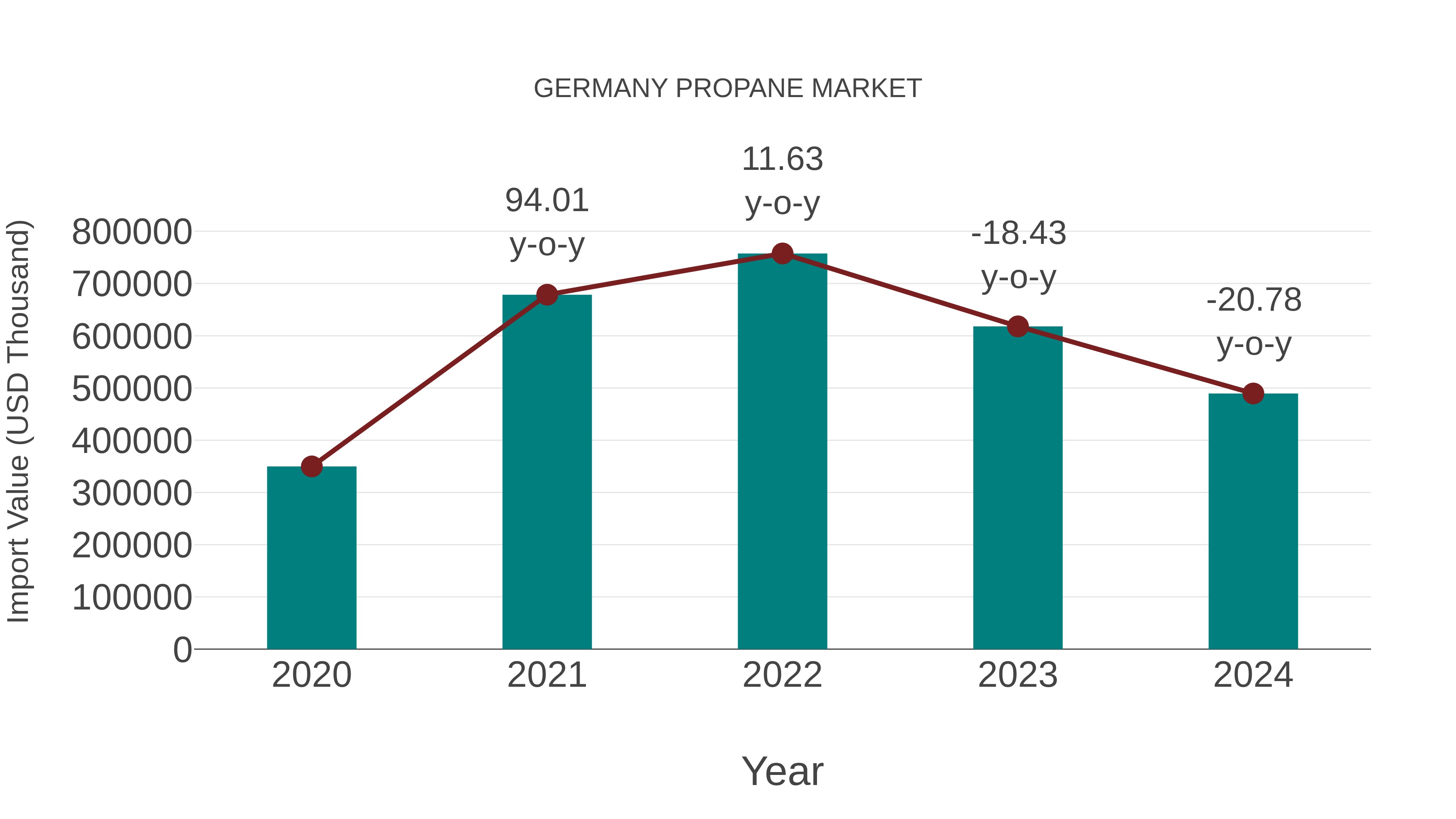
Germany`s propane import trend experienced a decline in growth rate from 2023 to 2024, with a decrease of -20.78%. However, the compound annual growth rate (CAGR) for the period 2020-2024 stood at a positive 8.76%. This shift in import momentum could be attributed to changes in demand dynamics or fluctuations in global market conditions.
Germany Propane Market Overview
The Germany propane market is witnessing steady growth, driven by factors such as increasing demand from residential, commercial, industrial, and agricultural sectors. Propane, also known as liquefied petroleum gas (LPG), is a versatile and clean-burning fuel widely used for heating, cooking, transportation, and power generation applications. With growing concerns about air quality and environmental pollution, there is a rising demand for cleaner and more efficient energy sources like propane. Moreover, the expanding availability of propane infrastructure and the growing adoption of propane-powered vehicles are further fueling the demand for propane in the country.
Drivers of the market
The demand for propane as a versatile fuel for heating, cooking, and transportation drives market growth in Germany. Emphasis on energy efficiency, environmental benefits, and infrastructure development contributes to market expansion. Additionally, the integration of propane into renewable energy systems and off-grid applications enhances market opportunities.
Challenges of the market
Challenges in the propane market include supply chain disruptions, regulatory compliance, and market volatility. Ensuring reliable supply and distribution of propane for various applications such as heating, transportation, and industrial processes is crucial. Moreover, addressing concerns related to safety, storage, and environmental impact poses challenges for propane suppliers and end-users. Additionally, ensuring that propane remains a competitive alternative to other energy sources poses challenges for market adoption and expansion.
Government Policy of the market
Germany prioritizes energy security, environmental sustainability, and consumer safety in its policies regarding the propane market. Government regulations address propane storage and handling standards, safety protocols, and emissions controls for propane distributors and end-users, ensuring compliance with safety regulations and environmental protection measures. Policies also support investment in renewable propane production, energy efficiency programs, and alternative fuel infrastructure to diversify energy sources and reduce greenhouse gas emissions in the propane market.
Key Highlights of the Report:
- Germany Propane Market Outlook
- Market Size of Germany Propane Market, 2024
- Forecast of Germany Propane Market, 2031
- Historical Data and Forecast of Germany Propane Revenues & Volume for the Period 2018 - 2031
- Germany Propane Market Trend Evolution
- Germany Propane Market Drivers and Challenges
- Germany Propane Price Trends
- Germany Propane Porter's Five Forces
- Germany Propane Industry Life Cycle
- Historical Data and Forecast of Germany Propane Market Revenues & Volume By Applications for the Period 2018 - 2031
- Historical Data and Forecast of Germany Propane Market Revenues & Volume By Industrial for the Period 2018 - 2031
- Historical Data and Forecast of Germany Propane Market Revenues & Volume By Commercial for the Period 2018 - 2031
- Historical Data and Forecast of Germany Propane Market Revenues & Volume By Residential for the Period 2018 - 2031
- Historical Data and Forecast of Germany Propane Market Revenues & Volume By Transportation for the Period 2018 - 2031
- Historical Data and Forecast of Germany Propane Market Revenues & Volume By Agriculture for the Period 2018 - 2031
- Historical Data and Forecast of Germany Propane Market Revenues & Volume By Chemicals and Refineries for the Period 2018 - 2031
- Germany Propane Import Export Trade Statistics
- Market Opportunity Assessment By Applications
- Germany Propane Top Companies Market Share
- Germany Propane Competitive Benchmarking By Technical and Operational Parameters
- Germany Propane Company Profiles
- Germany Propane Key Strategic Recommendations






































