Germany Table Olives Market: Import Trend Analysis
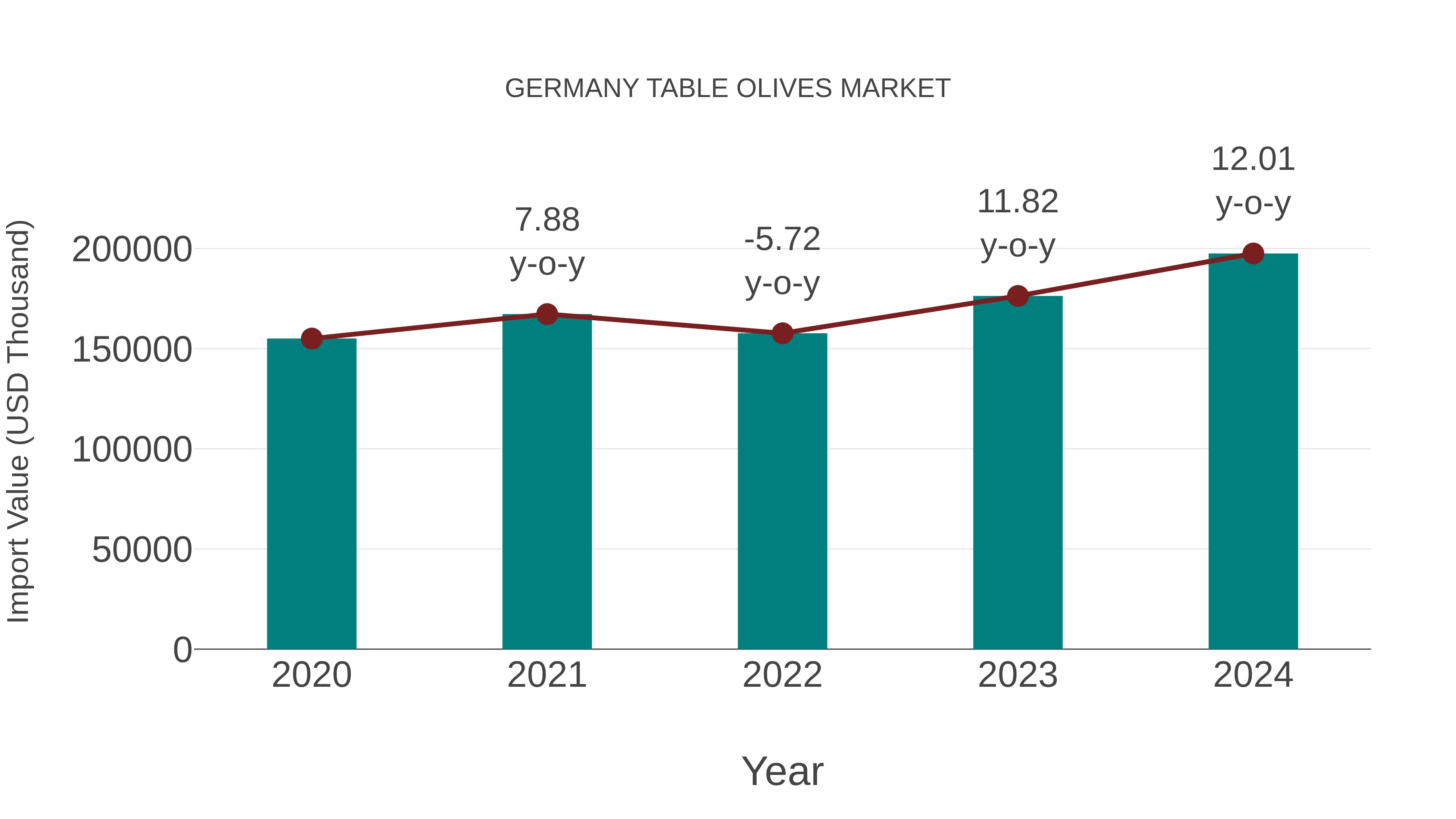
In the Germany table olives market, the import trend showed a notable growth rate of 12.01% from 2023 to 2024, with a compound annual growth rate (CAGR) of 6.24% from 2020 to 2024. This increase in imports can be attributed to shifting consumer preferences towards Mediterranean cuisine, leading to heightened demand for table olives in the market.
Germany Table Olives Market Synopsis
The Germany Table Olives Market is characterized by a growing demand for high-quality and diverse olive products. Consumers in Germany are increasingly seeking healthier food options, leading to a rise in the consumption of table olives due to their numerous health benefits. The market offers a wide range of olive varieties, including green, black, and stuffed olives, catering to different taste preferences. German consumers are also showing a growing interest in Mediterranean cuisine, further driving the demand for table olives. Key players in the market are focusing on product innovation, packaging enhancements, and marketing strategies to attract a larger customer base. With a trend towards organic and sustainable products, there is an opportunity for market growth through the introduction of premium and organic table olives to meet the evolving preferences of German consumers.
Germany Table Olives Market Trends
The Germany Table Olives Market is experiencing a growing demand for premium and high-quality olives, driven by the increasing consumer preference for healthy and Mediterranean diet options. There is a rising trend towards organic and sustainably produced olives, reflecting the general shift towards conscious consumption among German consumers. Additionally, there is a growing interest in flavored and specialty olives, offering opportunities for product innovation and differentiation in the market. E-commerce and online retail channels are also gaining traction, providing a convenient platform for consumers to access a wider variety of table olives. Overall, the Germany Table Olives Market presents opportunities for producers to cater to evolving consumer preferences and expand their product offerings to capture a larger market share.
Germany Table Olives Market Challenges
In the Germany Table Olives Market, some of the challenges faced include increasing competition from other snack options, such as chips and nuts, which are perceived as more convenient and trendy by consumers. Additionally, there is a lack of awareness and understanding about table olives compared to other types of olives or olive products in the market. The market also faces challenges related to the perception of table olives as a niche product, limiting their mainstream appeal and consumption. Furthermore, import regulations and trade barriers can impact the availability and pricing of table olives in Germany. To overcome these challenges, companies in the table olives market need to focus on educating consumers about the health benefits and versatility of table olives, as well as innovating with new flavors and packaging to attract a wider audience.
Germany Table Olives Market Investment Opportunities
The Germany Table Olives Market is primarily driven by the increasing consumer awareness of the health benefits associated with olives, such as their high content of antioxidants and healthy fats. The growing trend of healthy eating and gourmet food consumption is also fueling the demand for table olives in Germany. Additionally, the rising popularity of Mediterranean cuisine and the increasing availability of a variety of flavored olives in the market are contributing to the market growth. The shift towards organic and natural food products is further driving the demand for high-quality table olives in Germany. Moreover, the expanding retail sector and the growing preference for convenient and ready-to-eat snack options are expected to boost the market for table olives in the country.
Germany Table Olives Market Government Polices
Government policies related to the Germany Table Olives Market include regulations on food safety and quality standards, import/export controls, and agricultural subsidies. The German government enforces strict standards to ensure that table olives meet safety and quality requirements before they can be sold in the market. There are also regulations on labeling and packaging to provide consumers with accurate information about the product. Import and export controls aim to maintain a balance between domestic production and international trade. Additionally, agricultural subsidies may be provided to support olive farmers and promote sustainable farming practices. Overall, these policies play a crucial role in shaping the Germany Table Olives Market by ensuring product quality, consumer protection, and market stability.
Germany Table Olives Market Future Outlook
The future outlook for the Germany Table Olives Market looks promising, with a projected steady growth in demand driven by the increasing consumer preference for healthy and Mediterranean diet choices. Factors such as rising health consciousness, the popularity of Mediterranean cuisine, and the growing trend of snacking on healthy foods are expected to contribute to the market`s expansion. Furthermore, the introduction of innovative flavors and packaging formats by market players, along with a focus on sustainability and organic production methods, are likely to attract more consumers. With a strong emphasis on quality and authenticity, the Germany Table Olives Market is anticipated to witness sustained growth in the coming years, presenting opportunities for both domestic producers and international suppliers to capitalize on the evolving consumer preferences in the region.
Key Highlights of the Report:
- Germany Table Olives Market Outlook
- Market Size of Germany Table Olives Market, 2025
- Forecast of Germany Table Olives Market, 2032
- Historical Data and Forecast of Germany Table Olives Revenues & Volume for the Period 2022 - 2032F
- Germany Table Olives Market Trend Evolution
- Germany Table Olives Market Drivers and Challenges
- Germany Table Olives Price Trends
- Germany Table Olives Porter's Five Forces
- Germany Table Olives Industry Life Cycle
- Historical Data and Forecast of Germany Table Olives Market Revenues & Volume By Type for the Period 2022 - 2032F
- Historical Data and Forecast of Germany Table Olives Market Revenues & Volume By Black Olive for the Period 2022 - 2032F
- Historical Data and Forecast of Germany Table Olives Market Revenues & Volume By Green Olive for the Period 2022 - 2032F
- Historical Data and Forecast of Germany Table Olives Market Revenues & Volume By Application for the Period 2022 - 2032F
- Historical Data and Forecast of Germany Table Olives Market Revenues & Volume By Online Store for the Period 2022 - 2032F
- Historical Data and Forecast of Germany Table Olives Market Revenues & Volume By Supermarket for the Period 2022 - 2032F
- Historical Data and Forecast of Germany Table Olives Market Revenues & Volume By Convenience Store for the Period 2022 - 2032F
- Historical Data and Forecast of Germany Table Olives Market Revenues & Volume By Other for the Period 2022 - 2032F
- Germany Table Olives Import Export Trade Statistics
- Market Opportunity Assessment By Type
- Market Opportunity Assessment By Application
- Germany Table Olives Top Companies Market Share
- Germany Table Olives Competitive Benchmarking By Technical and Operational Parameters
- Germany Table Olives Company Profiles
- Germany Table Olives Key Strategic Recommendations






































