Germany Transaction Monitoring Market Size & Growth Rate (2026-2032)
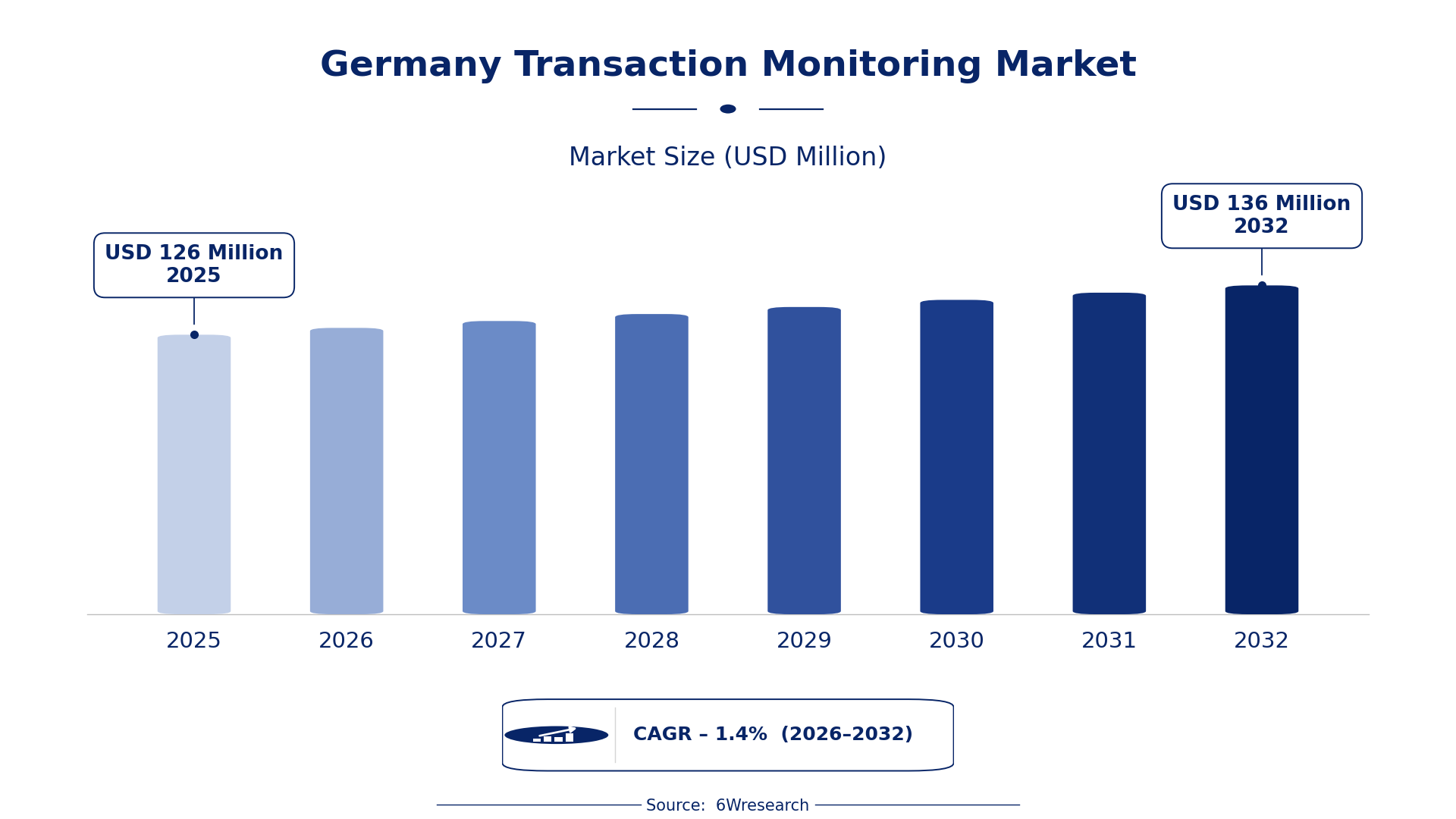
The Germany Transaction Monitoring Market was estimated at USD 126 Million in 2025 and is projected to reach USD 136 Million by 2032, growing at a CAGR of 1.4% from 2026 to 2032.
Germany Transaction Monitoring Market Synopsis
The necessity for robust transaction monitoring systems in Germany is underscored by the complex nature of financial activities. Financial institutions are increasingly adopting technology-driven solutions to safeguard against illicit activities, driven by stringent regulatory demands.
on top of that, with the rise in digital transactions, banks and payment processors are compelled to enhance their monitoring capabilities to detect anomalies effectively. The integration of advanced analytics and AI technologies is shaping how these institutions manage compliance and mitigate risks associated with financial crime.
Germany Transaction Monitoring Market Year-wise Growth Rate and Key Drivers
This graph illustrates the annual growth rates of the Germany Transaction Monitoring Market from 2021 to 2032, highlighting a steady upward trajectory and projected expansion over the forecast period.
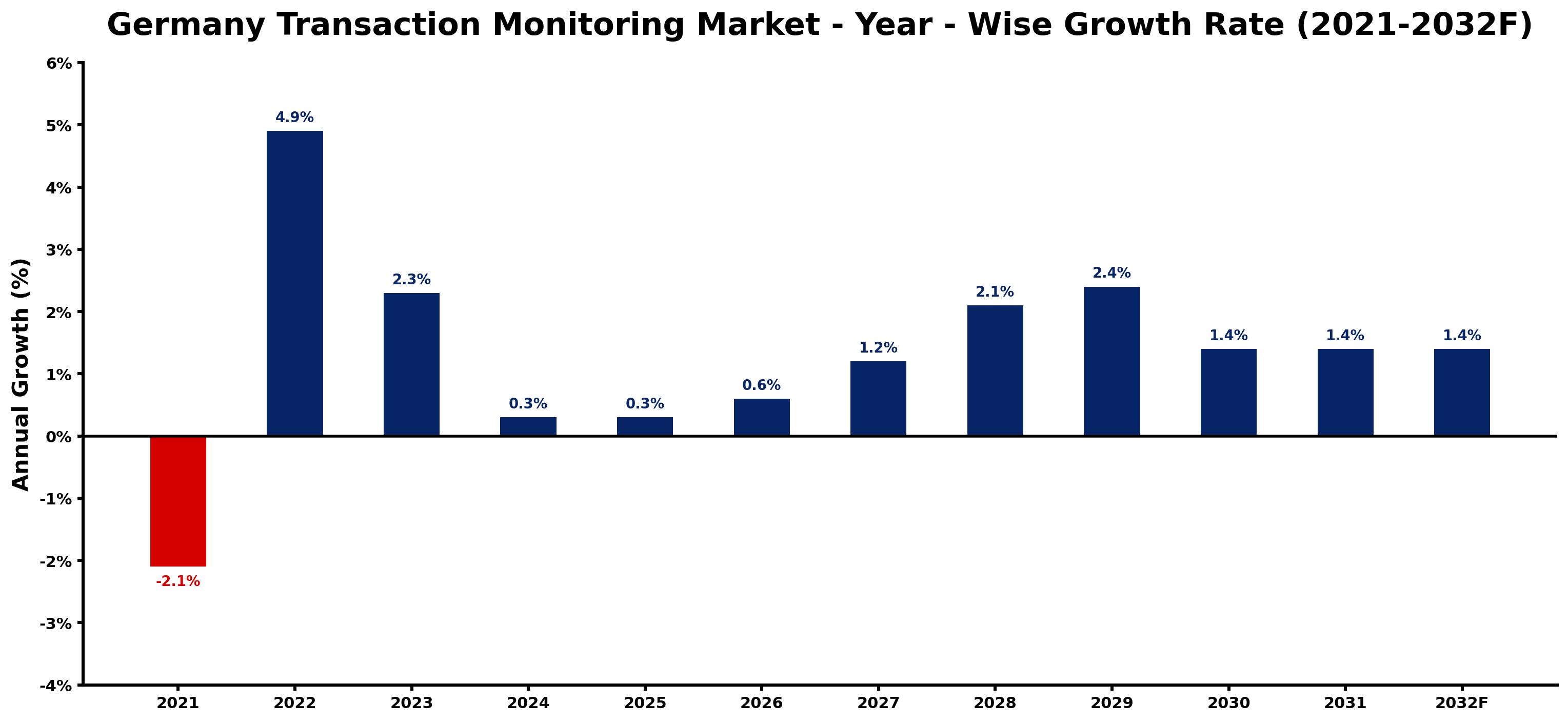
The table below presents the year‑wise growth rates along with the key drivers influencing the market
| Year | Growth Rate | Major Drivers |
| 2021 | -2.1% | BaFin's strict compliance regulations hindered service scalability. |
| 2022 | 4.9% | Implementation of AMLD6 enhances transaction monitoring requirements. |
| 2023 | 2.3% | Increased focus on digital fraud prevention by BaFin. |
| 2024 | 0.3% | Rise in e-commerce drives transaction scrutiny demand. |
| 2025 | 0.3% | Growing complexity of international transactions fosters monitoring needs. |
| 2026 | 0.6% | Local initiatives promote fintech growth, boosting compliance services. |
| 2027 | 1.2% | Adoption of machine learning in fraud detection technologies. |
| 2028 | 2.1% | Regulatory pressure from EU encourages robust monitoring systems. |
| 2029 | 2.4% | Increasing number of payment providers demands enhanced oversight. |
| 2030 | 1.4% | Enhanced data-sharing regulations improve transaction visibility. |
| 2031 | 1.4% | Shift towards cashless transactions amplifies monitoring requirements. |
| 2032 | 1.4% | Sustainability-linked financing increases compliance monitoring needs. |
Note: Market size estimations and growth projections presented in this report are based on 6Wresearch's proprietary forecasting methodology, utilizing the latest available industry data, government publications, and primary research inputs.
Germany Transaction Monitoring Market Key Takeaways
Below are some of the specific key takeaways from the market, including:
- Germany's financial institutions are under increasing pressure to comply with AML and KYC regulations.
- Advanced analytics and AI are driving innovations in transaction monitoring systems.
- Financial institutions face challenges in managing data volumes and reducing false positives.
- Regulatory frameworks are evolving to enhance transaction monitoring effectiveness.
- Collaboration between sectors is vital for technological advancement in monitoring solutions.
Evaluation of Restraints in Germany Transaction Monitoring Market
Despite the positive outlook, several factors pose restraints to market growth. One major issue is the sheer volume of transactions that financial institutions must monitor. This can overwhelm existing systems and lead to an increase in false positives, hindering the efficiency of compliance processes. on top of that, the continuous evolution of regulations means that institutions must adapt quickly, which can strain resources and result in inconsistent practices across the sector. Addressing data privacy concerns while integrating innovative technologies adds another layer of complexity that cannot be ignored.
Germany Transaction Monitoring Market Trends
A notable trend in the Germany Transaction Monitoring Market is the integration of machine learning algorithms that enhance the detection of suspicious patterns. These algorithms help in analyzing transaction data more effectively, identifying anomalies that traditional systems might miss. Additionally, there is a growing emphasis on real-time monitoring capabilities, enabling institutions to respond promptly to potential threats. The collaboration between technology providers and financial institutions is also intensifying, leading to tailored solutions that address specific compliance needs.
Germany Transaction Monitoring Market Opportunities
The market presents several growth opportunities, especially for companies willing to invest in innovative technology. There is significant potential in automating compliance workflows, which can enhance efficiency and accuracy in monitoring processes. The ongoing shift toward open banking also creates new avenues for transaction monitoring services as institutions seek to manage risks associated with data sharing. Finally, expanding services to smaller financial institutions can help in addressing their unique needs and regulatory challenges.
Government Initiatives in the Germany Transaction Monitoring Market
Germany's government has taken a proactive stance in strengthening the integrity of its financial system through various regulatory measures. Emphasizing the importance of compliance with anti-money laundering laws, these initiatives encourage the adoption of effective transaction monitoring practices across all financial sectors. The collaboration between public and private entities is crucial for enhancing the technology landscape and ensuring that financial institutions remain vigilant against threats.
- A new regulatory framework introduced in early 2025 mandates enhanced transparency in transaction monitoring practices for all financial institutions.
- Currently underway is a national initiative to improve data-sharing capabilities among financial institutions, aimed at bolstering anti-money laundering efforts.
- A planned public-private partnership expected to be announced in 2026 will focus on integrating advanced technologies into transaction monitoring systems.
- A recently completed review by the Federal Financial Supervisory Authority (BaFin) has led to updated guidelines for transaction monitoring processes.
- Legislation passed in late 2024 emphasizes stricter penalties for non-compliance with AML regulations, driving investment in monitoring solutions.
Future Insights of the Germany Transaction Monitoring Market
Looking ahead, the Germany Transaction Monitoring Market is expected to evolve significantly. The integration of artificial intelligence and machine learning will continue to improve monitoring capabilities, making compliance processes more efficient. With regulatory pressures not likely to ease, financial institutions will prioritize investments in advanced technology solutions. This will not only enhance their ability to detect fraudulent activities but also ensure adherence to emerging regulations, ultimately shaping the future of transaction monitoring in Germany.
Germany Transaction Monitoring Market Latest Developments
In the past year, the Germany Transaction Monitoring Market has witnessed various developments that reflect the industry's proactive stance towards compliance and technological advancement. Financial institutions have ramped up their adoption of advanced solutions to tackle growing regulatory demands and enhance their monitoring capabilities.
- A major technology vendor launched an AI-driven transaction monitoring system in mid-2025 that aims to reduce false positives in fraud detection.
- An initiative started in Q2 2025 to train compliance staff in advanced analytics techniques remains ongoing, focusing on improving the skills necessary for effective monitoring.
- By late 2025, a partnership between several banks and fintech companies will introduce an integrated platform for real-time transaction monitoring.
- In early 2026, a pilot program for automating reporting processes in transaction monitoring is expected to commence, focusing on small to medium-sized enterprises.
- A regulatory technology firm completed the development of a cloud-based monitoring solution in Q3 2025, now being adopted by several mid-tier banks.
Germany Transaction Monitoring Market - Key Attractiveness of the Report
- 10 Years of Market Numbers
- Historical Data Starting from 2022 to 2025
- Base Year: 2025
- Forecast Data until 2032
- Key Performance Indicators Impacting the Market
- Major Upcoming Developments and Projects
Key Highlights of the Report:
- Germany Transaction Monitoring Market Outlook
- Market Size of Germany Transaction Monitoring Market, 2025
- Forecast of Germany Transaction Monitoring Market, 2032
- Historical Data and Forecast of Germany Transaction Monitoring Revenues & Volume for the Period 2022-2032F
- Germany Transaction Monitoring Market Trend Evolution
- Germany Transaction Monitoring Market Drivers and Challenges
- Germany Transaction Monitoring Price Trends
- Germany Transaction Monitoring Porter's Five Forces
- Germany Transaction Monitoring Industry Life Cycle
- Historical Data and Forecast of Germany Transaction Monitoring Market Revenues & Volume By Application Area for the Period 2022-2032F
- Historical Data and Forecast of Germany Transaction Monitoring Market Revenues & Volume By AML for the Period 2022-2032F
- Historical Data and Forecast of Germany Transaction Monitoring Market Revenues & Volume By FDP for the Period 2022-2032F
- Historical Data and Forecast of Germany Transaction Monitoring Market Revenues & Volume By Compliance Management for the Period 2022-2032F
- Historical Data and Forecast of Germany Transaction Monitoring Market Revenues & Volume By Customer Identity Management for the Period 2022-2032F
- Historical Data and Forecast of Germany Transaction Monitoring Market Revenues & Volume By Component for the Period 2022-2032F
- Historical Data and Forecast of Germany Transaction Monitoring Market Revenues & Volume By Solution for the Period 2022-2032F
- Historical Data and Forecast of Germany Transaction Monitoring Market Revenues & Volume By Services for the Period 2022-2032F
- Historical Data and Forecast of Germany Transaction Monitoring Market Revenues & Volume By Function for the Period 2022-2032F
- Historical Data and Forecast of Germany Transaction Monitoring Market Revenues & Volume By Case Management for the Period 2022-2032F
- Historical Data and Forecast of Germany Transaction Monitoring Market Revenues & Volume By KYC/Customer Onboarding for the Period 2022-2032F
- Historical Data and Forecast of Germany Transaction Monitoring Market Revenues & Volume By Dashboard and Reporting for the Period 2022-2032F
- Historical Data and Forecast of Germany Transaction Monitoring Market Revenues & Volume By Watch List Screening for the Period 2022-2032F
- Historical Data and Forecast of Germany Transaction Monitoring Market Revenues & Volume By Deployment Mode for the Period 2022-2032F
- Historical Data and Forecast of Germany Transaction Monitoring Market Revenues & Volume By On-Premises for the Period 2022-2032F
- Historical Data and Forecast of Germany Transaction Monitoring Market Revenues & Volume By Cloud for the Period 2022-2032F
- Historical Data and Forecast of Germany Transaction Monitoring Market Revenues & Volume By Organization Size for the Period 2022-2032F
- Historical Data and Forecast of Germany Transaction Monitoring Market Revenues & Volume By SMEs for the Period 2022-2032F
- Historical Data and Forecast of Germany Transaction Monitoring Market Revenues & Volume By Large Enterprises for the Period 2022-2032F
- Historical Data and Forecast of Germany Transaction Monitoring Market Revenues & Volume By Vertical for the Period 2022-2032F
- Historical Data and Forecast of Germany Transaction Monitoring Market Revenues & Volume By Banking, Financial Services, and Insurance for the Period 2022-2032F
- Historical Data and Forecast of Germany Transaction Monitoring Market Revenues & Volume By Government and Defense for the Period 2022-2032F
- Historical Data and Forecast of Germany Transaction Monitoring Market Revenues & Volume By IT and Telecom for the Period 2022-2032F
- Historical Data and Forecast of Germany Transaction Monitoring Market Revenues & Volume By Retail for the Period 2022-2032F
- Historical Data and Forecast of Germany Transaction Monitoring Market Revenues & Volume By Healthcare for the Period 2022-2032F
- Historical Data and Forecast of Germany Transaction Monitoring Market Revenues & Volume By Energy and Utilities for the Period 2022-2032F
- Historical Data and Forecast of Germany Transaction Monitoring Market Revenues & Volume By Manufacturing for the Period 2022-2032F
- Historical Data and Forecast of Germany Transaction Monitoring Market Revenues & Volume By Others for the Period 2022-2032F
- Germany Transaction Monitoring Import Export Trade Statistics
- Market Opportunity Assessment By Application Area
- Market Opportunity Assessment By Component
- Market Opportunity Assessment By Function
- Market Opportunity Assessment By Deployment Mode
- Market Opportunity Assessment By Organization Size
- Market Opportunity Assessment By Vertical
- Germany Transaction Monitoring Top Companies Market Share
- Germany Transaction Monitoring Competitive Benchmarking By Technical and Operational Parameters
- Germany Transaction Monitoring Company Profiles
- Germany Transaction Monitoring Key Strategic Recommendations






































