Ghana Ammonia Market Size Growth Rate
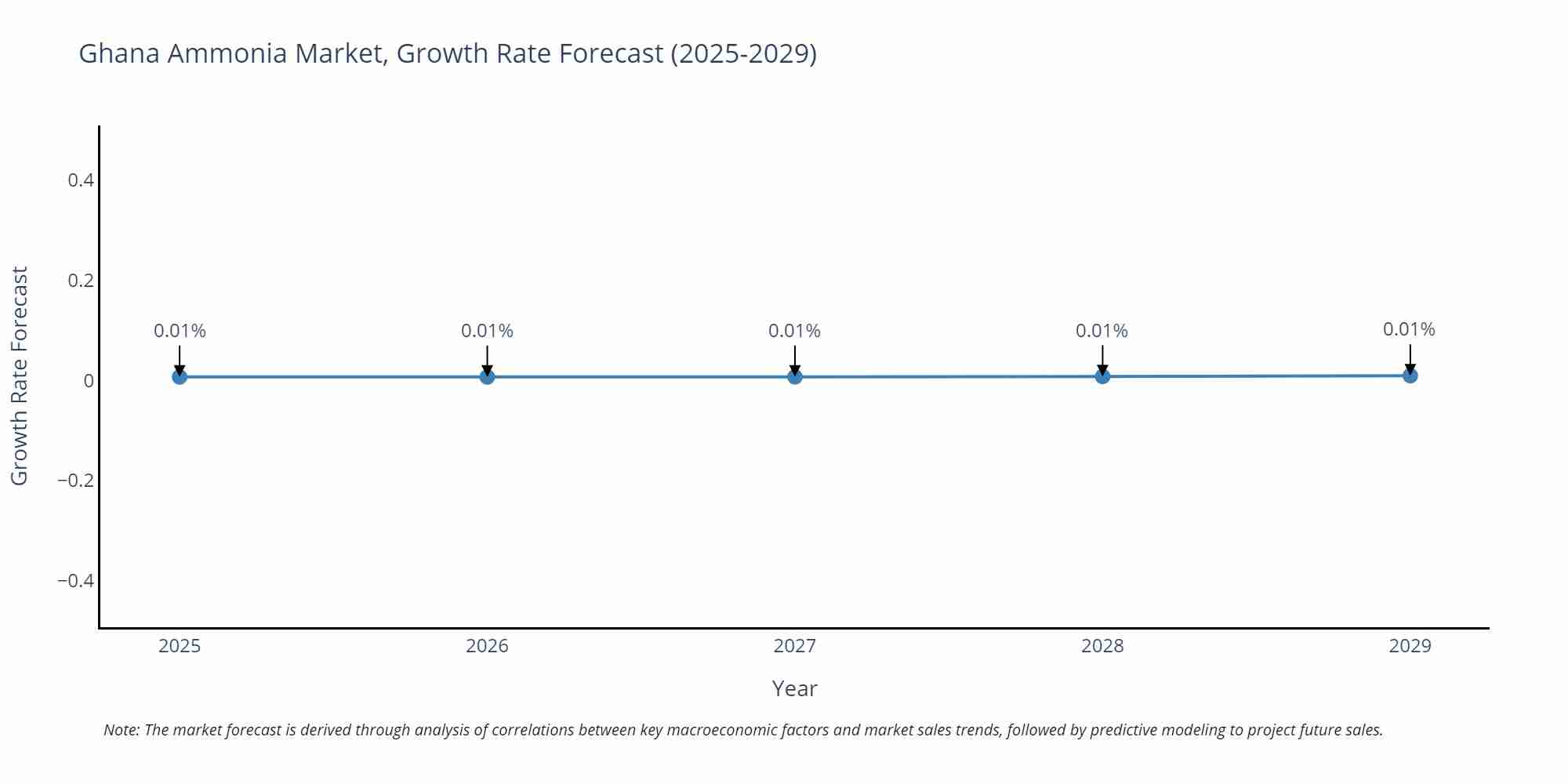
The Ghana Ammonia Market is poised for steady growth rate improvements from 2025 to 2029. From 0.01% in 2025, the growth rate steadily ascends to 0.01% in 2029.
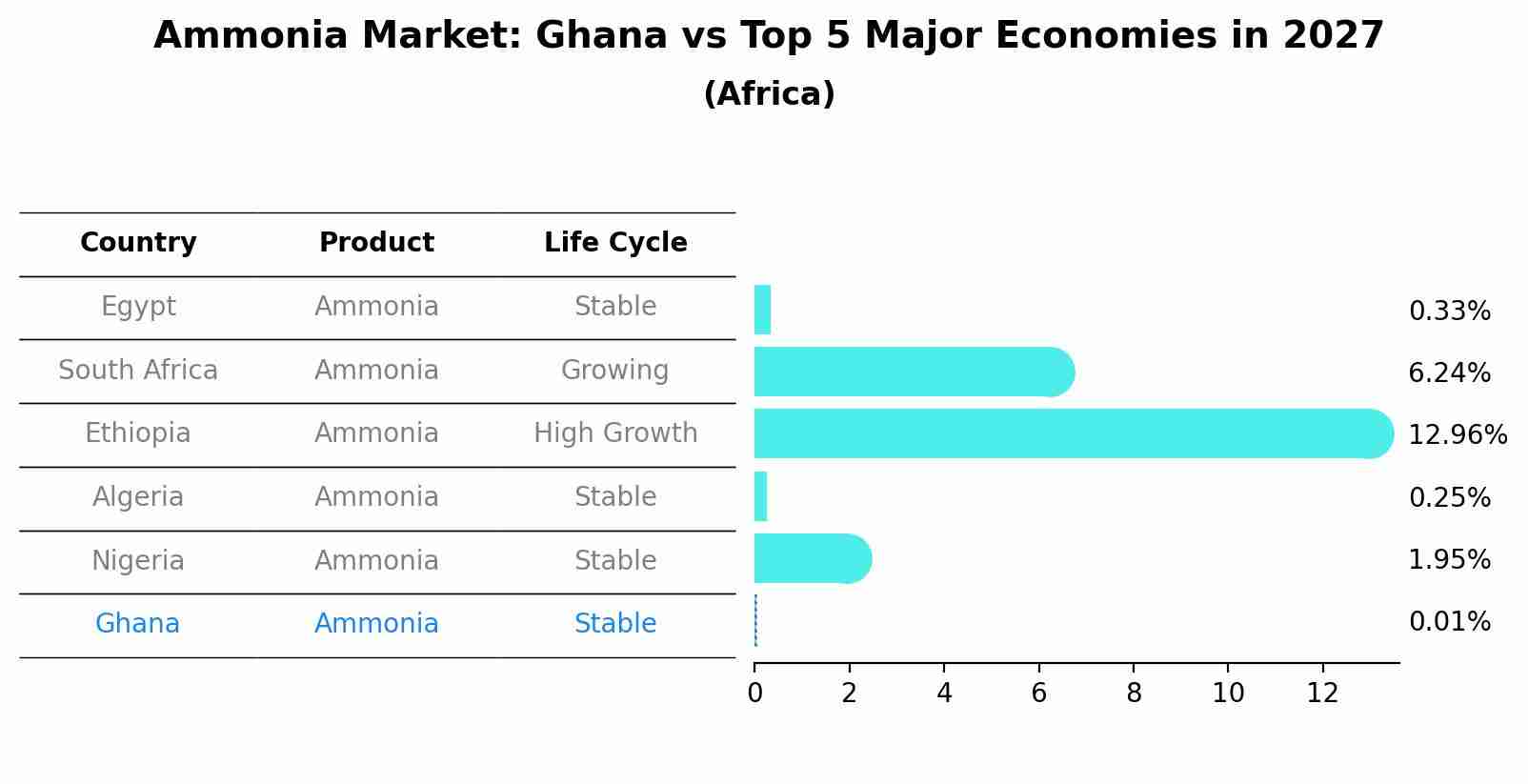
Ammonia Market: Ghana vs Top 5 Major Economies in 2027 (Africa)
The Ammonia market in Ghana is projected to grow at a stable growth rate of 0.01% by 2027, highlighting the country's increasing focus on advanced technologies within the Africa region, where Egypt holds the dominant position, followed closely by South Africa, Ethiopia, Algeria and Nigeria, shaping overall regional demand.
Ghana Ammonia Market Overview
The Ghana Ammonia Market is experiencing steady growth driven by increasing demand from various industries such as agriculture, food processing, and chemical manufacturing. Ammonia is primarily used as a fertilizer in the agriculture sector to enhance crop yields and soil fertility. The government`s initiatives to promote sustainable agriculture practices and improve food security have also contributed to the market`s growth. In addition, the chemical industry`s growing need for ammonia as a raw material for manufacturing various products further boosts market demand. Key players in the Ghana Ammonia Market include local distributors and international suppliers catering to the diverse needs of the market. Overall, the market is poised for continued expansion in the coming years due to the country`s economic development and increasing industrial activities.
Ghana Ammonia Market Trends
The Ghana Ammonia Market is experiencing steady growth driven by increasing demand from various sectors such as agriculture, pharmaceuticals, and manufacturing. With the rising emphasis on sustainable agriculture practices, there is a growing demand for ammonia-based fertilizers in the country. Additionally, the expansion of industries such as food processing and textiles is driving the demand for ammonia as a raw material for various processes. Market players are focusing on product innovation and quality to meet the evolving needs of consumers. However, challenges such as fluctuating raw material prices and environmental concerns regarding ammonia production processes are influencing market dynamics. Overall, the Ghana Ammonia Market is poised for continued growth, with opportunities for market expansion and product diversification.
Ghana Ammonia Market Challenges
In the Ghana Ammonia Market, challenges are primarily related to the availability and affordability of raw materials for ammonia production, as most of the raw materials need to be imported, leading to increased production costs. Infrastructure limitations, such as inadequate storage facilities and transportation systems, also pose challenges in the distribution of ammonia within the country. Additionally, fluctuations in global ammonia prices and currency exchange rates can impact the profitability of ammonia producers in Ghana. Regulatory hurdles, including compliance with environmental standards and government policies, further add complexity to operating in the ammonia market in Ghana. Overall, addressing these challenges requires strategic planning, investment in infrastructure, and effective regulatory management to ensure a stable and competitive ammonia market in the country.
Ghana Ammonia Market Investment Opportunities
The Ghana Ammonia Market presents promising investment opportunities due to the country`s growing agricultural sector and increasing demand for fertilizers. Investing in ammonia production plants or distribution networks can be lucrative as Ghana aims to boost its agricultural productivity. Additionally, ammonia is a key component in various industries such as pharmaceuticals, mining, and chemicals, offering diversification possibilities for investors. With the government`s focus on promoting agribusiness and industrial growth, there is a favorable regulatory environment for ammonia-related investments. Collaborating with local agricultural companies or partnering with international players can further capitalize on the market`s potential and contribute to the sustainable development of Ghana`s economy.
Ghana Ammonia Market Government Policy
Government policies related to the Ghana Ammonia Market primarily focus on promoting domestic production and reducing reliance on imports. The government has implemented strategies such as providing subsidies and incentives to local ammonia producers, supporting research and development in the sector, and encouraging foreign investment in ammonia production facilities. Additionally, there are regulations in place to ensure environmental sustainability and safety standards in ammonia production and handling. The government aims to enhance the competitiveness of the domestic ammonia industry, create job opportunities, and reduce the country`s import bill by increasing local production capacity. Overall, Ghana`s ammonia market is influenced by these government policies that aim to boost domestic production and strengthen the country`s position in the global ammonia market.
Ghana Ammonia Market Future Outlook
The future outlook for the Ghana Ammonia Market appears promising, driven by factors such as increasing demand for fertilizers in the agriculture sector, growth in industrial applications like pharmaceuticals and chemicals, and government initiatives to boost agricultural productivity. Ghana`s focus on enhancing food security and modernizing its agricultural practices is expected to drive the demand for ammonia as a key ingredient in fertilizers. Additionally, the country`s strategic location and growing infrastructure developments could attract investments in the ammonia market. However, challenges such as fluctuating raw material prices and environmental concerns regarding ammonia production may impact market growth. Overall, with the right investments and sustainable practices, the Ghana Ammonia Market is poised for steady growth in the coming years.
Key Highlights of the Report:
- Ghana Ammonia Market Outlook
- Market Size of Ghana Ammonia Market, 2024
- Forecast of Ghana Ammonia Market, 2031
- Historical Data and Forecast of Ghana Ammonia Revenues & Volume for the Period 2021 - 2031
- Ghana Ammonia Market Trend Evolution
- Ghana Ammonia Market Drivers and Challenges
- Ghana Ammonia Price Trends
- Ghana Ammonia Porter's Five Forces
- Ghana Ammonia Industry Life Cycle
- Historical Data and Forecast of Ghana Ammonia Market Revenues & Volume By Type for the Period 2021 - 2031
- Historical Data and Forecast of Ghana Ammonia Market Revenues & Volume By Liquid for the Period 2021 - 2031
- Historical Data and Forecast of Ghana Ammonia Market Revenues & Volume By Gas for the Period 2021 - 2031
- Historical Data and Forecast of Ghana Ammonia Market Revenues & Volume By End-user Industry for the Period 2021 - 2031
- Historical Data and Forecast of Ghana Ammonia Market Revenues & Volume By Agriculture for the Period 2021 - 2031
- Historical Data and Forecast of Ghana Ammonia Market Revenues & Volume By Textiles for the Period 2021 - 2031
- Historical Data and Forecast of Ghana Ammonia Market Revenues & Volume By Mining for the Period 2021 - 2031
- Historical Data and Forecast of Ghana Ammonia Market Revenues & Volume By Pharmaceutical for the Period 2021 - 2031
- Historical Data and Forecast of Ghana Ammonia Market Revenues & Volume By Refrigeration for the Period 2021 - 2031
- Historical Data and Forecast of Ghana Ammonia Market Revenues & Volume By Others for the Period 2021 - 2031
- Ghana Ammonia Import Export Trade Statistics
- Market Opportunity Assessment By Type
- Market Opportunity Assessment By End-user Industry
- Ghana Ammonia Top Companies Market Share
- Ghana Ammonia Competitive Benchmarking By Technical and Operational Parameters
- Ghana Ammonia Company Profiles
- Ghana Ammonia Key Strategic Recommendations






































