Ghana Antidiabetics Market Size, Share & Growth Rate
The Ghana Antidiabetics Market was estimated at USD 195 Million in 2025 and is projected to reach USD 271 Million by 2032, growing at a CAGR of 4.8% from 2026 to 2032. This growth trajectory is fueled by rising obesity rates, unhealthy lifestyles, and an increasingly aging population, which collectively contribute to a higher prevalence of diabetes. The influx of multinational pharmaceutical companies offering advanced treatment options has further stimulated market demand, alongside government initiatives aimed at enhancing healthcare access.
Ghana Antidiabetics Market Year-wise Growth Rate and Key Drivers
This graph highlights how the Ghana Antidiabetics Market has steadily grown over the years, supported by major growth factors.
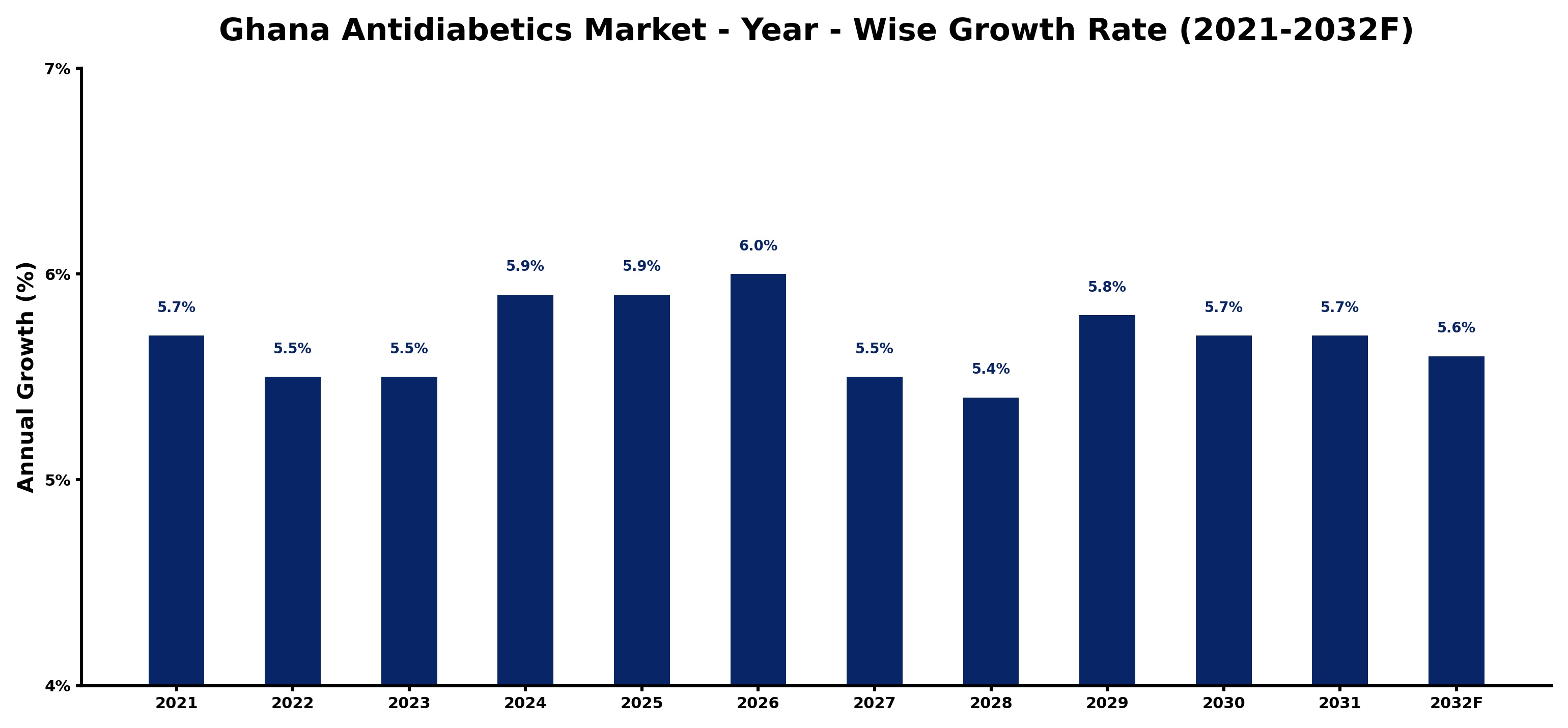
The table below presents the year‑wise growth rates along with the key drivers influencing the market
| Year | Growth Rate | Major Drivers |
| 2021 | 5.7% | Expansion of commercial construction activities |
| 2022 | 5.5% | Growing urbanization and commercial development |
| 2023 | 5.5% | Rising electricity demand across industries |
| 2024 | 5.9% | Growing urbanization and commercial development |
| 2025 | 5.9% | Growing renewable energy integration projects |
| 2026 | 6.0% | Growing renewable energy integration projects |
| 2027 | 5.5% | Increasing industrial automation investments |
| 2028 | 5.4% | Rapid growth in telecom and data center sectors |
| 2029 | 5.8% | Increasing industrial automation investments |
| 2030 | 5.7% | Increasing adoption of advanced technologies |
| 2031 | 5.7% | Expansion of transportation and logistics networks |
| 2032 | 5.6% | Increasing smart city development projects |
Note - Market size estimations and growth projections presented in this report are based on 6Wresearch’s advanced forecasting approach, validated with industry datasets as of June 2026.
Ghana Antidiabetics Market Synopsis
The most significant force shaping the Ghana Antidiabetics Market is the increasing prevalence of diabetes, driven by lifestyle changes and demographic shifts. This urgent health concern is pushing both local and international pharmaceutical firms to innovate and expand their offerings of antidiabetic medications.
Additionally, government efforts to improve healthcare infrastructure and the availability of essential medicines are pivotal in addressing the growing demand. However, challenges like high treatment costs and limited public awareness remain pressing issues that need to be tackled.
Ghana Antidiabetics Market Key Takeaways
- Significant growth in the Ghana Antidiabetics Market is projected due to rising diabetes cases and an aging population.
- Multinational pharmaceutical companies currently dominate the market with a variety of antidiabetic medications.
- Emerging trends focus on advanced therapeutic options and personalized treatment plans.
- Government initiatives are crucial for improving healthcare access and medication affordability.
- Investment opportunities abound in both pharmaceutical manufacturing and innovative healthcare services.
Evaluation of Restraints in Ghana Antidiabetics Market
The Ghana Antidiabetics Market faces real constraints that hinder its potential. Chief among them are the high costs associated with diabetes treatment, which create barriers for many patients seeking essential medications. Moreover, a fragmented healthcare system often leaves remote areas with limited access to necessary care and education about diabetes management. The lack of awareness among the general populace about diabetes and its complications exacerbates the situation, leading to underdiagnosis and poor management. These intertwined issues require a strategic approach from various stakeholders to enhance the overall healthcare landscape.
Ghana Antidiabetics Market Trends
A notable trend in the Ghana Antidiabetics Market is the shift toward advanced treatment options, such as SGLT-2 inhibitors and GLP-1 receptor agonists, known for their multifaceted benefits beyond glycemic control. The focus on personalized treatment strategies, aimed at improving patient compliance and outcomes, reflects a more patient-centric approach. Furthermore, the rise of digital health solutions, including telemedicine and mobile health applications, is gaining traction to facilitate remote monitoring and support for diabetes management. This evolution towards innovation and accessibility signifies a paradigm shift in how diabetes care is approached in Ghana.
Ghana Antidiabetics Market Opportunities
With the increasing prevalence of diabetes in Ghana, there is a compelling opportunity for investment across various facets of the market. Pharmaceutical companies focusing on the production of antidiabetic drugs, especially affordable generics, stand to benefit significantly. Additionally, engaging in research and development of innovative therapies could yield substantial returns. Collaborating with local health organizations to enhance public awareness campaigns will also create fruitful investment avenues, addressing both prevention and effective management of diabetes in the population.
Government Initiatives in the Ghana Antidiabetics Market
The Ghanaian government has introduced a series of policies aimed at improving access to healthcare and reducing the economic burden of diabetes. The National Health Insurance Scheme (NHIS) is a vital component, designed to make essential medications, including antidiabetics, more affordable for the population. Additionally, the Ministry of Health works in partnership with various stakeholders to regulate drug prices and ensure quality standards, while public awareness campaigns promote early detection and healthy lifestyle choices. These initiatives collectively seek to bolster the healthcare framework in the fight against diabetes.
Future Insights of the Ghana Antidiabetics Market
The Ghana Antidiabetics Market is set for steady growth as awareness about diabetes increases and healthcare infrastructure improves. With the population aging and lifestyle diseases on the rise, demand for antidiabetic medications is expected to escalate. Advancements in drug development and technology promise to deliver more effective treatment alternatives, enabling better management of the disease. Strategic partnerships and investments in educational initiatives will also play critical roles in shaping the market's future landscape.
Ghana Antidiabetics Market Latest Developments (May 2025 - June 2026)
In recent months, the Ghana Antidiabetics Market has witnessed a surge in interest towards digital health platforms, which facilitate telemedicine consultations and remote patient monitoring. Pharmaceutical companies are increasingly investing in the development of more affordable generics to cater to the price-sensitive segment of the population. There has also been a concerted effort from healthcare stakeholders to enhance public education on diabetes management, addressing the critical awareness gap that currently exists. These developments signal an industry on the cusp of transformation, responding to the urgent healthcare needs of the population.
Ghana Antidiabetics Market - Key Attractiveness of the Report
- 10 Years of Market Numbers
- Historical Data Starting from 2022 to 2025
- Base Year: 2025
- Forecast Data until 2032
- Key Performance Indicators Impacting the Market
- Major Upcoming Developments and Projects
Key Highlights of the Report:
- Ghana Antidiabetics Market Outlook
- Market Size of Ghana Antidiabetics Market, 2025
- Forecast of Ghana Antidiabetics Market, 2032
- Historical Data and Forecast of Ghana Antidiabetics Revenues & Volume for the Period 2022-2032F
- Ghana Antidiabetics Market Trend Evolution
- Ghana Antidiabetics Market Drivers and Challenges
- Ghana Antidiabetics Price Trends
- Ghana Antidiabetics Porter's Five Forces
- Ghana Antidiabetics Industry Life Cycle
- Historical Data and Forecast of Ghana Antidiabetics Market Revenues & Volume By Product for the Period 2022-2032F
- Historical Data and Forecast of Ghana Antidiabetics Market Revenues & Volume By Insulin for the Period 2022-2032F
- Historical Data and Forecast of Ghana Antidiabetics Market Revenues & Volume By Drug Class for the Period 2022-2032F
- Historical Data and Forecast of Ghana Antidiabetics Market Revenues & Volume By Patient Population for the Period 2022-2032F
- Historical Data and Forecast of Ghana Antidiabetics Market Revenues & Volume By Paediatric for the Period 2022-2032F
- Historical Data and Forecast of Ghana Antidiabetics Market Revenues & Volume By Adult for the Period 2022-2032F
- Historical Data and Forecast of Ghana Antidiabetics Market Revenues & Volume By Geriatric for the Period 2022-2032F
- Historical Data and Forecast of Ghana Antidiabetics Market Revenues & Volume By Route of Administration for the Period 2022-2032F
- Historical Data and Forecast of Ghana Antidiabetics Market Revenues & Volume By Insulin syringe/ Insulin pen for the Period 2022-2032F
- Historical Data and Forecast of Ghana Antidiabetics Market Revenues & Volume By Insulin pump for the Period 2022-2032F
- Historical Data and Forecast of Ghana Antidiabetics Market Revenues & Volume By Intravenous infusion for the Period 2022-2032F
- Historical Data and Forecast of Ghana Antidiabetics Market Revenues & Volume By Oral for the Period 2022-2032F
- Historical Data and Forecast of Ghana Antidiabetics Market Revenues & Volume By Others for the Period 2022-2032F
- Ghana Antidiabetics Import Export Trade Statistics
- Market Opportunity Assessment By Product
- Market Opportunity Assessment By Patient Population
- Market Opportunity Assessment By Route of Administration
- Ghana Antidiabetics Top Companies Market Share
- Ghana Antidiabetics Competitive Benchmarking By Technical and Operational Parameters
- Ghana Antidiabetics Company Profiles
- Ghana Antidiabetics Key Strategic Recommendations






































