Ghana Building And Construction Plastic Market Size, Share & Growth Rate
The Ghana Building And Construction Plastic Market was estimated at USD 458 Million in 2025 and is projected to reach USD 622 Million by 2032, growing at a CAGR of 4.5% from 2026 to 2032. This growth trajectory is primarily fueled by escalating urbanization rates and significant infrastructure development initiatives being undertaken throughout the country. The cost-effectiveness and versatility of plastic materials are increasingly favored by builders and architects, further bolstering market expansion.
Ghana Building And Construction Plastic Market Year-wise Growth Rate and Key Drivers
This graph highlights how the Ghana Building And Construction Plastic Market has steadily grown over the years, supported by major growth factors.
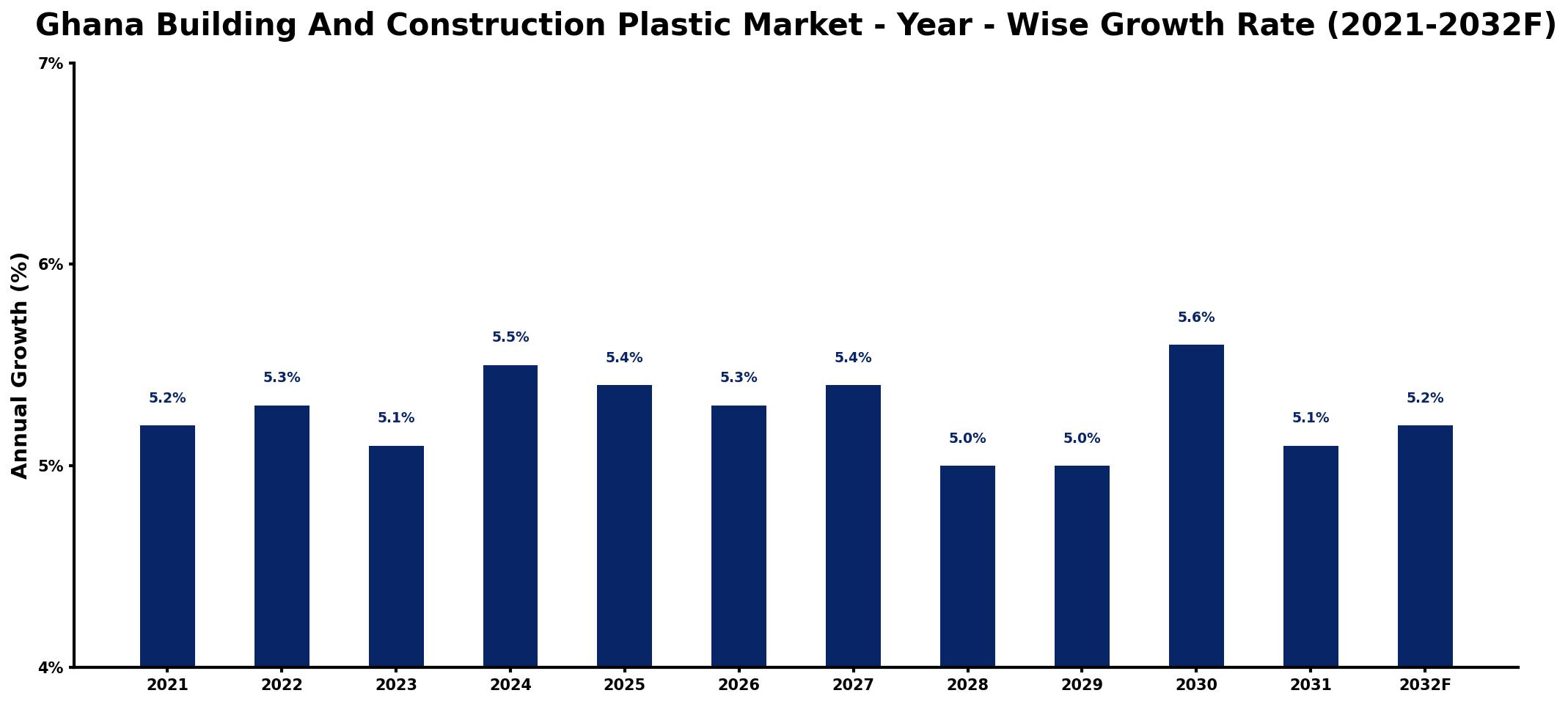
The table below presents the year‑wise growth rates along with the key drivers influencing the market
| Year | Growth Rate | Major Drivers |
| 2021 | 5.2% | Rising demand for sustainable materials |
| 2022 | 5.3% | Increased investment in infrastructure projects |
| 2023 | 5.1% | Growth in residential housing projects |
| 2024 | 5.5% | Expansion of renewable energy initiatives |
| 2025 | 5.4% | Surge in commercial property developments |
| 2026 | 5.3% | Technological advancements in manufacturing |
| 2027 | 5.4% | Growing interest in eco-friendly solutions |
| 2028 | 5.0% | Strengthened regulations on waste management |
| 2029 | 5.0% | Increased urbanization and population growth |
| 2030 | 5.6% | Emergence of innovative design trends |
| 2031 | 5.1% | increased overall sector activity |
| 2032 | 5.2% | Rising consumer preference for durability |
Note: Market size estimations and growth projections presented in this report are based on 6Wresearch's proprietary forecasting methodology, utilizing the latest available industry data, government publications, and primary research inputs.
Ghana Building And Construction Plastic Market Synopsis
Recent momentum in the Ghana Building and Construction Plastic Market reflects a surge in demand driven by ongoing urbanization and infrastructure enhancement projects. As the country advances, the market is heading toward a robust future characterized by innovative product offerings and a shift towards sustainable building practices.
The integration of eco-friendly materials into construction is redefining industry standards, with local manufacturers and international suppliers adapting to evolving consumer preferences. This transformation in the Ghana Building and Construction Plastic Market not only signifies growth but also a commitment to reducing environmental impact.
Ghana Building And Construction Plastic Market Key Takeaways
- Plastics are increasingly being recognized for their cost-effectiveness and durability in the construction sector.
- Growing urbanization and government infrastructure projects are propelling market growth.
- There is a notable shift towards sustainable and eco-friendly plastic construction materials.
- Local and international manufacturers are innovating to meet the unique requirements of the Ghanaian market.
- Investment in plastic technologies and recycling initiatives is gaining traction among market players.
Evaluation of Restraints in Ghana Building And Construction Plastic Market
Despite the optimistic outlook, the Ghana Building and Construction Plastic Market faces several restraints. A key challenge is the pervasive lack of awareness regarding the benefits of plastic materials among consumers and industry stakeholders. This results in a preference for traditional construction materials, which can hinder market penetration. Moreover, the perception of plastics as less durable compared to alternatives can deter potential adopters. Limited access to high-quality local products and inconsistent regulatory frameworks further exacerbate these issues, necessitating targeted education and advocacy to elevate the market's acceptance.
Ghana Building And Construction Plastic Market Trends
The Ghana Building and Construction Plastic Market is witnessing a notable trend towards the adoption of recyclable and biodegradable plastics. This shift is driven by a growing consciousness about environmental sustainability. Additionally, the market is seeing increasing demand for innovative products, such as high-performance PVC pipes and energy-efficient insulation materials. The focus on building energy-efficient structures, which emphasize thermal insulation properties, is also influencing material selection in construction projects.
Ghana Building And Construction Plastic Market Opportunities
The market offers numerous investment opportunities, particularly in the development and distribution of sustainable plastic building materials. There is a significant demand for innovative products that are not only durable but also environmentally friendly. Companies that invest in research and development of advanced plastic technologies will find profitable avenues. Collaborating with local construction firms to establish supply chains for eco-friendly materials presents another lucrative opportunity, positioning businesses to capitalize on the nation's infrastructure growth.
Government Initiatives in the Ghana Building And Construction Plastic Market
The Ghanaian government is actively promoting sustainable practices in the building and construction sector. Policies aimed at reducing single-use plastics are encouraging the adoption of eco-friendly materials. Furthermore, regulations that support the recycling of plastic waste generated from construction activities are being implemented to mitigate environmental pollution. These government initiatives are crucial in fostering a more sustainable construction environment and driving the market towards responsible practices.
Future Insights of the Ghana Building And Construction Plastic Market
Looking ahead to 2026-2032, the Ghana Building and Construction Plastic Market is set to flourish, spurred by urbanization and a robust focus on sustainable construction solutions. The demand for plastic materials is anticipated to escalate as innovative product developments cater to specific construction needs, enhancing their appeal. The growing emphasis on energy efficiency and eco-friendly building practices will likely encourage the transition to more advanced and sustainable plastic solutions, setting the stage for a thriving market environment.
Ghana Building And Construction Plastic Market Latest Developments (2025 - 2026)
Recent developments in the Ghana Building and Construction Plastic Market indicate a trend towards increased collaboration between local manufacturers and international suppliers. This partnership approach aims to leverage innovative technologies in product offerings. Additionally, there is a noticeable uptick in government-led initiatives focused on enhancing recycling capabilities within the construction industry, further underscoring a commitment to sustainability.
Ghana Building And Construction Plastic Market - Key Attractiveness of the Report
- 10 Years of Market Numbers
- Historical Data Starting from 2022 to 2025
- Base Year: 2025
- Forecast Data until 2032
- Key Performance Indicators Impacting the Market
- Major Upcoming Developments and Projects
Key Highlights of the Report:
- Ghana Building And Construction Plastic Market Outlook
- Market Size of Ghana Building And Construction Plastic Market, 2025
- Forecast of Ghana Building And Construction Plastic Market, 2032
- Historical Data and Forecast of Ghana Building And Construction Plastic Revenues & Volume for the Period 2022-2032F
- Ghana Building And Construction Plastic Market Trend Evolution
- Ghana Building And Construction Plastic Market Drivers and Challenges
- Ghana Building And Construction Plastic Price Trends
- Ghana Building And Construction Plastic Porter's Five Forces
- Ghana Building And Construction Plastic Industry Life Cycle
- Historical Data and Forecast of Ghana Building And Construction Plastic Market Revenues & Volume By Type for the Period 2022-2032F
- Historical Data and Forecast of Ghana Building And Construction Plastic Market Revenues & Volume By Thermoplastic for the Period 2022-2032F
- Historical Data and Forecast of Ghana Building And Construction Plastic Market Revenues & Volume By Thermosetting Plastic for the Period 2022-2032F
- Historical Data and Forecast of Ghana Building And Construction Plastic Market Revenues & Volume By Application for the Period 2022-2032F
- Historical Data and Forecast of Ghana Building And Construction Plastic Market Revenues & Volume By Flooring for the Period 2022-2032F
- Historical Data and Forecast of Ghana Building And Construction Plastic Market Revenues & Volume By Window and Door Panel for the Period 2022-2032F
- Historical Data and Forecast of Ghana Building And Construction Plastic Market Revenues & Volume By Siding for the Period 2022-2032F
- Historical Data and Forecast of Ghana Building And Construction Plastic Market Revenues & Volume By Piping for the Period 2022-2032F
- Historical Data and Forecast of Ghana Building And Construction Plastic Market Revenues & Volume By Roofing for the Period 2022-2032F
- Historical Data and Forecast of Ghana Building And Construction Plastic Market Revenues & Volume By Insulation for the Period 2022-2032F
- Historical Data and Forecast of Ghana Building And Construction Plastic Market Revenues & Volume By Others for the Period 2022-2032F
- Ghana Building And Construction Plastic Import Export Trade Statistics
- Market Opportunity Assessment By Type
- Market Opportunity Assessment By Application
- Ghana Building And Construction Plastic Top Companies Market Share
- Ghana Building And Construction Plastic Competitive Benchmarking By Technical and Operational Parameters
- Ghana Building And Construction Plastic Company Profiles
- Ghana Building And Construction Plastic Key Strategic Recommendations






































