Ghana Ceiling Tiles Market Size, Share & Growth Rate
The Ghana Ceiling Tiles Market was estimated at USD 248 Million in 2025 and is projected to reach USD 341 Million by 2032, growing at a CAGR of 4.7% from 2026 to 2032. This growth trajectory is largely propelled by the booming construction sector, which increasingly demands high-quality, aesthetically pleasing ceiling solutions. The rising trends in urbanization and the need for modernized infrastructure are significantly influencing the uptake of ceiling tiles across residential, commercial, and institutional buildings.
Ghana Ceiling Tiles Market Year-wise Growth Rate and Key Drivers
This graph highlights how the Ghana Ceiling Tiles Market has steadily grown over the years, supported by major growth factors.
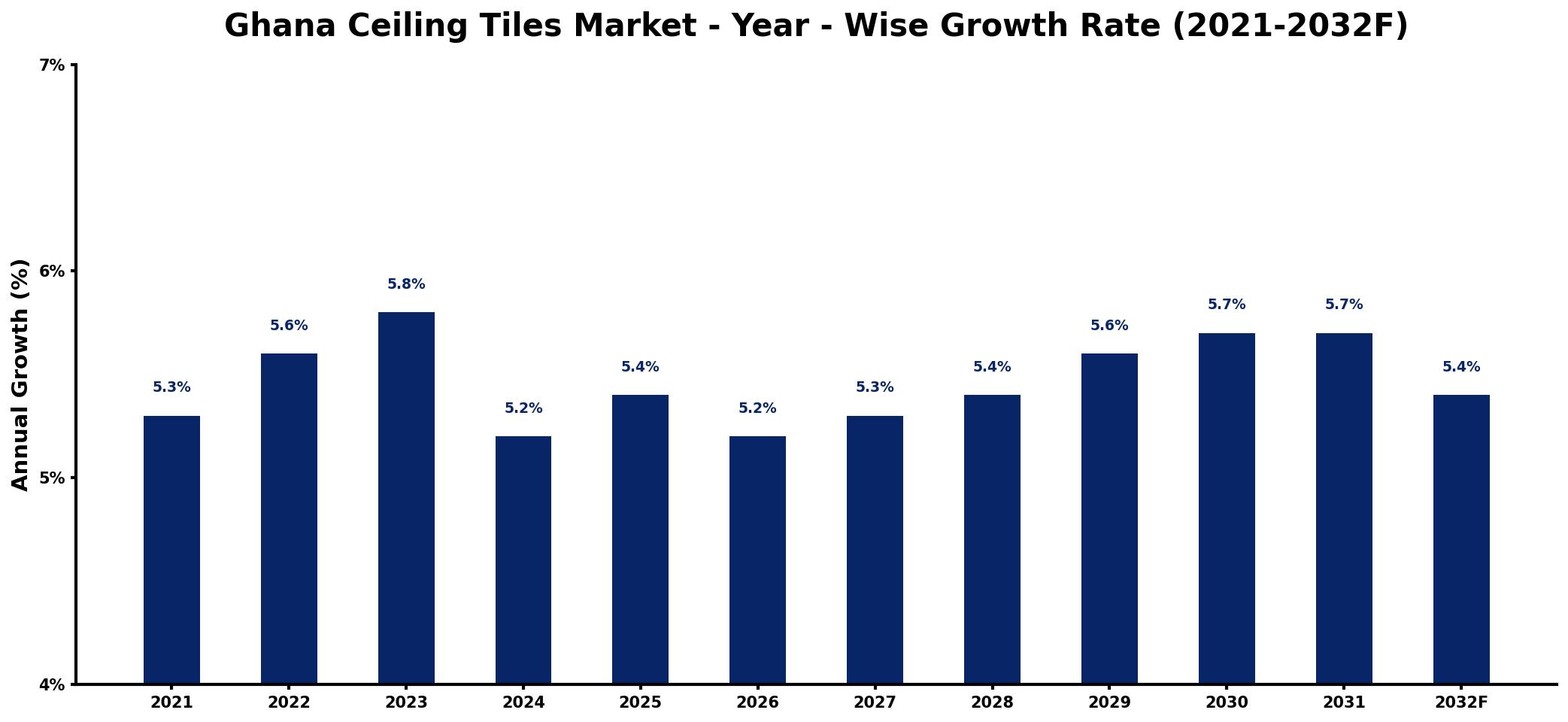
The table below presents the year‑wise growth rates along with the key drivers influencing the market
| Year | Growth Rate | Major Drivers |
| 2021 | 5.3% | Rising construction sector activities |
| 2022 | 5.6% | Increased residential development projects |
| 2023 | 5.8% | Growing demand for interior aesthetics |
| 2024 | 5.2% | Expansion in commercial real estate |
| 2025 | 5.4% | Surge in remodeling and renovations |
| 2026 | 5.2% | Enhanced awareness of acoustic solutions |
| 2027 | 5.3% | Investment in sustainable building materials |
| 2028 | 5.4% | Technological advancements in manufacturing |
| 2029 | 5.6% | Growth in hospitality sector investments |
| 2030 | 5.7% | Increased urban population density |
| 2031 | 5.7% | Rising demand for energy efficiency |
| 2032 | 5.4% | Focus on modern architectural designs |
Note: Market size estimations and growth projections presented in this report are based on 6Wresearch's proprietary forecasting methodology, utilizing the latest available industry data, government publications, and primary research inputs.
Ghana Ceiling Tiles Market Synopsis
As Ghana's urban landscape continues to evolve, the ceiling tiles market is witnessing a noticeable shift towards more innovative and eco-friendly materials. Homeowners and businesses alike are increasingly prioritizing acoustic performance and thermal insulation, pushing manufacturers to adapt their offerings to meet these emerging demands.
The market encompasses a diverse range of products, including mineral fiber, gypsum, and metal panel tiles. These materials serve both functional and decorative roles, enhancing the overall aesthetic of interiors while providing essential soundproofing and temperature control features.
Ghana Ceiling Tiles Market Key Takeaways
- The market is set for sustained growth, driven by urbanization and the demand for modern construction solutions.
- Awareness of interior design aesthetics is increasingly influencing consumer preferences in ceiling tiles.
- Government policies promoting sustainability are shaping material choices within the market.
- Imported materials dominate, yet there is a growing call for local manufacturing to enhance market competitiveness.
- Innovative technologies are emerging to improve the acoustic and thermal properties of ceiling tiles.
Evaluation of Restraints in Ghana Ceiling Tiles Market
Despite its growth potential, the Ghana Ceiling Tiles Market faces significant constraints. One major issue is the limited availability of locally manufactured ceiling tiles, which leads to a heavy reliance on imports. This dependency not only affects pricing but also impacts lead times and product availability. Furthermore, competition from alternative building materials, such as plasterboard and wood panels, presents a challenge, as they often offer similar aesthetic benefits with different price points. Quality control issues, particularly with imported products, can also lead to consumer dissatisfaction and influence purchasing decisions.
Ghana Ceiling Tiles Market Trends
Current trends in the Ghana Ceiling Tiles Market reflect a growing preference for sustainable and environmentally friendly materials. Consumers are becoming more eco-conscious, prompting manufacturers to innovate with recycled materials and low-emission adhesives. Additionally, the trend towards open-concept spaces has led to an increased focus on acoustic ceiling tiles that can manage sound levels effectively while maintaining an appealing design. Technology integration, such as ceiling tiles equipped with LED lighting solutions, is also on the rise, enhancing functionality without compromising aesthetics.
Ghana Ceiling Tiles Market Opportunities
Opportunities abound for growth and investment in the Ghana Ceiling Tiles Market. As construction activities ramp up, especially in urban centers, there is a clear demand for high-quality ceiling solutions that align with modern architectural standards. Additionally, the increasing interest in green building certifications presents a significant opportunity for manufacturers willing to invest in sustainable product lines. Expanding the local manufacturing base could also reduce import dependency, leading to better pricing strategies and improved supply chain efficiency.
Government Initiatives in the Ghana Ceiling Tiles Market
Government initiatives are playing a crucial role in shaping the Ghana Ceiling Tiles Market. Policies focused on improving building safety, indoor air quality, and sustainability are gaining traction. Regulatory frameworks are being developed to establish standards for ceiling tile materials, ensuring they meet criteria for fire resistance and acoustic performance. Furthermore, the government may support green building programs that encourage the use of environmentally friendly ceiling materials and provide incentives for their adoption across various construction projects.
Future Insights of the Ghana Ceiling Tiles Market
Looking ahead to 2026-2032, the Ghana Ceiling Tiles Market is poised for continued evolution. As urbanization intensifies, the demand for innovative ceiling solutions that balance functionality with design aesthetics will only grow. The push for sustainability and environmental consciousness will drive manufacturers to adopt greener practices and materials. Moreover, collaborations with architects and interior designers will become increasingly vital, ensuring that ceiling tiles meet the diverse needs of modern spaces while enhancing the overall building experience.
Ghana Ceiling Tiles Market Latest Developments (2025 - 2026)
Recent developments in the Ghana Ceiling Tiles Market indicate a rising focus on localized manufacturing capabilities to reduce reliance on imports. Moreover, industry stakeholders are increasingly engaging in dialogues around sustainability, leading to the introduction of innovative products that utilize eco-friendly materials. There's also a notable trend towards partnerships between construction firms and ceiling tile manufacturers, aimed at streamlining procurement processes and ensuring product availability in line with project timelines.
Ghana Ceiling Tiles Market - Key Attractiveness of the Report
- 10 Years of Market Numbers
- Historical Data Starting from 2022 to 2025
- Base Year: 2025
- Forecast Data until 2032
- Key Performance Indicators Impacting the Market
- Major Upcoming Developments and Projects
Key Highlights of the Report:
- Ghana Ceiling Tiles Market Outlook
- Market Size of Ghana Ceiling Tiles Market, 2025
- Forecast of Ghana Ceiling Tiles Market, 2032
- Historical Data and Forecast of Ghana Ceiling Tiles Revenues & Volume for the Period 2022-2032F
- Ghana Ceiling Tiles Market Trend Evolution
- Ghana Ceiling Tiles Market Drivers and Challenges
- Ghana Ceiling Tiles Price Trends
- Ghana Ceiling Tiles Porter's Five Forces
- Ghana Ceiling Tiles Industry Life Cycle
- Historical Data and Forecast of Ghana Ceiling Tiles Market Revenues & Volume By Material Type for the Period 2022-2032F
- Historical Data and Forecast of Ghana Ceiling Tiles Market Revenues & Volume By Mineral Wool for the Period 2022-2032F
- Historical Data and Forecast of Ghana Ceiling Tiles Market Revenues & Volume By Metal for the Period 2022-2032F
- Historical Data and Forecast of Ghana Ceiling Tiles Market Revenues & Volume By Gypsum for the Period 2022-2032F
- Historical Data and Forecast of Ghana Ceiling Tiles Market Revenues & Volume By Others for the Period 2022-2032F
- Historical Data and Forecast of Ghana Ceiling Tiles Market Revenues & Volume By Application for the Period 2022-2032F
- Historical Data and Forecast of Ghana Ceiling Tiles Market Revenues & Volume By Residential for the Period 2022-2032F
- Historical Data and Forecast of Ghana Ceiling Tiles Market Revenues & Volume By Non-residential for the Period 2022-2032F
- Ghana Ceiling Tiles Import Export Trade Statistics
- Market Opportunity Assessment By Material Type
- Market Opportunity Assessment By Application
- Ghana Ceiling Tiles Top Companies Market Share
- Ghana Ceiling Tiles Competitive Benchmarking By Technical and Operational Parameters
- Ghana Ceiling Tiles Company Profiles
- Ghana Ceiling Tiles Key Strategic Recommendations






































