Ghana Curtains and Window Blinds Market Size, Share & Growth Rate
The Ghana Curtains and Window Blinds Market was estimated at USD 1310 Million in 2025 and is projected to reach USD 2295 Million by 2032, growing at a CAGR of 8.3% from 2026 to 2032. This growth trajectory is being propelled by a confluence of factors, including rapid urbanization and rising disposable incomes among consumers. As more Ghanaians prioritize aesthetic enhancements in their living spaces, the demand for diverse and functional window treatments continues to rise.
Ghana Curtains and Window Blinds Market Year-wise Growth Rate and Key Drivers
This graph highlights how the Ghana Curtains and Window Blinds Market has steadily grown over the years, supported by major growth factors.
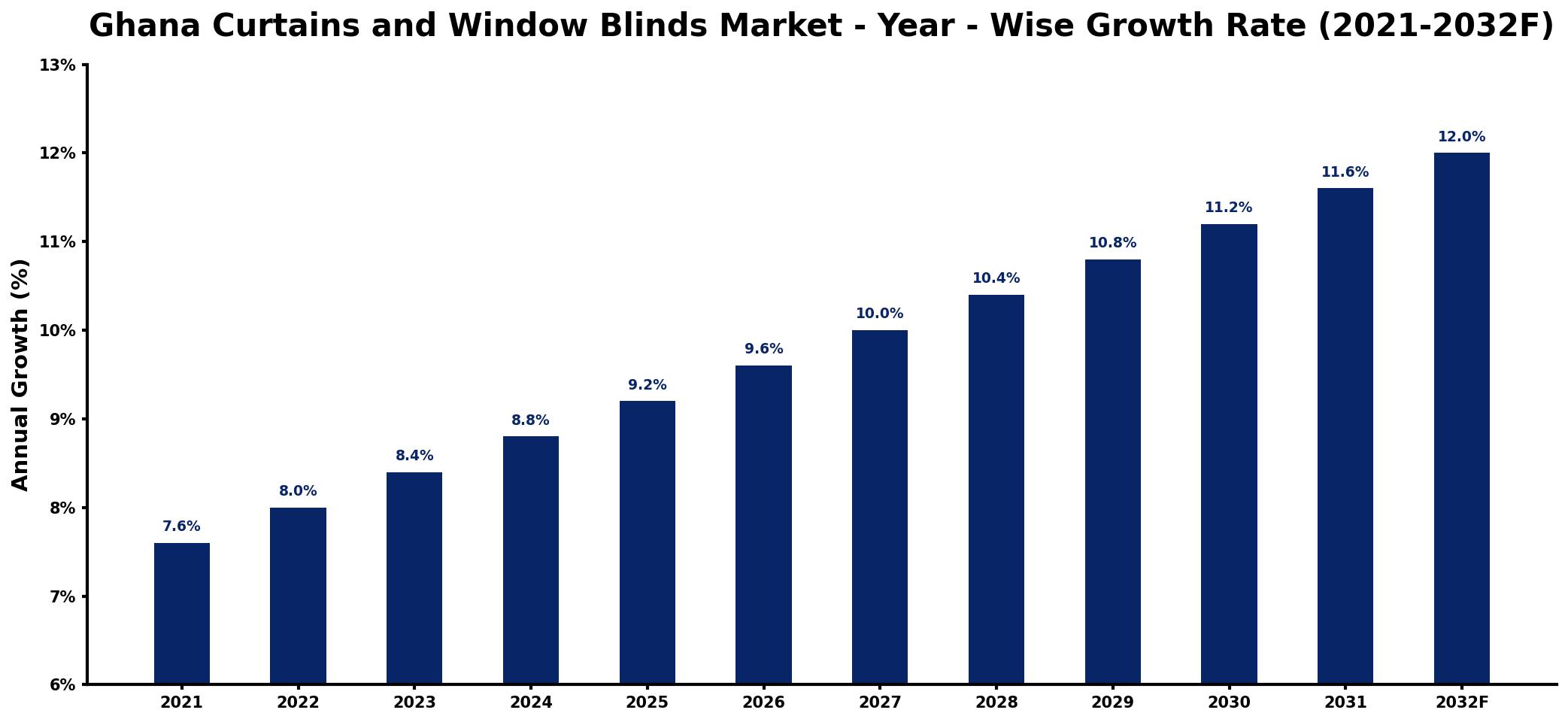
The table below presents the year‑wise growth rates along with the key drivers influencing the market
| Year | Growth Rate | Major Drivers |
| 2021 | 7.6% | Rising construction activity nationwide |
| 2022 | 8.0% | Increased disposable income levels |
| 2023 | 8.4% | Growing interest in interior design |
| 2024 | 8.8% | Expansion of real estate projects |
| 2025 | 9.2% | Surge in home renovations |
| 2026 | 9.6% | Boost in tourism sector investments |
| 2027 | 10.0% | Emergence of smart home technology |
| 2028 | 10.4% | Increased focus on sustainability practices |
| 2029 | 10.8% | Growth of e-commerce platforms |
| 2030 | 11.2% | rising infrastructure development spending |
| 2031 | 11.6% | Rising demand for custom solutions |
| 2032 | 12.0% | Greater emphasis on energy efficiency |
Note: Market size estimations and growth projections presented in this report are based on 6Wresearch's proprietary forecasting methodology, utilizing the latest available industry data, government publications, and primary research inputs.
Ghana Curtains and Window Blinds Market Synopsis
In recent years, the Ghana Curtains and Window Blinds Market has gained significant momentum, reflecting a shift towards more stylish and efficient home décor solutions. The ongoing interest in interior design and modern aesthetics is reshaping consumer preferences, creating a fertile ground for market expansion.
Looking ahead, the market is expected to continue this upward trajectory as consumers increasingly explore a wider array of choices, from elegant sheer drapes to sleek, functional blinds. This transformation not only aligns with global trends but also highlights a burgeoning appreciation for personalized interior solutions among Ghanaian consumers.
Ghana Curtains and Window Blinds Market Key Takeaways
- The market is experiencing robust growth driven by urbanization and rising incomes.
- Modern and minimalistic designs are gaining popularity among consumers.
- Customization options are becoming a key demand driver.
- Investors are encouraged to tap into the growing real estate sector.
- Government policies are fostering a competitive environment for product quality and innovation.
Evaluation of Restraints in Ghana Curtains and Window Blinds Market
While the Ghana Curtains and Window Blinds Market is poised for significant growth, it faces several constraints that could impede its momentum. Intense competition between local and international suppliers often results in price wars that can undermine profit margins. Additionally, fluctuations in raw material prices may impact production costs and overall pricing strategies. Furthermore, the market grapples with a lack of consumer awareness about the benefits of high-quality window treatments, which can restrict sales potential. Lastly, issues such as inconsistent government policies and infrastructure constraints further challenge the industry, necessitating strategic adaptability from market players.
Ghana Curtains and Window Blinds Market Trends
Current trends in the Ghana Curtains and Window Blinds Market indicate a strong shift towards modern, eco-friendly designs. Consumers increasingly favor sleek and simple aesthetics, often opting for neutral color palettes and natural materials like bamboo and linen. Additionally, the popularity of energy-efficient window coverings is on the rise, as consumers look for products that not only enhance the visual appeal of their spaces but also contribute to cost savings on energy bills. The growing preference for customizable window treatments allows consumers to align their selections with their personal style and home decor, catering to a demand for individuality in interior design.
Ghana Curtains and Window Blinds Market Opportunities
The Ghana Curtains and Window Blinds Market presents a wealth of opportunities for investors and businesses willing to adapt to changing consumer demands. With the real estate sector expanding, there is a notable demand for high-quality, stylish window treatments that cater to both residential and commercial properties. Furthermore, offering customization services can set businesses apart in a competitive landscape. Collaborating with architects, interior designers, and property developers can facilitate market entry and broaden brand visibility. By aligning with sustainability trends and leveraging innovative marketing strategies, businesses can position themselves to thrive in this dynamic market.
Government Initiatives in the Ghana Curtains and Window Blinds Market
Government policies related to the Ghana Curtains and Window Blinds Market are primarily geared towards ensuring consumer safety and product quality. The Ghana Standards Authority establishes stringent guidelines for manufacturing practices to uphold quality standards. Additionally, regulations by the Ghana Revenue Authority aim to safeguard the market from substandard imports. The Ghana Investment Promotion Centre supports local manufacturers by providing incentives to bolster growth and competitiveness within the industry, fostering an environment conducive to innovation and expansion.
Future Insights of the Ghana Curtains and Window Blinds Market
The outlook for the Ghana Curtains and Window Blinds Market through 2026-2032 appears promising, driven by continuing urbanization and increased consumer expenditure on home decor. As Ghanaian homeowners and businesses increasingly invest in stylish and functional interior solutions, the market is likely to see sustained growth. Technological advancements in design and production are expected to further enhance the diversity of offerings, appealing to the eco-conscious consumer base. As lifestyle preferences evolve, industry stakeholders must remain agile, focusing on innovation and quality to capture the opportunities that lie ahead.
Ghana Curtains and Window Blinds Market Latest Developments (2025 - 2026)
Recent developments in the Ghana Curtains and Window Blinds Market have showcased a strong emphasis on innovation and product differentiation. Manufacturers are increasingly introducing new materials and designs that cater to the evolving tastes of consumers. Sustainable practices are becoming more prevalent, with some companies prioritizing eco-friendly materials in their product offerings. Additionally, digital marketing strategies are being leveraged to reach a broader audience and enhance customer engagement, reflecting the industry's adaptability to contemporary marketing trends.
Ghana Curtains and Window Blinds Market - Key Attractiveness of the Report
- 10 Years of Market Numbers
- Historical Data Starting from 2022 to 2025
- Base Year: 2025
- Forecast Data until 2032
- Key Performance Indicators Impacting the Market
- Major Upcoming Developments and Projects
Key Highlights of the Report:
- Ghana Curtains and Window Blinds Market Outlook
- Market Size of Ghana Curtains and Window Blinds Market, 2025
- Forecast of Ghana Curtains and Window Blinds Market, 2032
- Historical Data and Forecast of Ghana Curtains and Window Blinds Revenues & Volume for the Period 2022-2032F
- Ghana Curtains and Window Blinds Market Trend Evolution
- Ghana Curtains and Window Blinds Market Drivers and Challenges
- Ghana Curtains and Window Blinds Price Trends
- Ghana Curtains and Window Blinds Porter's Five Forces
- Ghana Curtains and Window Blinds Industry Life Cycle
- Historical Data and Forecast of Ghana Curtains and Window Blinds Market Revenues & Volume By Materials for the Period 2022-2032F
- Historical Data and Forecast of Ghana Curtains and Window Blinds Market Revenues & Volume By Curtains (Cotton, Linen, Polyester) for the Period 2022-2032F
- Historical Data and Forecast of Ghana Curtains and Window Blinds Market Revenues & Volume By Window Blinds (Cotton, Linen, Wood, PVC, Metal) for the Period 2022-2032F
- Historical Data and Forecast of Ghana Curtains and Window Blinds Market Revenues & Volume By Product for the Period 2022-2032F
- Historical Data and Forecast of Ghana Curtains and Window Blinds Market Revenues & Volume By Curtains (Box pleat curtains, Pinch pleat curtains & drapery, Goblet pleat curtains & drapery, Eyelet curtains & drapery) for the Period 2022-2032F
- Historical Data and Forecast of Ghana Curtains and Window Blinds Market Revenues & Volume By Window Blinds (Window Shades,, Window Screens, Connected) for the Period 2022-2032F
- Historical Data and Forecast of Ghana Curtains and Window Blinds Market Revenues & Volume By Distribution Channel for the Period 2022-2032F
- Historical Data and Forecast of Ghana Curtains and Window Blinds Market Revenues & Volume By B2B for the Period 2022-2032F
- Historical Data and Forecast of Ghana Curtains and Window Blinds Market Revenues & Volume By B2C for the Period 2022-2032F
- Historical Data and Forecast of Ghana Curtains and Window Blinds Market Revenues & Volume By E-commerce for the Period 2022-2032F
- Historical Data and Forecast of Ghana Curtains and Window Blinds Market Revenues & Volume By Price Range for the Period 2022-2032F
- Historical Data and Forecast of Ghana Curtains and Window Blinds Market Revenues & Volume By High for the Period 2022-2032F
- Historical Data and Forecast of Ghana Curtains and Window Blinds Market Revenues & Volume By Medium for the Period 2022-2032F
- Historical Data and Forecast of Ghana Curtains and Window Blinds Market Revenues & Volume By Low for the Period 2022-2032F
- Ghana Curtains and Window Blinds Import Export Trade Statistics
- Market Opportunity Assessment By Materials
- Market Opportunity Assessment By Product
- Market Opportunity Assessment By Distribution Channel
- Market Opportunity Assessment By Price Range
- Ghana Curtains and Window Blinds Top Companies Market Share
- Ghana Curtains and Window Blinds Competitive Benchmarking By Technical and Operational Parameters
- Ghana Curtains and Window Blinds Company Profiles
- Ghana Curtains and Window Blinds Key Strategic Recommendations






































