Ghana Double Glazing Glass Market Size, Share & Growth Rate
The Ghana Double Glazing Glass Market was estimated at USD 394 Million in 2025 and is projected to reach USD 533 Million by 2032, growing at a CAGR of 4.4% from 2026 to 2032. This growth is primarily fueled by an upsurge in construction activities across both residential and commercial sectors, alongside a heightened awareness of energy efficiency and environmental sustainability among consumers. As urbanization accelerates, the demand for energy-efficient solutions like double glazing glass is expected to strengthen, creating further momentum in the market.
Ghana Double Glazing Glass Market Year-wise Growth Rate and Key Drivers
This graph highlights how the Ghana Double Glazing Glass Market has steadily grown over the years, supported by major growth factors.
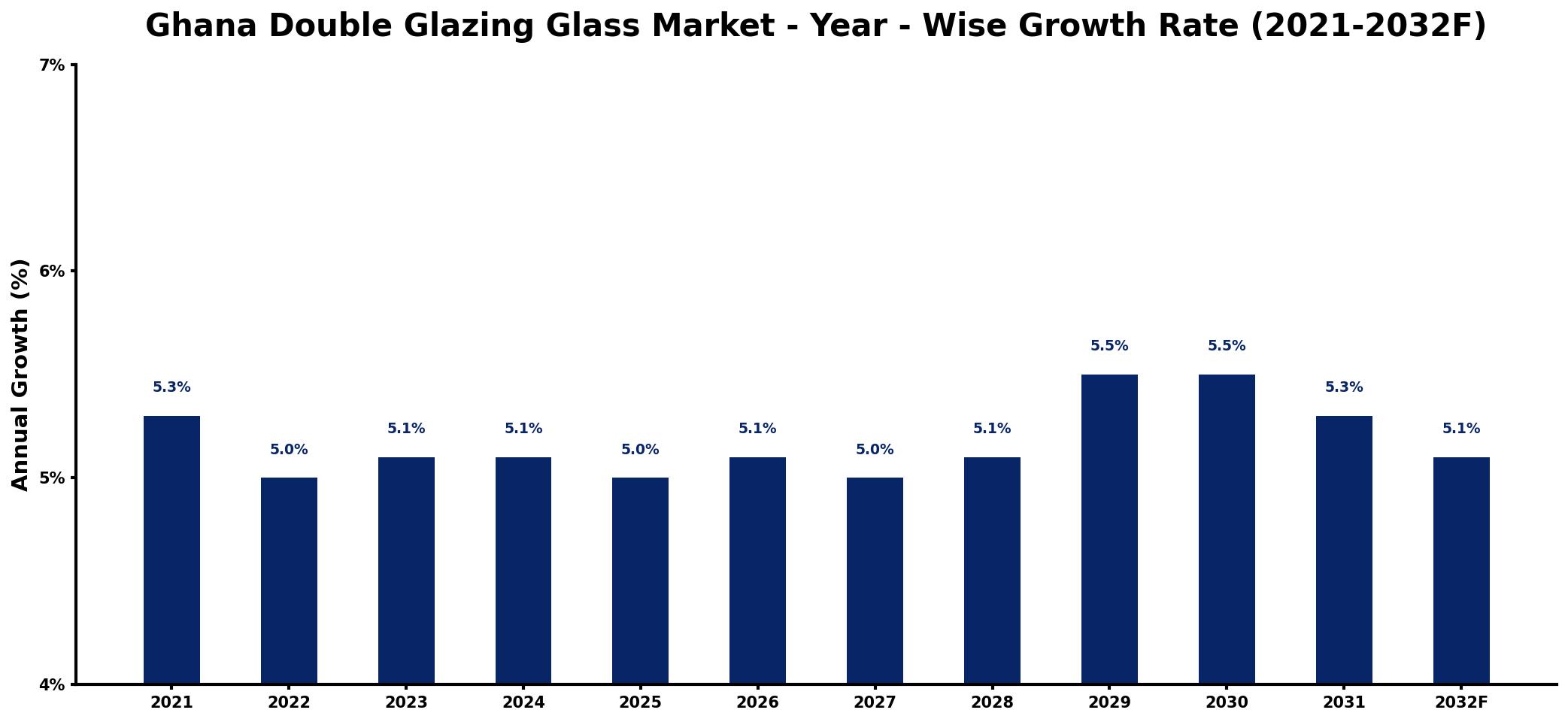
The table below presents the year‑wise growth rates along with the key drivers influencing the market
| Year | Growth Rate | Major Drivers |
| 2021 | 5.3% | Rising construction sector investments |
| 2022 | 5.0% | Growing demand for energy efficiency |
| 2023 | 5.1% | Increased focus on sustainability initiatives |
| 2024 | 5.1% | Expansion of residential housing projects |
| 2025 | 5.0% | Higher adoption of modern architecture |
| 2026 | 5.1% | Investment in commercial infrastructure upgrades |
| 2027 | 5.0% | Surge in home renovation activities |
| 2028 | 5.1% | Development of eco-friendly building standards |
| 2029 | 5.5% | Boost in real estate developments |
| 2030 | 5.5% | Growing awareness of noise reduction |
| 2031 | 5.3% | Increase in urban population density |
| 2032 | 5.1% | Rising demand for luxury properties |
Note: Market size estimations and growth projections presented in this report are based on 6Wresearch's proprietary forecasting methodology, utilizing the latest available industry data, government publications, and primary research inputs.
Ghana Double Glazing Glass Market Synopsis
The Ghana Double Glazing Glass Market is characterized by a robust demand for products that offer superior insulation and energy savings. With the government pushing for sustainable building practices, developers and homeowners alike are increasingly opting for double-glazed windows and doors to enhance their properties' efficiency.
Local manufacturers are stepping up to meet this growing demand, while international companies are also eyeing opportunities in the Ghanaian market. This synergy between local and foreign entities is driving innovation and competition, resulting in a wider array of high-performance glass products available to consumers.
Ghana Double Glazing Glass Market Key Takeaways
- The market is poised for significant growth due to increasing urbanization and construction activity.
- Government initiatives promoting energy-efficient solutions are boosting demand for double glazing glass.
- Technological advancements are facilitating the production of customized and innovative glass solutions.
- Consumer awareness regarding energy efficiency is gradually rising, contributing to adoption rates.
- Investment opportunities are ripe for suppliers and manufacturers in the double glazing sector.
Evaluation of Restraints in Ghana Double Glazing Glass Market
Despite its promising trajectory, the Ghana Double Glazing Glass Market faces several hurdles that could impact growth. A significant restraint is the relatively limited consumer awareness of the benefits of double glazing, which can lead to slower adoption compared to more developed markets. Moreover, the initial investment for double-glazing products remains a concern for many consumers, particularly in a cost-sensitive economy. The shortage of skilled installers further complicates matters, as improper installation can deter potential customers and diminish overall satisfaction with the product.
Ghana Double Glazing Glass Market Trends
Emerging trends in the Ghana Double Glazing Glass Market highlight a shift towards high-performance glass that not only meets but exceeds basic insulation requirements. Consumers are increasingly seeking products that offer enhanced thermal efficiency, coupled with sustainability features. Additionally, technological innovations in manufacturing processes are paving the way for bespoke solutions that align with modern architectural designs and preferences.
Ghana Double Glazing Glass Market Opportunities
As the construction sector in Ghana continues to expand, there lies a wealth of investment opportunities in the double glazing glass segment. The demand for energy-efficient building materials is growing, particularly in urban areas where new residential and commercial projects are on the rise. Investors can seize this moment by supplying high-quality double glazing products tailored to meet the needs of the burgeoning market, aligning with government initiatives aimed at promoting sustainable development.
Government Initiatives in the Ghana Double Glazing Glass Market
The Ghanaian government is actively fostering the adoption of double glazing glass through various initiatives. This includes tax incentives for homeowners and businesses who install energy-efficient solutions, alongside the establishment of building codes that mandate the use of sustainable materials in new constructions. Such policies are strategically aimed at reducing energy consumption, thereby encouraging the widespread use of double glazing glass.
Future Insights of the Ghana Double Glazing Glass Market
Looking ahead to 2026-2032, the Ghana Double Glazing Glass Market is set to benefit from a combination of increased urbanization, growing disposable incomes, and a concerted push towards energy-efficient building practices. The ongoing commitment from both the government and private sectors to embrace green technologies suggests that the market will not only expand in size but also in diversity, offering more advanced and tailored solutions to meet consumer demands.
Ghana Double Glazing Glass Market Latest Developments (2025 - 2026)
Recent developments in the Ghana Double Glazing Glass Market reflect a dynamic industry adapting to evolving consumer preferences. Innovations in glass production techniques are being adopted, allowing for more effective thermal insulation and design flexibility. Furthermore, partnerships between local suppliers and international manufacturers are emerging, enhancing product availability and fostering competitive pricing in the marketplace.
Ghana Double Glazing Glass Market - Key Attractiveness of the Report
- 10 Years of Market Numbers
- Historical Data Starting from 2022 to 2025
- Base Year: 2025
- Forecast Data until 2032
- Key Performance Indicators Impacting the Market
- Major Upcoming Developments and Projects
Key Highlights of the Report:
- Ghana Double Glazing Glass Market Outlook
- Market Size of Ghana Double Glazing Glass Market, 2025
- Forecast of Ghana Double Glazing Glass Market, 2032
- Historical Data and Forecast of Ghana Double Glazing Glass Revenues & Volume for the Period 2022-2032F
- Ghana Double Glazing Glass Market Trend Evolution
- Ghana Double Glazing Glass Market Drivers and Challenges
- Ghana Double Glazing Glass Price Trends
- Ghana Double Glazing Glass Porter's Five Forces
- Ghana Double Glazing Glass Industry Life Cycle
- Historical Data and Forecast of Ghana Double Glazing Glass Market Revenues & Volume By Material for the Period 2022-2032F
- Historical Data and Forecast of Ghana Double Glazing Glass Market Revenues & Volume By Glass for the Period 2022-2032F
- Historical Data and Forecast of Ghana Double Glazing Glass Market Revenues & Volume By Frame and Spacer for the Period 2022-2032F
- Historical Data and Forecast of Ghana Double Glazing Glass Market Revenues & Volume By Sealant for the Period 2022-2032F
- Historical Data and Forecast of Ghana Double Glazing Glass Market Revenues & Volume By Others for the Period 2022-2032F
- Historical Data and Forecast of Ghana Double Glazing Glass Market Revenues & Volume By Thickness for the Period 2022-2032F
- Historical Data and Forecast of Ghana Double Glazing Glass Market Revenues & Volume By Less than 10mm for the Period 2022-2032F
- Historical Data and Forecast of Ghana Double Glazing Glass Market Revenues & Volume By 10mm to 12mm for the Period 2022-2032F
- Historical Data and Forecast of Ghana Double Glazing Glass Market Revenues & Volume By More than 12mm for the Period 2022-2032F
- Historical Data and Forecast of Ghana Double Glazing Glass Market Revenues & Volume By Application for the Period 2022-2032F
- Historical Data and Forecast of Ghana Double Glazing Glass Market Revenues & Volume By Window and Door for the Period 2022-2032F
- Historical Data and Forecast of Ghana Double Glazing Glass Market Revenues & Volume By Faade for the Period 2022-2032F
- Historical Data and Forecast of Ghana Double Glazing Glass Market Revenues & Volume By Applications for the Period 2022-2032F
- Ghana Double Glazing Glass Import Export Trade Statistics
- Market Opportunity Assessment By Material
- Market Opportunity Assessment By Thickness
- Market Opportunity Assessment By Application
- Ghana Double Glazing Glass Top Companies Market Share
- Ghana Double Glazing Glass Competitive Benchmarking By Technical and Operational Parameters
- Ghana Double Glazing Glass Company Profiles
- Ghana Double Glazing Glass Key Strategic Recommendations






































