Ghana Ergonomic Chair Market Size, Share & Growth Rate
The Ghana Ergonomic Chair Market was estimated at USD 779 Million in 2025 and is projected to reach USD 1441 Million by 2032, growing at a CAGR of 9.2% from 2026 to 2032. This growth trajectory is primarily driven by increasing consumer awareness surrounding ergonomics, particularly in light of the rise in remote work and a greater focus on employee wellness in corporate environments. The market is witnessing an uptick in demand for chairs that not only provide comfort but also address health concerns linked to poor seating practices.
Ghana Ergonomic Chair Market Year-wise Growth Rate and Key Drivers
This graph highlights how the Ghana Ergonomic Chair Market has steadily grown over the years, supported by major growth factors.
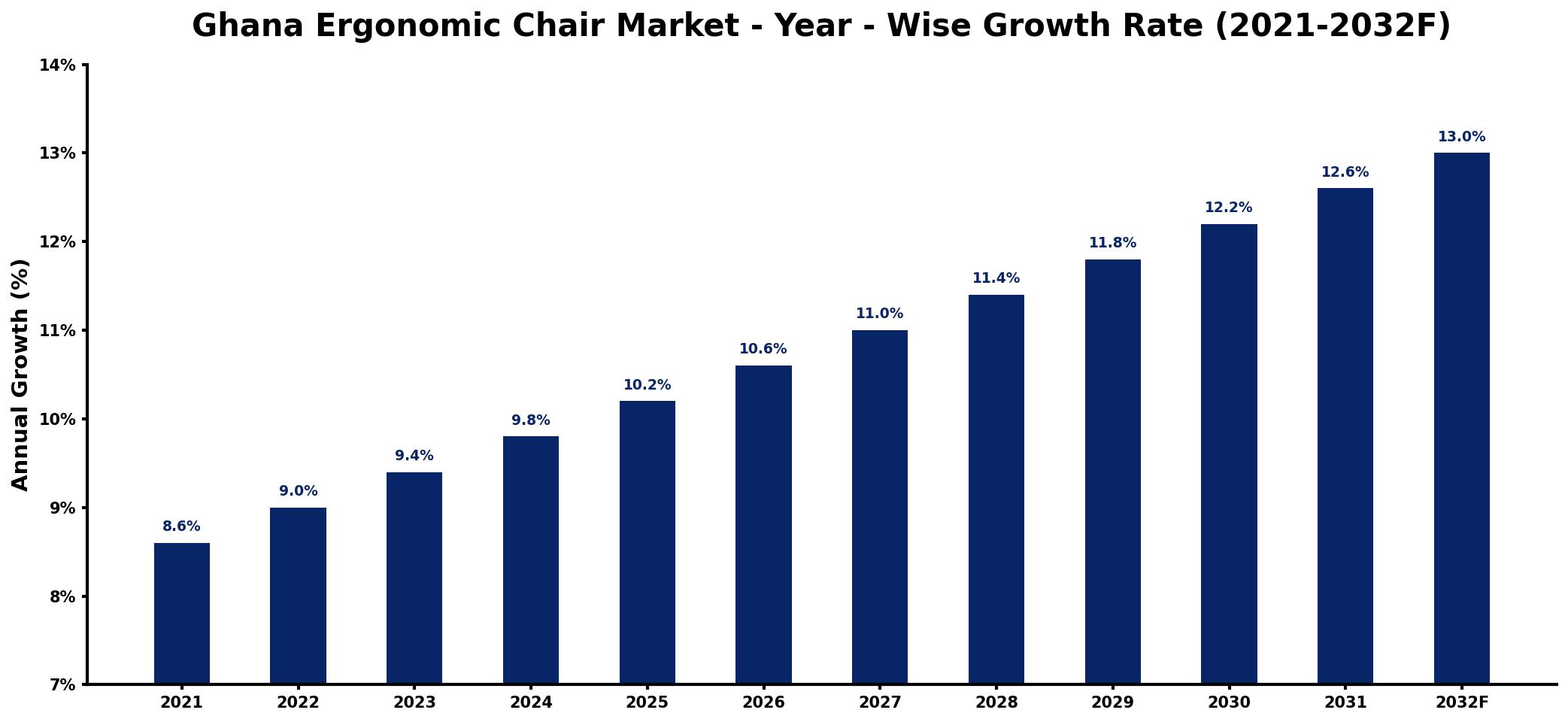
The table below presents the year‑wise growth rates along with the key drivers influencing the market
| Year | Growth Rate | Major Drivers |
| 2021 | 8.6% | Rising awareness of health benefits |
| 2022 | 9.0% | Growth in remote working culture |
| 2023 | 9.4% | Increase in office renovation projects |
| 2024 | 9.8% | Expansion of corporate wellness programs |
| 2025 | 10.2% | Surge in online retail platforms |
| 2026 | 10.6% | Growing investment in workplace design |
| 2027 | 11.0% | Demand from educational institutions |
| 2028 | 11.4% | increased production capacity utilization |
| 2029 | 11.8% | Rising disposable income levels |
| 2030 | 12.2% | rising end-use demand growth |
| 2031 | 12.6% | increased capital investment inflows |
| 2032 | 13.0% | growing emerging market penetration |
Note: Market size estimations and growth projections presented in this report are based on 6Wresearch's proprietary forecasting methodology, utilizing the latest available industry data, government publications, and primary research inputs.
Ghana Ergonomic Chair Market Synopsis
In recent years, the Ghana Ergonomic Chair Market has gained momentum, driven by an evolving understanding of workplace ergonomics. As businesses adopt flexible work models, there is a growing emphasis on creating ergonomic workspaces to enhance productivity and reduce physical strain. This foundational shift is setting the stage for sustained market expansion as health-conscious consumers increasingly prioritize ergonomic designs in their purchasing decisions.
Contrasting with earlier periods marked by limited awareness, the current trajectory highlights a burgeoning interest in ergonomic solutions. Local manufacturers are beginning to emerge, presenting affordable options to meet the demand without compromising quality. As consumer expectations shift towards comfort, durability, and aesthetic appeal, the market is on the cusp of transformative growth.
Ghana Ergonomic Chair Market Key Takeaways
- The market is witnessing a significant shift towards ergonomic designs in both home and office settings.
- Adjustable features, including lumbar support and seat height, are increasingly sought after by consumers.
- There is a rising demand for eco-friendly materials in ergonomic chair production.
- Local manufacturers are beginning to emerge, offering competitive options to established international brands.
- Increased remote working trends are significantly influencing ergonomic chair sales.
Evaluation of Restraints in Ghana Ergonomic Chair Market
Despite the promising growth, the Ghana Ergonomic Chair Market faces several restraints that could hinder its full potential. Limited consumer awareness about the benefits of ergonomic seating poses a significant challenge, often leading to continued reliance on traditional seating solutions. The absence of standardized regulations results in variations in product quality, which can erode consumer trust. Additionally, high import duties and taxes impact pricing, making these vital ergonomic solutions less accessible to a broader demographic. Finally, logistical hurdles in distribution limit the reach of ergonomic chairs, especially in rural areas, further constraining market expansion.
Ghana Ergonomic Chair Market Trends
Emerging trends in the Ghana Ergonomic Chair Market are increasingly influenced by consumer demands for comfort and customization. The trend towards adjustable chairs has gained traction, emphasizing individual preferences for lumbar support and armrests. There is also a notable shift towards sustainable materials, as consumers express a growing concern for the environmental impact of their purchases. Furthermore, modern designs that integrate aesthetics with functionality are becoming popular, appealing to both corporate and home office markets. Together, these trends are reshaping the landscape of ergonomic seating in Ghana.
Ghana Ergonomic Chair Market Opportunities
The Ghana Ergonomic Chair Market offers fertile ground for investment due to the increasing recognition of ergonomic principles in workplaces. The rise of corporate offices, co-working spaces, and home-based setups highlights the demand for high-quality ergonomic seating solutions. Opportunities abound for local manufacturers and distributors to tailor products specifically for the Ghanaian market, incorporating features that resonate with local needs, such as adjustable settings and breathable materials suited to the climate. Furthermore, the introduction of affordable eco-friendly options can significantly enhance market share, presenting a lucrative opportunity for growth and sustainability.
Government Initiatives in the Ghana Ergonomic Chair Market
Currently, the Ghanaian government lacks specific policies targeting the ergonomic chair market. However, existing regulations related to product quality and safety still apply to ergonomic furniture. The Ghana Standards Authority (GSA) is responsible for setting these standards, which ensure that products sold in the market meet certain safety criteria. Compliance with these regulations is essential for manufacturers and importers to operate effectively. While direct incentives for ergonomic products are absent, adherence to these standards is crucial for shaping the industry dynamics in Ghana.
Future Insights of the Ghana Ergonomic Chair Market
Looking ahead to the period of 2026-2032, the Ghana Ergonomic Chair Market is poised for considerable growth. As the awareness of ergonomic practices continues to rise, businesses are increasingly focused on fostering healthier work environments to enhance employee productivity. Innovations in design and material technology are anticipated to play a significant role in this growth, pushing manufacturers to incorporate more advanced ergonomic features into their offerings. The intersection of global trends in office furniture with local market demands will further drive the evolution of ergonomic seating solutions in Ghana.
Ghana Ergonomic Chair Market Latest Developments (2025 - 2026)
In recent months, the Ghana Ergonomic Chair Market has seen a noticeable uptick in consumer interest, particularly following a surge in remote work arrangements. As businesses adapt to this new normal, there has been a corresponding increase in demand for ergonomic solutions that prioritize comfort and well-being. Additionally, the emergence of local manufacturers is beginning to alter market dynamics, providing consumers with more options. Furthermore, partnerships and collaborations aimed at educating the market about the importance of ergonomic seating are expected to gain momentum, reflecting a positive shift towards more informed purchasing decisions.
Ghana Ergonomic Chair Market - Key Attractiveness of the Report
- 10 Years of Market Numbers
- Historical Data Starting from 2022 to 2025
- Base Year: 2025
- Forecast Data until 2032
- Key Performance Indicators Impacting the Market
- Major Upcoming Developments and Projects
Key Highlights of the Report:
- Ghana Ergonomic Chair Market Outlook
- Market Size of Ghana Ergonomic Chair Market, 2025
- Forecast of Ghana Ergonomic Chair Market, 2032
- Historical Data and Forecast of Ghana Ergonomic Chair Revenues & Volume for the Period 2022-2032F
- Ghana Ergonomic Chair Market Trend Evolution
- Ghana Ergonomic Chair Market Drivers and Challenges
- Ghana Ergonomic Chair Price Trends
- Ghana Ergonomic Chair Porter's Five Forces
- Ghana Ergonomic Chair Industry Life Cycle
- Historical Data and Forecast of Ghana Ergonomic Chair Market Revenues & Volume By Application for the Period 2022-2032F
- Historical Data and Forecast of Ghana Ergonomic Chair Market Revenues & Volume By Enterprise Procurement for the Period 2022-2032F
- Historical Data and Forecast of Ghana Ergonomic Chair Market Revenues & Volume By Government Procurement for the Period 2022-2032F
- Historical Data and Forecast of Ghana Ergonomic Chair Market Revenues & Volume By School Procurement for the Period 2022-2032F
- Historical Data and Forecast of Ghana Ergonomic Chair Market Revenues & Volume By Individual Procurement for the Period 2022-2032F
- Historical Data and Forecast of Ghana Ergonomic Chair Market Revenues & Volume By Other for the Period 2022-2032F
- Ghana Ergonomic Chair Import Export Trade Statistics
- Market Opportunity Assessment By Application
- Ghana Ergonomic Chair Top Companies Market Share
- Ghana Ergonomic Chair Competitive Benchmarking By Technical and Operational Parameters
- Ghana Ergonomic Chair Company Profiles
- Ghana Ergonomic Chair Key Strategic Recommendations






































