Ghana Ethanol Market Growth Rate
According to 6Wresearch internal database and industry insights, the Ghana Ethanol Market is projected to grow at a compound annual growth rate (CAGR) of 7.4% during the forecast period from 2026 to 2032.
Five-Year Growth Trajectory of Ghana Ethanol Market with Core Drivers
Below mentioned is an evaluation of year-wise growth rate along with key drivers:
| Year | Est. Annual Growth (%) | Growth Drivers |
| 2021 | 5.1% | Increased awareness of clinical hygiene and widespread usage of alcohol-based sanitizers. |
| 2022 | 5.5% | Domestic spirit production increases and the local beverage sector became more premium. |
| 2023 | 5.9% | Pharmaceutical production growth require high-purity industrial solvents due to increased capabilities. |
| 2024 | 6.4% | Expansion of cassava processing hubs under specialized agricultural value-addition programs. |
| 2025 | 6.8% | Emerging demand for ethanol-based clean cooking fuels as an alternative to wood and charcoal. |
Topics Covered in the Ghana Ethanol Market Report
The Ghana Ethanol Market report thoroughly covers the market by purity, source, and application. It provides an unbiased and detailed analysis of ongoing market trends, opportunities, challenges, and market drivers, helping stakeholders align their strategies with current and future market dynamics.
Ghana Ethanol Market Highlights
| Report Name | Ghana Ethanol Market |
| Forecast Period | 2026–2032 |
| CAGR | 7.4% |
| Growing Sector | Bio-Renewables and Industrial Chemicals |
Ghana Ethanol Market Synopsis
Ghana Ethanol Market is expected to witness substantial growth, driven by government support for the "National Energy Transition Framework," growing awareness about eco-friendly industrial inputs, and high demand for ethanol in the pharmaceutical and personal care sectors. The market is also fuelled by new advancements in fractional distillation technology, declining costs of raw material conversion from abundant cassava and sugarcane, and favourable government policies such as the 1D1F industrialization drive.
The ambitious target of Ghana is to become a regional hub for chemical manufacturing and efforts to reduce the heavy fiscal burden of imported petroleum products are propelling the industry forward. With growing demand for sustainable hygiene solutions and a strong commitment for environmental stewardship, the market is expected to have a steady expansion.
Evaluation of Growth Drivers in Ghana Ethanol Market
Below mentioned are some prominent drivers and their impact on Ghana Ethanol Market dynamics:
| Drivers | Primary Segment Affected | Why It Matters (Evidence) |
| Value-Addition Mandates | All Segments | Government directives to process raw agricultural surplus (cassava/corn) into industrial ethanol boost local supply. |
| Clean Cooking Initiatives | Fuel & Fuel Additives | National programs encouraging ethanol-based cookstoves to minimize indoor air pollution promote new market volume. |
| Pharma Hub Ambitions | Non-Denatured | The expansion of localized medication production boosts the demand for Extra Neutral Alcohol (ENA) as a key solvent. |
| Agro-Processing Subsidies | Sugar & Molasses, Grain | Financial support for "One District, One Factory" projects makes it easier to establish modern distilleries. |
| Sustainable Cosmetic Trends | Personal Care | High demand for natural and bio-based carriers in perfumes and skincare products fuels the use of high-grade ethanol. |
Ghana Ethanol Market is projected to grow at a CAGR of 7.4% from 2026 to 2032. Key growth factors for this growth are government support for the clean cooking transition, new advancements in enzyme-assisted fermentation, and an increasing demand for bio-sustainable solvents. The demand for ethanol, particularly for beverage and pharmaceutical applications, is increasing in industrial centers like the Tema Free Zones as the country aims to meet its 2030 renewable energy targets and reduce its carbon footprint. The expanding local biorefinery infrastructure and the rising popularity of ethanol-based household energy solutions are also contributing to the Ghana Ethanol Market Growth.
Evaluation of Restraints in Ghana Ethanol Market
Below mentioned are some major restraints and their influence on Ghana Ethanol Market dynamics:
| Restraints | Primary Segment Affected | What This Means (Evidence) |
| High Equipment Import Costs | All Segments | Heavy duties and currency fluctuations make the importation of advanced distillation columns expensive for local SMEs. |
| Feedstock Price Volatility | Grain Based, Second Gen | Fluctuating market prices for cassava and maize due to seasonal yields can lead to unstable production costs. |
| Grid and Power Instability | Industrial Solvent | Frequent power outages in industrial zones might disrupt continuous fermentation operations needed for high yields. |
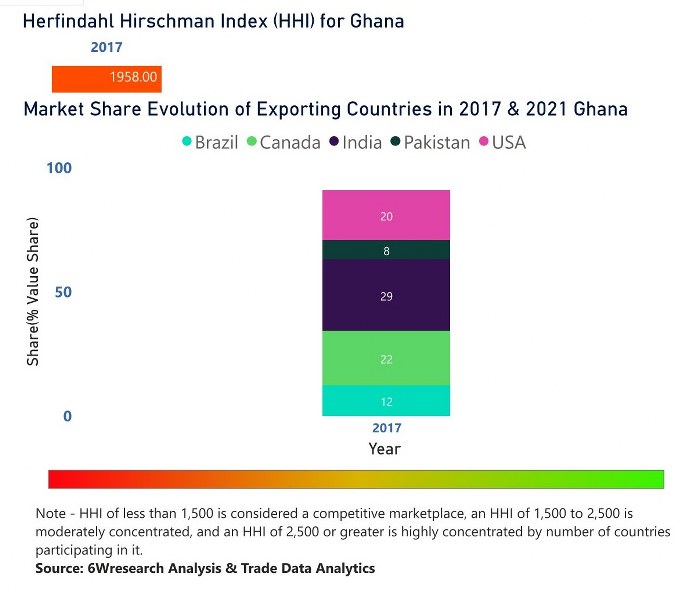
| Competitive Import Pricing | All Segments | Influx of low-priced ethanol from global markets like Brazil can undercut the margins of newly established local plants. |
Ghana Ethanol Market Challenges
Ghana Ethanol Industry faces many challenges such as high cost of investment for molecular sieve dehydration technology, limited availability of climate-resilient feedstock varieties, and regulatory difficulties regarding the standardization of bio-fuel blending ratios. Inconsistency in agricultural supply chains, often caused by poor rural road infrastructure, can reduce the efficiency of ethanol refineries. Despite all these challenges, the support of the government for the "Planting for Food and Jobs" second phase and with new advancements in waste-to-ethanol technology is likely to continue to drive demand in this market.
Emerging Trends in the Ghana Ethanol Market
Trends driving the Ghana Ethanol Market include:
- Commercialization of Cassava ENA: The commercialization of cassava Extra Neutral Alcohol (ENA) involves creating manufacturing plants that produce ENA made solely from cassava to supply both premium spirit producers as well as medical market participants.
- Ethanol Stove Hackathons and Innovation: Youth-led innovation competitions (e.g., 2025 Ethanol Stove Hackathon) are helping to accelerate the creation of locally made, low cost, ethanol cooking stoves.
- Transition to Second-Generation Biofuels: The shift toward second-generation biofuels is focused on producing ethanol from inedible biomass like cocoa pod husks and corn stover with the intent of providing a sustainable production method and ensuring food security.
- B2B Digital Procurement: Digital B2B marketplaces link local, smallholder farms to large ethanol refineries, establishing a stable supply chain.
Investment Opportunities in the Ghana Ethanol Market
Key investment avenues in the Ghana Ethanol Market are:
- Anhydrous Ethanol Production: Investment into dehydration facilities producing Ethanol with 99% as pure as possible will be able to take advantage of future possibilities of blending fuels in transportation.
- Specialized Chemical Logistics: Developing a fleet of specialized chemical tankers and bulk storage depots in major ports like Takoradi presents a critical market gap.
- Bio-Fertilizer Co-products: Investing in the ability to turn refinery effluent into high-quality organic fertilizers will provide additional revenue.
- Packaging and Distribution for Clean Fuel: Setting up a network for the bottling and retail distribution of ethanol cooking fuel in urban centers like Accra.
Top 5 Leading Players in the Ghana Ethanol Market
Below is a list of prominent companies leading in the Ghana Ethanol Market:
1. Kasapreko PLC
| Company Name | Kasapreko PLC |
|---|---|
| Established Year | 1989 |
| Headquarters | Accra, Ghana |
| Official Website | Click Here |
Kasapreko is a leading West African producer of ethanol and industrial gases. The company operates high-capacity distillation plants that produce food-grade ethanol for its wide range of beverages and supplies high-purity alcohol to other regional manufacturers.
2. Econexus Ventures Limited
| Company Name | Econexus Ventures Limited |
|---|---|
| Established Year | 2017 |
| Headquarters | Ghana |
| Official Website | Click Here |
A Ghanaian social enterprise commercializing sustainable bio-ethanol fuel from organic waste and agro by-products, promoting clean energy alternatives.
3. Caltech Ventures Ltd
| Company Name | Caltech Ventures Ltd |
|---|---|
| Established Year | 2007 |
| Headquarters | Hodzo, Volta Region, Ghana |
| Official Website | Click Here |
Caltech Ventures is a major agribusiness firm focused on cassava value-addition. Their facility produces high-quality neutral alcohol for the pharmaceutical and beverage industries, serving as a model for rural industrialization.
4. Accra Breweries Limited (ABL)
| Company Name | Accra Breweries Limited (ABL) |
|---|---|
| Established Year | 1931 |
| Headquarters | Accra, Ghana |
| Official Website | Click Here |
As a subsidiary of AB InBev, ABL is a major consumer and technical partner in the ethanol market. They drive demand for high-standard fermentation products and invest in sustainable sourcing of local raw materials.
5. GIHOC Distilleries Company Limited
| Company Name | GIHOC Distilleries Company Limited |
|---|---|
| Established Year | 1958 |
| Headquarters | Accra, Ghana |
| Official Website | Click Here |
GIHOC Distilleries is a state-owned distillery and spirits producer that also plays a role in ethanol production used for industrial, pharmaceutical, and beverage purposes.
Government Regulations Introduced in the Ghana Ethanol Market
According to Ghana’s government data, many policies support the development of ethanol such as the National Energy Transition Framework, which explicitly targets the adoption of clean cooking fuels like ethanol to achieve net-zero goals. Ghana has also implemented the One District, One Factory (1D1F) Policy, which exempts imported distillery equipment from tariff and grants new ethanol plants a 5-year corporation tax break. The Ghana Energy Commission recently unveiled the Renewable Energy Master Plan, which contains explicit targets for bioenergy penetration in the national fuel mix. For example, the Ministry of Finance has offered financial incentives for private investors under the Ghana CARES (Obaatanpa) Program to boost the local manufacturing of pharmaceutical-grade solvents.
Future Insights of the Ghana Ethanol Market
Ghana Ethanol Market Share is expected to experience a massive growth in the upcoming years due to substantial investments in integrated biorefineries, government-led clean energy mandates, and new advancements in cellulosic ethanol technology. The decreasing cost of decentralized production, increasing usage of ethanol in the industrial chemical sector, and a high demand for sustainable household energy solutions will continue to push this market in the forward direction. The large-scale cassava processing hubs and new innovations in carbon-efficient distillation will be the key drivers of this market growth.
Market Segmentation Analysis
The report offers a comprehensive study of the following market segments and their leading categories:
By Purity - Non-Denatured to dominate the market
According to Ekta Gupta, Senior Research Analyst, 6Wresearch, Non-Denatured ethanol is expected to dominate the Ghana Ethanol Market Share due to the vast requirements of the beverage and pharmaceutical sectors. As a pure form of alcohol suitable for human consumption and medical extractions, its demand is consistently high among major distilleries and drug manufacturers who prioritize high-purity Extra Neutral Alcohol (ENA).
By Sources - Grain Based to dominate the market
Grain-based ethanol (specifically Cassava and Corn) is expected to dominate the market source as it is driven by Ghana's status as the second-largest cassava producer in Africa. The government focus on agricultural surplus management and the establishment of dedicated processing factories for these starch-rich crops make grain-based feedstock the most scalable source for the industry.
By Application - Beverages to dominate the market
Beverages is the dominant application for ethanol in Ghana as it is driven by a robust local market for spirits and a growing export presence in West Africa. The high volume of ethanol required for both artisanal and large-scale industrial bottling plants ensures that this segment remains the primary revenue driver for the market.
Key Attractiveness of the Report
- 10 Years of Market Numbers
- Historical Data Starting from 2022 to 2025
- Base Year: 2025
- Forecast Data until 2032
- Key Performance Indicators Impacting the Market
- Major Upcoming Developments and Projects
Key Highlights of the Report:
- Ghana Ethanol Market Outlook
- Market Size of Ghana Ethanol Market, 2025
- Forecast of Ghana Ethanol Market, 2032
- Historical Data and Forecast of Ghana Ethanol Revenues & Volume for the Period 2022- 2032
- Ghana Ethanol Market Trend Evolution
- Ghana Ethanol Market Drivers and Challenges
- Ghana Ethanol Price Trends
- Ghana Ethanol Porter's Five Forces
- Ghana Ethanol Industry Life Cycle
- Historical Data and Forecast of Ghana Ethanol Market Revenues & Volume By Purity for the Period 2022- 2032
- Historical Data and Forecast of Ghana Ethanol Market Revenues & Volume By Denatured for the Period 2022- 2032
- Historical Data and Forecast of Ghana Ethanol Market Revenues & Volume By Non-Denatured for the Period 2022- 2032
- Historical Data and Forecast of Ghana Ethanol Market Revenues & Volume By Sources for the Period 2022- 2032
- Historical Data and Forecast of Ghana Ethanol Market Revenues & Volume By Sugar & Molasses Based for the Period 2022- 2032
- Historical Data and Forecast of Ghana Ethanol Market Revenues & Volume By Grained Based for the Period 2022- 2032
- Historical Data and Forecast of Ghana Ethanol Market Revenues & Volume By Second Generation for the Period 2022- 2032
- Historical Data and Forecast of Ghana Ethanol Market Revenues & Volume By Application for the Period 2022- 2032
- Historical Data and Forecast of Ghana Ethanol Market Revenues & Volume By Industrial Solvent for the Period 2022- 2032
- Historical Data and Forecast of Ghana Ethanol Market Revenues & Volume By Fuel & Fuel Additives for the Period 2022- 2032
- Historical Data and Forecast of Ghana Ethanol Market Revenues & Volume By Beverages for the Period 2022- 2032
- Historical Data and Forecast of Ghana Ethanol Market Revenues & Volume By Disinfectant for the Period 2022- 2032
- Historical Data and Forecast of Ghana Ethanol Market Revenues & Volume By Personal Care for the Period 2022- 2032
- Historical Data and Forecast of Ghana Ethanol Market Revenues & Volume By Others for the Period 2022- 2032
- Ghana Ethanol Import Export Trade Statistics
- Market Opportunity Assessment By Purity
- Market Opportunity Assessment By Source
- Market Opportunity Assessment By Application
- Ghana Ethanol Top Companies Market Share
- Ghana Ethanol Competitive Benchmarking By Technical and Operational Parameters
- Ghana Ethanol Company Profiles
- Ghana Ethanol Key Strategic Recommendations
Markets Covered
The report provides a detailed analysis of the following market segments
By Purity
- Denatured
- Non-Denatured
By Source
- Sugar & molasses Based
- Second Generation
- Grain Based
By Application
- Fuel & Fuel Additives
- Disinfectant
- Industrial Solvents
- Personal Care
- Beverages
- Others