Ghana Ethyl Alcohol Market Size Growth Rate
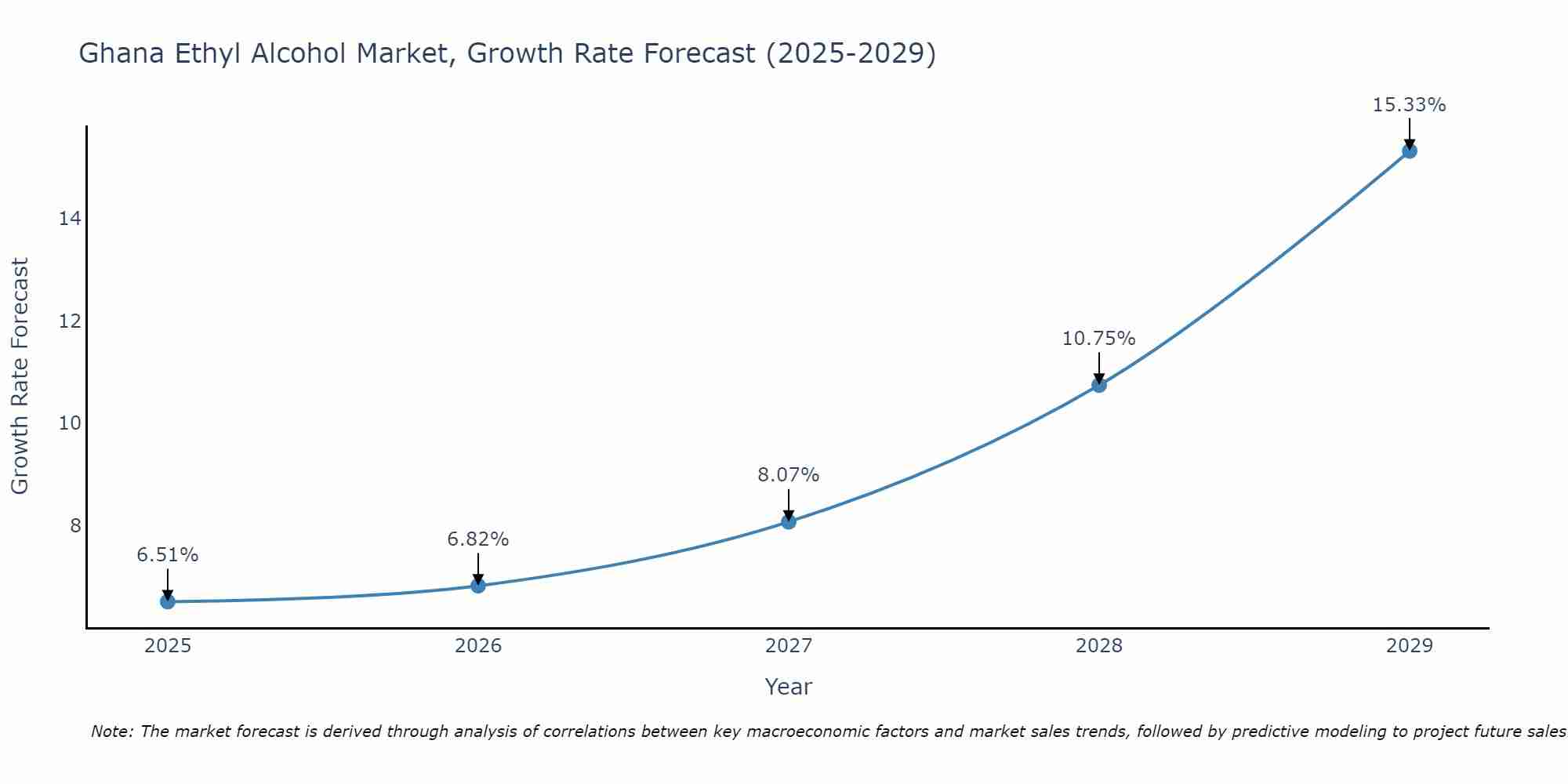
The Ghana Ethyl Alcohol Market is poised for steady growth rate improvements from 2025 to 2029. Commencing at 6.51% in 2025, growth builds up to 15.33% by 2029.
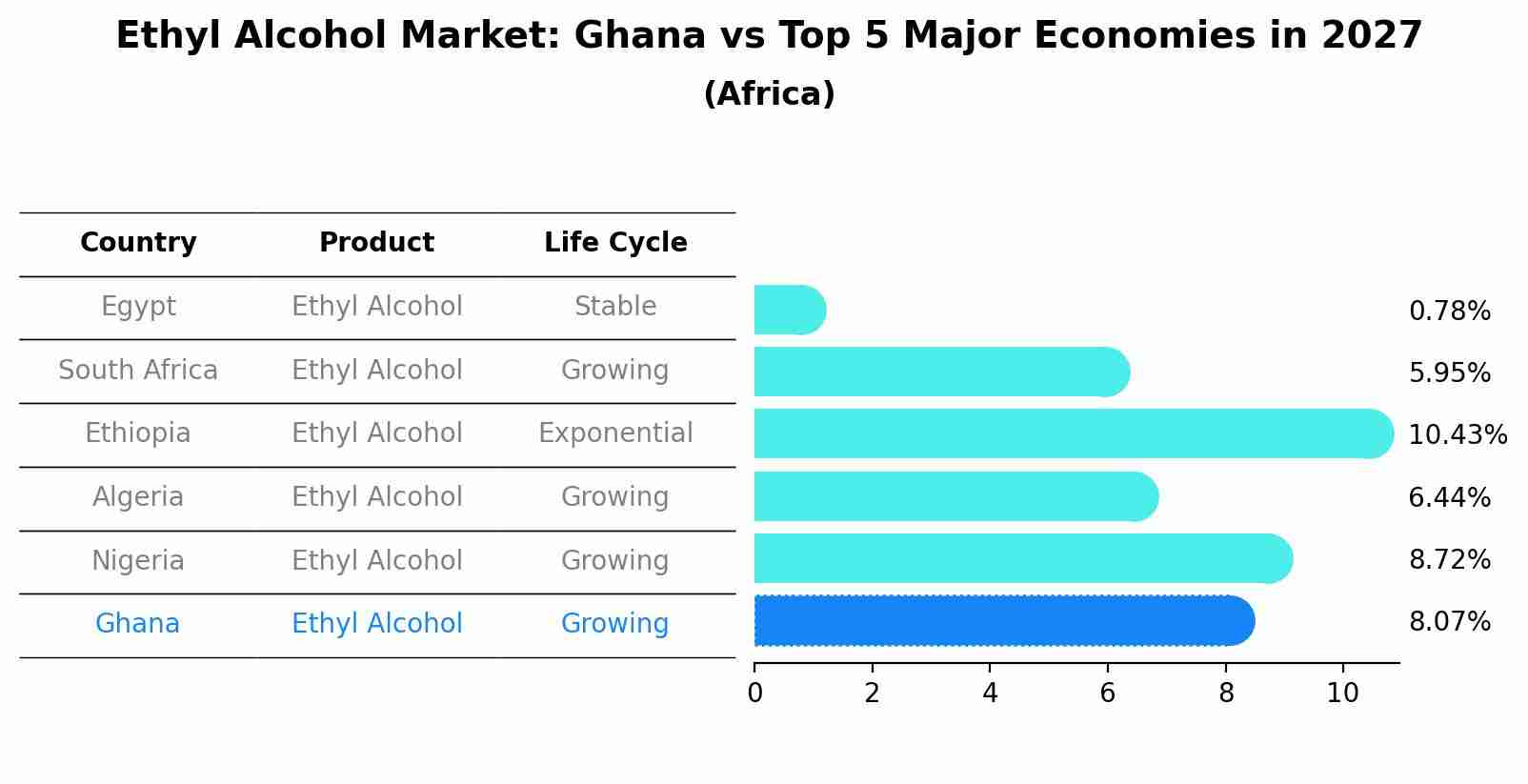
Ethyl Alcohol Market: Ghana vs Top 5 Major Economies in 2027 (Africa)
Ghana's Ethyl Alcohol market is anticipated to experience a growing growth rate of 8.07% by 2027, reflecting trends observed in the largest economy Egypt, followed by South Africa, Ethiopia, Algeria and Nigeria.
Ghana Ethyl Alcohol Market Overview
The Ghana Ethyl Alcohol Market is witnessing steady growth driven by increasing demand from various industries such as healthcare, pharmaceuticals, food and beverages, and personal care products. The market is primarily fueled by the growing population, rising disposable income, and changing consumer preferences towards alcohol-based products. Additionally, the government`s initiatives to promote local production and reduce dependency on imports are further boosting the market growth. Key players in the Ghana Ethyl Alcohol Market include local distilleries, importers, and multinational companies, who are focusing on product innovation, distribution expansion, and strategic partnerships to gain a competitive edge. However, challenges such as stringent regulations, fluctuating raw material prices, and economic uncertainties may hinder market growth in the future.
Ghana Ethyl Alcohol Market Trends
The Ghana Ethyl Alcohol market is experiencing a growing demand due to the rise in the beverage industry, pharmaceutical sector, and the increasing use of ethyl alcohol for sanitization purposes in response to the COVID-19 pandemic. Consumers are also showing a preference for ethyl alcohol-based products for personal care and cosmetics. The market is witnessing a shift towards organic and natural ethyl alcohol products, driven by the increasing health and wellness awareness among consumers. Additionally, the government`s initiatives to promote local production and reduce imports are boosting the growth of the Ghana Ethyl Alcohol market. Overall, the market is expected to continue expanding in the coming years, driven by these trends and the increasing applications of ethyl alcohol across various industries.
Ghana Ethyl Alcohol Market Challenges
In the Ghana Ethyl Alcohol Market, some key challenges include high production costs due to the reliance on imported raw materials, inconsistent government regulations impacting the industry`s growth and sustainability, limited access to affordable financing options for local producers, and competition from cheaper imported products. Additionally, poor infrastructure, such as unreliable electricity supply and transportation networks, can hinder distribution and increase operational costs for companies in the market. Addressing these challenges will require a collaborative effort between industry stakeholders, government bodies, and financial institutions to create a more conducive environment for growth and innovation in the Ghana Ethyl Alcohol Market.
Ghana Ethyl Alcohol Market Investment Opportunities
The Ghana Ethyl Alcohol market presents attractive investment opportunities due to increasing demand from various sectors such as pharmaceuticals, personal care, food and beverage, and industrial applications. The market is driven by factors such as population growth, rising disposable incomes, and a growing awareness of the benefits of ethyl alcohol-based products. Additionally, government initiatives to promote local manufacturing and reduce import dependency further enhance the market potential. Investing in ethanol production facilities, distribution networks, or research and development for innovative ethanol-based products could prove to be lucrative strategies in capitalizing on the expanding Ghana Ethyl Alcohol market. However, investors should also consider factors such as regulatory environment, competition, and sustainability practices to ensure long-term success in this market.
Ghana Ethyl Alcohol Market Government Policy
In Ghana, the government regulates the ethyl alcohol market through various policies aimed at ensuring public health and safety. The Food and Drugs Authority (FDA) oversees the production, distribution, and sale of ethyl alcohol products, setting quality standards and issuing licenses to manufacturers and distributors. Additionally, there are strict regulations on the labeling and advertising of ethyl alcohol products to protect consumers from misleading information and ensure product authenticity. The government also imposes taxes on ethyl alcohol products to generate revenue and discourage excessive consumption. Overall, the regulatory framework in Ghana aims to promote responsible consumption of ethyl alcohol while safeguarding public health and maintaining industry standards.
Ghana Ethyl Alcohol Market Future Outlook
The future outlook for the Ghana Ethyl Alcohol Market appears promising, with continued growth opportunities expected in the coming years. Factors such as the increasing use of ethyl alcohol in various industries including pharmaceuticals, cosmetics, and beverages, along with the rising demand for sanitizers and disinfectants due to the ongoing focus on hygiene and health, are likely to drive market growth. Additionally, the government`s support for local production and the growing trend towards sustainable and eco-friendly products are anticipated to further boost the market. However, challenges such as fluctuating raw material prices and intense competition may impact market dynamics. Overall, the Ghana Ethyl Alcohol Market is forecasted to experience steady growth and innovation, presenting opportunities for both domestic and international players.
Key Highlights of the Report:
- Ghana Ethyl Alcohol Market Outlook
- Market Size of Ghana Ethyl Alcohol Market, 2024
- Forecast of Ghana Ethyl Alcohol Market, 2031
- Historical Data and Forecast of Ghana Ethyl Alcohol Revenues & Volume for the Period 2021 - 2031
- Ghana Ethyl Alcohol Market Trend Evolution
- Ghana Ethyl Alcohol Market Drivers and Challenges
- Ghana Ethyl Alcohol Price Trends
- Ghana Ethyl Alcohol Porter's Five Forces
- Ghana Ethyl Alcohol Industry Life Cycle
- Historical Data and Forecast of Ghana Ethyl Alcohol Market Revenues & Volume By Grade for the Period 2021 - 2031
- Historical Data and Forecast of Ghana Ethyl Alcohol Market Revenues & Volume By Food Grade for the Period 2021 - 2031
- Historical Data and Forecast of Ghana Ethyl Alcohol Market Revenues & Volume By Industrial Grade for the Period 2021 - 2031
- Historical Data and Forecast of Ghana Ethyl Alcohol Market Revenues & Volume By Pharmaceutical Grade for the Period 2021 - 2031
- Historical Data and Forecast of Ghana Ethyl Alcohol Market Revenues & Volume By Lab Grade for the Period 2021 - 2031
- Historical Data and Forecast of Ghana Ethyl Alcohol Market Revenues & Volume By End-user Industry for the Period 2021 - 2031
- Historical Data and Forecast of Ghana Ethyl Alcohol Market Revenues & Volume By Automotive and Transportation for the Period 2021 - 2031
- Historical Data and Forecast of Ghana Ethyl Alcohol Market Revenues & Volume By Food and Beverage for the Period 2021 - 2031
- Historical Data and Forecast of Ghana Ethyl Alcohol Market Revenues & Volume By Pharmaceutical for the Period 2021 - 2031
- Historical Data and Forecast of Ghana Ethyl Alcohol Market Revenues & Volume By Cosmetics and Personal Care (Includes hand-Sanitizer) for the Period 2021 - 2031
- Historical Data and Forecast of Ghana Ethyl Alcohol Market Revenues & Volume By Other End-user Industries for the Period 2021 - 2031
- Ghana Ethyl Alcohol Import Export Trade Statistics
- Market Opportunity Assessment By Grade
- Market Opportunity Assessment By End-user Industry
- Ghana Ethyl Alcohol Top Companies Market Share
- Ghana Ethyl Alcohol Competitive Benchmarking By Technical and Operational Parameters
- Ghana Ethyl Alcohol Company Profiles
- Ghana Ethyl Alcohol Key Strategic Recommendations






































