Ghana Fishing Equipment Market Size Growth Rate
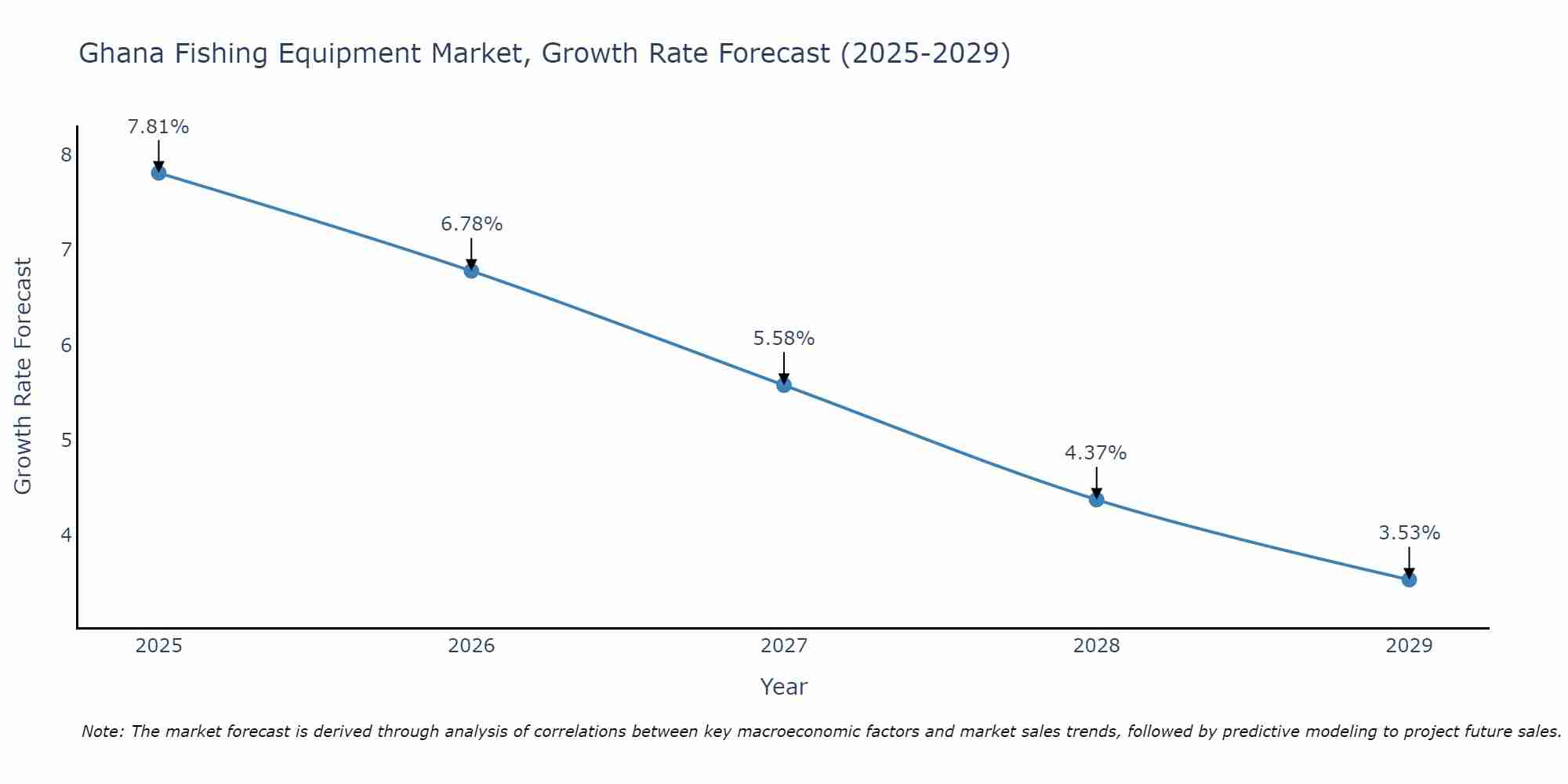
The Ghana Fishing Equipment Market may undergo a gradual slowdown in growth rates between 2025 and 2029. Although the growth rate starts strong at 7.81% in 2025, it steadily loses momentum, ending at 3.53% by 2029.
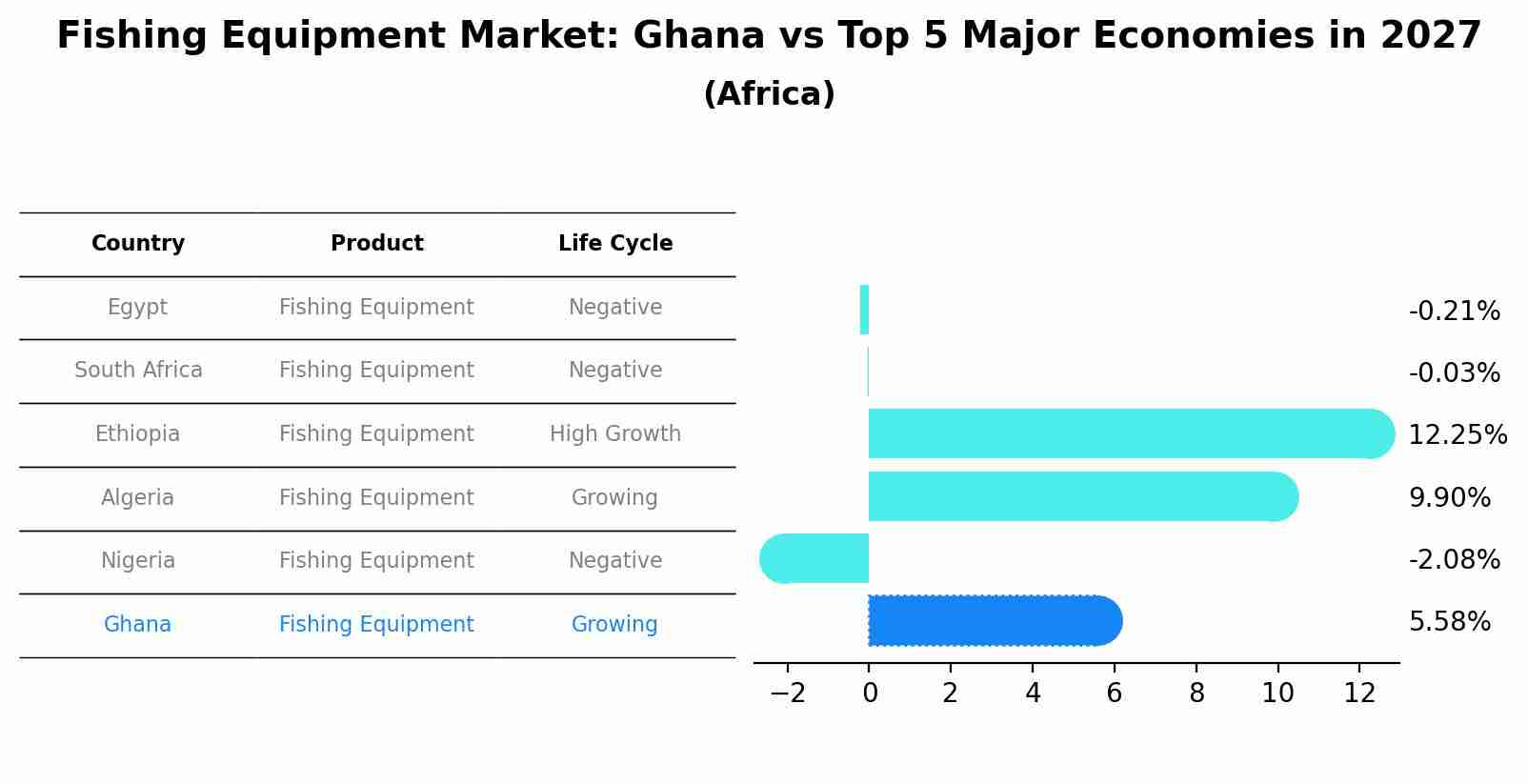
Fishing Equipment Market: Ghana vs Top 5 Major Economies in 2027 (Africa)
By 2027, Ghana's Fishing Equipment market is forecasted to achieve a growing growth rate of 5.58%, with Egypt leading the Africa region, followed by South Africa, Ethiopia, Algeria and Nigeria.
Ghana Fishing Equipment Market Overview
The Ghana fishing equipment market is experiencing steady growth driven by the country`s significant reliance on fishing as a source of livelihood and economic activity. The market offers a wide range of fishing equipment including nets, hooks, lines, fishing rods, and accessories catering to both artisanal and commercial fishermen. Key factors driving market growth include increasing demand for sustainable and efficient fishing practices, government initiatives to modernize the fishing industry, and rising consumer awareness about the importance of quality fishing gear. Local manufacturers and international brands compete in the market, offering diverse product options to meet the varying needs of fishermen. With favorable coastal conditions and a growing fishing industry, the Ghana fishing equipment market presents opportunities for both domestic and international manufacturers to expand their presence and offerings in the region.
Ghana Fishing Equipment Market Trends
The Ghana Fishing Equipment Market is experiencing several key trends. Firstly, there is a growing shift towards sustainable and eco-friendly fishing practices, leading to increased demand for equipment such as biodegradable nets and non-toxic bait. Additionally, technological advancements are playing a significant role, with the adoption of GPS systems, fish finders, and advanced fishing rods enhancing efficiency and productivity for fishers. The market is also seeing a rise in online sales and e-commerce platforms, making it easier for both commercial and recreational fishers to access a wide range of fishing equipment. Lastly, there is a noticeable trend towards innovative gear designs that cater to specific fishing needs, such as lightweight and portable equipment for small-scale fishers. Overall, these trends are shaping the Ghana Fishing Equipment Market towards sustainability, efficiency, and accessibility.
Ghana Fishing Equipment Market Challenges
In the Ghana Fishing Equipment Market, some of the key challenges faced include limited access to modern and high-quality fishing equipment, resulting in reduced efficiency and productivity for local fishermen. Additionally, the market is also plagued by the presence of counterfeit and substandard equipment, leading to safety concerns and potential damage to marine ecosystems. Lack of awareness and education among fishermen about the importance of using proper equipment further exacerbates the situation. Infrastructure constraints, such as inadequate storage and maintenance facilities, also hinder the overall growth and development of the fishing equipment market in Ghana. Addressing these challenges will require collaborative efforts between government agencies, industry stakeholders, and international partners to improve access to quality equipment, enhance regulatory measures, and provide training programs for sustainable fishing practices.
Ghana Fishing Equipment Market Investment Opportunities
The Ghana Fishing Equipment Market presents promising investment opportunities due to the country`s rich fishing industry and its potential for growth. Key areas for investment include the supply of modern and efficient fishing equipment such as nets, lines, hooks, and fishing vessels to help improve the productivity and sustainability of local fishermen. Additionally, there is a growing demand for innovative technologies in fish processing and preservation equipment to ensure quality and increase market access. Investing in the development of infrastructure for cold storage facilities and processing plants can also be lucrative as it can help reduce post-harvest losses and enhance the value chain. Overall, the Ghana Fishing Equipment Market offers diverse investment opportunities that cater to both the traditional artisanal fishing sector and the emerging commercial fishing enterprises.
Ghana Fishing Equipment Market Government Policy
The Ghanaian government has implemented various policies to regulate the fishing equipment market in the country. These policies include licensing requirements for fishermen and fishing vessels, restrictions on the use of certain types of fishing gear to prevent overfishing and protect marine resources, and regulations on the importation of fishing equipment to ensure quality and safety standards are met. Additionally, the government has established monitoring and enforcement mechanisms to ensure compliance with these policies and prevent illegal fishing practices. Overall, these policies aim to promote sustainable fishing practices, protect the marine environment, and support the livelihoods of fishing communities in Ghana.
Ghana Fishing Equipment Market Future Outlook
The future outlook for the Ghana Fishing Equipment Market appears promising, driven by factors such as increasing demand for fish products, government initiatives to boost the fishing industry, and growth in aquaculture activities. As the population continues to grow and consumer preferences shift towards healthier protein sources, the demand for fishing equipment is expected to rise. Additionally, advancements in technology are likely to lead to the development of more efficient and sustainable fishing tools, further driving market growth. However, challenges such as overfishing, environmental concerns, and fluctuating raw material prices may also impact the market. Overall, with the right strategies in place to address these challenges, the Ghana Fishing Equipment Market is poised for steady growth in the coming years.
Key Highlights of the Report:
- Ghana Fishing Equipment Market Outlook
- Market Size of Ghana Fishing Equipment Market, 2024
- Forecast of Ghana Fishing Equipment Market, 2031
- Historical Data and Forecast of Ghana Fishing Equipment Revenues & Volume for the Period 2021 - 2031
- Ghana Fishing Equipment Market Trend Evolution
- Ghana Fishing Equipment Market Drivers and Challenges
- Ghana Fishing Equipment Price Trends
- Ghana Fishing Equipment Porter's Five Forces
- Ghana Fishing Equipment Industry Life Cycle
- Historical Data and Forecast of Ghana Fishing Equipment Market Revenues & Volume By Type for the Period 2021 - 2031
- Historical Data and Forecast of Ghana Fishing Equipment Market Revenues & Volume By Hooks for the Period 2021 - 2031
- Historical Data and Forecast of Ghana Fishing Equipment Market Revenues & Volume By Lines for the Period 2021 - 2031
- Historical Data and Forecast of Ghana Fishing Equipment Market Revenues & Volume By Sinkers & Floats for the Period 2021 - 2031
- Historical Data and Forecast of Ghana Fishing Equipment Market Revenues & Volume By Rods for the Period 2021 - 2031
- Historical Data and Forecast of Ghana Fishing Equipment Market Revenues & Volume By Reels for the Period 2021 - 2031
- Historical Data and Forecast of Ghana Fishing Equipment Market Revenues & Volume By Nets & Traps for the Period 2021 - 2031
- Historical Data and Forecast of Ghana Fishing Equipment Market Revenues & Volume By Spear & Gaffs for the Period 2021 - 2031
- Historical Data and Forecast of Ghana Hooks Fishing Equipment Market Revenues & Volume By Others for the Period 2021 - 2031
- Historical Data and Forecast of Ghana Fishing Equipment Market Revenues & Volume By Nature for the Period 2021 - 2031
- Historical Data and Forecast of Ghana Fishing Equipment Market Revenues & Volume By Fresh Water for the Period 2021 - 2031
- Historical Data and Forecast of Ghana Fishing Equipment Market Revenues & Volume By Salt Water for the Period 2021 - 2031
- Historical Data and Forecast of Ghana Fishing Equipment Market Revenues & Volume By Fly Fishing for the Period 2021 - 2031
- Historical Data and Forecast of Ghana Fishing Equipment Market Revenues & Volume By Distribution Channel for the Period 2021 - 2031
- Historical Data and Forecast of Ghana Fishing Equipment Market Revenues & Volume By Online for the Period 2021 - 2031
- Historical Data and Forecast of Ghana Fishing Equipment Market Revenues & Volume By Offline for the Period 2021 - 2031
- Ghana Fishing Equipment Import Export Trade Statistics
- Market Opportunity Assessment By Type
- Market Opportunity Assessment By Nature
- Market Opportunity Assessment By Distribution Channel
- Ghana Fishing Equipment Top Companies Market Share
- Ghana Fishing Equipment Competitive Benchmarking By Technical and Operational Parameters
- Ghana Fishing Equipment Company Profiles
- Ghana Fishing Equipment Key Strategic Recommendations






































