Ghana Flower and Ornamental Plants Market Summary
The ghana flower and ornamental plants market was estimated at USD 233 Million in 2025 and is projected to reach USD 329 Million by 2032, growing at a CAGR of 5.7% from 2026 to 2032.
Ghana Flower and Ornamental Plants Market Year-wise Growth Rate and Key Drivers
This graph highlights how the Ghana Flower and Ornamental Plants Market has steadily grown over the past five years, supported by major growth factors.
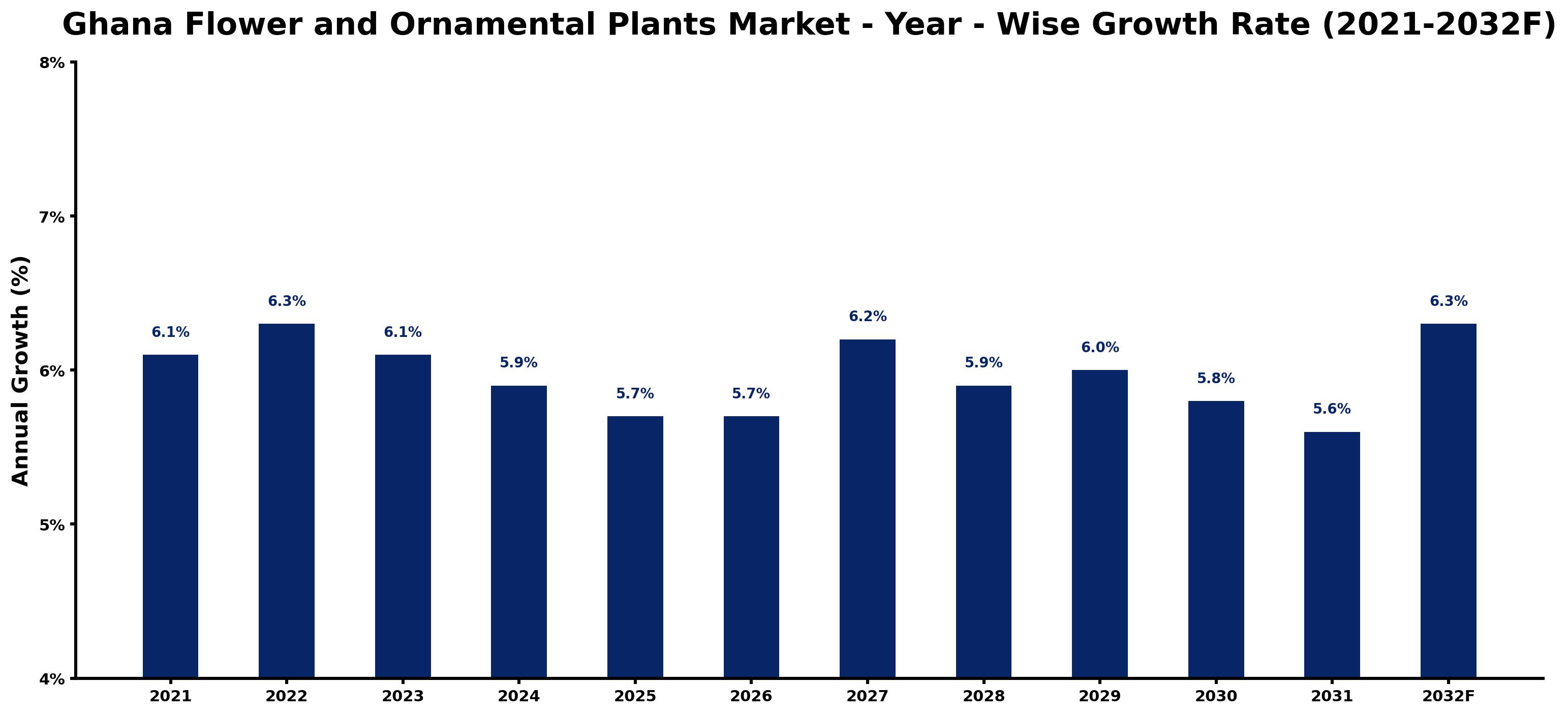
The table below presents the year wise growth rates along with the key drivers influencing the market
| Year | Growth Rate | Major Drivers |
| 2021 | 6.1% | Local nurseries expanded offerings to include indigenous Ghanaian ornamental plants. |
| 2022 | 6.3% | E-commerce platforms began to showcase exotic flower varieties to urban consumers. |
| 2023 | 6.1% | Increased interest in landscaping services spurred demand for ornamental plants. |
| 2024 | 5.9% | The emergence of gardening clubs fostered community engagement in plant cultivation. |
| 2025 | 5.7% | Urbanization led to smaller living spaces, increasing the popularity of indoor plants. |
| 2026 | 5.7% | Wellness trends highlighted the benefits of plants for mental health and productivity. |
| 2027 | 6.2% | Rural farmers diversified crops, integrating ornamental plants into traditional agriculture. |
| 2028 | 5.9% | Events and festivals dedicated to horticulture brought attention to local growers. |
| 2029 | 6.0% | Sustainable gardening practices became a focal point for environmentally conscious consumers. |
| 2030 | 5.8% | Social media influencers began promoting gardening, captivating a younger audience. |
| 2031 | 5.6% | Educational initiatives about plant care boosted consumer knowledge and purchasing confidence. |
| 2032 | 6.3% | Interior design trends embraced biophilic elements, encouraging more plant integration indoors. |
Note - Market size estimations and growth projections presented in this report are based on 6Wresearch's advanced forecasting approach, validated with industry datasets as of June 2026.
Ghana Flower and Ornamental Plants Market Synopsis
The Ghana Flower and Ornamental Plants Market is projected to reach 5.7% and witness significant growth during the forecast period (2026-2032). The market dynamics are driven by various factors, including escalating demand from large-scale retailers and a growing middle class with increasing disposable incomes. This demand is further propelled by government initiatives aimed at bolstering the floriculture industry through subsidies and tax exemptions. Moreover, advancements in greenhouse technology have streamlined flower production, thereby enhancing availability and accessibility to consumers.
Ghana Flower and Ornamental Plants Market Growth Drivers
The primary growth drivers for the Ghana Flower and Ornamental Plants Market can be identified as follows:
- Increasing consumer interest in home decor continues to fuel the demand for ornamental plants, thereby expanding retail opportunities both for small vendors and large chains.
- Urbanization and population growth have created more households that appreciate the aesthetic value of flowers and plants, leading to higher sales in both residential and commercial segments.
- The rise of online retail channels for flower sales provides consumers with convenient access to a diverse array of ornamental plants, significantly boosting market penetration.
- Increasing participation in events such as weddings, corporate functions, and festivals amplifies the need for floral decorations, driving substantial sales opportunities in the sector.
- Global trends promoting sustainability and eco-friendliness encourage the use of locally sourced flowers and ornamental plants, thereby contributing to market growth.
Ghana Flower and Ornamental Plants Market Trends and Opportunities
Several emerging trends in the Ghana Flower and Ornamental Plants Market highlight opportunities for growth:
- A surge in social media marketing and influencer endorsements has elevated the visibility of floral products, especially among younger demographics.
- Sustainable practices such as organic farming and eco-friendly packaging are gaining traction, opening avenues for innovative product lines that appeal to environmentally conscious consumers.
- The rise of experiential retail, where consumers participate in workshops and flower arrangement classes, is creating deeper engagements and loyalty towards floral brands.
- Increased interest in exotic and rare plant varieties presents a niche market for specialty growers, catering to collectors and horticulture enthusiasts.
- Expansion of floriculture education and training programs enhances the skill set of growers and contributors to the market, thereby ensuring higher quality and innovation.
Ghana Flower and Ornamental Plants Market Challenges and Restraints
Despite the positive outlook, the Ghana Flower and Ornamental Plants Market faces several challenges that may hinder growth:
- High infrastructural costs required for proper cultivation and distribution of flowers can restrict entry for smaller players, thereby limiting market competition.
- Seasonal variations can affect the availability of certain flower species, leading to fluctuations in supply and ultimately influencing market pricing.
- Environmental factors, such as climate change and pests, pose a continual threat to the stability of flower production, necessitating adaptive strategies by growers.
- Consumer trends toward minimalism may affect the demand for ornamental plants in favor of simpler decorations, thereby altering sales dynamics.
- Regulatory challenges related to agricultural practices can impact operational feasibility for growers, especially in relation to the use of pesticides and fertilizers.
Ghana Flower and Ornamental Plants Market Government Investment and Initiatives
The Ghanaian government has taken considerable steps to enhance the flower and ornamental plants sector, aiming to position the country as a competitive player in the international floriculture market. Initiatives include:
- Introduction of tax exemptions for exporters and producers of floriculture products, aimed at enhancing profitability and attracting investment into the sector.
- Provision of subsidies for the development of greenhouse facilities to ensure optimal growing conditions and improve production efficiency.
- Establishment of training programs aimed at improving skills among local farmers and promoting best practices in floriculture.
- Promotion of public-private partnerships to garner investments for the creation and expansion of floricultural businesses.
- Support for research and development in floriculture to enhance product quality, sustainability, and market readiness.
Ghana Flower and Ornamental Plants Market Latest Developments (May 2025 - June 2026)
In the recent period from May 2025 to June 2026, the Ghana Flower and Ornamental Plants Market has observed several noteworthy developments:
- A notable increase in the adoption of technology within the sector has emerged, particularly concerning e-commerce platforms facilitating direct-to-consumer sales.
- The government's continued investment in infrastructure has begun to yield positive results, allowing producers better access to markets both domestically and internationally.
- Various trade fairs and exhibitions focused on floriculture have been organized, providing a platform for local growers to showcase their products and network within the industry.
- Research collaborations have intensified, allowing for innovations in plant breeding and pest management strategies, aimed at improving flower quality.
- Sustainability initiatives have gained momentum, focusing on organic flower production and eco-friendly practices that resonate with global consumer preferences.
Ghana Flower and Ornamental Plants Market - Key Attractiveness of the Report
- 10 Years of Market Numbers
- Historical Data Starting from 2022 to 2025
- Base Year: 2025
- Forecast Data until 2032
- Key Performance Indicators Impacting the Market
- Major Upcoming Developments and Projects
Key Highlights of the Report:
- Ghana Flower and Ornamental Plants Market Outlook
- Market Size of Ghana Flower and Ornamental Plants Market, 2025
- Forecast of Ghana Flower and Ornamental Plants Market, 2032F
- Historical Data and Forecast of Ghana Flower and Ornamental Plants Revenues & Volume for the Period 2022-2032F
- Ghana Flower and Ornamental Plants Market Trend Evolution
- Ghana Flower and Ornamental Plants Market Drivers and Challenges
- Ghana Flower and Ornamental Plants Price Trends
- Ghana Flower and Ornamental Plants Porter's Five Forces
- Ghana Flower and Ornamental Plants Industry Life Cycle
- Historical Data and Forecast of Ghana Flower and Ornamental Plants Market Revenues & Volume By Product Type for the Period 2022-2032F
- Historical Data and Forecast of Ghana Flower and Ornamental Plants Market Revenues & Volume By Potted Plants for the Period 2022-2032F
- Historical Data and Forecast of Ghana Flower and Ornamental Plants Market Revenues & Volume By Cut Flowers for the Period 2022-2032F
- Historical Data and Forecast of Ghana Flower and Ornamental Plants Market Revenues & Volume By Application for the Period 2022-2032F
- Historical Data and Forecast of Ghana Flower and Ornamental Plants Market Revenues & Volume By Home for the Period 2022-2032F
- Historical Data and Forecast of Ghana Flower and Ornamental Plants Market Revenues & Volume By Commercial for the Period 2022-2032F
- Ghana Flower and Ornamental Plants Import Export Trade Statistics
- Market Opportunity Assessment By Product Type
- Market Opportunity Assessment By Application
- Ghana Flower and Ornamental Plants Top Companies Market Share
- Ghana Flower and Ornamental Plants Competitive Benchmarking By Technical and Operational Parameters
- Ghana Flower and Ornamental Plants Company Profiles
- Ghana Flower and Ornamental Plants Key Strategic Recommendations






































