Ghana Foot Care Products Market Size, Share & Growth Rate
The Ghana Foot Care Products Market was estimated at USD 153 Million in 2025 and is projected to reach USD 200 Million by 2032, growing at a CAGR of 3.9% from 2026 to 2032. This growth trajectory is being driven by a burgeoning awareness of foot health and hygiene among consumers, coupled with an expanding middle class that increasingly prioritizes self-care. Urbanization and the rise of e-commerce have also facilitated access to a diverse range of foot care products, further propelling market expansion.
Ghana Foot Care Products Market Year-wise Growth Rate and Key Drivers
This graph highlights how the Ghana Foot Care Products Market has steadily grown over the years, supported by major growth factors.
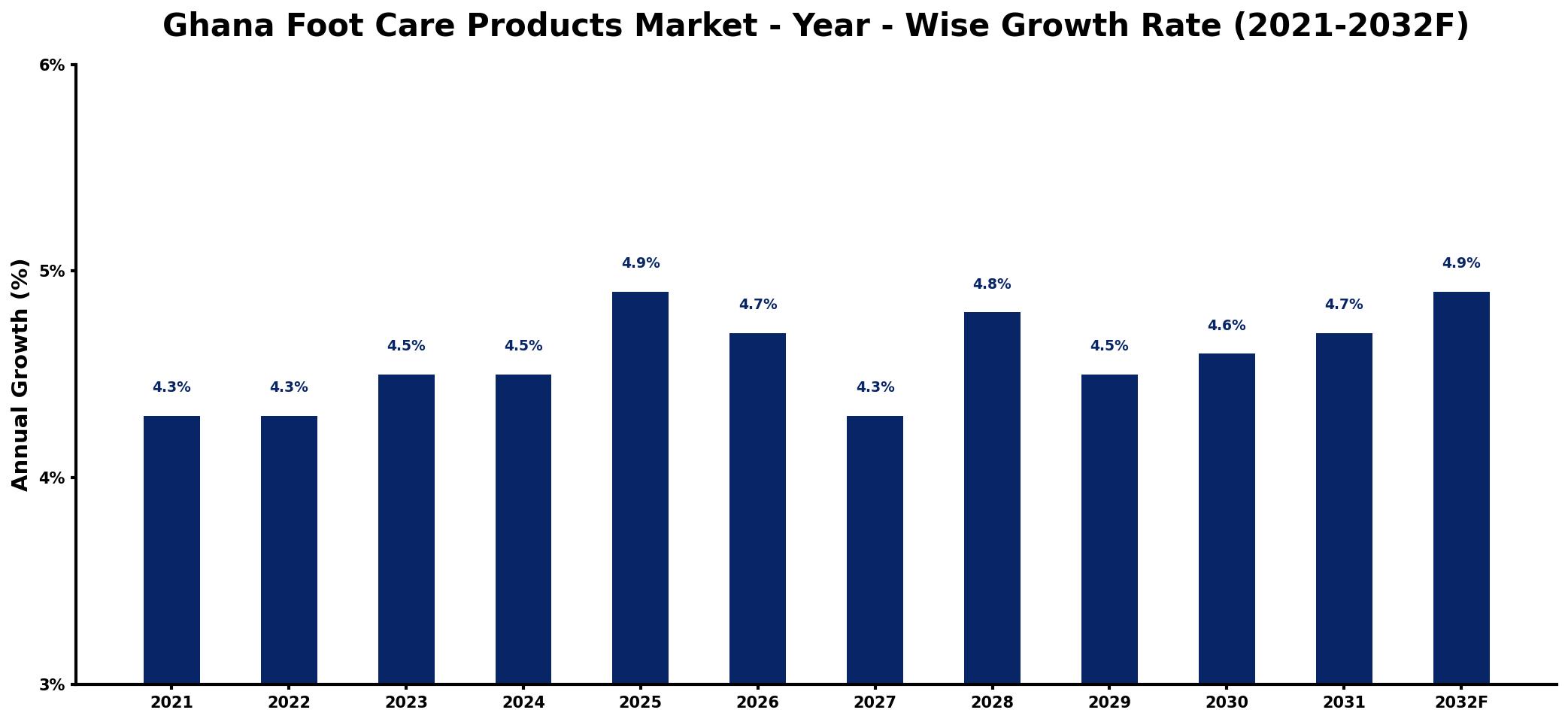
The table below presents the year‑wise growth rates along with the key drivers influencing the market
| Year | Growth Rate | Major Drivers |
| 2021 | 4.3% | Rising health awareness initiatives |
| 2022 | 4.3% | Increasing disposable income levels |
| 2023 | 4.5% | Growth in retail distribution channels |
| 2024 | 4.5% | Surge in online shopping trends |
| 2025 | 4.9% | Expansion of wellness tourism sector |
| 2026 | 4.7% | Enhanced marketing strategies adopted |
| 2027 | 4.3% | Growing popularity of natural ingredients |
| 2028 | 4.8% | Increased investment in local manufacturing |
| 2029 | 4.5% | Development of innovative product formulations |
| 2030 | 4.6% | Strengthening partnerships with influencers |
| 2031 | 4.7% | Rising demand for organic alternatives |
| 2032 | 4.9% | Emergence of eco-friendly packaging solutions |
Note: Market size estimations and growth projections presented in this report are based on 6Wresearch's proprietary forecasting methodology, utilizing the latest available industry data, government publications, and primary research inputs.
Ghana Foot Care Products Market Synopsis
In Ghana, foot care is emerging as a vital component of personal grooming, with consumers becoming more educated on the importance of maintaining healthy feet. The market is witnessing a shift towards products like foot creams, scrubs, and treatments that cater specifically to issues such as dryness and calluses, reflecting a growing consciousness around overall foot health.
Moreover, theres a notable trend towards natural and organic ingredients, as consumers increasingly seek out products with fewer chemicals. This is leading to a competitive landscape where both local and international brands vie to meet the evolving preferences of health-conscious consumers.
Ghana Foot Care Products Market Key Takeaways
- The market is driven by a growing middle-class population prioritizing self-care and wellness.
- Urbanization and increased access to e-commerce are expanding the consumer base for foot care products.
- Rising demand for natural and organic foot care solutions reflects changing consumer preferences.
- Specialized products addressing specific foot issues are gaining traction in the market.
- Government regulations aim to ensure product safety and promote local manufacturing.
Evaluation of Restraints in Ghana Foot Care Products Market
Despite its promising outlook, the Ghana Foot Care Products Market faces several restraints that could impede growth. One significant challenge is the limited awareness about the necessity of foot care among certain consumer segments. This lack of understanding may hinder the adoption of specialized products designed to address specific foot health issues. Furthermore, counterfeit products pose a threat to consumer trust, while the affordability of premium foot care solutions can restrict access for a sizable portion of the population. Traditional beliefs and reliance on home remedies further complicate the market dynamics, necessitating concerted efforts from brands to educate consumers and establish stronger distribution networks.
Ghana Foot Care Products Market Trends
The market is currently witnessing a shift towards natural and organic formulations, as consumers increasingly prefer products that align with sustainable and health-conscious lifestyles. Ingredients like shea butter and tea tree oil are becoming popular due to their recognized benefits. Additionally, there's a heightened demand for products that offer targeted solutions for specific foot concerns, creating opportunities for innovation. Social media and beauty influencers are also playing a significant role in shaping consumer perceptions and encouraging the adoption of modern foot care routines.
Ghana Foot Care Products Market Opportunities
Investment opportunities in the Ghana Foot Care Products Market are robust, particularly in developing specialized products that address emerging consumer needs. The increasing prevalence of foot-related health issues among the middle class, along with a growing tourism industry, provides a lucrative avenue for brands. Innovations in product development, particularly those emphasizing natural and culturally relevant ingredients, will likely resonate well with consumers. Forming strategic partnerships with local retailers and health care providers can also enhance market reach and consumer trust.
Government Initiatives in the Ghana Foot Care Products Market
The Ghanaian government has implemented regulations aimed at enhancing the safety and quality of foot care products available in the market. The Food and Drugs Authority (FDA) oversees these regulations, ensuring that products undergo thorough assessment before reaching consumers. There are also initiatives to promote the local manufacturing of foot care products, which is expected to bolster the domestic industry while creating job opportunities. Regular inspections and monitoring are conducted to mitigate the sale of counterfeit items and uphold market integrity.
Future Insights of the Ghana Foot Care Products Market
Looking ahead to 2026-2032, the Ghana Foot Care Products Market is anticipated to experience steady growth fueled by increasing disposable incomes and evolving consumer lifestyles. As awareness of foot health continues to rise, the demand for specialized foot care products is likely to expand. With both local and international brands introducing innovative solutions, competition will intensify, ultimately benefiting consumers. Overall, the market is well-positioned for growth, characterized by an emphasis on quality, authenticity, and holistic well-being.
Ghana Foot Care Products Market Latest Developments (2025 - 2026)
Recent months have seen an acceleration in product launches and marketing campaigns aimed at promoting foot care awareness. Brands are increasingly utilizing digital platforms to engage with consumers, showcasing new formulations and the benefits of foot care. Additionally, collaborations with health professionals and beauty experts have emerged, aimed at educating the public on the importance of proper foot hygiene. This strategic focus on consumer education and accessibility is expected to reinforce market growth in the upcoming years.
Ghana Foot Care Products Market - Key Attractiveness of the Report
- 10 Years of Market Numbers
- Historical Data Starting from 2022 to 2025
- Base Year: 2025
- Forecast Data until 2032
- Key Performance Indicators Impacting the Market
- Major Upcoming Developments and Projects
Key Highlights of the Report:
- Ghana Foot Care Products Market Outlook
- Market Size of Ghana Foot Care Products Market, 2025
- Forecast of Ghana Foot Care Products Market, 2032
- Historical Data and Forecast of Ghana Foot Care Products Revenues & Volume for the Period 2022-2032F
- Ghana Foot Care Products Market Trend Evolution
- Ghana Foot Care Products Market Drivers and Challenges
- Ghana Foot Care Products Price Trends
- Ghana Foot Care Products Porter's Five Forces
- Ghana Foot Care Products Industry Life Cycle
- Historical Data and Forecast of Ghana Foot Care Products Market Revenues & Volume By Application for the Period 2022-2032F
- Historical Data and Forecast of Ghana Foot Care Products Market Revenues & Volume By Sports & Athletics for the Period 2022-2032F
- Historical Data and Forecast of Ghana Foot Care Products Market Revenues & Volume By Medical for the Period 2022-2032F
- Historical Data and Forecast of Ghana Foot Care Products Market Revenues & Volume By Personal Comfort for the Period 2022-2032F
- Historical Data and Forecast of Ghana Foot Care Products Market Revenues & Volume By Distribution Channel for the Period 2022-2032F
- Historical Data and Forecast of Ghana Foot Care Products Market Revenues & Volume By Drug Stores & Pharmacies for the Period 2022-2032F
- Historical Data and Forecast of Ghana Foot Care Products Market Revenues & Volume By Hospitals & Specialty Clinics for the Period 2022-2032F
- Historical Data and Forecast of Ghana Foot Care Products Market Revenues & Volume By Online Stores for the Period 2022-2032F
- Historical Data and Forecast of Ghana Foot Care Products Market Revenues & Volume By Others for the Period 2022-2032F
- Ghana Foot Care Products Import Export Trade Statistics
- Market Opportunity Assessment By Application
- Market Opportunity Assessment By Distribution Channel
- Ghana Foot Care Products Top Companies Market Share
- Ghana Foot Care Products Competitive Benchmarking By Technical and Operational Parameters
- Ghana Foot Care Products Company Profiles
- Ghana Foot Care Products Key Strategic Recommendations






































