Ghana Gambling Market Summary
The ghana gambling market was estimated at USD 348 Million in 2025 and is projected to reach USD 476 Million by 2032, growing at a CAGR of 5.4% from 2026 to 2032.
Ghana Gambling Market Year-wise Growth Rate and Key Drivers
This graph highlights how the Ghana Gambling Market has steadily grown over the past five years, supported by major growth factors.
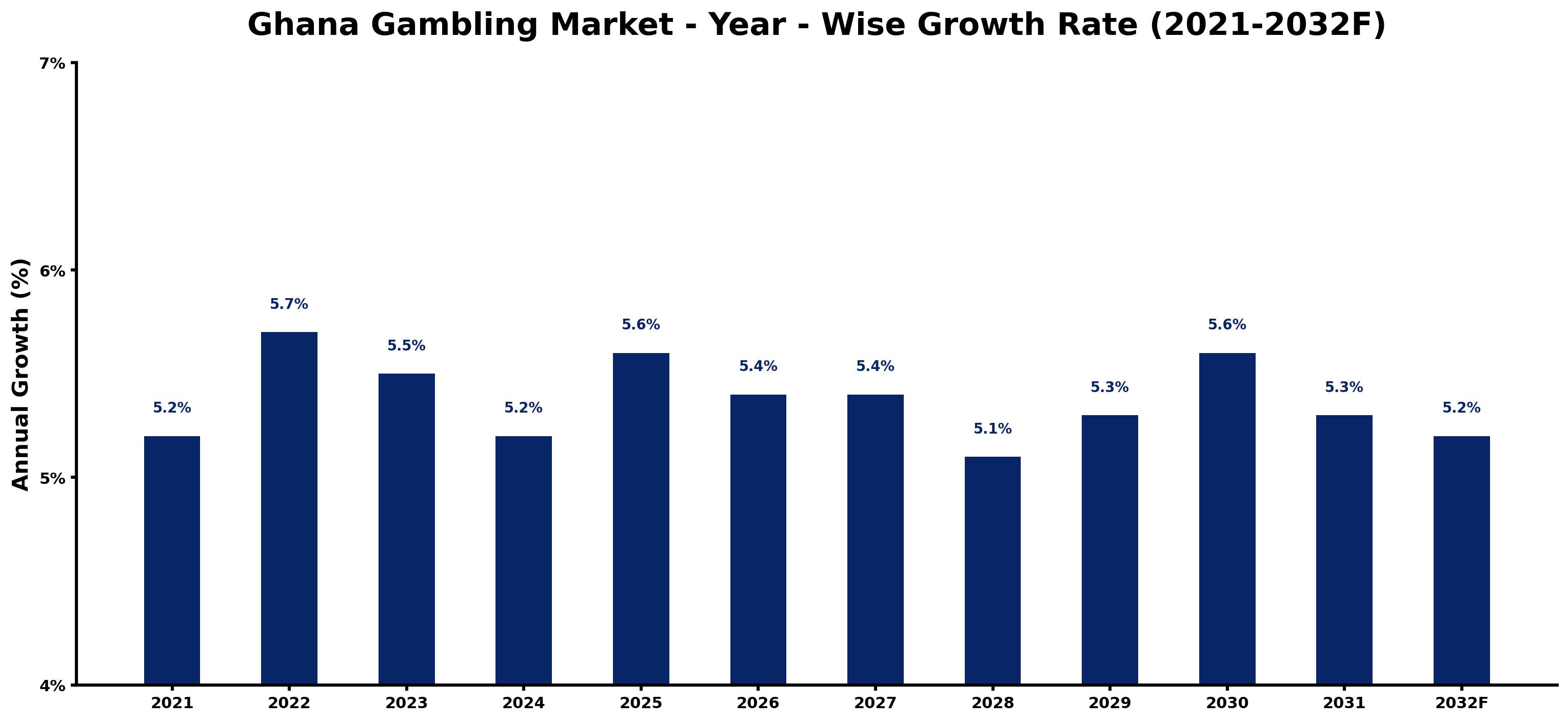
The table below presents the year wise growth rates along with the key drivers influencing the market
| Year | Growth Rate | Major Drivers |
| 2021 | 5.2% | Digital platforms captured attention, enabling broader access for enthusiastic bettors across Ghana. |
| 2022 | 5.7% | Emerging local operators introduced innovative gaming experiences tailored to Ghanaian preferences. |
| 2023 | 5.5% | Investment in mobile technology enhanced user engagement, streamlining betting processes significantly. |
| 2024 | 5.2% | Major international brands began entering the market, intensifying competition and diversifying offerings. |
| 2025 | 5.6% | Social media influencers promoted gambling brands, expanding awareness and attracting younger demographics. |
| 2026 | 5.4% | Mobile payment solutions flourished, simplifying transactions and increasing consumer confidence in online betting. |
| 2027 | 5.4% | Land-based casinos expanded, providing immersive experiences alongside growing online gambling popularity. |
| 2028 | 5.1% | Collaborations with local businesses emerged, fostering community ties and enhancing brand credibility. |
| 2029 | 5.3% | Consumer education initiatives highlighted responsible gambling, ensuring sustained interest without negative impacts. |
| 2030 | 5.6% | Data analytics usage grew, enabling personalized marketing strategies tailored to individual bettor behaviors. |
| 2031 | 5.3% | Emerging technologies like blockchain bolstered security, enhancing trust in online gambling transactions. |
| 2032 | 5.2% | Increasing disposable incomes empowered more individuals to engage in varied gambling activities. |
Note - Market size estimations and growth projections presented in this report are based on 6Wresearch's advanced forecasting approach, validated with industry datasets as of June 2026.
Ghana Gambling Market Synopsis
The Ghana Gambling Market is projected to reach 5.4% and witness significant growth during the forecast period (2026-2032). This anticipated growth is fueled by multiple factors, including an increase in disposable income among consumers, a growing number of internet users, and the rising popularity of gambling activities among urban populations. Furthermore, the Ghanaian government has implemented various measures aimed at legalizing and regulating gambling, which are expected to enhance the sector's growth prospects. The digitalization trend has also contributed to the upward trajectory of mobile gaming and online sports betting, creating a wealth of opportunities for stakeholders within the market. Additionally, the emergence of innovative gaming products such as fantasy sports leagues presents new revenue streams, indicating a dynamic evolution in the Ghana Gambling Market.
Ghana Gambling Market Growth Drivers
The growth of the Ghana Gambling Market is influenced by several critical drivers:
- Rising disposable incomes are enabling more consumers to engage in gambling activities. With improved financial stability, individuals are willing to spend on entertainment, including gaming and betting.
- The increasing number of internet users is a vital factor driving market expansion. Enhanced internet access, especially with mobile connectivity, encourages more people to participate in online gambling.
- Urbanization is contributing to the popularity of gambling. As cities continue to grow and modernize, urban dwellers are more inclined to seek leisure activities, including gambling.
- The government's proactive approach to legalizing and regulating gambling activities provides a framework that fosters growth and attracts investment in the sector.
- Technological advancements in mobile gaming platforms have made gambling more accessible, leading to increased engagement and participation from a broader audience.
Ghana Gambling Market Trends and Opportunities
As the Ghana Gambling Market continues to evolve, several trends and opportunities are emerging:
- The shift towards online gambling is gaining momentum, driven by convenience and the wide variety of gaming options available. This trend presents opportunities for online operators and gaming software developers.
- Mobile gaming is becoming increasingly popular as smartphone penetration rises. Companies focusing on mobile-optimized games can tap into this expanding user base.
- The rise of social gaming elements, including interactive and community-based features, is attracting a younger demographic interested in immersive experiences.
- The ongoing introduction of innovative products like fantasy sports leagues caters to changing consumer preferences and offers new ways for operators to generate revenue.
- Strategic partnerships and collaborations within the industry can enhance market reach and operational capabilities, paving the way for more comprehensive service offerings.
Ghana Gambling Market Government Investment and Initiatives
The government of Ghana plays a crucial role in shaping the gambling landscape through various investments and initiatives aimed at enhancing the sector. Recent legislative efforts have focused on the legalization and regulation of gambling activities, creating a safer and more structured environment for operators and consumers alike. The establishment of regulatory bodies tasked with overseeing gambling operations ensures compliance with legal frameworks and promotes responsible gaming practices. Furthermore, the government is exploring public-private partnerships to drive infrastructure development that supports the growth of the gambling market. These initiatives not only improve market conditions but also contribute to tax revenues, which can be reinvested in public services and community development. Additionally, consumer protection policies are being developed to safeguard players and ensure fair gaming experiences.
Ghana Gambling Market Latest Developments (May 2025 - June 2026)
During the period between May 2025 and June 2026, the Ghana Gambling Market has witnessed several notable developments. The regulatory framework surrounding gambling activities has seen significant updates, aimed at streamlining operations and enhancing consumer protections. The government has started implementing new licensing procedures for online operators, ensuring a more transparent and accountable market environment. Additionally, there has been an increased focus on responsible gaming initiatives, with various campaigns launched to educate consumers about safe gambling practices. The rise of digital payment solutions has also facilitated smoother transactions for online betting platforms, further encouraging participation in the market. Moreover, the popularity of fantasy sports has been on the rise, attracting a younger demographic and adding a fresh dynamic to the traditional gambling landscape.
Ghana Gambling Market - Key Attractiveness of the Report
- 10 Years of Market Numbers
- Historical Data Starting from 2022 to 2025
- Base Year: 2025
- Forecast Data until 2032
- Key Performance Indicators Impacting the Market
- Major Upcoming Developments and Projects
Key Highlights of the Report:
- Ghana Gambling Market Outlook
- Market Size of Ghana Gambling Market, 2025
- Forecast of Ghana Gambling Market, 2032F
- Historical Data and Forecast of Ghana Gambling Revenues & Volume for the Period 2022-2032F
- Ghana Gambling Market Trend Evolution
- Ghana Gambling Market Drivers and Challenges
- Ghana Gambling Price Trends
- Ghana Gambling Porter's Five Forces
- Ghana Gambling Industry Life Cycle
- Historical Data and Forecast of Ghana Gambling Market Revenues & Volume By Product Type for the Period 2022-2032F
- Historical Data and Forecast of Ghana Gambling Market Revenues & Volume By Betting for the Period 2022-2032F
- Historical Data and Forecast of Ghana Gambling Market Revenues & Volume By Casino for the Period 2022-2032F
- Historical Data and Forecast of Ghana Gambling Market Revenues & Volume By Lottery for the Period 2022-2032F
- Historical Data and Forecast of Ghana Gambling Market Revenues & Volume By Others for the Period 2022-2032F
- Historical Data and Forecast of Ghana Gambling Market Revenues & Volume By Channel Type for the Period 2022-2032F
- Historical Data and Forecast of Ghana Gambling Market Revenues & Volume By Offline for the Period 2022-2032F
- Historical Data and Forecast of Ghana Gambling Market Revenues & Volume By Online for the Period 2022-2032F
- Historical Data and Forecast of Ghana Gambling Market Revenues & Volume By Virtual Reality VR for the Period 2022-2032F
- Historical Data and Forecast of Ghana Gambling Market Revenues & Volume By Platform for the Period 2022-2032F
- Historical Data and Forecast of Ghana Gambling Market Revenues & Volume By Land-Based for the Period 2022-2032F
- Historical Data and Forecast of Ghana Gambling Market Revenues & Volume By Online for the Period 2022-2032F
- Ghana Gambling Import Export Trade Statistics
- Market Opportunity Assessment By Product Type
- Market Opportunity Assessment By Channel Type
- Market Opportunity Assessment By Platform
- Ghana Gambling Top Companies Market Share
- Ghana Gambling Competitive Benchmarking By Technical and Operational Parameters
- Ghana Gambling Company Profiles
- Ghana Gambling Key Strategic Recommendations






































