Ghana Glass Tiles Market Size, Share & Growth Rate
The Ghana Glass Tiles Market was estimated at USD 180 Million in 2025 and is projected to reach USD 235 Million by 2032, growing at a CAGR of 3.9% from 2026 to 2032. This growth trajectory is driven by an increasing shift towards modern, sustainable building materials, which architects and interior designers are integrating into residential and commercial projects. Furthermore, the rising urban population and a burgeoning middle class are enhancing the demand for stylish and durable construction materials, making glass tiles an attractive choice.
Ghana Glass Tiles Market Year-wise Growth Rate and Key Drivers
This graph highlights how the Ghana Glass Tiles Market has steadily grown over the years, supported by major growth factors.
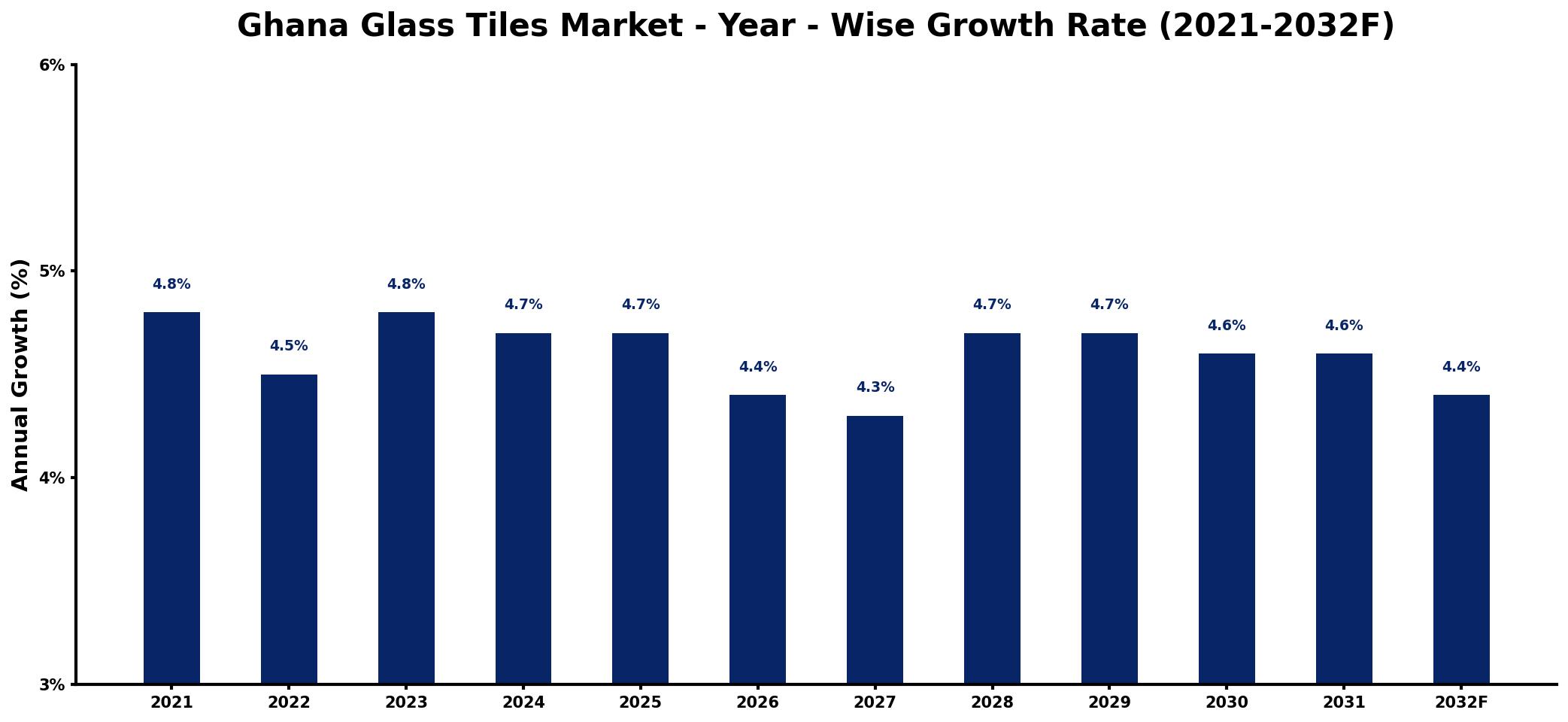
The table below presents the year‑wise growth rates along with the key drivers influencing the market
| Year | Growth Rate | Major Drivers |
| 2021 | 4.8% | Rising construction sector activities |
| 2022 | 4.5% | Increased residential renovation projects |
| 2023 | 4.8% | Growing demand for decorative surfaces |
| 2024 | 4.7% | Expansion of hospitality industry investments |
| 2025 | 4.7% | Surge in eco-friendly materials adoption |
| 2026 | 4.4% | Strengthening urbanization trends observed |
| 2027 | 4.3% | Increased focus on interior aesthetics |
| 2028 | 4.7% | Growth in luxury home developments |
| 2029 | 4.7% | Rise in commercial space constructions |
| 2030 | 4.6% | Emergence of innovative design solutions |
| 2031 | 4.6% | Boost in government infrastructure projects |
| 2032 | 4.4% | Growing popularity of sustainable design |
Note: Market size estimations and growth projections presented in this report are based on 6Wresearch's proprietary forecasting methodology, utilizing the latest available industry data, government publications, and primary research inputs.
Ghana Glass Tiles Market Synopsis
In recent years, the Ghana Glass Tiles Market has gained momentum as a favorite among developers and homeowners alike, with a growing preference for elegant finishes and energy-efficient options. As urbanization continues, this market is anticipated to see robust growth fueled by innovative design trends and a commitment to sustainable construction practices.
Looking ahead, the market stands at an inflection point where traditional building materials are being reevaluated against the backdrop of eco-conscious consumer behavior. With significant investments in infrastructure and advancements in manufacturing processes, the Ghana Glass Tiles Market is poised for an exciting evolution, promising new opportunities for stakeholders in the coming years.
Ghana Glass Tiles Market Key Takeaways
- The Ghana Glass Tiles Market is forecasted to witness substantial growth due to increased urbanization and demand for aesthetically appealing designs.
- Government initiatives aimed at promoting local manufacturing are expected to enhance market competitiveness.
- Advancements in production technology, including digital printing, are reshaping design possibilities in the glass tiles sector.
- Environmental sustainability trends are further pushing the adoption of glass tiles in construction.
- Despite challenges, the market holds potential for innovative applications across various sectors.
Evaluation of Restraints in Ghana Glass Tiles Market
Despite the promising growth outlook, the Ghana Glass Tiles Market faces several restraints that could inhibit its full potential. Architectural design constraints often limit the integration of glass tiles, especially in traditional structures where aesthetic preferences differ significantly. Furthermore, installation challenges associated with glass mosaics and decorative tiles may lead to increased costs, which can be a deterrent for builders working within strict budget constraints. Additionally, supply chain logistics and competition from alternative materials could pose significant hurdles for manufacturers striving to meet rising demand while maintaining quality.
Ghana Glass Tiles Market Trends
The market is currently witnessing a trend towards using recycled materials in glass tile production, aligning with global sustainability goals. Moreover, the incorporation of advanced digital printing techniques is enabling manufacturers to offer customized designs that cater to specific consumer tastes. Aesthetic innovation is driven by an increasing variety of colors, finishes, and textures, allowing homeowners and designers to create unique interior and exterior spaces.
Ghana Glass Tiles Market Opportunities
Significant opportunities exist for new investments and partnerships within the Ghana Glass Tiles Market. The governments support for local production presents a favorable environment for manufacturers to enter the market with innovative products. Additionally, expanding residential projects and commercial developments provide a fertile ground for exploring new applications of glass tiles, particularly in high-end retail and hospitality sectors where aesthetic appeal is paramount.
Government Initiatives in the Ghana Glass Tiles Market
The Ghanaian government has recognized the potential of the glass tiles market and is actively implementing policies to stimulate growth. Initiatives include providing incentives for local production and enhancing investment in glass processing technology. Furthermore, the government is establishing regulations and standards aimed at ensuring product quality and performance, which encourages consumer confidence and supports market expansion.
Future Insights of the Ghana Glass Tiles Market
From 2026 to 2032, the Ghana Glass Tiles Market is likely to experience notable transformations driven by both technological advancements and shifts in consumer preferences towards sustainable building materials. With the anticipated growth of the urban population and ongoing infrastructure projects, the demand for innovative glass tile solutions will rise. As manufacturers adapt to these trends, we can expect to see a diversification of product offerings, elevating the markets value proposition and attracting further investments.
Ghana Glass Tiles Market Latest Developments (2025 - 2026)
Recent developments in the Ghana Glass Tiles Market indicate a growing focus on eco-friendly production practices and the launch of new product lines that emphasize aesthetic versatility. Industry stakeholders are increasingly collaborating with designers to develop tailored solutions that meet the evolving demands of modern architecture. Additionally, the sector is witnessing a surge in online marketing strategies aimed at reaching a wider consumer base and enhancing awareness of glass tile benefits.
Ghana Glass Tiles Market - Key Attractiveness of the Report
- 10 Years of Market Numbers
- Historical Data Starting from 2022 to 2025
- Base Year: 2025
- Forecast Data until 2032
- Key Performance Indicators Impacting the Market
- Major Upcoming Developments and Projects
Key Highlights of the Report:
- Ghana Glass Tiles Market Outlook
- Market Size of Ghana Glass Tiles Market, 2025
- Forecast of Ghana Glass Tiles Market, 2032
- Historical Data and Forecast of Ghana Glass Tiles Revenues & Volume for the Period 2022-2032F
- Ghana Glass Tiles Market Trend Evolution
- Ghana Glass Tiles Market Drivers and Challenges
- Ghana Glass Tiles Price Trends
- Ghana Glass Tiles Porter's Five Forces
- Ghana Glass Tiles Industry Life Cycle
- Historical Data and Forecast of Ghana Glass Tiles Market Revenues & Volume By Manufacturing Process for the Period 2022-2032F
- Historical Data and Forecast of Ghana Glass Tiles Market Revenues & Volume By Smalti Tiles for the Period 2022-2032F
- Historical Data and Forecast of Ghana Glass Tiles Market Revenues & Volume By Fused Tiles for the Period 2022-2032F
- Historical Data and Forecast of Ghana Glass Tiles Market Revenues & Volume By Sintered Tiles for the Period 2022-2032F
- Historical Data and Forecast of Ghana Glass Tiles Market Revenues & Volume By Cast Tiles for the Period 2022-2032F
- Historical Data and Forecast of Ghana Glass Tiles Market Revenues & Volume By Other for the Period 2022-2032F
- Historical Data and Forecast of Ghana Glass Tiles Market Revenues & Volume By Product Type for the Period 2022-2032F
- Historical Data and Forecast of Ghana Glass Tiles Market Revenues & Volume By Matte-finished Glass Tile for the Period 2022-2032F
- Historical Data and Forecast of Ghana Glass Tiles Market Revenues & Volume By Smooth Glass Tile for the Period 2022-2032F
- Historical Data and Forecast of Ghana Glass Tiles Market Revenues & Volume By End-User Industry for the Period 2022-2032F
- Historical Data and Forecast of Ghana Glass Tiles Market Revenues & Volume By Residential for the Period 2022-2032F
- Historical Data and Forecast of Ghana Glass Tiles Market Revenues & Volume By Commercial for the Period 2022-2032F
- Historical Data and Forecast of Ghana Glass Tiles Market Revenues & Volume By Infrastructure for the Period 2022-2032F
- Ghana Glass Tiles Import Export Trade Statistics
- Market Opportunity Assessment By Manufacturing Process
- Market Opportunity Assessment By Product Type
- Market Opportunity Assessment By End-User Industry
- Ghana Glass Tiles Top Companies Market Share
- Ghana Glass Tiles Competitive Benchmarking By Technical and Operational Parameters
- Ghana Glass Tiles Company Profiles
- Ghana Glass Tiles Key Strategic Recommendations






































