Ghana Leather Market Summary
The ghana leather market was estimated at USD 455 Million in 2025 and is projected to reach USD 615 Million by 2032, growing at a CAGR of 5.3% from 2026 to 2032.
Ghana Leather Market Year-wise Growth Rate and Key Drivers
This graph highlights how the Ghana Leather Market has steadily grown over the past five years, supported by major growth factors.
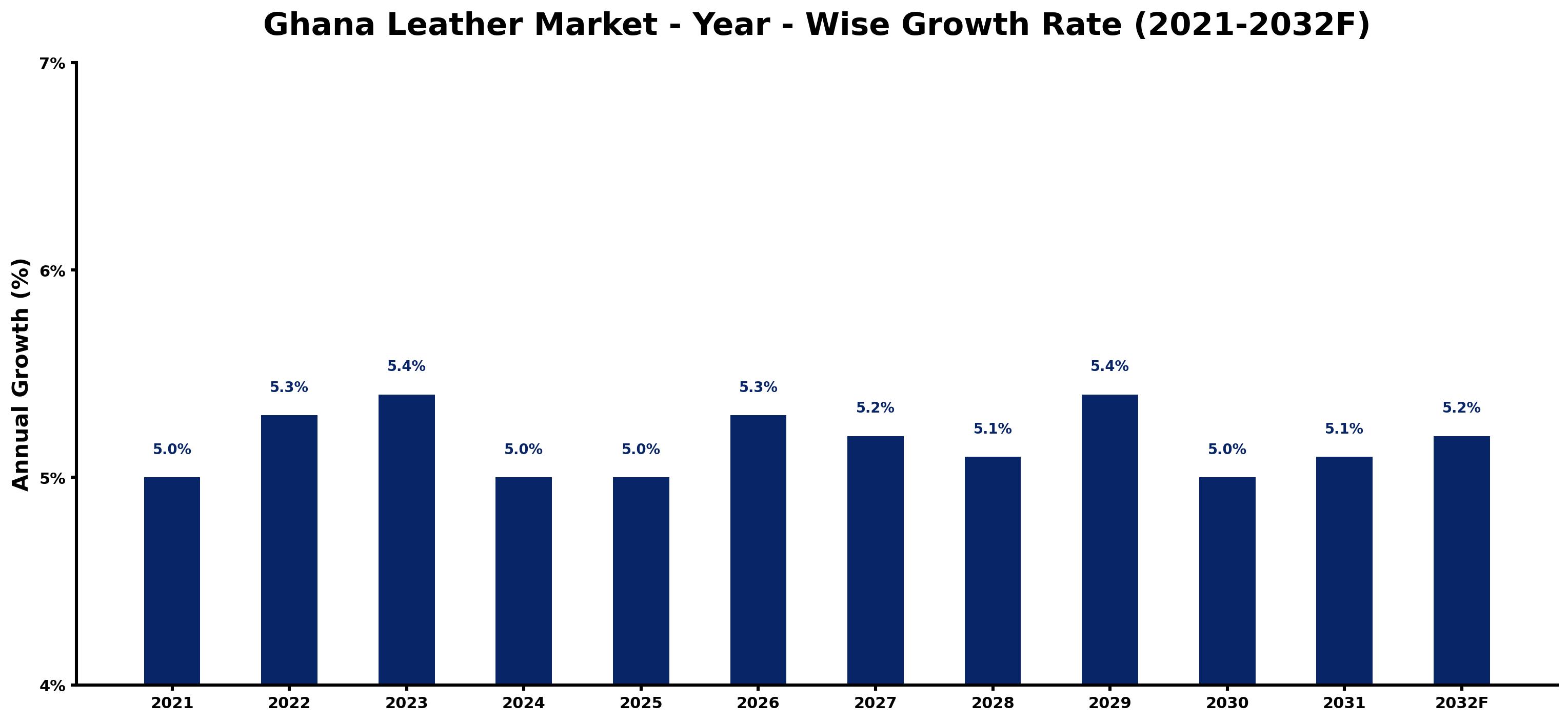
The table below presents the year wise growth rates along with the key drivers influencing the market
| Year | Growth Rate | Major Drivers |
| 2021 | 5.0% | Consumer interest in artisanal products led to a boom in local craftsmanship. |
| 2022 | 5.3% | E-commerce platforms connected artisans directly with global buyers, generating significant revenue. |
| 2023 | 5.4% | Sustainability trends motivated manufacturers to source eco-friendly materials and practices. |
| 2024 | 5.0% | Local fashion designers began to incorporate leather items into their collections frequently. |
| 2025 | 5.0% | Increased investments in leather processing facilities enhanced production capabilities significantly. |
| 2026 | 5.3% | Tourism recovery saw demand for locally made leather goods surge in retail outlets. |
| 2027 | 5.2% | Export opportunities expanded as Ghanaian leather gained recognition in international markets. |
| 2028 | 5.1% | Product diversification allowed companies to cater to various consumer segments effectively. |
| 2029 | 5.4% | Online marketplaces provided platforms for smaller producers to reach wider audiences. |
| 2030 | 5.0% | Innovation in design attracted younger consumers looking for unique leather pieces. |
| 2031 | 5.1% | Strong community support for local brands fostered loyalty among discerning shoppers. |
| 2032 | 5.2% | Collaborations between artisans and tech companies modernized production techniques significantly. |
Note - Market size estimations and growth projections presented in this report are based on 6Wresearch's advanced forecasting approach, validated with industry datasets as of June 2026.
Ghana Leather Market Synopsis
The Ghana Leather Market is projected to reach 5.3% and witness significant growth during the forecast period (2026-2032). The leather industry in Ghana is anticipated to expand at a compound annual growth rate (CAGR) of approximately 4.2%. This growth trajectory is primarily driven by the increasing demand for leather products, including apparel, footwear, and accessories, from both domestic consumers and international markets. The evolution of this sector reflects the strategic efforts to bolster local manufacturing capabilities, which have been gaining momentum in recent years.
Ghana Leather Market Growth Drivers
Several factors are contributing to the robust growth of the Ghana Leather Market. Firstly, there is a noticeable rise in disposable incomes among consumers, which is resulting in heightened demand for luxury leather items. As Ghana's economy continues to develop, consumers are increasingly inclined to invest in high-quality leather products that resonate with their status and lifestyle.
- The global trend towards sustainable and ethically sourced materials is encouraging local manufacturers to innovate within the leather sector, promoting eco-friendly practices.
- Export potential is being amplified by government initiatives aimed at enhancing the quality and competitiveness of finished leather goods, thus attracting a wider international market.
- Increased investment in the tanning industry is enhancing production capabilities, thereby meeting both local and global demands more efficiently.
- The introduction of new and diverse product lines by domestic manufacturers is catering to evolving consumer tastes and preferences, further solidifying market growth.
- Digital marketing and e-commerce platforms are creating new sales channels, allowing businesses to reach a broader audience, including international buyers.
Ghana Leather Market Challenges and Restraints
Despite the optimistic outlook for the Ghana Leather Market, several challenges persist that could impact its growth trajectory. One primary concern is the limited access to modern tanning technologies, which can hinder the quality and efficiency of production processes. Additionally, competition from imported leather products poses a threat to local manufacturers, as consumers may be drawn to cheaper alternatives. Ensuring compliance with international quality standards is another hurdle, as it requires significant investment from local businesses to upgrade their processes. Furthermore, fluctuations in raw material prices can affect profit margins and operational stability, creating an unpredictable business environment. Lastly, the need for continuous skill development among workers in the leather industry is essential to maintain competitiveness, necessitating targeted training initiatives.
Ghana Leather Market Government Investment and Initiatives
The Ghanaian government has been actively involved in advocating for the growth of the leather market through various investment initiatives and policy frameworks. Key interventions include financial incentives for local manufacturers, aimed at enhancing production processes and facilitating access to modern technologies. Additionally, the government is fostering partnerships within the private sector to stimulate innovation and expand export capabilities. There have also been efforts to implement trade policies that protect and promote local products, creating a more favorable business environment for domestic manufacturers. Public spending on infrastructure development for the leather industry is a critical focus, as improved facilities can significantly enhance efficiency and product quality. Furthermore, awareness campaigns targeted at consumers are promoting the value of locally made leather goods, encouraging a shift in purchasing preferences toward homegrown products.
Ghana Leather Market Latest Developments (May 2025 - June 2026)
In the recent period from May 2025 to June 2026, the Ghana Leather Market has experienced notable advancements contributing to its growth narrative. Key developments include the launch of initiatives aimed at enhancing local production capabilities and boosting export potential. There has been a significant push towards sustainable practices within the industry, aligning with global environmental standards and attracting conscientious consumers. Investment in research and development has been prioritized, leading to innovative product offerings that cater to emerging market trends. Additionally, the government has ramped up efforts to provide training programs focused on modern tanning techniques and leather craftsmanship, equipping the workforce with essential skills to thrive in a competitive landscape. These developments collectively position the Ghana Leather Market for a sustainable growth trajectory moving forward.
Ghana Leather Market - Key Attractiveness of the Report
- 10 Years of Market Numbers
- Historical Data Starting from 2022 to 2025
- Base Year: 2025
- Forecast Data until 2032
- Key Performance Indicators Impacting the Market
- Major Upcoming Developments and Projects
Key Highlights of the Report:
- Ghana Leather Market Outlook
- Market Size of Ghana Leather Market, 2025
- Forecast of Ghana Leather Market, 2032F
- Historical Data and Forecast of Ghana Leather Revenues & Volume for the Period 2022-2032F
- Ghana Leather Market Trend Evolution
- Ghana Leather Market Drivers and Challenges
- Ghana Leather Price Trends
- Ghana Leather Porter's Five Forces
- Ghana Leather Industry Life Cycle
- Historical Data and Forecast of Ghana Leather Market Revenues & Volume By Type for the Period 2022-2032F
- Historical Data and Forecast of Ghana Leather Market Revenues & Volume By Luggage for the Period 2022-2032F
- Historical Data and Forecast of Ghana Leather Market Revenues & Volume By Footwear for the Period 2022-2032F
- Historical Data and Forecast of Ghana Leather Market Revenues & Volume By Accessories for the Period 2022-2032F
- Historical Data and Forecast of Ghana Leather Market Revenues & Volume By Distribution Channel for the Period 2022-2032F
- Historical Data and Forecast of Ghana Leather Market Revenues & Volume By Online for the Period 2022-2032F
- Historical Data and Forecast of Ghana Leather Market Revenues & Volume By Offline for the Period 2022-2032F
- Ghana Leather Import Export Trade Statistics
- Market Opportunity Assessment By Type
- Market Opportunity Assessment By Distribution Channel
- Ghana Leather Top Companies Market Share
- Ghana Leather Competitive Benchmarking By Technical and Operational Parameters
- Ghana Leather Company Profiles
- Ghana Leather Key Strategic Recommendations






































