Ghana Mobile Security Market Size & Growth Rate (2026-2032)
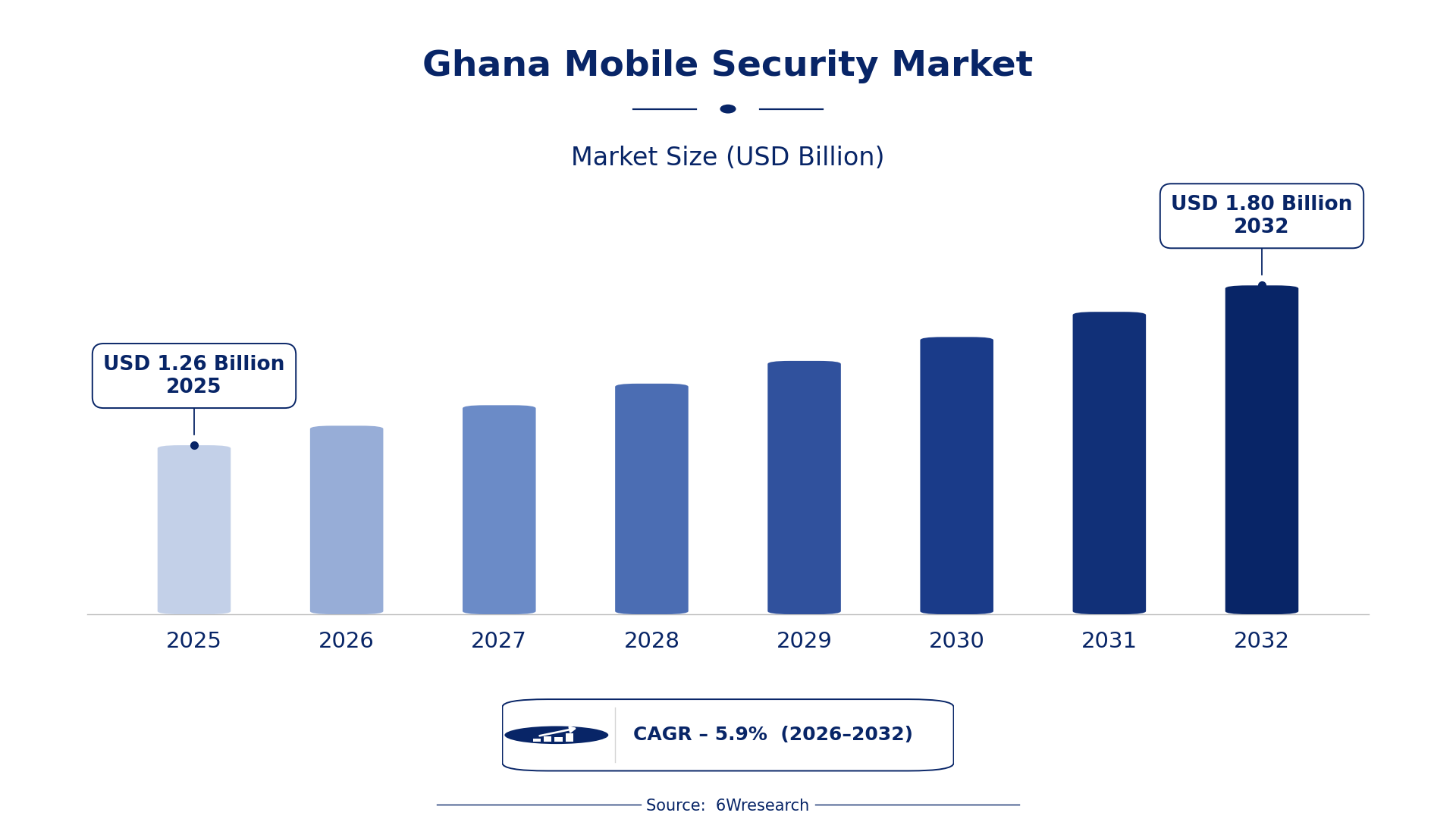
The Ghana Mobile Security Market was estimated at USD 1264 Million in 2025 and is projected to reach USD 1802 Million by 2032, growing at a CAGR of 5.9% from 2026 to 2032.
Ghana Mobile Security Market Synopsis
The surge in smartphone adoption across Ghana is creating a pressing need for mobile security solutions. As individuals and businesses increasingly rely on mobile devices for critical functions, protecting sensitive information has become paramount in the face of escalating cybersecurity threats.
Malware, phishing attacks, and data breaches are not just concerns for global players; they are very real threats affecting Ghanaian users. In response, the market is witnessing an uptick in investments geared toward advanced mobile security measures, including encryption, antivirus software, and mobile device management.
Ghana Mobile Security Market Year-wise Growth Rate and Key Drivers
This graph illustrates the annual growth rates of the Ghana Mobile Security Market from 2021 to 2032, highlighting a steady upward trajectory and projected expansion over the forecast period.
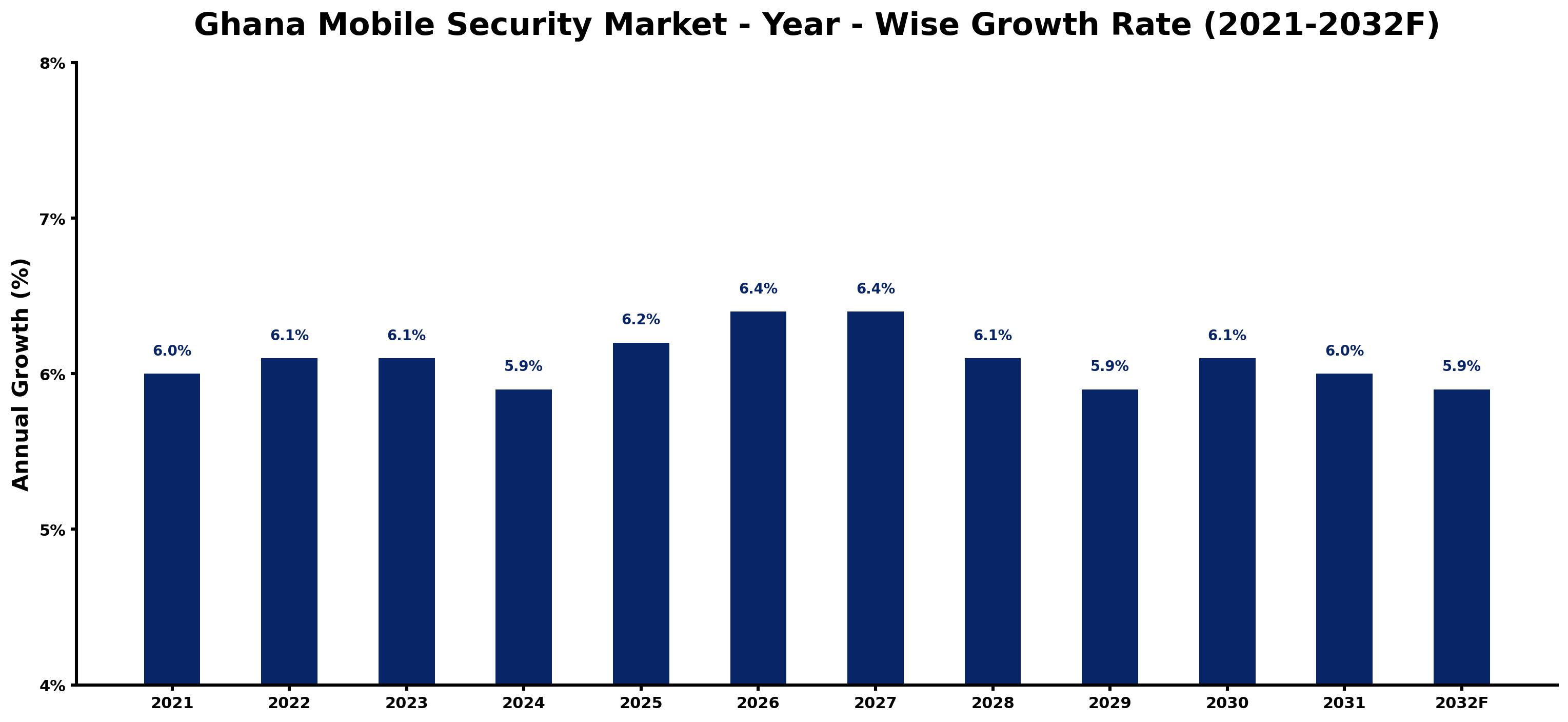
The table below presents the year‑wise growth rates along with the key drivers influencing the market
| Year | Growth Rate | Major Drivers |
| 2021 | 6.0% | National Cybersecurity Policy enhancing mobile security measures |
| 2022 | 6.1% | Increasing mobile banking adoption driving security solutions need |
| 2023 | 6.1% | Demand for biometric authentication rising among smartphone users |
| 2024 | 5.9% | Implementation of SIM card registration improving user security |
| 2025 | 6.2% | Government initiatives promoting digital identity verification standards |
| 2026 | 6.4% | Growing awareness of phishing attacks boosting security solutions |
| 2027 | 6.4% | Mobile transactions surge necessitating advanced security layers |
| 2028 | 6.1% | Regulatory push for data protection increasing cyber defense tools |
| 2029 | 5.9% | Rapid urbanization leading to higher mobile device usage rates |
| 2030 | 6.1% | Partnerships between telecoms and security firms enhancing services |
| 2031 | 6.0% | Rise in e-commerce creating demand for secure payment gateways |
| 2032 | 5.9% | Increased youth population driving mobile app security innovations |
Note: Market size estimations and growth projections presented in this report are based on 6Wresearch's proprietary forecasting methodology, utilizing the latest available industry data, government publications, and primary research inputs.
Ghana Mobile Security Market Key Takeaways
Below are some of the specific key takeaways from the market, including:
- The market is on a steady growth trajectory, driven by increasing mobile threats and digital reliance.
- Integration of AI and machine learning is revolutionizing threat detection capabilities.
- Regulatory policies are evolving to promote cybersecurity and data protection initiatives.
- Mobile banking and e-commerce are key sectors fueling demand for security solutions.
- User awareness programs are becoming crucial in enhancing mobile security practices.
Evaluation of Restraints in Ghana Mobile Security Market
While the Ghana mobile security market is expanding, it encounters notable constraints. A diverse array of mobile threats complicates the security landscape, making it challenging for users to keep up. Additionally, human behavior plays a central role in security effectiveness. Many users lack adequate knowledge about cybersecurity practices, which can leave them vulnerable, regardless of the technology implemented.
Ghana Mobile Security Market Trends
Key trends are shaping the Ghana Mobile Security Market, with user behavior increasingly influencing technology adoption. The rise of mobile banking necessitates more stringent security measures, while e-commerce growth is similarly driving demand for robust protective technologies. on top of that, the introduction of AI and machine learning into mobile security solutions is enhancing the ability to detect and respond to threats, providing a proactive stance against potential breaches.
Ghana Mobile Security Market Opportunities
Investment opportunities are abundant in the Ghana mobile security sector. Companies offering innovative solutions tailored for local industries, especially in finance and retail, stand to gain significantly. Additionally, partnerships with government bodies can bolster credibility and trust, positioning firms favorably in a market hungry for effective security measures. As businesses transition to more digital operations, tailored solutions that address specific vulnerabilities will be in high demand.
Government Initiatives in the Ghana Mobile Security Market
The Ghanaian government is actively engaged in fortifying the mobile security landscape through strategic initiatives. Recognizing the urgent need to protect its digital economy, policymakers are focusing on awareness, regulatory compliance, and collaborative efforts between key stakeholders in the security ecosystem. These initiatives aim to enhance the overall resilience of mobile security in Ghana.
- A national cybersecurity awareness campaign was launched in early 2025 to educate users on mobile threats and protection strategies.
- Current efforts include the establishment of a regulatory framework mandating compliance with data protection laws, focusing on mobile app developers and service providers.
- Ongoing collaborations with local telecom operators aim to develop an integrated mobile security infrastructure by mid-2026.
- Upcoming initiatives involve a planned nationwide cybersecurity certification program expected to commence by late 2027 to standardize security practices across the industry.
Future Insights of the Ghana Mobile Security Market
Looking ahead to 2026-2032, the Ghana Mobile Security Market is set to evolve significantly. With advancements in technology, expect an increase in sophisticated solutions targeting emerging threats. The focus will likely shift towards user-centric security approaches that prioritize education alongside technology. The market will benefit from a growing understanding of cybersecurity best practices, contributing to a safer digital environment for all users.
Ghana Mobile Security Market Latest Developments
Recent activity in the Ghana Mobile Security Market indicates a dynamic environment, characterized by innovations and strategic initiatives. In the past year, several organizations have taken significant steps to enhance their security offerings and expand their presence in the region.
- A major technology vendor initiated a service upgrade in Q1 2025 that improved encryption protocols for mobile banking applications.
- An ongoing partnership between telecom providers and cybersecurity firms began in late 2025 to enhance mobile security infrastructure.
- A new product launch focused on mobile threat defense occurred in early 2025, addressing the specific needs of local businesses.
- Plans for a cybersecurity bootcamp targeting youth are set to roll out in mid-2026, aimed at building a skilled workforce in cybersecurity.
Ghana Mobile Security Market - Key Attractiveness of the Report
- 10 Years of Market Numbers
- Historical Data Starting from 2022 to 2025
- Base Year: 2025
- Forecast Data until 2032
- Key Performance Indicators Impacting the Market
- Major Upcoming Developments and Projects
Key Highlights of the Report:
- Ghana Mobile Security Market Outlook
- Market Size of Ghana Mobile Security Market, 2025
- Forecast of Ghana Mobile Security Market, 2032
- Historical Data and Forecast of Ghana Mobile Security Revenues & Volume for the Period 2022-2032F
- Ghana Mobile Security Market Trend Evolution
- Ghana Mobile Security Market Drivers and Challenges
- Ghana Mobile Security Price Trends
- Ghana Mobile Security Porter's Five Forces
- Ghana Mobile Security Industry Life Cycle
- Historical Data and Forecast of Ghana Mobile Security Market Revenues & Volume By End User for the Period 2022-2032F
- Historical Data and Forecast of Ghana Mobile Security Market Revenues & Volume By Individual for the Period 2022-2032F
- Historical Data and Forecast of Ghana Mobile Security Market Revenues & Volume By Enterprise (Solution (Authentication, Application Security, & Device Security), Service) for the Period 2022-2032F
- Historical Data and Forecast of Ghana Mobile Security Market Revenues & Volume By Deployment Mode for the Period 2022-2032F
- Historical Data and Forecast of Ghana Mobile Security Market Revenues & Volume By On-premises for the Period 2022-2032F
- Historical Data and Forecast of Ghana Mobile Security Market Revenues & Volume By Cloud for the Period 2022-2032F
- Historical Data and Forecast of Ghana Mobile Security Market Revenues & Volume By Organization Size for the Period 2022-2032F
- Historical Data and Forecast of Ghana Mobile Security Market Revenues & Volume By Small and Medium-Sized Enterprises (SMEs) for the Period 2022-2032F
- Historical Data and Forecast of Ghana Mobile Security Market Revenues & Volume By Large Enterprises for the Period 2022-2032F
- Historical Data and Forecast of Ghana Mobile Security Market Revenues & Volume By Vertical for the Period 2022-2032F
- Historical Data and Forecast of Ghana Mobile Security Market Revenues & Volume By BFSI for the Period 2022-2032F
- Historical Data and Forecast of Ghana Mobile Security Market Revenues & Volume By Telecom & IT for the Period 2022-2032F
- Historical Data and Forecast of Ghana Mobile Security Market Revenues & Volume By Retail for the Period 2022-2032F
- Historical Data and Forecast of Ghana Mobile Security Market Revenues & Volume By Healthcare for the Period 2022-2032F
- Historical Data and Forecast of Ghana Mobile Security Market Revenues & Volume By Government & Defense for the Period 2022-2032F
- Historical Data and Forecast of Ghana Mobile Security Market Revenues & Volume By Manufacturing for the Period 2022-2032F
- Historical Data and Forecast of Ghana Mobile Security Market Revenues & Volume By Others for the Period 2022-2032F
- Historical Data and Forecast of Ghana Mobile Security Market Revenues & Volume By Operating System for the Period 2022-2032F
- Historical Data and Forecast of Ghana Mobile Security Market Revenues & Volume By iOS for the Period 2022-2032F
- Historical Data and Forecast of Ghana Mobile Security Market Revenues & Volume By Android for the Period 2022-2032F
- Ghana Mobile Security Import Export Trade Statistics
- Market Opportunity Assessment By End User
- Market Opportunity Assessment By Deployment Mode
- Market Opportunity Assessment By Organization Size
- Market Opportunity Assessment By Vertical
- Market Opportunity Assessment By Operating System
- Ghana Mobile Security Top Companies Market Share
- Ghana Mobile Security Competitive Benchmarking By Technical and Operational Parameters
- Ghana Mobile Security Company Profiles
- Ghana Mobile Security Key Strategic Recommendations






































