Ghana MVNO Market Size & Growth Rate (2026-2032)
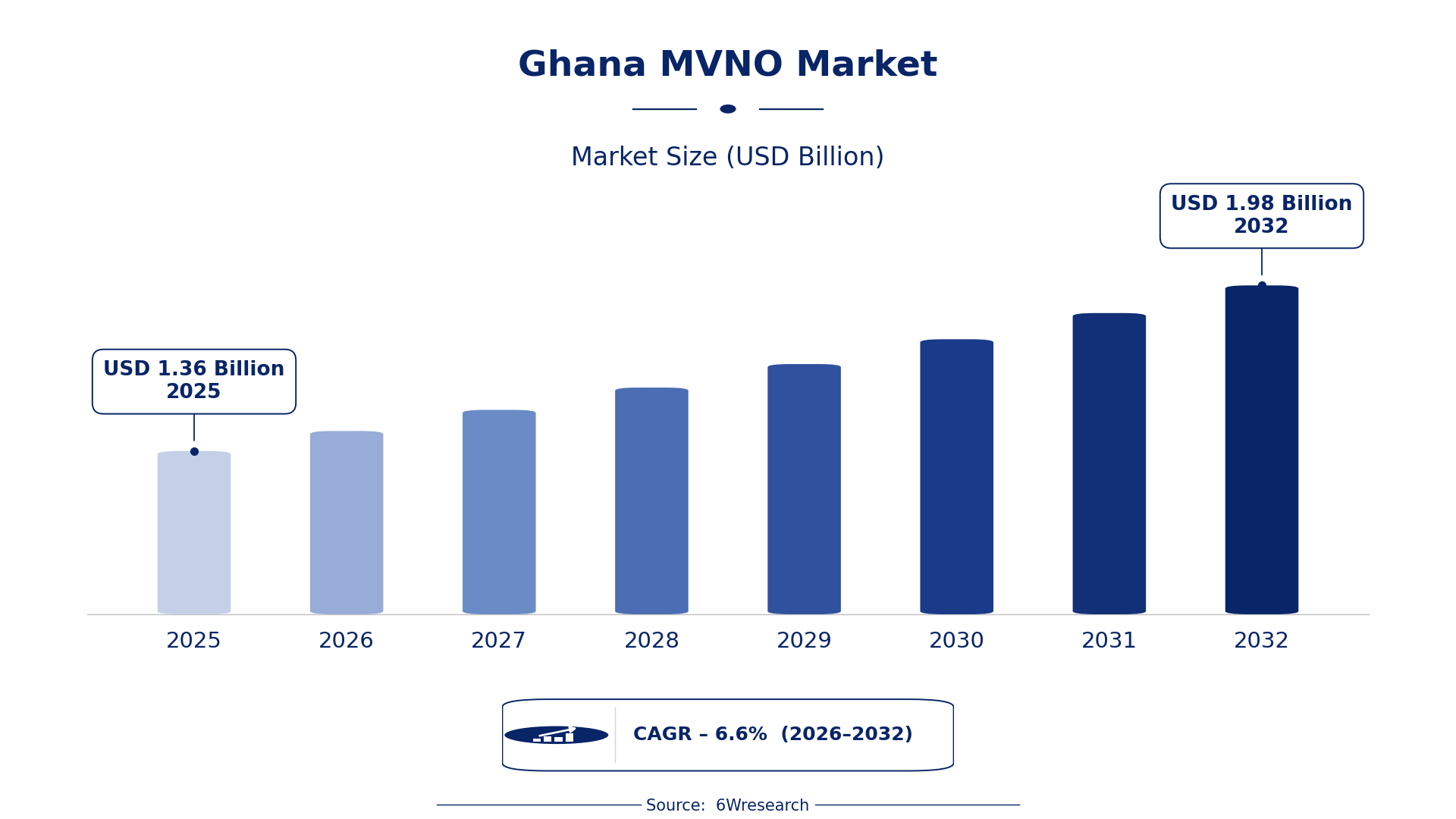
The Ghana MVNO Market was estimated at USD 1362 Million in 2025 and is projected to reach USD 1984 Million by 2032, growing at a CAGR of 6.6% from 2026 to 2032.
Ghana MVNO Market Synopsis
The most compelling force currently shaping the Ghana MVNO market is the insatiable demand for affordable mobile services among a young, tech-savvy population. This demographic is keen on accessing innovative solutions that traditional operators may not provide effectively.
MVNOs in Ghana are increasingly carving out niche markets, providing tailored offerings that cater to specific consumer needs. The competitive landscape is heating up as these operators seek to differentiate themselves through unique pricing strategies and value-added services.
Ghana MVNO Market Year-wise Growth Rate and Key Drivers
This graph illustrates the annual growth rates of the Ghana MVNO Market from 2021 to 2032, highlighting a steady upward trajectory and projected expansion over the forecast period.
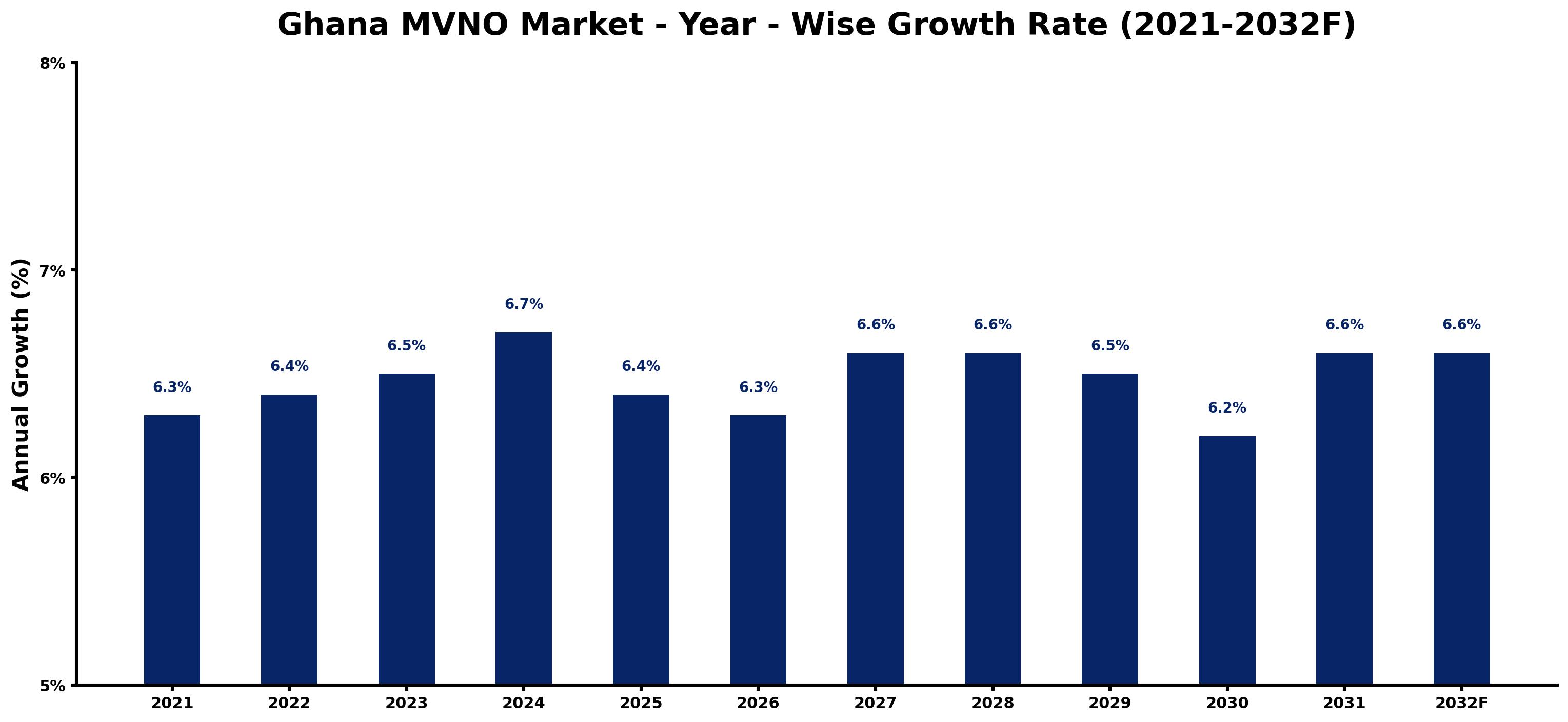
The table below presents the year‑wise growth rates along with the key drivers influencing the market
| Year | Growth Rate | Major Drivers |
| 2021 | 6.3% | Increase in mobile wallet adoption boosting MVNO subscriptions. |
| 2022 | 6.4% | Regulatory support from NCA promoting MVNO market entry. |
| 2023 | 6.5% | Growing youth population driving demand for affordable mobile services. |
| 2024 | 6.7% | Government initiatives enhancing digital literacy across urban areas. |
| 2025 | 6.4% | Strategic partnerships between local banks and MVNOs expanding offerings. |
| 2026 | 6.3% | Rise of e-commerce necessitating reliable mobile connectivity solutions. |
| 2027 | 6.6% | Local entrepreneurs launching innovative MVNO services for niche markets. |
| 2028 | 6.6% | Increased smartphone penetration aiding MVNO customer acquisition. |
| 2029 | 6.5% | Urban migration influencing demand for diverse mobile plans. |
| 2030 | 6.2% | Focus on improved customer service from new MVNO entrants. |
| 2031 | 6.6% | Emerging IoT applications requiring more data-centric MVNO solutions. |
| 2032 | 6.6% | Expanding rural network coverage enhancing MVNO subscriber base. |
Note: Market size estimations and growth projections presented in this report are based on 6Wresearch's proprietary forecasting methodology, utilizing the latest available industry data, government publications, and primary research inputs.
Ghana MVNO Market Key Takeaways
Below are some of the specific key takeaways from the market, including:
- The MVNO sector is experiencing rapid growth, fueled by a young and dynamic consumer base.
- Regulatory support is gradually improving, creating a more conducive environment for new entrants.
- Partnerships between MVNOs and established MNOs are becoming more common, allowing for resource sharing.
- Value-added services and flexible pricing models are key differentiators in attracting customers.
- The competition is pushing operators to innovate continuously, enhancing service quality and customer engagement.
Evaluation of Restraints in Ghana MVNO Market
Despite the encouraging growth trajectory, the Ghana MVNO market faces significant hurdles. Regulatory barriers remain a primary concern, as obtaining necessary licenses can be a complicated and time-consuming process. Many MVNOs also grapple with limited infrastructure, particularly in rural areas, which restricts their ability to deliver consistent service quality. Additionally, fierce competition from established mobile network operators (MNOs) intensifies the challenge, making it essential for MVNOs to develop compelling value propositions to attract and retain customers.
Ghana MVNO Market Trends
A surge in competition among MVNOs is leading to a focus on innovative and cost-effective service offerings. Operators are increasingly emphasizing value-added services, such as customized data bundles and affordable international calling plans, to cater to diverse consumer preferences. The ongoing shift toward digital platforms for customer engagement is also notable, as MVNOs adopt new technologies to streamline service delivery and enhance user experiences.
Ghana MVNO Market Opportunities
The Ghana MVNO market presents abundant investment opportunities, particularly as mobile penetration continues to rise. MVNOs can exploit the growing demand for specialized packages, such as low-cost data plans aimed at underserved customer segments. By collaborating with local businesses and utilizing existing distribution networks, MVNOs can scale their operations more efficiently, capturing a larger share of the expanding mobile market.
Government Initiatives in the Ghana MVNO Market
Government policy plays a crucial role in shaping the MVNO market in Ghana. The National Communications Authority (NCA) has implemented regulations that facilitate MVNO licensing, fostering a competitive environment that encourages innovation. These initiatives aim to ensure fair access to network infrastructure, ultimately benefiting consumers through improved service quality and pricing transparency.
- A regulatory framework introduced in 2025 mandating billing transparency to enhance consumer trust and clarity.
- A national digital infrastructure upgrade programme is currently underway, aimed at improving connectivity across rural areas.
- In 2026, the government plans to launch a public-private initiative focused on expanding telecom infrastructure access nationwide.
- The NCA has recently completed a review of existing regulations to streamline the licensing process for new MVNO entrants.
Future Insights of the Ghana MVNO Market
Looking ahead to 2026-2032, the Ghana MVNO market is set for steady expansion. An increase in smartphone adoption rates and a growing appetite for mobile data services will drive demand. MVNOs that adopt targeted marketing strategies and innovative offerings will stand out in a crowded marketplace. As the regulatory landscape continues to evolve positively, opportunities for collaboration with established MNOs will further enhance market prospects.
Ghana MVNO Market Latest Developments
Recent activity in the Ghana MVNO market indicates a vibrant atmosphere filled with innovation and strategic partnerships. Operators are increasingly focused on enhancing their service offerings and expanding their reach. This trend reflects a growing commitment to meet the diverse needs of consumers in an increasingly competitive environment.
- A major technology vendor launched a new platform in early 2025, enabling MVNOs to offer customized data plans effectively.
- In Q3 2025, a prominent regional MVNO announced a strategic partnership with a leading MNO to enhance service delivery capabilities.
- Currently, several MVNOs are undergoing upgrades to their billing systems to comply with new regulatory standards introduced by the NCA.
- A rollout of a customer engagement app is planned for mid-2026, aiming to improve user experience and service accessibility.
Ghana MVNO Market - Key Attractiveness of the Report
- 10 Years of Market Numbers
- Historical Data Starting from 2022 to 2025
- Base Year: 2025
- Forecast Data until 2032
- Key Performance Indicators Impacting the Market
- Major Upcoming Developments and Projects
Key Highlights of the Report:
- Ghana MVNO Market Outlook
- Market Size of Ghana MVNO Market, 2025
- Forecast of Ghana MVNO Market, 2032
- Historical Data and Forecast of Ghana MVNO Revenues & Volume for the Period 2022-2032F
- Ghana MVNO Market Trend Evolution
- Ghana MVNO Market Drivers and Challenges
- Ghana MVNO Price Trends
- Ghana MVNO Porter's Five Forces
- Ghana MVNO Industry Life Cycle
- Historical Data and Forecast of Ghana MVNO Market Revenues & Volume By Operational Model for the Period 2022-2032F
- Historical Data and Forecast of Ghana MVNO Market Revenues & Volume By Reseller for the Period 2022-2032F
- Historical Data and Forecast of Ghana MVNO Market Revenues & Volume By Service Operator for the Period 2022-2032F
- Historical Data and Forecast of Ghana MVNO Market Revenues & Volume By Full MVNO for the Period 2022-2032F
- Historical Data and Forecast of Ghana MVNO Market Revenues & Volume By Organization Size for the Period 2022-2032F
- Historical Data and Forecast of Ghana MVNO Market Revenues & Volume By SMES for the Period 2022-2032F
- Historical Data and Forecast of Ghana MVNO Market Revenues & Volume By Large Enterprise for the Period 2022-2032F
- Historical Data and Forecast of Ghana MVNO Market Revenues & Volume By Subscriber for the Period 2022-2032F
- Historical Data and Forecast of Ghana MVNO Market Revenues & Volume By Consumer for the Period 2022-2032F
- Historical Data and Forecast of Ghana MVNO Market Revenues & Volume By Enterprise for the Period 2022-2032F
- Ghana MVNO Import Export Trade Statistics
- Market Opportunity Assessment By Operational Model
- Market Opportunity Assessment By Organization Size
- Market Opportunity Assessment By Subscriber
- Ghana MVNO Top Companies Market Share
- Ghana MVNO Competitive Benchmarking By Technical and Operational Parameters
- Ghana MVNO Company Profiles
- Ghana MVNO Key Strategic Recommendations






































