Ghana Office Chair Market Size Growth Rate
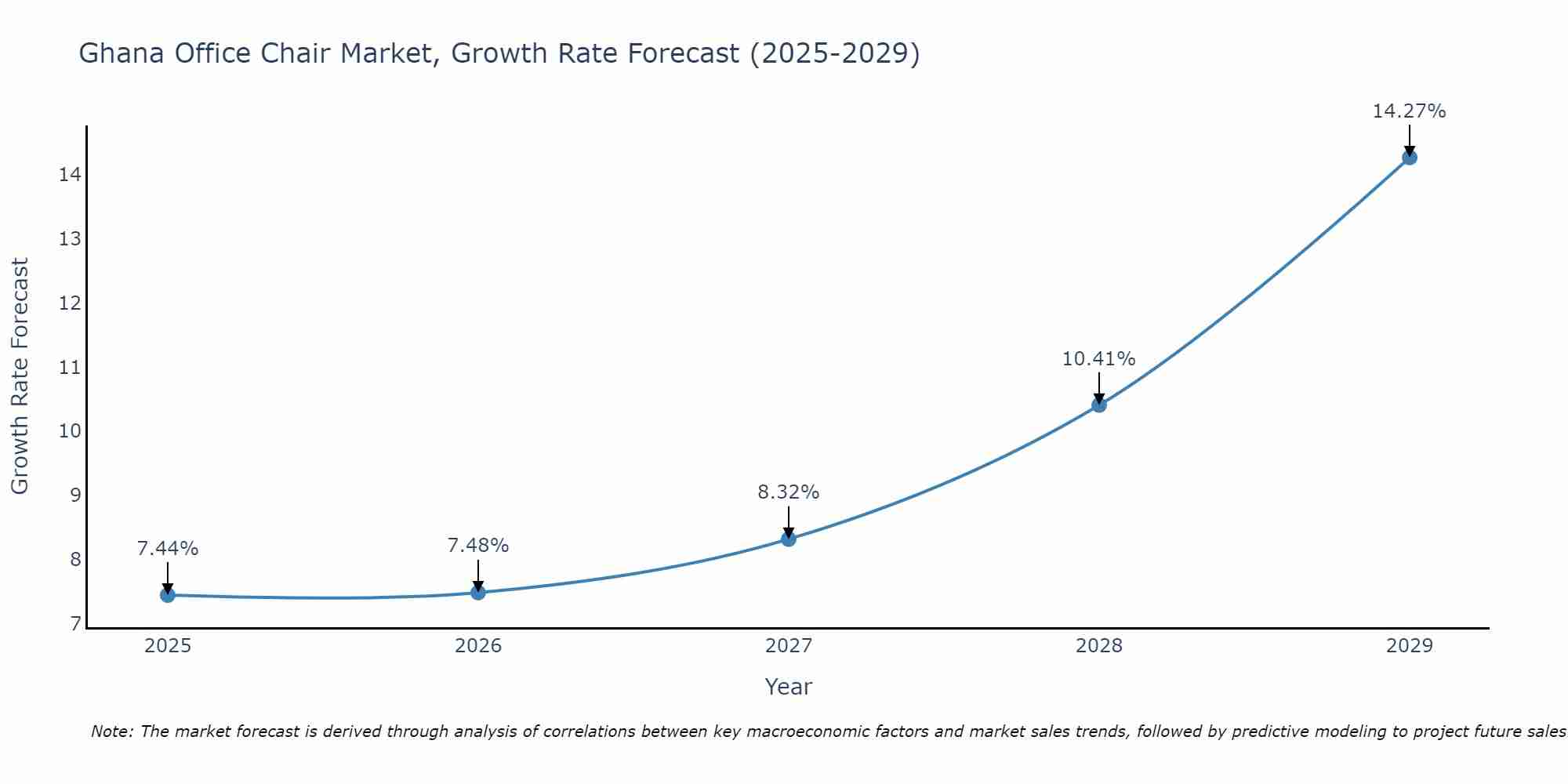
The Ghana Office Chair Market is poised for steady growth rate improvements from 2025 to 2029. The growth rate starts at 7.44% in 2025 and reaches 14.27% by 2029.
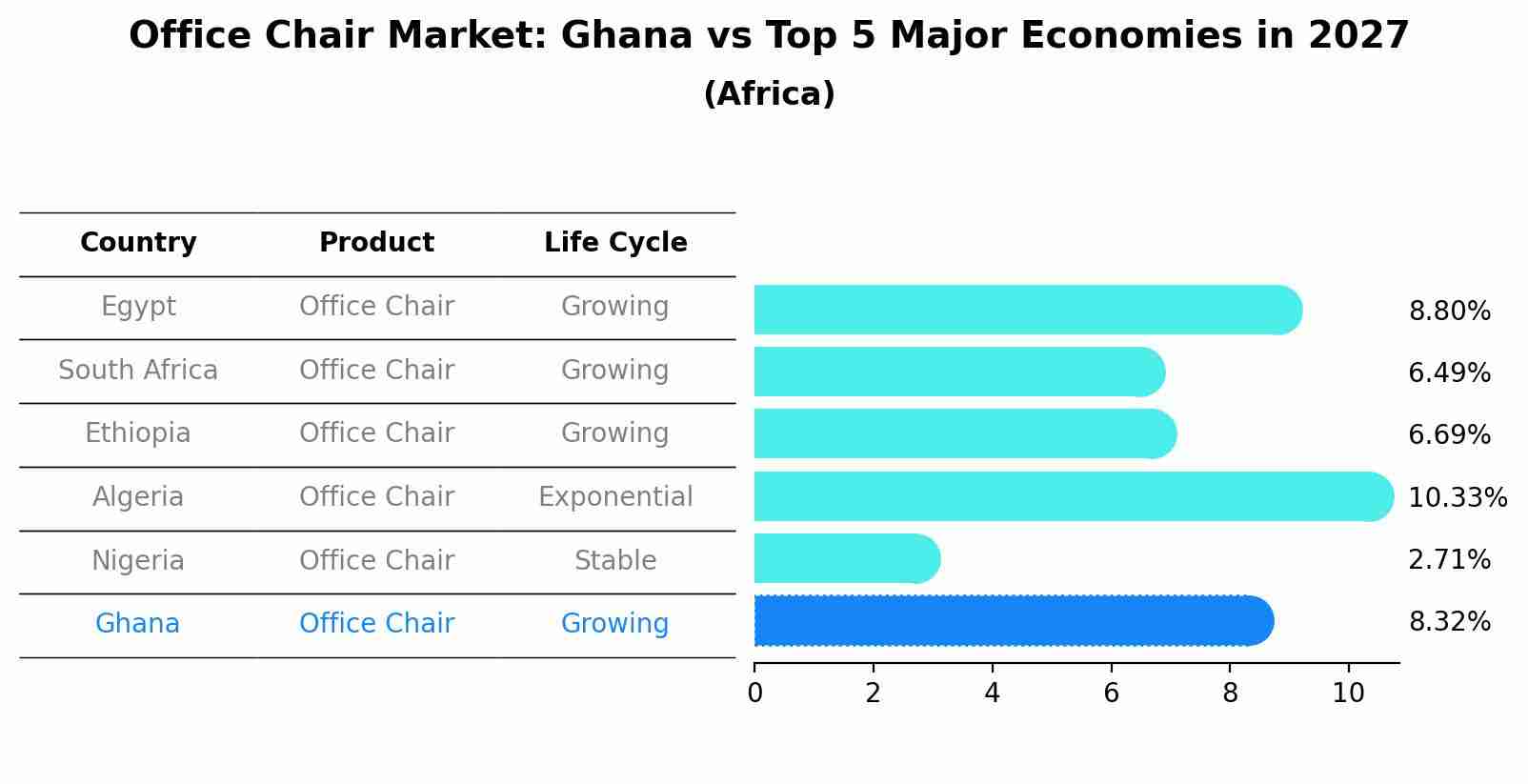
Office Chair Market: Ghana vs Top 5 Major Economies in 2027 (Africa)
In the Africa region, the Office Chair market in Ghana is projected to expand at a growing growth rate of 8.32% by 2027. The largest economy is Egypt, followed by South Africa, Ethiopia, Algeria and Nigeria.
Ghana Office Chair Market Synopsis
The Ghana office chair market is experiencing steady growth driven by increasing demand from both commercial and residential sectors. The market is characterized by a wide variety of products ranging from basic ergonomic chairs to high-end executive models, catering to diverse customer preferences. Key factors influencing market growth include the rise in the number of businesses, expansion of office spaces, and growing awareness about the importance of ergonomics in the workplace. Local manufacturers and international brands compete in this market, offering a range of designs, materials, and price points. With the trend towards remote work and home offices on the rise, there is a growing demand for comfortable and stylish office chairs in Ghana, presenting opportunities for further market expansion and product innovation.
Ghana Office Chair Market Trends
The Ghana Office Chair Market is witnessing a growing demand for ergonomic chairs that prioritize comfort and support for users who spend long hours sitting. Companies and individuals are increasingly recognizing the importance of proper posture and back health, driving the popularity of adjustable chairs with lumbar support and customizable features. Sustainability is also a key trend, with a rising preference for chairs made from eco-friendly materials and manufacturing processes. Additionally, there is a growing interest in stylish and modern designs that complement contemporary office spaces. As remote work continues to be prevalent, there is a shift towards versatile chairs that can easily transition from home offices to traditional work environments. Overall, the Ghana Office Chair Market is evolving to meet the needs of a diverse and health-conscious consumer base.
Ghana Office Chair Market Challenges
In the Ghana Office Chair Market, one of the main challenges faced is the presence of low-quality and counterfeit products flooding the market. This not only compromises the reputation of reputable brands but also confuses consumers and affects their trust in the overall market. Another challenge is the limited availability of locally manufactured office chairs, leading to a heavy reliance on imports which can be affected by fluctuating exchange rates and import duties. Additionally, the lack of standardized regulations and quality control measures in the market poses a challenge in ensuring that office chairs meet safety and ergonomic standards. Overall, improving product quality control, fostering more local manufacturing capabilities, and implementing stricter regulations can help address these challenges in the Ghana Office Chair Market.
Ghana Office Chair Market Investment Opportunities
The Ghana Office Chair Market presents promising investment opportunities due to the country`s growing economy and increasing demand for quality office furniture. With the rise of commercial activities and the expansion of businesses in sectors such as finance, technology, and services, there is a growing need for ergonomic, durable, and stylish office chairs. Investing in the Ghana Office Chair Market allows for potential growth and profitability, as companies and individuals seek to upgrade their workspaces with functional and comfortable seating options. Additionally, there is room for innovation and customization to cater to the preferences of the local market, providing a competitive edge for investors looking to capitalize on the evolving office furniture industry in Ghana.
Jordan Agar Market Government Policies
Government policies related to the Ghana Office Chair Market primarily focus on promoting local manufacturing and reducing reliance on imports. The government has implemented various initiatives such as the local content policy, import restrictions, and tax incentives to support the growth of the domestic office chair industry. Additionally, there are regulations in place to ensure product quality and safety standards are met to protect consumers. The government also aims to create a conducive business environment by providing infrastructure support and promoting investment in the sector. Overall, the policy framework aims to boost local production, create employment opportunities, and enhance the competitiveness of the Ghanaian office chair market.
Ghana Office Chair Market Future Outlook
The future outlook for the Ghana Office Chair Market appears promising, driven by the growing demand for ergonomic and stylish office furniture as the country`s workforce expands. With an increasing number of businesses setting up offices and the rising trend of remote work leading to home office setups, there is a significant opportunity for both local and international office chair manufacturers to cater to this market. The emphasis on employee comfort and productivity is expected to fuel the demand for high-quality, adjustable office chairs with modern designs. Additionally, the government`s initiatives to promote the business environment and attract foreign investments are likely to boost the demand for office furniture, including chairs, in Ghana. Overall, the Ghana Office Chair Market is poised for growth in the coming years.
Key Highlights of the Report:
- Ghana Office Chair Market Outlook
- Market Size of Ghana Office Chair Market, 2024
- Forecast of Ghana Office Chair Market, 2031
- Historical Data and Forecast of Ghana Office Chair Revenues & Volume for the Period 2021 - 2031
- Ghana Office Chair Market Trend Evolution
- Ghana Office Chair Market Drivers and Challenges
- Ghana Office Chair Price Trends
- Ghana Office Chair Porter's Five Forces
- Ghana Office Chair Industry Life Cycle
- Historical Data and Forecast of Ghana Office Chair Market Revenues & Volume By Product Type for the Period 2021 - 2031
- Historical Data and Forecast of Ghana Office Chair Market Revenues & Volume By Executive Office for the Period 2021 - 2031
- Historical Data and Forecast of Ghana Office Chair Market Revenues & Volume By Ergonomic for the Period 2021 - 2031
- Historical Data and Forecast of Ghana Office Chair Market Revenues & Volume By Conference for the Period 2021 - 2031
- Historical Data and Forecast of Ghana Office Chair Market Revenues & Volume By Material for the Period 2021 - 2031
- Historical Data and Forecast of Ghana Office Chair Market Revenues & Volume By Mesh for the Period 2021 - 2031
- Historical Data and Forecast of Ghana Office Chair Market Revenues & Volume By Lather for the Period 2021 - 2031
- Historical Data and Forecast of Ghana Office Chair Market Revenues & Volume By Plastic for the Period 2021 - 2031
- Historical Data and Forecast of Ghana Office Chair Market Revenues & Volume By Fabric for the Period 2021 - 2031
- Historical Data and Forecast of Ghana Office Chair Market Revenues & Volume By Sales Channel for the Period 2021 - 2031
- Historical Data and Forecast of Ghana Office Chair Market Revenues & Volume By Offline for the Period 2021 - 2031
- Historical Data and Forecast of Ghana Office Chair Market Revenues & Volume By Online for the Period 2021 - 2031
- Ghana Office Chair Import Export Trade Statistics
- Market Opportunity Assessment By Product Type
- Market Opportunity Assessment By Material
- Market Opportunity Assessment By Sales Channel
- Ghana Office Chair Top Companies Market Share
- Ghana Office Chair Competitive Benchmarking By Technical and Operational Parameters
- Ghana Office Chair Company Profiles
- Ghana Office Chair Key Strategic Recommendations






































