Ghana Oil and Gas Cloud Applications Market Size & Growth Rate (2026-2032)
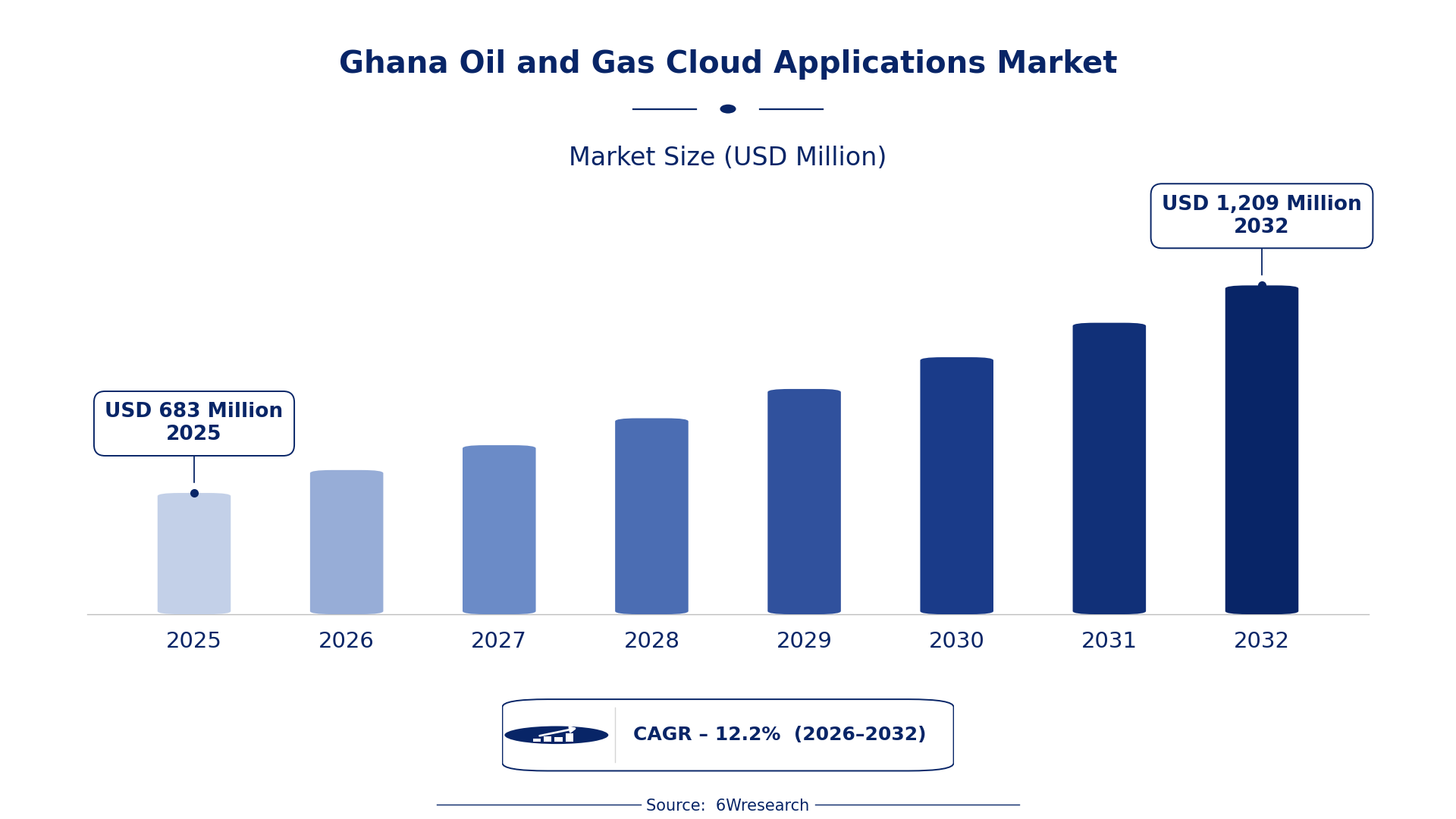
The Ghana Oil and Gas Cloud Applications Market was estimated at USD 683 Million in 2025 and is projected to reach USD 1209 Million by 2032, growing at a CAGR of 12.2% from 2026 to 2032.
Ghana Oil and Gas Cloud Applications Market Synopsis
The oil and gas cloud applications market in Ghana is witnessing an upward trajectory as energy companies increasingly recognize the benefits of cloud-based solutions. These applications are revolutionizing operations management, enabling better data analytics, and enhancing collaboration throughout the energy value chain.
In this environment, digital transformation emerges as a critical driver, with companies adopting these technologies to streamline complex operations. The growing need for effective asset management, production optimization, and workforce collaboration is further amplifying the demand for cloud solutions within the sector.
Ghana Oil and Gas Cloud Applications Market Year-wise Growth Rate and Key Drivers
This graph illustrates the annual growth rates of the Ghana Oil and Gas Cloud Applications Market from 2021 to 2032, highlighting a steady upward trajectory and projected expansion over the forecast period.
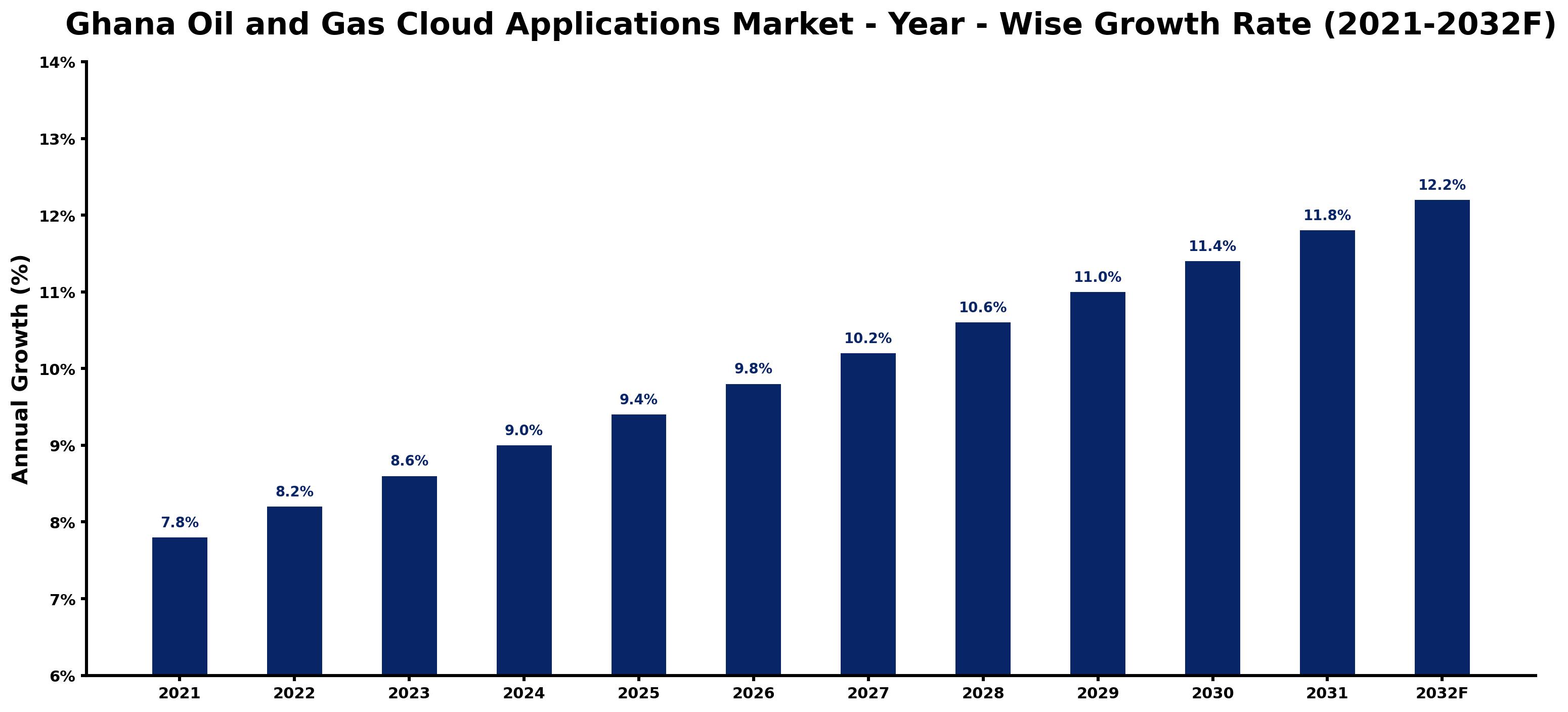
The table below presents the year‑wise growth rates along with the key drivers influencing the market
| Year | Growth Rate | Major Drivers |
| 2021 | 7.8% | National Petroleum Authority encourages digital transformation initiatives. |
| 2022 | 8.2% | Increased foreign investments in Ghana's oil sector leveraging cloud. |
| 2023 | 8.6% | Ghana National Gas Company's cloud integration for efficiency. |
| 2024 | 9.0% | Government pushes for tech adoption in oil regulation compliance. |
| 2025 | 9.4% | Emergence of local startups offering tailored oil cloud solutions. |
| 2026 | 9.8% | Oil price recovery spurs investments in cloud technologies. |
| 2027 | 10.2% | Ghana's digital economy strategy boosts cloud adoption in oil. |
| 2028 | 10.6% | Rising awareness of cybersecurity in oil sector cloud applications. |
| 2029 | 11.0% | Tailored cloud solutions improving predictive maintenance in oil rigs. |
| 2030 | 11.4% | Local workforce training programs enhance cloud skillsets in oil. |
| 2031 | 11.8% | Government incentives for tech upgrades in oil production processes. |
| 2032 | 12.2% | Increased demand for cloud-based environmental compliance solutions. |
Note: Market size estimations and growth projections presented in this report are based on 6Wresearch's proprietary forecasting methodology, utilizing the latest available industry data, government publications, and primary research inputs.
Ghana Oil and Gas Cloud Applications Market Key Takeaways
Below are some of the specific key takeaways from the market, including:
- Rapid adoption of cloud applications is transforming operational efficiencies in Ghana's oil and gas sector.
- Data analytics and cost optimization are primary factors fueling investment in cloud solutions.
- Remote monitoring and predictive maintenance are becoming standard practices among industry players.
- Government policies are evolving to support data security and compliance in cloud operations.
- Interoperability issues remain a challenge as companies integrate legacy systems with modern cloud platforms.
Evaluation of Restraints in Ghana Oil and Gas Cloud Applications Market
Despite the promising growth, several restraints hinder the broader adoption of cloud applications in Ghana's oil and gas sector. Data security concerns loom large, as companies must protect sensitive information from potential breaches. Additionally, reliable connectivity remains a critical issue, especially in remote drilling locations where traditional infrastructure may falter. Interoperability issues between diverse cloud platforms and legacy systems further complicate integration, creating friction in operational efficiency. These factors combine to create a cautious environment, where companies weigh the benefits against potential risks.
Ghana Oil and Gas Cloud Applications Market Trends
Current trends in the Ghana Oil and Gas Cloud Applications Market are leaning heavily towards automation and data-driven decision-making. Companies are increasingly investing in predictive analytics tools that enhance operational efficiencies and reduce downtime. The integration of artificial intelligence with cloud applications is also on the rise, offering advanced capabilities in monitoring and asset management. As regulatory standards tighten, firms are focusing on compliance and security protocols, making cloud solutions not just a technological upgrade but a strategic necessity.
Ghana Oil and Gas Cloud Applications Market Opportunities
The market presents genuine growth opportunities driven by the ongoing digital transformation within the industry. With significant investments in infrastructure and technology, companies can capitalize on cloud applications to enhance productivity and reduce operational costs. Emerging technologies, such as the Internet of Things (IoT), are set to integrate seamlessly with cloud solutions, enabling better data collection and real-time analysis. Additionally, as regulatory frameworks evolve, there is an opportunity for firms to innovate while ensuring compliance, fostering a competitive edge in the market.
Government Initiatives in the Ghana Oil and Gas Cloud Applications Market
Government policies are shaping the Ghana Oil and Gas Cloud Applications Market by promoting digital transformation within the sector. The focus is on establishing regulations that enhance data security and privacy while encouraging compliance with international standards. These initiatives aim to foster a conducive environment for cloud technology adoption, ultimately leading to improved operational efficiencies in the oil and gas value chain.
- A national digital security framework was introduced in 2025 to strengthen cloud data protection and compliance measures.
- Currently, a public-private partnership initiative is underway, enhancing digital infrastructure and cloud access across remote areas.
- Planned regulatory reviews in 2026 aim to streamline compliance processes for cloud service providers and oil and gas companies.
- Ongoing training programs for industry personnel focus on cloud technology adoption and data analytics skills development.
- A new policy initiative expected to launch in 2027 will encourage innovation in cloud-based applications for enhanced operational efficiency.
Future Insights of the Ghana Oil and Gas Cloud Applications Market
Looking ahead to 2026-2032, the Ghana Oil and Gas Cloud Applications Market is set to expand significantly. As companies continue to embrace digital solutions, the demand for innovative cloud applications will rise. The combination of improved connectivity, enhanced data security measures, and ongoing government support will create a fertile ground for cloud adoption. Firms that proactively invest in these technologies will likely experience marked improvements in operational efficiencies and profitability, positioning themselves as leaders in the evolving energy sector.
Ghana Oil and Gas Cloud Applications Market Latest Developments
In the past year, the Ghana Oil and Gas Cloud Applications Market has seen a surge in activity, with companies increasingly focused on digital transformation initiatives. The trend towards cloud adoption has accelerated, driven by the need for operational efficiency and enhanced data analytics capabilities. This period has also witnessed greater collaboration between public and private sectors to enhance digital infrastructure.
- A major technology vendor launched a new cloud-based asset management platform in Q2 2025, aimed at optimizing production processes.
- An ongoing partnership between local energy firms and cloud service providers is enhancing remote monitoring capabilities across oil fields.
- By late 2025, a pilot program for predictive maintenance using cloud applications was successfully completed, yielding impressive cost savings.
- A rollout of an advanced data analytics tool is planned for early 2026, expected to transform decision-making processes.
- A regional conference in mid-2025 focused on cloud technologies and their applications in the oil and gas sector, fostering knowledge exchange among industry players.
Ghana Oil and Gas Cloud Applications Market - Key Attractiveness of the Report
- 10 Years of Market Numbers
- Historical Data Starting from 2022 to 2025
- Base Year: 2025
- Forecast Data until 2032
- Key Performance Indicators Impacting the Market
- Major Upcoming Developments and Projects
Key Highlights of the Report:
- Ghana Oil and Gas Cloud Applications Market Outlook
- Market Size of Ghana Oil and Gas Cloud Applications Market, 2025
- Forecast of Ghana Oil and Gas Cloud Applications Market, 2032
- Historical Data and Forecast of Ghana Oil and Gas Cloud Applications Revenues & Volume for the Period 2022-2032F
- Ghana Oil and Gas Cloud Applications Market Trend Evolution
- Ghana Oil and Gas Cloud Applications Market Drivers and Challenges
- Ghana Oil and Gas Cloud Applications Price Trends
- Ghana Oil and Gas Cloud Applications Porter's Five Forces
- Ghana Oil and Gas Cloud Applications Industry Life Cycle
- Historical Data and Forecast of Ghana Oil and Gas Cloud Applications Market Revenues & Volume By Component for the Period 2022-2032F
- Historical Data and Forecast of Ghana Oil and Gas Cloud Applications Market Revenues & Volume By Solution for the Period 2022-2032F
- Historical Data and Forecast of Ghana Oil and Gas Cloud Applications Market Revenues & Volume By Services for the Period 2022-2032F
- Historical Data and Forecast of Ghana Oil and Gas Cloud Applications Market Revenues & Volume By Deployment Type for the Period 2022-2032F
- Historical Data and Forecast of Ghana Oil and Gas Cloud Applications Market Revenues & Volume By Private for the Period 2022-2032F
- Historical Data and Forecast of Ghana Oil and Gas Cloud Applications Market Revenues & Volume By Public Cloud for the Period 2022-2032F
- Historical Data and Forecast of Ghana Oil and Gas Cloud Applications Market Revenues & Volume By Operation for the Period 2022-2032F
- Historical Data and Forecast of Ghana Oil and Gas Cloud Applications Market Revenues & Volume By Upstream for the Period 2022-2032F
- Historical Data and Forecast of Ghana Oil and Gas Cloud Applications Market Revenues & Volume By Midstream for the Period 2022-2032F
- Historical Data and Forecast of Ghana Oil and Gas Cloud Applications Market Revenues & Volume By Downstream for the Period 2022-2032F
- Ghana Oil and Gas Cloud Applications Import Export Trade Statistics
- Market Opportunity Assessment By Component
- Market Opportunity Assessment By Deployment Type
- Market Opportunity Assessment By Operation
- Ghana Oil and Gas Cloud Applications Top Companies Market Share
- Ghana Oil and Gas Cloud Applications Competitive Benchmarking By Technical and Operational Parameters
- Ghana Oil and Gas Cloud Applications Company Profiles
- Ghana Oil and Gas Cloud Applications Key Strategic Recommendations






































