Ghana Over the Top Market Size & Growth Rate (2026-2032)
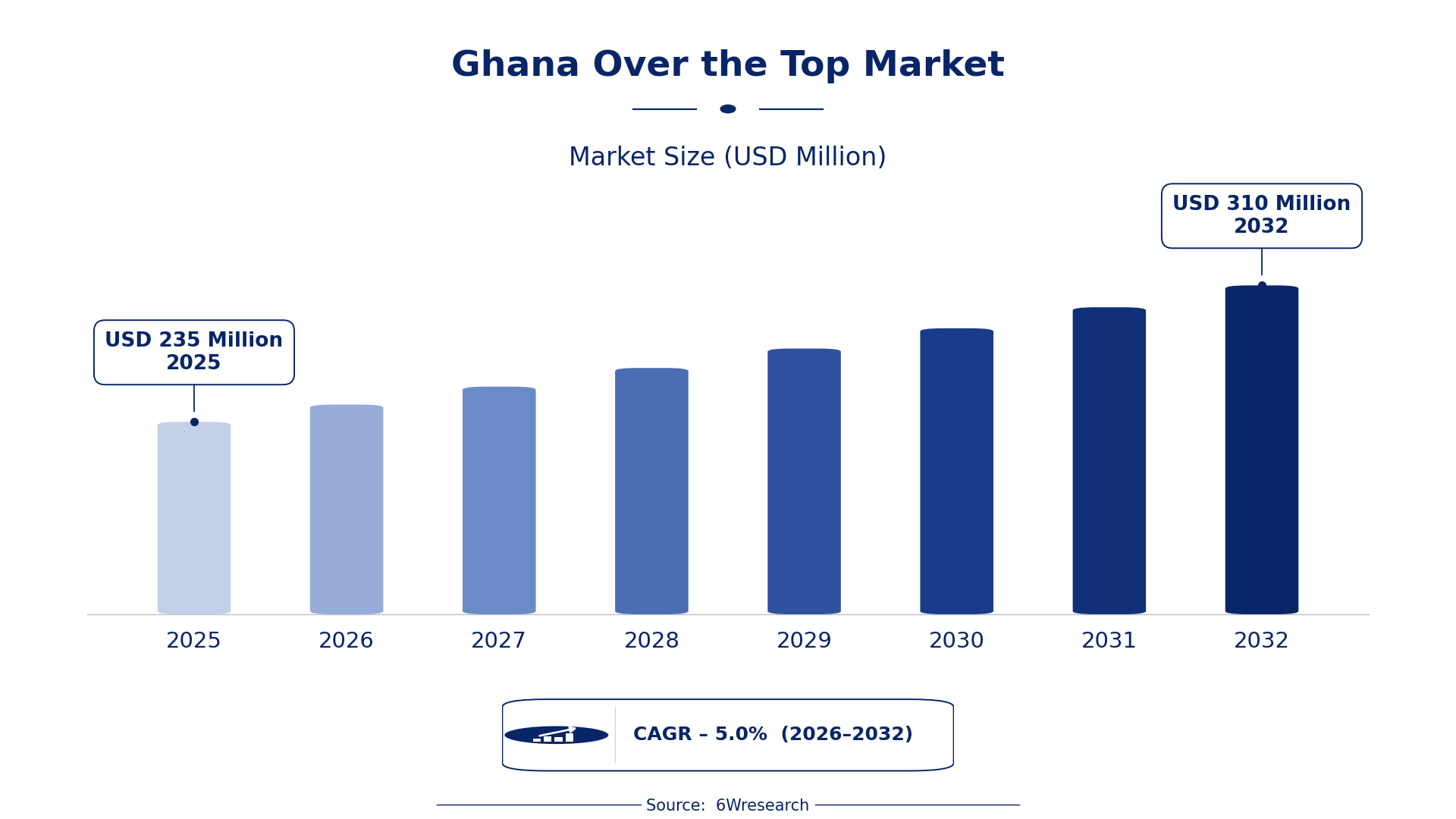
The Ghana Over the Top Market was estimated at USD 235 Million in 2025 and is projected to reach USD 310 Million by 2032, growing at a CAGR of 5.0% from 2026 to 2032.
Ghana Over the Top Market Synopsis
The Ghana Over the Top (OTT) market is on an upward trajectory, powered by the surge in internet connectivity and the rising number of smartphone users. This momentum is shifting as Ghanaians increasingly embrace digital streaming platforms, reflecting a broader global trend towards on-demand entertainment.
While international giants like Netflix and YouTube capture significant attention, homegrown platforms such as Kwese Play are rising to meet local tastes. However, high data costs and limited payment options are still hindering widespread engagement with these services, indicating both challenges and opportunities for market growth.
Ghana Over the Top Market Year-wise Growth Rate and Key Drivers
This graph illustrates the annual growth rates of the Ghana Over the Top Market from 2021 to 2032, highlighting a steady upward trajectory and projected expansion over the forecast period.
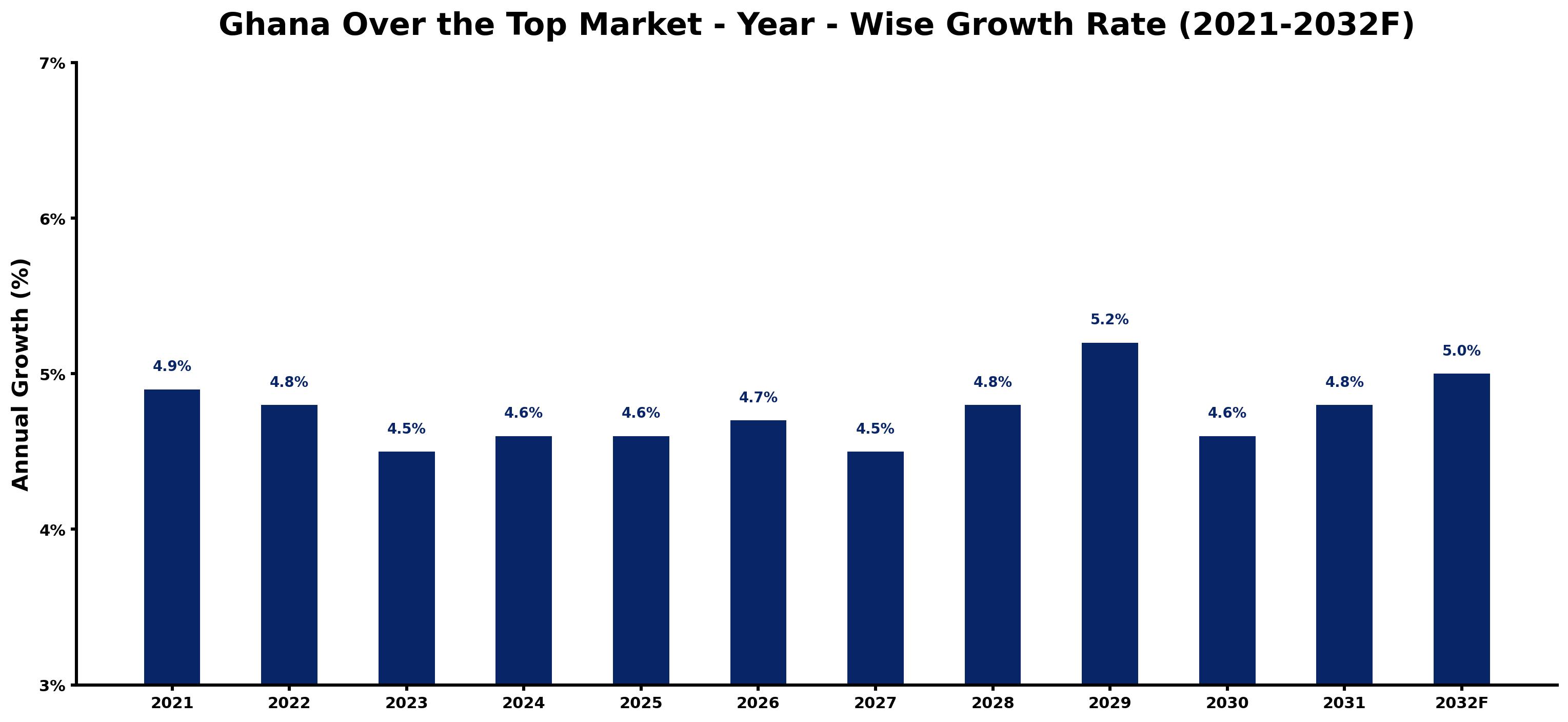
The table below presents the year‑wise growth rates along with the key drivers influencing the market
| Year | Growth Rate | Major Drivers |
| 2021 | 4.9% | Increased smartphone penetration among young population. |
| 2022 | 4.8% | Growth in local content creation and distribution channels. |
| 2023 | 4.5% | Expanded internet connectivity through national broadband initiative. |
| 2024 | 4.6% | Rising subscription-based services among urban households. |
| 2025 | 4.6% | Boost from government-regulated local video streaming platforms. |
| 2026 | 4.7% | Enhanced data affordability from telecom service providers. |
| 2027 | 4.5% | Growing interest in sports streaming among consumers. |
| 2028 | 4.8% | Emergence of local talent promoting cultural programming. |
| 2029 | 5.2% | Increased investment in digital advertising sectors. |
| 2030 | 4.6% | Launch of new OTT platforms catering to local tastes. |
| 2031 | 4.8% | Popularity of mobile viewing among young audiences. |
| 2032 | 5.0% | Support from local government on digital media regulations. |
Note: Market size estimations and growth projections presented in this report are based on 6Wresearch's proprietary forecasting methodology, utilizing the latest available industry data, government publications, and primary research inputs.
Ghana Over the Top Market Key Takeaways
Below are some of the specific key takeaways from the market, including:
- Increased smartphone adoption is significantly driving OTT service consumption.
- Local platforms are gaining traction by offering tailored content that resonates with Ghanaian audiences.
- Telecom operators are beginning to form partnerships with OTT providers to create bundled service offerings.
- High data costs present a considerable barrier to entry for many potential consumers.
- There are ample opportunities for investors in infrastructure and content development in the sector.
Evaluation of Restraints in Ghana Over the Top Market
The Ghana OTT market faces several real limitations, primarily high data costs that deter frequent usage of streaming services. Many Ghanaians find themselves unable to subscribe to multiple OTT platforms due to the financial burden of data expenses. Additionally, the variability in internet connectivity means that users in some areas experience frustrating interruptions during streaming, which can lead to dissatisfaction and potential churn. Low digital literacy rates among segments of the population further hinder market penetration, as a lack of understanding about OTT services can prevent users from exploring these options.
Ghana Over the Top Market Trends
Current trends in the Ghana OTT market point toward an increasing focus on original content production. Both local and international services are investing in unique programming aimed at capturing a diverse audience. There's also a noticeable shift toward improving payment flexibility, with providers experimenting with subscriptions and pay-per-view models tailored to local payment habits. This adaptability could attract a broader audience, particularly among younger consumers eager for on-demand entertainment.
Ghana Over the Top Market Opportunities
The growth of the Ghana OTT market is rich with opportunities for investors and service providers. With the digital entertainment landscape gaining traction, there is a notable demand for localized content that reflects cultural nuances. Partnerships between OTT platforms and telecom companies can lead to bundled packages that make access more affordable. Furthermore, investing in internet infrastructure will not only enhance user experience but also broaden the potential customer base, creating avenues for substantial returns.
Government Initiatives in the Ghana Over the Top Market
Government regulation is significantly shaping the Ghana OTT market. The focus lies on creating a balanced framework that nurtures growth while ensuring consumer protection. The establishment of policies aimed at regulating content on OTT platforms is critical to fostering a safe digital environment, reflecting a proactive stance on digital governance.
- A recently completed initiative introduced a 1% tax on OTT services to create a more level playing field with traditional telecommunication companies.
- A current regulatory framework is being implemented to monitor content on OTT platforms, aimed at combating misinformation and ensuring quality standards.
- A national digital infrastructure upgrade program is now underway, intended to improve internet access and reliability across underserved regions.
- A planned public-private initiative expected to enhance collaboration between telecom companies and OTT platforms is set to launch within the next year.
- Ongoing efforts to increase digital literacy through educational programs targeting the youth are being prioritized to ensure a more informed consumer base.
Future Insights of the Ghana Over the Top Market
Looking ahead, the Ghana OTT market is positioned for strong growth, fueled by advancements in internet infrastructure and a cultural shift towards digital content consumption. As internet access improves and costs begin to lower, an increasing number of Ghanaians are likely to adopt OTT services. The demographic trends, particularly the young population, will continue to drive demand for innovative and diverse content, suggesting a vibrant future for the industry. Furthermore, regulatory developments will likely play a crucial role in shaping competitive dynamics and enabling further investment.
Ghana Over the Top Market Latest Developments
In the last year, the Ghana OTT market has seen a flurry of activities that signify its dynamic nature. New partnerships are emerging, aimed at enhancing service delivery, while local players are stepping up to meet growing consumer expectations. This period marks a significant push towards localized content creation, alongside a growing recognition of the need for affordable data solutions.
- A major regional operator announced a partnership in Q2 2025 with a local OTT provider to bundle services, enhancing user accessibility.
- A content platform launched an original series in late 2025 focused on Ghanaian culture, quickly gaining traction among local audiences.
- In early 2025, a technology provider began the rollout of enhanced streaming solutions aimed at reducing buffering and improving user experience.
- A national campaign to promote digital literacy commenced in early 2025, aimed at encouraging more consumers to explore OTT services.
- A regional telecom provider is planning an upgrade to its infrastructure in mid-2026 to support the rising demand for streaming services.
Ghana Over the Top Market - Key Attractiveness of the Report
- 10 Years of Market Numbers
- Historical Data Starting from 2022 to 2025
- Base Year: 2025
- Forecast Data until 2032
- Key Performance Indicators Impacting the Market
- Major Upcoming Developments and Projects
Key Highlights of the Report:
- Ghana Over the Top Market Outlook
- Market Size of Ghana Over the Top Market, 2025
- Forecast of Ghana Over the Top Market, 2032
- Historical Data and Forecast of Ghana Over the Top Revenues & Volume for the Period 2022-2032F
- Ghana Over the Top Market Trend Evolution
- Ghana Over the Top Market Drivers and Challenges
- Ghana Over the Top Price Trends
- Ghana Over the Top Porter's Five Forces
- Ghana Over the Top Industry Life Cycle
- Historical Data and Forecast of Ghana Over the Top Market Revenues & Volume By Type for the Period 2022-2032F
- Historical Data and Forecast of Ghana Over the Top Market Revenues & Volume By Game Streaming for the Period 2022-2032F
- Historical Data and Forecast of Ghana Over the Top Market Revenues & Volume By Audio Streaming for the Period 2022-2032F
- Historical Data and Forecast of Ghana Over the Top Market Revenues & Volume By Video Streaming for the Period 2022-2032F
- Historical Data and Forecast of Ghana Over the Top Market Revenues & Volume By Communication for the Period 2022-2032F
- Historical Data and Forecast of Ghana Over the Top Market Revenues & Volume By Monetization Model for the Period 2022-2032F
- Historical Data and Forecast of Ghana Over the Top Market Revenues & Volume By Subscription-based for the Period 2022-2032F
- Historical Data and Forecast of Ghana Over the Top Market Revenues & Volume By Advertising-based for the Period 2022-2032F
- Historical Data and Forecast of Ghana Over the Top Market Revenues & Volume By Transaction-based for the Period 2022-2032F
- Historical Data and Forecast of Ghana Over the Top Market Revenues & Volume By Streaming Device for the Period 2022-2032F
- Historical Data and Forecast of Ghana Over the Top Market Revenues & Volume By Smartphones and Tablets for the Period 2022-2032F
- Historical Data and Forecast of Ghana Over the Top Market Revenues & Volume By Desktops and Laptops for the Period 2022-2032F
- Historical Data and Forecast of Ghana Over the Top Market Revenues & Volume By IPTV and Consoles for the Period 2022-2032F
- Historical Data and Forecast of Ghana Over the Top Market Revenues & Volume By Vertical for the Period 2022-2032F
- Historical Data and Forecast of Ghana Over the Top Market Revenues & Volume By Media and Entertainment for the Period 2022-2032F
- Historical Data and Forecast of Ghana Over the Top Market Revenues & Volume By Education and Learning for the Period 2022-2032F
- Historical Data and Forecast of Ghana Over the Top Market Revenues & Volume By Gaming for the Period 2022-2032F
- Historical Data and Forecast of Ghana Over the Top Market Revenues & Volume By Service Utilities for the Period 2022-2032F
- Ghana Over the Top Import Export Trade Statistics
- Market Opportunity Assessment By Type
- Market Opportunity Assessment By Monetization Model
- Market Opportunity Assessment By Streaming Device
- Market Opportunity Assessment By Vertical
- Ghana Over the Top Top Companies Market Share
- Ghana Over the Top Competitive Benchmarking By Technical and Operational Parameters
- Ghana Over the Top Company Profiles
- Ghana Over the Top Key Strategic Recommendations






































