Ghana Peas Market Size, Share & Growth Rate
The Ghana Peas Market was estimated at USD 416 Million in 2025 and is projected to reach USD 580 Million by 2032, growing at a CAGR of 4.9% from 2026 to 2032. This growth trajectory is primarily driven by the increasing consumer preference for plant-based protein sources, combined with a rising awareness of health and nutrition among the urban populace. Furthermore, as culinary practices evolve, there is a noticeable shift towards incorporating more diverse and nutritious ingredients like peas into everyday meals.
Ghana Peas Market Year-wise Growth Rate and Key Drivers
This graph highlights how the Ghana Peas Market has steadily grown over the years, supported by major growth factors.
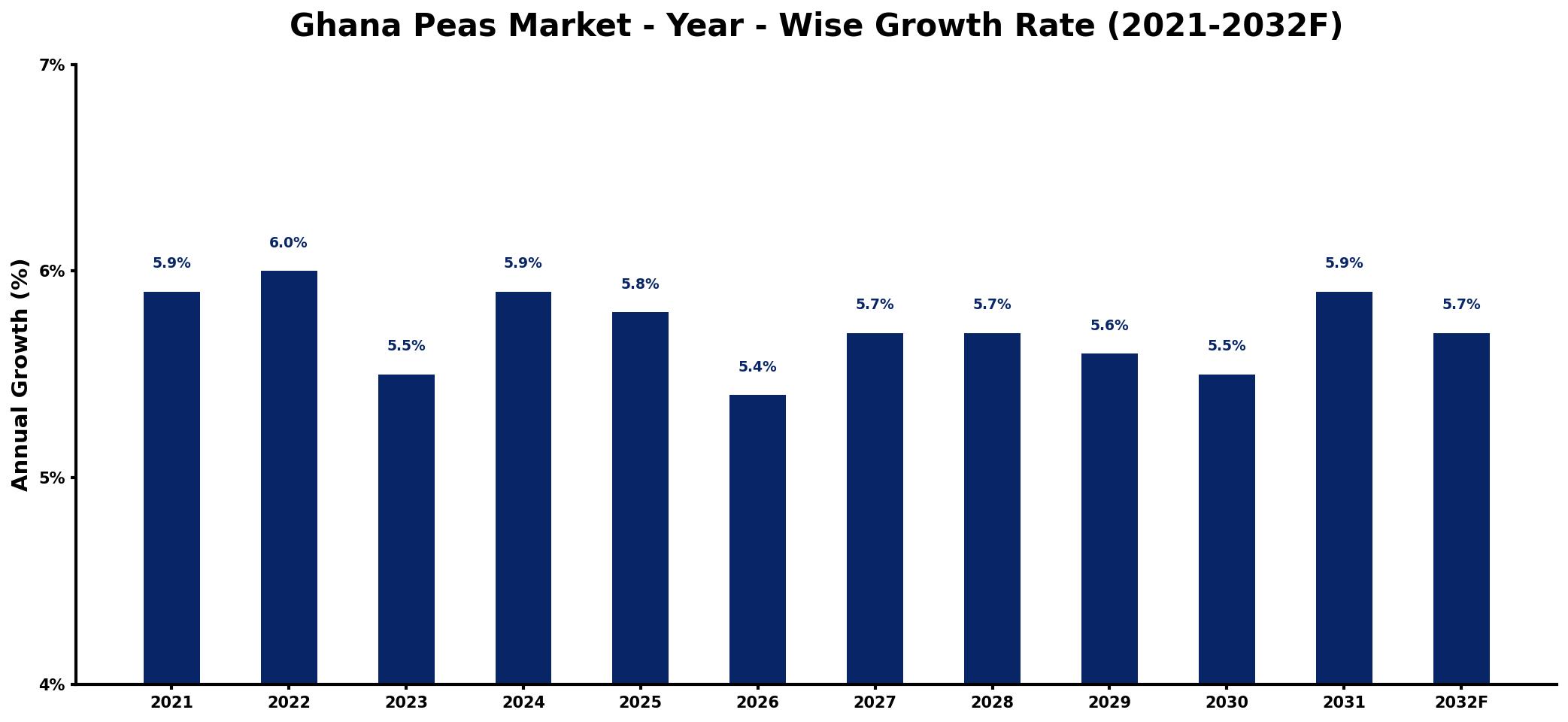
The table below presents the year‑wise growth rates along with the key drivers influencing the market
| Year | Growth Rate | Major Drivers |
| 2021 | 5.9% | increased consumer health awareness |
| 2022 | 6.0% | growing demand for plant proteins |
| 2023 | 5.5% | rising popularity of vegetarian diets |
| 2024 | 5.9% | expansion of agricultural technologies |
| 2025 | 5.8% | increased investment in farming |
| 2026 | 5.4% | growing export opportunities abroad |
| 2027 | 5.7% | enhanced supply chain efficiencies |
| 2028 | 5.7% | higher retail market penetration |
| 2029 | 5.6% | increased organic farming practices |
| 2030 | 5.5% | rising interest in sustainability |
| 2031 | 5.9% | growing nutritional education programs |
| 2032 | 5.7% | increased local processing facilities |
Note: Market size estimations and growth projections presented in this report are based on 6Wresearch's proprietary forecasting methodology, utilizing the latest available industry data, government publications, and primary research inputs.
Ghana Peas Market Synopsis
The strongest force currently shaping the Ghana peas market is the demand for healthier food options. As urban consumers become more health-conscious, they are gravitating towards meals rich in plant-based proteins, with peas emerging as a staple ingredient. This trend is amplified by a growing interest in veganism and meat alternatives, creating new avenues for product innovation.
Local farmers are responding to this surge in demand by expanding their cultivation efforts, leveraging Ghanas fertile land. Additionally, the emphasis on sustainability has prompted a rise in organic pea farming, aligning agricultural practices with consumer preferences for environmentally friendly products.
Ghana Peas Market Key Takeaways
- Growing demand for nutritious, plant-based food choices is reshaping consumer behavior.
- Investment in agricultural technologies and infrastructure is essential for productivity improvement.
- Emerging trends include a shift towards organic and locally sourced pea products.
- Value-added products like pea protein and convenient meal solutions are on the rise.
- Government policies are increasingly supporting local producers and ensuring market competitiveness.
Evaluation of Restraints in Ghana Peas Market
While the Ghana peas market holds substantial growth potential, several restraints hinder its advancement. Weather-related uncertainties often lead to inconsistent crop yields, posing risks for farmers reliant on traditional farming methods. Furthermore, limited access to modern agricultural technologies hampers productivity and efficiency. Storage facilities remain inadequate, contributing to significant post-harvest losses. To address these limitations, strategic investments in agricultural infrastructure and farmer training programs are necessary, alongside the implementation of quality control measures to enhance product reliability and market confidence.
Ghana Peas Market Trends
The current trends influencing the Ghana peas market reflect a broader shift toward health and sustainability. Consumers are increasingly seeking premium-quality peas, while a preference for organic and locally sourced produce continues to rise. Urban populations are also embracing convenience, leading to greater demand for canned and frozen peas, which offer quick meal solutions. In addition, the burgeoning interest in plant-based diets is driving innovation in value-added products, such as pea protein powders and snacks, catering to diverse dietary preferences.
Ghana Peas Market Opportunities
Investment opportunities within the Ghana peas market are burgeoning, particularly for those aiming to support local farmers. Enhancing farming operations with modern technology and resources presents a significant growth avenue, while establishing processing facilities can add value to the crops before reaching export markets. Furthermore, there is a growing need for robust logistics and distribution networks, which are vital for connecting rural farmers to urban markets and meeting rising consumer demand.
Government Initiatives in the Ghana Peas Market
The Ghanaian government has put forth various initiatives aimed at bolstering local pea production. Policies include offering subsidies to farmers, fostering research and development in sustainable cultivation techniques, and implementing quality control measures to uphold product standards. Additionally, market information systems have been established to provide farmers with crucial data on prices and market trends, helping them to make informed decisions. These government actions are pivotal in enhancing the competitive edge of the domestic peas industry.
Future Insights of the Ghana Peas Market
Looking forward to 2026-2032, the Ghana peas market is poised for significant growth. With a continually increasing population and improving economic conditions, demand for nutritious and sustainable food options is set to rise. The governments ongoing support for agricultural initiatives, coupled with a growing consumer inclination toward plant-based diets, positions the market for expansion. However, market participants will need to remain vigilant regarding potential challenges such as climate change and competition from imports, ensuring adaptability in an evolving landscape.
Ghana Peas Market Latest Developments (2025 - 2026)
Recent developments within the Ghana peas market showcase a trend towards innovation and sustainability. Stakeholders are actively exploring new processing techniques and product formats to align with consumer preferences for convenience and health. Efforts to enhance farmer training programs are also underway, aiming to improve yield quality and overall agricultural productivity. Additionally, collaborations between local producers and international buyers are increasingly common, fostering growth and market access.
Ghana Peas Market - Key Attractiveness of the Report
- 10 Years of Market Numbers
- Historical Data Starting from 2022 to 2025
- Base Year: 2025
- Forecast Data until 2032
- Key Performance Indicators Impacting the Market
- Major Upcoming Developments and Projects
Key Highlights of the Report:
- Ghana Peas Market Outlook
- Market Size of Ghana Peas Market, 2025
- Forecast of Ghana Peas Market, 2032
- Historical Data and Forecast of Ghana Peas Revenues & Volume for the Period 2022-2032F
- Ghana Peas Market Trend Evolution
- Ghana Peas Market Drivers and Challenges
- Ghana Peas Price Trends
- Ghana Peas Porter's Five Forces
- Ghana Peas Industry Life Cycle
- Historical Data and Forecast of Ghana Peas Market Revenues & Volume By Type for the Period 2022-2032F
- Historical Data and Forecast of Ghana Peas Market Revenues & Volume By Field Peas for the Period 2022-2032F
- Historical Data and Forecast of Ghana Peas Market Revenues & Volume By Garden Peas for the Period 2022-2032F
- Historical Data and Forecast of Ghana Peas Market Revenues & Volume By Others for the Period 2022-2032F
- Historical Data and Forecast of Ghana Peas Market Revenues & Volume By Application for the Period 2022-2032F
- Historical Data and Forecast of Ghana Peas Market Revenues & Volume By Food for the Period 2022-2032F
- Historical Data and Forecast of Ghana Peas Market Revenues & Volume By Others for the Period 2022-2032F
- Historical Data and Forecast of Ghana Peas Market Revenues & Volume By Distribution Channel for the Period 2022-2032F
- Historical Data and Forecast of Ghana Peas Market Revenues & Volume By Online for the Period 2022-2032F
- Historical Data and Forecast of Ghana Peas Market Revenues & Volume By Offline for the Period 2022-2032F
- Historical Data and Forecast of Ghana Peas Market Revenues & Volume By Others for the Period 2022-2032F
- Ghana Peas Import Export Trade Statistics
- Market Opportunity Assessment By Type
- Market Opportunity Assessment By Application
- Market Opportunity Assessment By Distribution Channel
- Ghana Peas Top Companies Market Share
- Ghana Peas Competitive Benchmarking By Technical and Operational Parameters
- Ghana Peas Company Profiles
- Ghana Peas Key Strategic Recommendations






































