Ghana Plastic Bottles Market Size, Share & Growth Rate
The Ghana Plastic Bottles Market was estimated at USD 472 Million in 2025 and is projected to reach USD 637 Million by 2032, growing at a CAGR of 4.4% from 2026 to 2032. This growth trajectory is propelled by a surge in consumer demand for packaged beverages, heightened interest in personal care products, and the expanding food and beverage sector. As urbanization continues and disposable incomes rise, the market is expected to capitalize on the increasing need for convenient and portable packaging solutions.
Ghana Plastic Bottles Market Year-wise Growth Rate and Key Drivers
This graph highlights how the Ghana Plastic Bottles Market has steadily grown over the years, supported by major growth factors.
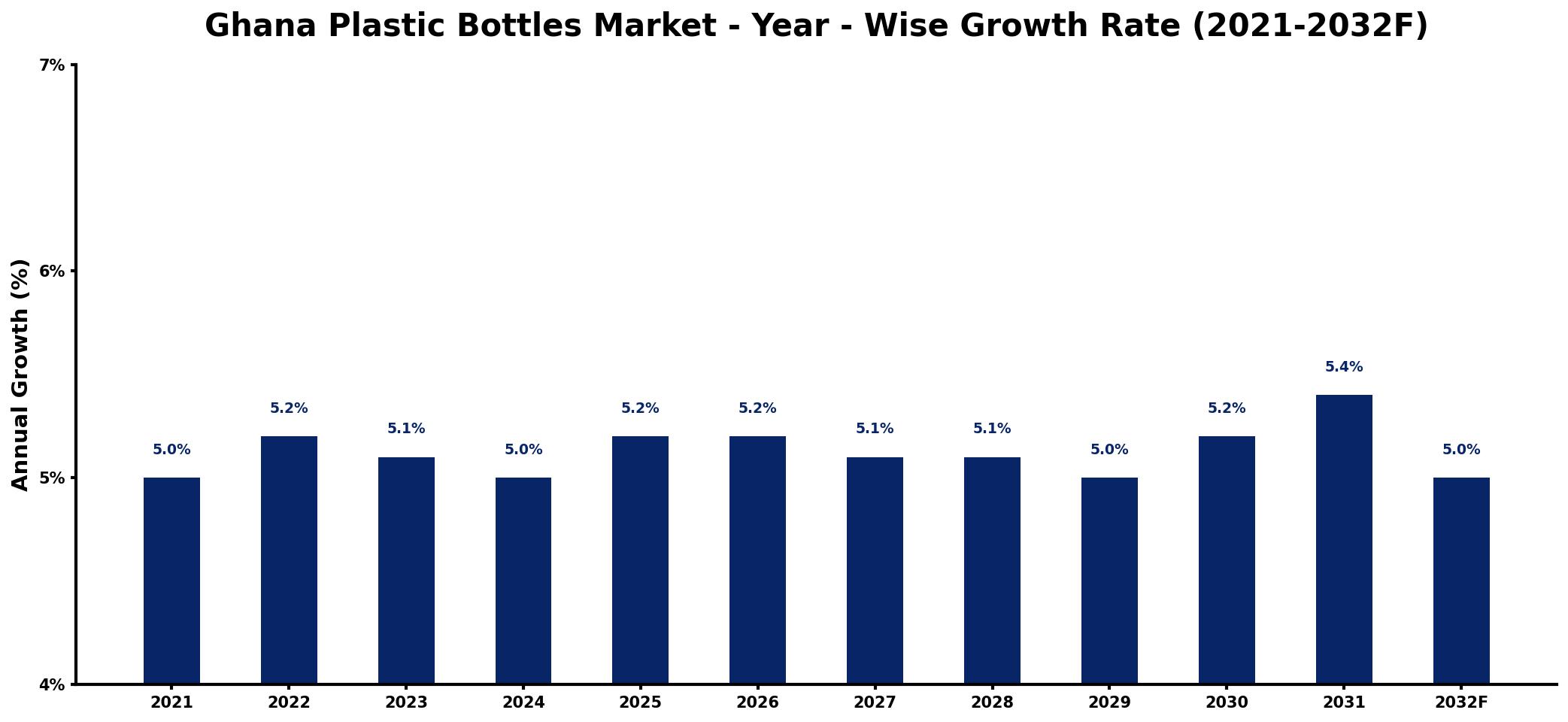
The table below presents the year‑wise growth rates along with the key drivers influencing the market
| Year | Growth Rate | Major Drivers |
| 2021 | 5.0% | Rising consumer demand for packaging |
| 2022 | 5.2% | Increased investment in recycling technology |
| 2023 | 5.1% | Expansion of beverage industry production |
| 2024 | 5.0% | Growth in e-commerce packaging needs |
| 2025 | 5.2% | Developments in sustainable materials adoption |
| 2026 | 5.2% | Higher demand from food sector |
| 2027 | 5.1% | Innovations in lightweight packaging solutions |
| 2028 | 5.1% | Increase in export market opportunities |
| 2029 | 5.0% | Strengthened local manufacturing capabilities |
| 2030 | 5.2% | rising infrastructure development spending |
| 2031 | 5.4% | Emergence of new market entrants |
| 2032 | 5.0% | Enhanced government support for industries |
Note: Market size estimations and growth projections presented in this report are based on 6Wresearch's proprietary forecasting methodology, utilizing the latest available industry data, government publications, and primary research inputs.
Ghana Plastic Bottles Market Synopsis
The Ghana plastic bottles market has been experiencing noteworthy momentum, largely due to a rising consumer shift towards packaged goods. This demand is being met by both local and international manufacturers who are offering diverse and innovative packaging options. As consumer consciousness about sustainability intensifies, the market is evolving towards eco-friendly solutions, reflecting a significant shift in both consumer preferences and industry standards.
Looking ahead, the market is positioned for considerable transformation as manufacturers invest in new technologies and sustainable practices. Government regulations aimed at promoting recycling and the use of biodegradable materials are influencing product development and consumer choices alike. The blend of market demand and regulatory support is set to reshape the landscape of plastic bottles in Ghana.
Ghana Plastic Bottles Market Key Takeaways
- Significant market growth driven by increasing demand for beverages and personal care products.
- Shift towards sustainable and eco-friendly packaging solutions due to rising consumer awareness.
- Government regulations are encouraging manufacturers to adopt recycling practices.
- Competition exists between local and international players, enhancing product variety.
- Investment opportunities in manufacturing and recycling infrastructure are on the rise.
Evaluation of Restraints in Ghana Plastic Bottles Market
Despite the positive growth trajectory, the Ghana plastic bottles market faces several restraints. One of the most pressing challenges is the inadequate recycling infrastructure, which contributes to environmental pollution and limits the effective management of plastic waste. Moreover, there is a notable gap in consumer awareness regarding proper disposal methods, exacerbating littering issues. Additionally, the prevalence of counterfeit and subpar products threatens consumer safety and confidence, while reliance on imported raw materials escalates production costs for local manufacturers, hindering their competitiveness.
Ghana Plastic Bottles Market Trends
Emerging trends in the Ghana plastic bottles market are significantly shaping demand and technology. There is a marked increase in the pursuit of lightweight and durable bottles that cater to the convenience-seeking consumer. Alongside this, manufacturers are heavily investing in research and development aimed at creating biodegradable and recyclable materials. This trend aligns with the growing consumer demand for products that are not only functional but also environmentally responsible, reflecting a broader shift toward sustainability within the packaging industry.
Ghana Plastic Bottles Market Opportunities
The market presents several lucrative opportunities for growth and investment. Establishing manufacturing facilities to produce innovative plastic bottles can meet the increasing demands from various sectors such as beverages and personal care. Furthermore, investing in recycling and waste management solutions could yield significant returns, especially as consumer preferences tilt toward sustainability. Collaborating with local firms to strengthen distribution networks or introducing cutting-edge technology can enhance product offerings and drive market expansion.
Government Initiatives in the Ghana Plastic Bottles Market
The Ghanaian government has enacted various policies aimed at regulating the plastic bottles market, including the introduction of environmental taxes on plastic products to incentivize recycling. There are also regulations mandating the use of biodegradable materials in production processes to mitigate environmental impact. Public awareness campaigns are being launched to educate consumers on the importance of reducing plastic waste and embracing sustainable alternatives, reflecting the governments commitment to fostering an environmentally friendly market.
Future Insights of the Ghana Plastic Bottles Market
The future outlook for the Ghana plastic bottles market appears robust, bolstered by urbanization trends and rising disposable incomes. The demand for convenience and packaged beverages is likely to strengthen, particularly in segments such as bottled water and carbonated drinks. As the government's commitment to recycling initiatives grows, consumer preferences will likely gravitate toward sustainable packaging solutions. With innovative technologies and materials coming into play, the market is on a path of progressive expansion, positioning itself as an attractive opportunity for stakeholders.
Ghana Plastic Bottles Market Latest Developments (2025 - 2026)
Recent developments in the Ghana plastic bottles market indicate a strong industry trend towards sustainability. Many manufacturers are adopting innovative production techniques focused on reducing environmental impact. Initiatives to increase public awareness about recycling and responsible plastic consumption are also gaining momentum. These efforts are essential as the market anticipates increased scrutiny regarding plastic waste management and sustainability practices.
Ghana Plastic Bottles Market - Key Attractiveness of the Report
- 10 Years of Market Numbers
- Historical Data Starting from 2022 to 2025
- Base Year: 2025
- Forecast Data until 2032
- Key Performance Indicators Impacting the Market
- Major Upcoming Developments and Projects
Key Highlights of the Report:
- Ghana Plastic Bottles Market Outlook
- Market Size of Ghana Plastic Bottles Market, 2025
- Forecast of Ghana Plastic Bottles Market, 2032
- Historical Data and Forecast of Ghana Plastic Bottles Revenues & Volume for the Period 2022-2032F
- Ghana Plastic Bottles Market Trend Evolution
- Ghana Plastic Bottles Market Drivers and Challenges
- Ghana Plastic Bottles Price Trends
- Ghana Plastic Bottles Porter's Five Forces
- Ghana Plastic Bottles Industry Life Cycle
- Historical Data and Forecast of Ghana Plastic Bottles Market Revenues & Volume By Raw Material Type for the Period 2022-2032F
- Historical Data and Forecast of Ghana Plastic Bottles Market Revenues & Volume By Polyethylene Terephthalate (PET) for the Period 2022-2032F
- Historical Data and Forecast of Ghana Plastic Bottles Market Revenues & Volume By Poly Propylene (PP) for the Period 2022-2032F
- Historical Data and Forecast of Ghana Plastic Bottles Market Revenues & Volume By Low-density Polyethylene (LDPE) for the Period 2022-2032F
- Historical Data and Forecast of Ghana Plastic Bottles Market Revenues & Volume By High-density Polyethylene (HDPE) for the Period 2022-2032F
- Historical Data and Forecast of Ghana Plastic Bottles Market Revenues & Volume By Other Raw Materials for the Period 2022-2032F
- Historical Data and Forecast of Ghana Plastic Bottles Market Revenues & Volume By End-user for the Period 2022-2032F
- Historical Data and Forecast of Ghana Plastic Bottles Market Revenues & Volume By Beverage for the Period 2022-2032F
- Historical Data and Forecast of Ghana Plastic Bottles Market Revenues & Volume By Food for the Period 2022-2032F
- Historical Data and Forecast of Ghana Plastic Bottles Market Revenues & Volume By Cosmetics for the Period 2022-2032F
- Historical Data and Forecast of Ghana Plastic Bottles Market Revenues & Volume By Pharmaceutical for the Period 2022-2032F
- Historical Data and Forecast of Ghana Plastic Bottles Market Revenues & Volume By Household Care for the Period 2022-2032F
- Historical Data and Forecast of Ghana Plastic Bottles Market Revenues & Volume By Other for the Period 2022-2032F
- Ghana Plastic Bottles Import Export Trade Statistics
- Market Opportunity Assessment By Raw Material Type
- Market Opportunity Assessment By End-user
- Ghana Plastic Bottles Top Companies Market Share
- Ghana Plastic Bottles Competitive Benchmarking By Technical and Operational Parameters
- Ghana Plastic Bottles Company Profiles
- Ghana Plastic Bottles Key Strategic Recommendations






































