Ghana Prom Dresses Market Summary
The ghana prom dresses market was estimated at USD 411 Million in 2025 and is projected to reach USD 540 Million by 2032, growing at a CAGR of 4.4% from 2026 to 2032.
Ghana Prom Dresses Market Year-wise Growth Rate and Key Drivers
This graph highlights how the Ghana Prom Dresses Market has steadily grown over the past five years, supported by major growth factors.
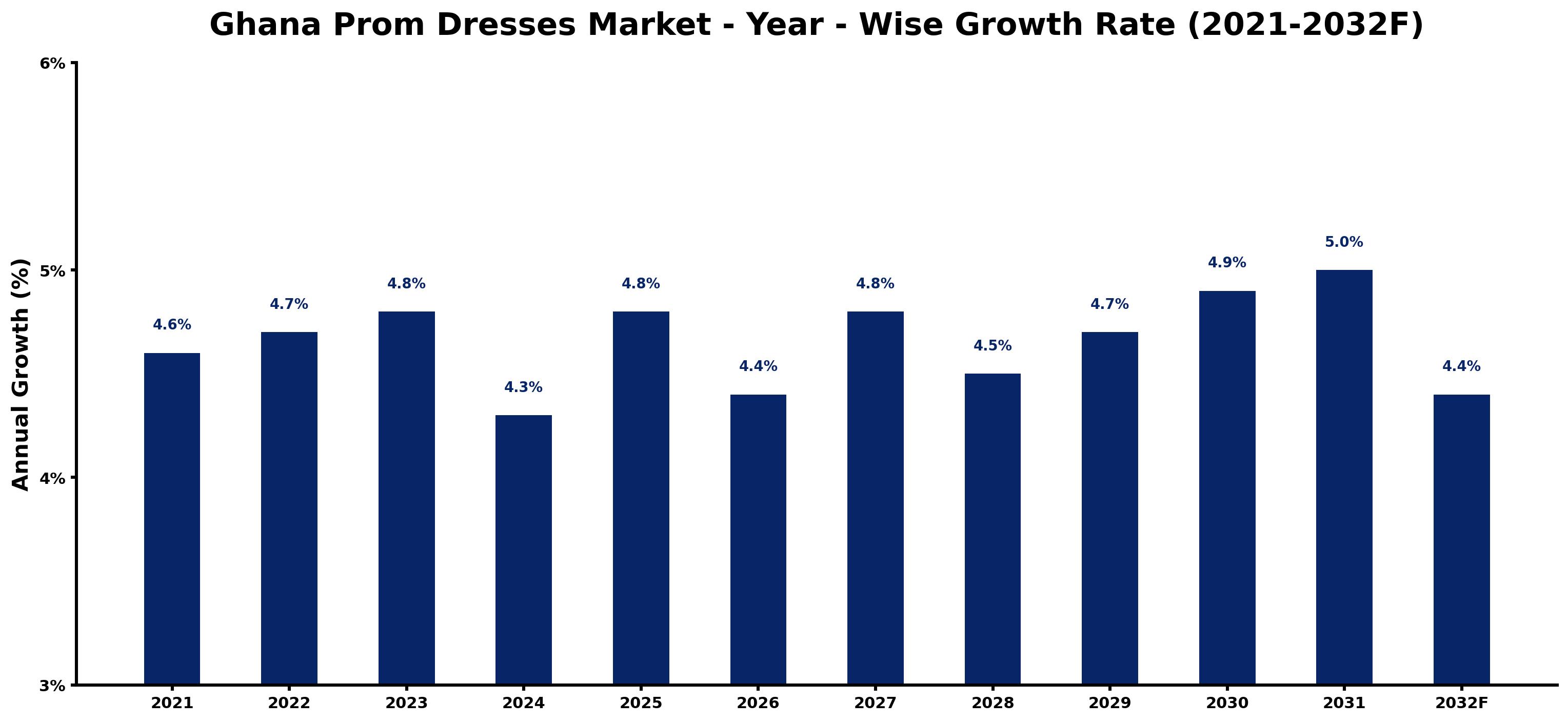
The table below presents the year wise growth rates along with the key drivers influencing the market
| Year | Growth Rate | Major Drivers |
| 2021 | 4.6% | Post-lockdown retail projects emphasized online sales channels for prom dress retailers. |
| 2022 | 4.7% | Increasing social media influence inspired unique designs among local fashion designers. |
| 2023 | 4.8% | Ghanaian youth embraced cultural fusion, blending traditional styles with modern aesthetics. |
| 2024 | 4.3% | E-commerce platforms enabled wider access to diverse prom dress selections across Ghana. |
| 2025 | 4.8% | Fashion events in Accra showcased emerging designers, enhancing brand visibility and appeal. |
| 2026 | 4.4% | Rising disposable incomes allowed families to invest more in special occasion attire. |
| 2027 | 4.8% | Local textile production initiatives reduced reliance on imports, creating sustainable supply chains. |
| 2028 | 4.5% | Collaborations between designers and influencers shaped aspirational fashion trends nationwide. |
| 2029 | 4.7% | Increased focus on eco-friendly materials influenced consumer choices and brand differentiation. |
| 2030 | 4.9% | Ghana's urbanization trend led to higher demand for trendy prom dress options in cities. |
| 2031 | 5.0% | Digital marketing strategies successfully attracted younger audiences to local apparel brands. |
| 2032 | 4.4% | Cultural celebrations integrated into prom traditions expanded the market's consumer base diversity. |
Note - Market size estimations and growth projections presented in this report are based on 6Wresearch's advanced forecasting approach, validated with industry datasets as of June 2026.
Ghana Prom Dresses Market Synopsis
The Ghana Prom Dresses Market is projected to reach 4.4% and witness significant growth during the forecast period (2026-2032). This dynamic market reflects a combination of cultural pride, rising disposable incomes, and the growing influence of Western fashion trends among Ghanaian youth. With local designers and international brands vying for prominence, the sector is characterized by a rich diversity of styles that encapsulate both traditional Ghanaian aesthetics and modern design sensibilities.
Ghana Prom Dresses Market Growth Drivers
Several key factors are propelling the growth of the Ghana Prom Dresses Market. First, the increasing disposable income among the younger population is allowing more consumers to invest in fashionable clothing, especially for significant events like proms. Second, cultural events play a pivotal role, with prom celebrations becoming more popular and elaborate, necessitating unique attire that reflects individual styles and cultural roots.
- Social media platforms serve as influential channels for showcasing prom dress styles, often leading to increased consumer interest and demand.
- Celebrity endorsements and influencer marketing are playing an essential role in shaping consumer preferences, driving younger audiences towards specific brands and styles.
- There is a notable trend toward customization in dress design, giving consumers more opportunities to express their individuality and creativity.
- The growing acceptance of e-commerce is transforming the way consumers shop, making it easier for them to access a broader range of styles and designs from both local and international sources.
- As young people increasingly value sustainability, there is an observable shift towards eco-friendly materials and ethically produced dresses, pushing brands to adopt more responsible practices.
Ghana Prom Dresses Market Trends and Opportunities
The current trends in the Ghana Prom Dresses Market highlight a strong preference for unique and personalized designs. This demand is often met by the incorporation of traditional Ghanaian fabrics and motifs into modern dress styles, allowing consumers to celebrate their heritage while enjoying contemporary fashion. Additionally, sustainability is gaining traction, with many customers showing a clear preference for eco-friendly materials and locally produced options.
- Shifts in consumer preferences indicate a growing desire for dresses that reflect personal values, as younger consumers increasingly prioritize ethical fashion choices.
- The online retail sector is flourishing, providing opportunities for businesses to reach beyond urban centers, where traditional shopping may be more limited.
- Collaborations with local artisans and designers can lead to unique offerings that resonate with the cultural identity of the market.
- Market players can leverage social media marketing strategies to connect with youth demographics effectively, enhancing brand visibility and customer engagement.
- Introducing a broader range of sizes and styles that cater to diverse body types will enhance inclusivity and accessibility in the market.
Ghana Prom Dresses Market Challenges and Restraints
Despite the opportunities, the Ghana Prom Dresses Market faces several challenges. Limited availability of trendy and affordable options can make it difficult for consumers to find the perfect dress domestically. The prevalence of counterfeit products further complicates the landscape, as consumers may struggle to distinguish between authentic and fraudulent offerings.
- Many young consumers are shifting towards international online retailers due to the scarcity of diverse styles within the local market, highlighting a gap in supply.
- Counterfeit dresses not only erode consumer trust but also undermine the efforts of legitimate businesses to establish brand loyalty.
- Logistical challenges, such as high import duties and shipping costs, create barriers for international brands attempting to enter the Ghanaian market.
- Limited consumer education on identifying authentic products necessitates improved awareness campaigns and retailer support.
- To compete effectively, local designers must innovate continuously, addressing the evolving preferences of the market and mitigating the risk of stagnation.
Ghana Prom Dresses Market Government Investment and Initiatives
While there are no specific government policies directly targeting the prom dresses market, general trade policies and regulations significantly impact its landscape. The Ghanaian government has enacted various initiatives to bolster the local textile and garment industry, which indirectly affects the availability of prom dresses. These efforts include import tariff adjustments, support for local fabric production, and incentives for small and medium-sized fashion enterprises aimed at enhancing domestic offerings.
The government's commitment to uplifting local fashion industries reflects in public spending geared towards capacity building and skill development. Such initiatives are crucial in fostering a creative environment that nurtures local talent, ultimately leading to more unique and competitive prom dress options in the market. Furthermore, policy frameworks aimed at facilitating smoother importation processes can aid local businesses in sourcing quality materials and designs.
Ghana Prom Dresses Market Latest Developments (May 2025 - June 2026)
In the period spanning May 2025 to June 2026, the Ghana Prom Dresses Market has witnessed several notable developments. There has been an increase in the number of online platforms dedicated to the sale of prom dresses, reflecting heightened e-commerce activity within the region. This trend has been driven by an increasing number of consumers opting for online shopping due to convenience and a broader product selection.
Moreover, local designers have begun to collaborate more extensively with artisans, creating bespoke dresses that integrate traditional African designs with contemporary styles. This has not only enhanced the uniqueness of the offerings but also encouraged local craftsmanship. Sustainability has gained traction, with several brands launching eco-conscious lines made from organic and recyclable materials. Such initiatives align with global trends in ethical fashion and resonate with a consumer base increasingly concerned about sustainability. Finally, social media continues to play a crucial role in shaping market dynamics, with influencers using platforms to showcase diverse styles and promote new collections actively.
Ghana Prom Dresses Market - Key Attractiveness of the Report
- 10 Years of Market Numbers
- Historical Data Starting from 2022 to 2025
- Base Year: 2025
- Forecast Data until 2032
- Key Performance Indicators Impacting the Market
- Major Upcoming Developments and Projects
Key Highlights of the Report:
- Ghana Prom Dresses Market Outlook
- Market Size of Ghana Prom Dresses Market, 2025
- Forecast of Ghana Prom Dresses Market, 2032F
- Historical Data and Forecast of Ghana Prom Dresses Revenues & Volume for the Period 2022-2032F
- Ghana Prom Dresses Market Trend Evolution
- Ghana Prom Dresses Market Drivers and Challenges
- Ghana Prom Dresses Price Trends
- Ghana Prom Dresses Porter's Five Forces
- Ghana Prom Dresses Industry Life Cycle
- Historical Data and Forecast of Ghana Prom Dresses Market Revenues & Volume By Type for the Period 2022-2032F
- Historical Data and Forecast of Ghana Prom Dresses Market Revenues & Volume By Long Dresses for the Period 2022-2032F
- Historical Data and Forecast of Ghana Prom Dresses Market Revenues & Volume By Short Dresses for the Period 2022-2032F
- Historical Data and Forecast of Ghana Prom Dresses Market Revenues & Volume By Knee-length Dresses for the Period 2022-2032F
- Historical Data and Forecast of Ghana Prom Dresses Market Revenues & Volume By Fabric for the Period 2022-2032F
- Historical Data and Forecast of Ghana Prom Dresses Market Revenues & Volume By Chiffon for the Period 2022-2032F
- Historical Data and Forecast of Ghana Prom Dresses Market Revenues & Volume By Satin for the Period 2022-2032F
- Historical Data and Forecast of Ghana Prom Dresses Market Revenues & Volume By Organza for the Period 2022-2032F
- Historical Data and Forecast of Ghana Prom Dresses Market Revenues & Volume By Others for the Period 2022-2032F
- Historical Data and Forecast of Ghana Prom Dresses Market Revenues & Volume By Distribution Channel for the Period 2022-2032F
- Historical Data and Forecast of Ghana Prom Dresses Market Revenues & Volume By Store-Based for the Period 2022-2032F
- Historical Data and Forecast of Ghana Prom Dresses Market Revenues & Volume By Non-Store-Based for the Period 2022-2032F
- Ghana Prom Dresses Import Export Trade Statistics
- Market Opportunity Assessment By Type
- Market Opportunity Assessment By Fabric
- Market Opportunity Assessment By Distribution Channel
- Ghana Prom Dresses Top Companies Market Share
- Ghana Prom Dresses Competitive Benchmarking By Technical and Operational Parameters
- Ghana Prom Dresses Company Profiles
- Ghana Prom Dresses Key Strategic Recommendations






































