Ghana Rotary Pumps Market Size, Share & Growth Rate
The Ghana Rotary Pumps Market was estimated at USD 266 Million in 2025 and is projected to reach USD 363 Million by 2032, growing at a CAGR of 4.5% from 2026 to 2032. This anticipated growth trajectory is largely driven by the country's ongoing industrialization and infrastructure projects, which are creating a burgeoning demand for efficient fluid transfer solutions. Additionally, the expansion of sectors such as oil and gas, agriculture, and manufacturing is further propelling the need for reliable rotary pumping systems.
Ghana Rotary Pumps Market Year-wise Growth Rate and Key Drivers
This graph highlights how the Ghana Rotary Pumps Market has steadily grown over the years, supported by major growth factors.
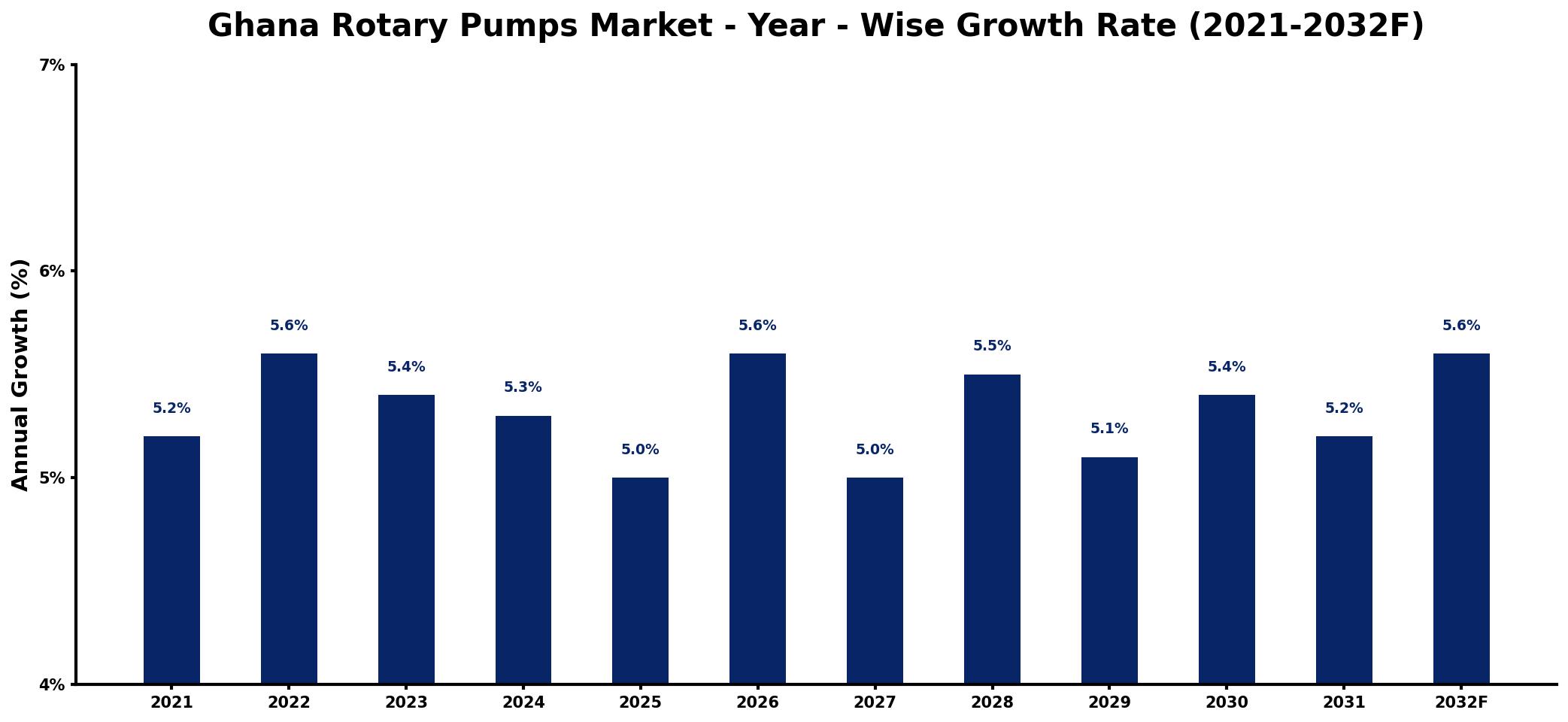
The table below presents the year‑wise growth rates along with the key drivers influencing the market
| Year | Growth Rate | Major Drivers |
| 2021 | 5.2% | Rising industrial sector investments |
| 2022 | 5.6% | Increased agricultural irrigation demand |
| 2023 | 5.4% | Growing urban water supply needs |
| 2024 | 5.3% | Expansion of construction activities |
| 2025 | 5.0% | Surge in mining operations demand |
| 2026 | 5.6% | Enhancements in energy generation projects |
| 2027 | 5.0% | Boost in food processing industries |
| 2028 | 5.5% | Developments in infrastructure projects |
| 2029 | 5.1% | Increased focus on sustainability initiatives |
| 2030 | 5.4% | Growth in manufacturing sector requirements |
| 2031 | 5.2% | Rising need for wastewater management |
| 2032 | 5.6% | enhanced product quality standards |
Note: Market size estimations and growth projections presented in this report are based on 6Wresearch's proprietary forecasting methodology, utilizing the latest available industry data, government publications, and primary research inputs.
Ghana Rotary Pumps Market Synopsis
The Ghana rotary pumps market is currently witnessing significant momentum, fueled by increased investments in infrastructure and industrial sectors. The diverse applications of rotary pumps across oil and gas, agriculture, and water treatment underline their essential role in supporting the countrys economic growth.
As industries modernize, there is an escalating demand for innovative, energy-efficient rotary pump solutions. With several multinational manufacturers operating in the market, competition is robust, driving advancements in technology and efficiency, ultimately benefiting end-users.
Ghana Rotary Pumps Market Key Takeaways
- Strong growth in the rotary pumps market is linked to Ghanas industrial development and infrastructure projects.
- Energy efficiency and environmental sustainability are becoming paramount in product offerings.
- The prevalence of counterfeit products poses a significant challenge to genuine manufacturers.
- Technological innovations are paving the way for smart pump solutions that enhance performance.
- Government initiatives aim to promote investment, particularly in the energy and oil sectors.
Evaluation of Restraints in Ghana Rotary Pumps Market
Despite the optimistic outlook, the Ghana rotary pumps market faces notable restraints. Chief among these is the issue of counterfeit products, which compromise product integrity and safety, often leading to decreased consumer trust. The regulatory environment lacks stringent measures to mitigate the influx of these subpar goods. Additionally, fluctuations in raw material prices can unpredictably affect production costs, while limited access to financing for small and medium enterprises constrains market innovation and growth potential. These challenges necessitate a cooperative approach among industry stakeholders and regulatory authorities to establish frameworks that ensure product quality and fair competition.
Ghana Rotary Pumps Market Trends
The Ghana rotary pumps market is increasingly leaning towards energy-efficient and sustainable pumping solutions. Users are prioritizing pumps that not only minimize energy consumption but also reduce long-term maintenance costs. There is a notable shift towards smart pump technologies, allowing for remote monitoring and better control, which enhances operational reliability. Furthermore, the adoption of advanced materials and coatings is gaining traction, as they contribute to longer lifespan and resilience against harsh operational conditions, particularly in the oil and gas sector.
Ghana Rotary Pumps Market Opportunities
Investment opportunities within the Ghana rotary pumps market appear promising as the nation enhances its industrial capabilities. The urgent need for robust pumping solutions in sectors like mining, agriculture, and oil and gas presents a compelling case for investment. Moreover, the rising demand for energy-efficient technologies opens avenues for companies willing to innovate and cater to environmentally conscious consumers. As infrastructure projects continue to evolve, investors can leverage this growth trajectory to secure profitable returns.
Government Initiatives in the Ghana Rotary Pumps Market
Government policies in Ghana are gradually shaping the rotary pumps market landscape. Regulations aimed at ensuring local content participation in key industries, particularly oil and gas, are influencing procurement practices. The government has also taken strides towards promoting sustainable practices by enforcing environmental standards that manufacturers must adhere to. These initiatives not only facilitate compliance but also create a favorable investment climate, encouraging domestic and international companies to partake in the markets growth.
Future Insights of the Ghana Rotary Pumps Market
Looking ahead to 2026-2032, the Ghana rotary pumps market is set for consistent growth, driven by ongoing industrialization and infrastructure initiatives. The anticipated expansion in oil and gas production, coupled with improvements in water treatment and agricultural efficiency, will spur demand for reliable rotary pumps. Technological advancements that enhance pump performance, energy efficiency, and sustainability are likely to further fuel market growth. However, stakeholders must remain cognizant of challenges such as competition from alternative pumping technologies and market volatility.
Ghana Rotary Pumps Market Latest Developments (2025 - 2026)
Recent developments within the Ghana rotary pumps market reflect a strong focus on innovation and sustainability. Companies are launching new product lines that incorporate cutting-edge technology and environmentally friendly practices, reinforcing their commitment to efficiency and reliability. Additionally, ongoing infrastructure projects are creating partnerships among industry players to enhance supply chain dynamics and product offerings, ultimately leading to improved service delivery in the sector.
Ghana Rotary Pumps Market - Key Attractiveness of the Report
- 10 Years of Market Numbers
- Historical Data Starting from 2022 to 2025
- Base Year: 2025
- Forecast Data until 2032
- Key Performance Indicators Impacting the Market
- Major Upcoming Developments and Projects
Key Highlights of the Report:
- Ghana Rotary Pumps Market Outlook
- Market Size of Ghana Rotary Pumps Market, 2025
- Forecast of Ghana Rotary Pumps Market, 2032
- Historical Data and Forecast of Ghana Rotary Pumps Revenues & Volume for the Period 2022-2032F
- Ghana Rotary Pumps Market Trend Evolution
- Ghana Rotary Pumps Market Drivers and Challenges
- Ghana Rotary Pumps Price Trends
- Ghana Rotary Pumps Porter's Five Forces
- Ghana Rotary Pumps Industry Life Cycle
- Historical Data and Forecast of Ghana Rotary Pumps Market Revenues & Volume By Product Type for the Period 2022-2032F
- Historical Data and Forecast of Ghana Rotary Pumps Market Revenues & Volume By Gear for the Period 2022-2032F
- Historical Data and Forecast of Ghana Rotary Pumps Market Revenues & Volume By Vane for the Period 2022-2032F
- Historical Data and Forecast of Ghana Rotary Pumps Market Revenues & Volume By Screw for the Period 2022-2032F
- Historical Data and Forecast of Ghana Rotary Pumps Market Revenues & Volume By Lobe for the Period 2022-2032F
- Historical Data and Forecast of Ghana Rotary Pumps Market Revenues & Volume By Progressive Cavity Pumps for the Period 2022-2032F
- Historical Data and Forecast of Ghana Rotary Pumps Market Revenues & Volume By Piston for the Period 2022-2032F
- Historical Data and Forecast of Ghana Rotary Pumps Market Revenues & Volume By Peristaltic for the Period 2022-2032F
- Historical Data and Forecast of Ghana Rotary Pumps Market Revenues & Volume By Capacity for the Period 2022-2032F
- Historical Data and Forecast of Ghana Rotary Pumps Market Revenues & Volume By Small (Up to 500 gpm) for the Period 2022-2032F
- Historical Data and Forecast of Ghana Rotary Pumps Market Revenues & Volume By Medium (500-1,000 gpm) for the Period 2022-2032F
- Historical Data and Forecast of Ghana Rotary Pumps Market Revenues & Volume By High (More than 1,000 gpm) for the Period 2022-2032F
- Historical Data and Forecast of Ghana Rotary Pumps Market Revenues & Volume By End-use Application for the Period 2022-2032F
- Historical Data and Forecast of Ghana Rotary Pumps Market Revenues & Volume By Oil, Gas & Refining for the Period 2022-2032F
- Historical Data and Forecast of Ghana Rotary Pumps Market Revenues & Volume By Chemical for the Period 2022-2032F
- Historical Data and Forecast of Ghana Rotary Pumps Market Revenues & Volume By Water & Wastewater for the Period 2022-2032F
- Historical Data and Forecast of Ghana Rotary Pumps Market Revenues & Volume By General Industry for the Period 2022-2032F
- Historical Data and Forecast of Ghana Rotary Pumps Market Revenues & Volume By Power Generation for the Period 2022-2032F
- Ghana Rotary Pumps Import Export Trade Statistics
- Market Opportunity Assessment By Product Type
- Market Opportunity Assessment By Capacity
- Market Opportunity Assessment By End-use Application
- Ghana Rotary Pumps Top Companies Market Share
- Ghana Rotary Pumps Competitive Benchmarking By Technical and Operational Parameters
- Ghana Rotary Pumps Company Profiles
- Ghana Rotary Pumps Key Strategic Recommendations






































