Ghana Toilet seat Market Size Growth Rate
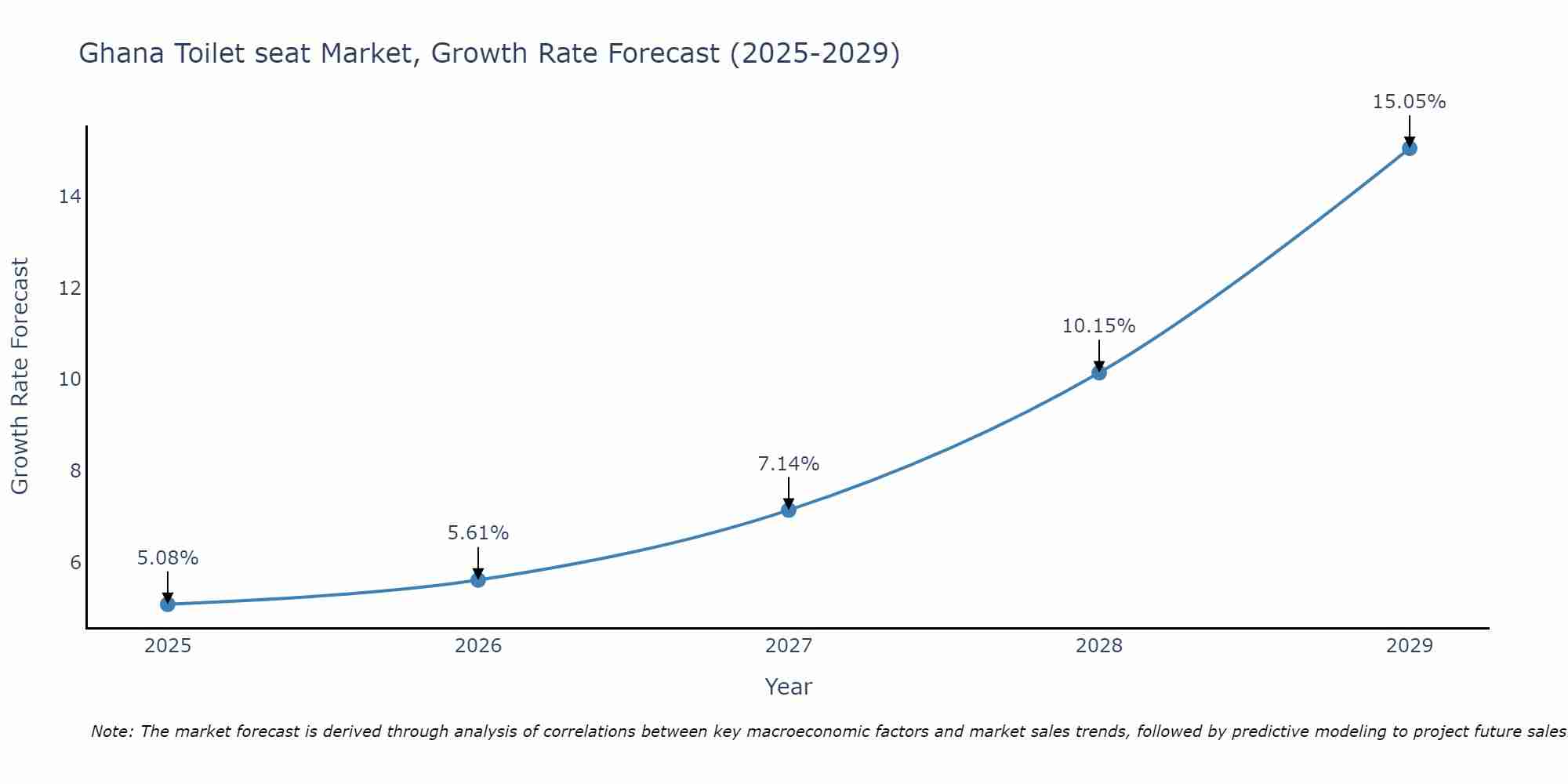
The Ghana Toilet seat Market is likely to experience consistent growth rate gains over the period 2025 to 2029. From 5.08% in 2025, the growth rate steadily ascends to 15.05% in 2029.
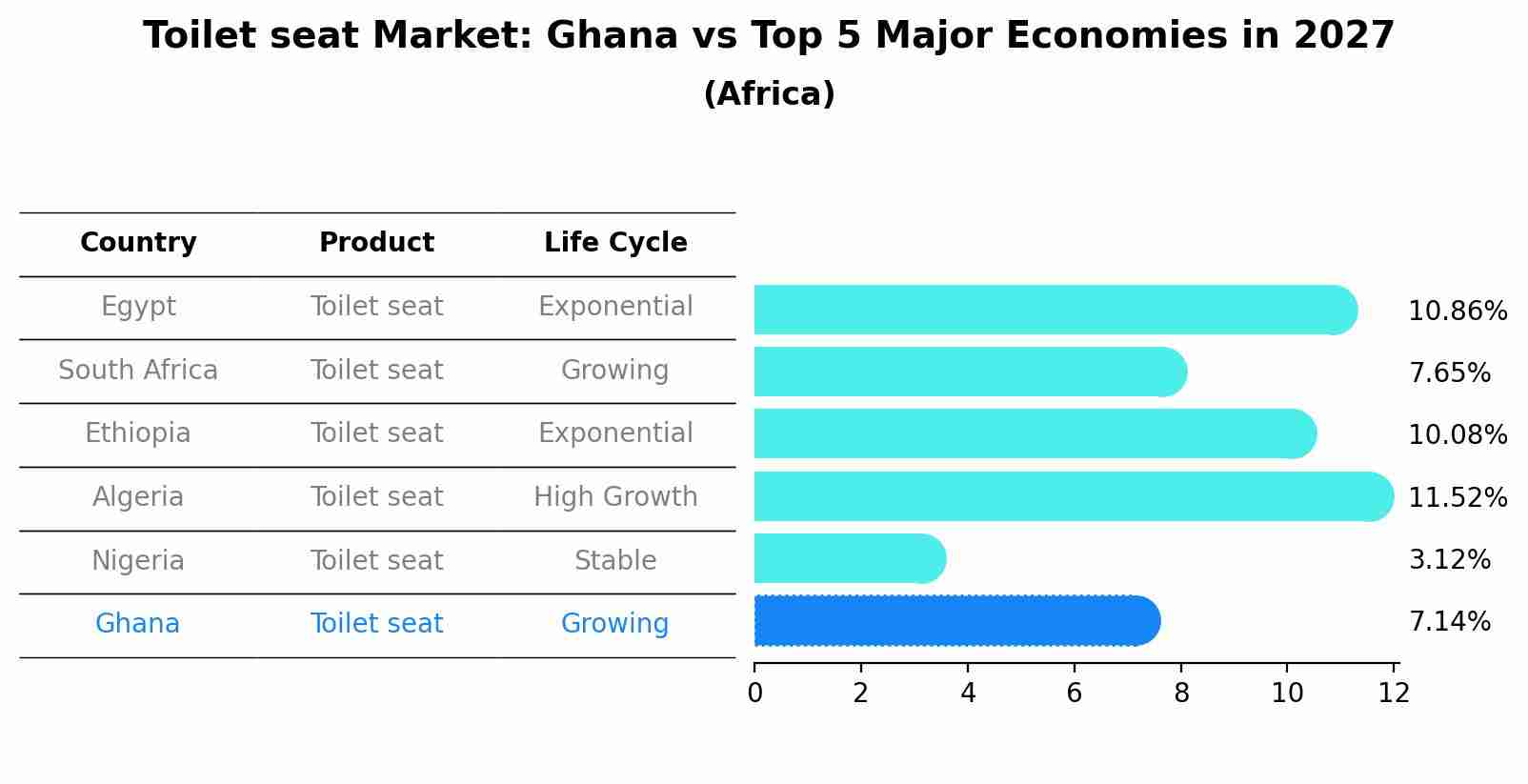
Toilet seat Market: Ghana vs Top 5 Major Economies in 2027 (Africa)
The Toilet seat market in Ghana is projected to grow at a growing growth rate of 7.14% by 2027, highlighting the country's increasing focus on advanced technologies within the Africa region, where Egypt holds the dominant position, followed closely by South Africa, Ethiopia, Algeria and Nigeria, shaping overall regional demand.
Ghana Toilet seat Market Overview
The Ghana toilet seat market is experiencing steady growth driven by increasing urbanization, rising disposable income, and a growing awareness of hygiene and sanitation. There is a growing demand for modern and innovative toilet seat designs that offer comfort, durability, and easy maintenance. The market is highly competitive, with both domestic manufacturers and international brands vying for market share. Key trends in the market include the adoption of smart toilet seats with features such as bidet functions and heated seats. The market is also witnessing a shift towards eco-friendly and water-saving toilet seat options. Overall, the Ghana toilet seat market presents opportunities for companies to introduce innovative products catering to the evolving needs and preferences of consumers.
Ghana Toilet seat Market Trends
Currently, the Ghana toilet seat market is experiencing a shift towards more advanced and innovative products. Consumers are increasingly looking for features such as soft-closing mechanisms, easy-clean surfaces, and water-saving functionalities. There is also a growing demand for eco-friendly and sustainable materials in toilet seat manufacturing, reflecting a broader trend towards environmental consciousness. Additionally, the market is witnessing a rise in the popularity of smart toilet seats with integrated technologies like bidet functions, heated seats, and automatic flushing systems. As urbanization and modernization continue to drive development in Ghana, the toilet seat market is expected to further evolve to meet the changing needs and preferences of consumers.
Ghana Toilet seat Market Challenges
Some challenges faced in the Ghana toilet seat market include limited access to proper sanitation facilities in rural areas, leading to lower demand for modern toilet seats. Additionally, the presence of counterfeit products in the market affects the reputation of genuine brands and can lead to consumer distrust. High import taxes and transportation costs also contribute to the increased pricing of toilet seats, making it less affordable for some consumers. Limited awareness about the benefits of using high-quality toilet seats and the importance of proper sanitation practices further hinders market growth. Overall, addressing these challenges will require a combination of improving infrastructure, cracking down on counterfeit products, and implementing effective marketing strategies to educate consumers about the value of investing in quality toilet seats.
Ghana Toilet seat Market Investment Opportunities
The Ghana toilet seat market presents promising investment opportunities due to the country`s growing population, increasing urbanization, and rising focus on sanitation and hygiene. With a rising middle-class population and improving disposable incomes, there is a growing demand for modern and innovative toilet seat products. Investors can explore opportunities in manufacturing and distributing a wide range of toilet seats, including eco-friendly and smart toilet seats that cater to changing consumer preferences. Additionally, there is potential for partnerships with government agencies and NGOs to promote access to sanitation facilities in rural areas. Investing in the Ghana toilet seat market offers the potential for long-term growth and profitability as the country continues to prioritize sanitation infrastructure development.
Ghana Toilet seat Market Government Policy
Government policies related to the Ghana toilet seat market primarily focus on promoting sanitation and hygiene. The government has implemented initiatives to increase access to improved sanitation facilities, including the promotion of affordable and quality toilet seats. This includes providing subsidies or financial assistance to households and businesses for the installation of toilet seats. Additionally, there are regulations in place to ensure the quality and safety standards of toilet seats, which contribute to consumer protection. The government also encourages innovation and investment in the sanitation sector to address the country`s sanitation challenges. Overall, these policies aim to improve public health outcomes, reduce open defecation, and create a more sustainable and hygienic environment in Ghana.
Ghana Toilet seat Market Future Outlook
The future outlook for the Ghana toilet seat market appears promising, driven by factors such as rapid urbanization, increasing disposable income levels, and a growing awareness of hygiene and sanitation practices. As more households in Ghana transition towards modern living standards, there is a rising demand for innovative and stylish toilet seat designs that offer both comfort and functionality. Additionally, government initiatives aimed at improving sanitation infrastructure across the country are likely to boost the market further. Manufacturers in the sector are expected to focus on sustainable materials and smart technologies to cater to the evolving needs of consumers. Overall, the Ghana toilet seat market is anticipated to witness steady growth in the coming years, presenting opportunities for both local and international players to capitalize on this expanding market segment.
Key Highlights of the Report:
- Ghana Toilet seat Market Outlook
- Market Size of Ghana Toilet seat Market, 2021
- Forecast of Ghana Toilet seat Market, 2031
- Historical Data and Forecast of Ghana Toilet seat Revenues & Volume for the Period 2021 - 2031
- Ghana Toilet seat Market Trend Evolution
- Ghana Toilet seat Market Drivers and Challenges
- Ghana Toilet seat Price Trends
- Ghana Toilet seat Porter's Five Forces
- Ghana Toilet seat Industry Life Cycle
- Historical Data and Forecast of Ghana Toilet seat Market Revenues & Volume By Bowl Shape for the Period 2021 - 2031
- Historical Data and Forecast of Ghana Toilet seat Market Revenues & Volume By Elongated for the Period 2021 - 2031
- Historical Data and Forecast of Ghana Toilet seat Market Revenues & Volume By Round for the Period 2021 - 2031
- Historical Data and Forecast of Ghana Toilet seat Market Revenues & Volume By Square for the Period 2021 - 2031
- Historical Data and Forecast of Ghana Toilet seat Market Revenues & Volume By Raw Material for the Period 2021 - 2031
- Historical Data and Forecast of Ghana Toilet seat Market Revenues & Volume By Plastic for the Period 2021 - 2031
- Historical Data and Forecast of Ghana Toilet seat Market Revenues & Volume By Wood for the Period 2021 - 2031
- Historical Data and Forecast of Ghana Toilet seat Market Revenues & Volume By Ceramic for the Period 2021 - 2031
- Historical Data and Forecast of Ghana Toilet seat Market Revenues & Volume By Urea Molding Compound for the Period 2021 - 2031
- Historical Data and Forecast of Ghana Toilet seat Market Revenues & Volume By Others for the Period 2021 - 2031
- Historical Data and Forecast of Ghana Toilet seat Market Revenues & Volume By Category for the Period 2021 - 2031
- Historical Data and Forecast of Ghana Toilet seat Market Revenues & Volume By Smart for the Period 2021 - 2031
- Historical Data and Forecast of Ghana Toilet seat Market Revenues & Volume By Ordinary for the Period 2021 - 2031
- Historical Data and Forecast of Ghana Toilet seat Market Revenues & Volume By Application for the Period 2021 - 2031
- Historical Data and Forecast of Ghana Toilet seat Market Revenues & Volume By Residential for the Period 2021 - 2031
- Historical Data and Forecast of Ghana Toilet seat Market Revenues & Volume By Commercial for the Period 2021 - 2031
- Historical Data and Forecast of Ghana Toilet seat Market Revenues & Volume By Distribution Channel for the Period 2021 - 2031
- Historical Data and Forecast of Ghana Toilet seat Market Revenues & Volume By Online for the Period 2021 - 2031
- Historical Data and Forecast of Ghana Toilet seat Market Revenues & Volume By Offline for the Period 2021 - 2031
- Ghana Toilet seat Import Export Trade Statistics
- Market Opportunity Assessment By Bowl Shape
- Market Opportunity Assessment By Raw Material
- Market Opportunity Assessment By Category
- Market Opportunity Assessment By Application
- Market Opportunity Assessment By Distribution Channel
- Ghana Toilet seat Top Companies Market Share
- Ghana Toilet seat Competitive Benchmarking By Technical and Operational Parameters
- Ghana Toilet seat Company Profiles
- Ghana Toilet seat Key Strategic Recommendations






































