Ghana Vending machines Market Summary
The ghana vending machines market was estimated at USD 368 Million in 2025 and is projected to reach USD 507 Million by 2032, growing at a CAGR of 5.5% from 2026 to 2032.
Ghana Vending machines Market Year-wise Growth Rate and Key Drivers
This graph highlights how the Ghana Vending machines Market has steadily grown over the past five years, supported by major growth factors.
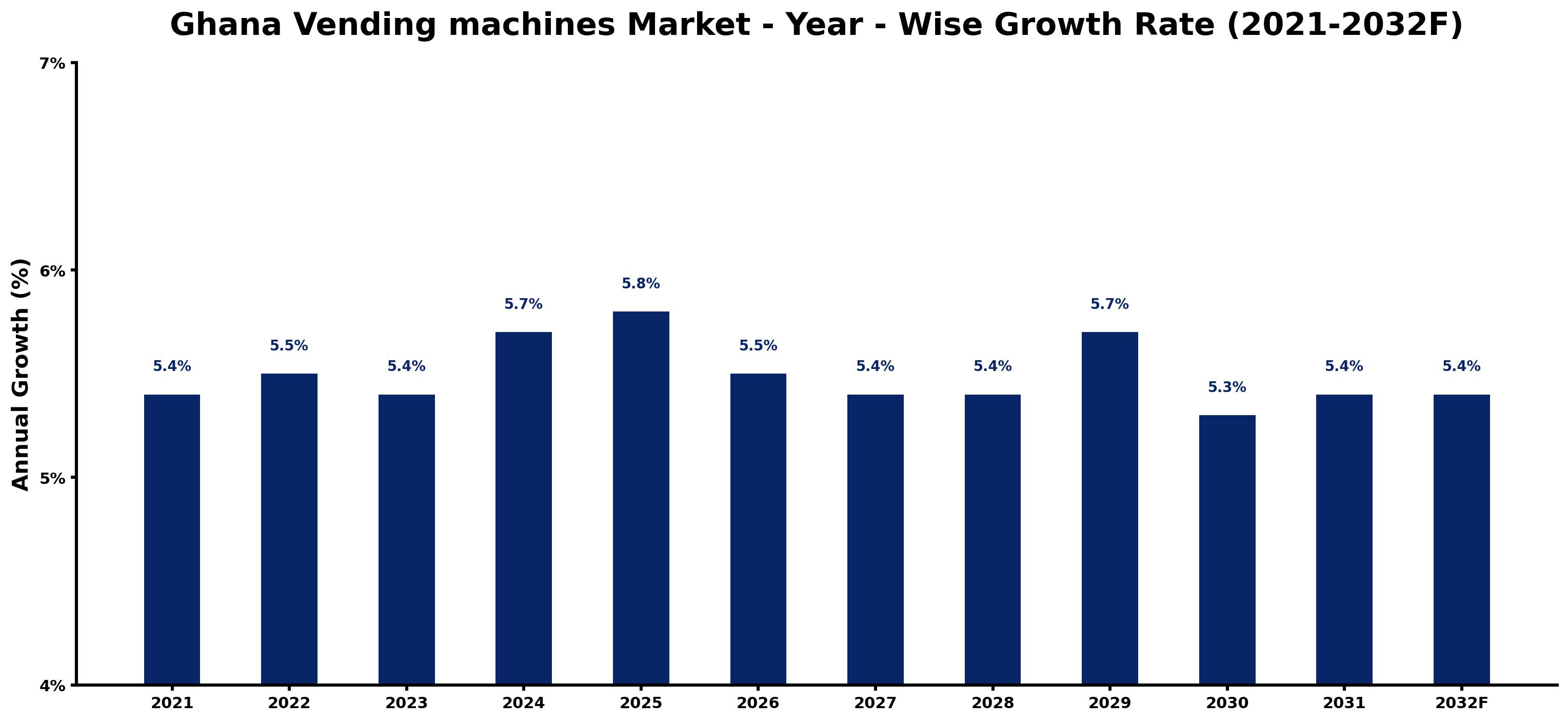
The table below presents the year wise growth rates along with the key drivers influencing the market
| Year | Growth Rate | Major Drivers |
| 2021 | 5.4% | Vending machine placements in high-traffic areas cater to urban consumer convenience needs. |
| 2022 | 5.5% | Local entrepreneurs invest in innovative vending solutions, enhancing product variety and accessibility. |
| 2023 | 5.4% | Digital payment integrations in vending machines appeal to tech-savvy and cashless consumers. |
| 2024 | 5.7% | Partnerships between brands and vending operators expand product offerings and marketing reach. |
| 2025 | 5.8% | Rising urbanization trends lead to increased foot traffic in key commercial districts. |
| 2026 | 5.5% | Health-conscious product options in vending machines resonate with shifting consumer preferences. |
| 2027 | 5.4% | Technological advancements streamline vending machine operations and improve consumer engagement. |
| 2028 | 5.4% | Educational institutions adopt vending solutions, providing convenient access for students and staff. |
| 2029 | 5.7% | Local sourcing of products improves supply chain efficiencies and boosts local economies. |
| 2030 | 5.3% | Sustainability initiatives encourage eco-friendly vending machines, attracting environmentally conscious buyers. |
| 2031 | 5.4% | Consumer habit shifts towards automation drive demand for various unattended retail solutions. |
| 2032 | 5.4% | Collaborative projects among tech firms and retailers redefine consumer experiences in vending. |
Note - Market size estimations and growth projections presented in this report are based on 6Wresearch's advanced forecasting approach, validated with industry datasets as of June 2026.
Ghana Vending machines Market Synopsis
The Ghana Vending machines Market is projected to reach 5.5% and witness significant growth during the forecast period (2026-2032). This market encompasses the establishment and management of vending machines that dispense a range of products including snacks, beverages, and personal care items. These automated machines are strategically located in offices, educational institutions, hospitals, and various public venues, enhancing consumer accessibility to products around the clock.
Ghana Vending machines Market Growth Drivers
A primary driver of the Ghana Vending machines Market is the increasing consumer demand for convenience and readily available snacks and beverages. This trend is influenced by urbanization and the fast-paced lifestyle of urban dwellers, prompting them to seek quick and efficient purchasing solutions. Vending machines cater to this need by providing:
- 24/7 accessibility, allowing consumers to purchase products at any time, which is especially appealing in metropolitan areas.
- A variety of product offerings, ranging from traditional snacks to healthier options, appealing to diverse consumer preferences.
- The convenience of cashless payment systems, which enhance the consumer experience and increase transaction speeds.
- The growing trend of on-the-go consumption, where consumers prefer quick access to food and drinks rather than traditional retail channels.
- The integration of digital technologies, which allows for better inventory management and consumer interaction through smart vending solutions.
Ghana Vending machines Market Challenges and Restraints
Despite the promising growth, the Ghana Vending machines Market faces several challenges that could hinder its development. Key issues include:
- Ensuring machine reliability and the ongoing maintenance of vending equipment to prevent downtime and ensure consumer satisfaction.
- Addressing concerns regarding product freshness, which is critical in maintaining consumer trust and loyalty.
- Combating vandalism and theft, which can lead to significant losses and deter investment in new machines.
- Navigating competition from alternative retail channels, including convenience stores and online delivery services, which may offer similar products.
- Overcoming regulatory challenges regarding health and safety standards that can complicate operation and compliance for vending machine owners.
Ghana Vending machines Market Government Investment and Initiatives
The Ghanaian government recognizes the strategic importance of the vending machines market in promoting entrepreneurship and improving consumer access to products. As part of its commitment, several initiatives are being pursued, including:
- Formulating regulations that support efficient vending machine operations while ensuring adherence to health and safety standards.
- Promoting the adoption of cashless payment systems to facilitate smoother transactions and enhance consumer experience.
- Providing incentives for entrepreneurs looking to invest in the vending machine sector, fostering innovation and competition.
- Encouraging collaborative efforts among vending machine manufacturers, suppliers, and location owners to expand the network and improve offerings.
- Supporting development plans aimed at enhancing urban infrastructure conducive to vending machine placement, thereby increasing accessibility.
Ghana Vending machines Market Latest Developments (May 2025 - June 2026)
In the period from May 2025 to June 2026, the Ghana Vending machines Market has witnessed notable advancements and industry shifts. The ongoing integration of digital technologies into vending operations is significantly reshaping the landscape, enhancing consumer engagement through interactive interfaces and real-time inventory tracking. Additionally, there has been an increasing focus on sustainable product offerings, with many operators beginning to include healthier food options in their machines to cater to evolving consumer preferences. Furthermore, the government's regulatory framework is becoming more supportive, leading to improved operational standards and greater market confidence among potential investors.
Ghana Vending machines Market - Key Attractiveness of the Report
- 10 Years of Market Numbers
- Historical Data Starting from 2022 to 2025
- Base Year: 2025
- Forecast Data until 2032
- Key Performance Indicators Impacting the Market
- Major Upcoming Developments and Projects
Key Highlights of the Report:
- Ghana Vending machines Market Outlook
- Market Size of Ghana Vending machines Market, 2025
- Forecast of Ghana Vending machines Market, 2032
- Historical Data and Forecast of Ghana Vending machines Revenues & Volume for the Period 2022-2032F
- Ghana Vending machines Market Trend Evolution
- Ghana Vending machines Market Drivers and Challenges
- Ghana Vending machines Price Trends
- Ghana Vending machines Porter's Five Forces
- Ghana Vending machines Industry Life Cycle
- Historical Data and Forecast of Ghana Vending machines Market Revenues & Volume By Applications for the Period 2022-2032F
- Historical Data and Forecast of Ghana Vending machines Market Revenues & Volume By Commercial Places for the Period 2022-2032F
- Historical Data and Forecast of Ghana Vending machines Market Revenues & Volume By Offices for the Period 2022-2032F
- Historical Data and Forecast of Ghana Vending machines Market Revenues & Volume By Public Places for the Period 2022-2032F
- Historical Data and Forecast of Ghana Vending machines Market Revenues & Volume By Others for the Period 2022-2032F
- Historical Data and Forecast of Ghana Vending machines Market Revenues & Volume By Payment Mode for the Period 2022-2032F
- Historical Data and Forecast of Ghana Vending machines Market Revenues & Volume By Cash for the Period 2022-2032F
- Historical Data and Forecast of Ghana Vending machines Market Revenues & Volume By Cashless for the Period 2022-2032F
- Ghana Vending machines Import Export Trade Statistics
- Market Opportunity Assessment By Applications
- Market Opportunity Assessment By Payment Mode
- Ghana Vending machines Top Companies Market Share
- Ghana Vending machines Competitive Benchmarking By Technical and Operational Parameters
- Ghana Vending machines Company Profiles
- Ghana Vending machines Key Strategic Recommendations






































