Ghana Wheat Bran Market Size, Share & Growth Rate
The Ghana Wheat Bran Market was estimated at USD 440 Million in 2025 and is projected to reach USD 603 Million by 2032, growing at a CAGR of 4.6% from 2026 to 2032. This robust growth trajectory can be attributed to increasing consumer awareness regarding the nutritional benefits of wheat bran, alongside a significant rise in demand for fiber-rich food products. As the Ghanaian population becomes increasingly health-conscious, the desire for functional foods that promote overall well-being is driving market expansion.
Ghana Wheat Bran Market Year-wise Growth Rate and Key Drivers
This graph highlights how the Ghana Wheat Bran Market has steadily grown over the years, supported by major growth factors.
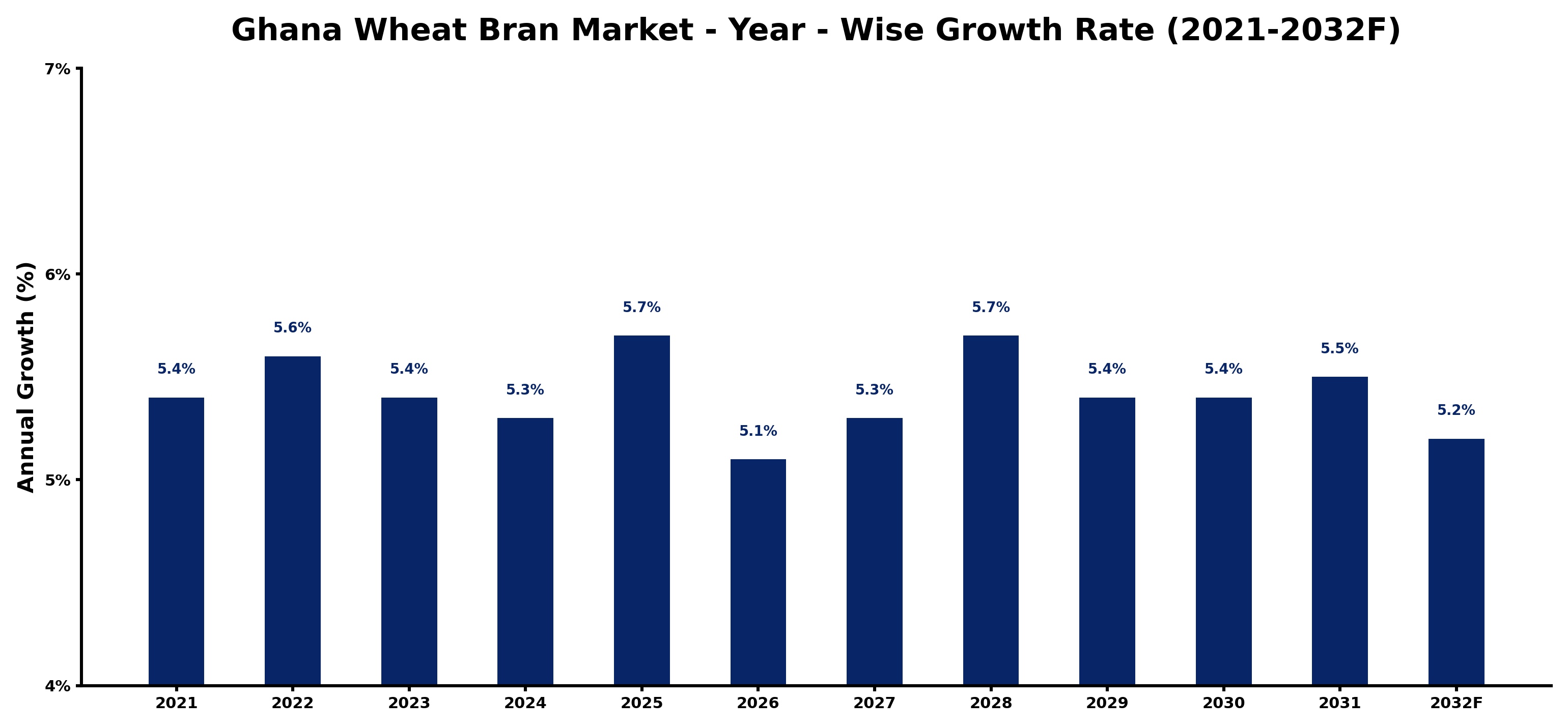
The table below presents the year‑wise growth rates along with the key drivers influencing the market
| Year | Growth Rate | Major Drivers |
| 2021 | 5.4% | Health consciousness drove demand |
| 2022 | 5.6% | Increased bakery production capacity |
| 2023 | 5.4% | Nutritional awareness expanded market |
| 2024 | 5.3% | Local sourcing initiatives gained traction |
| 2025 | 5.7% | Consumer preference for whole grains |
| 2026 | 5.1% | Sustainable farming practices improved |
| 2027 | 5.3% | Export opportunities enhanced growth |
| 2028 | 5.7% | Innovative product formulations emerged |
| 2029 | 5.4% | Partnerships with health brands formed |
| 2030 | 5.4% | E-commerce platforms increased accessibility |
| 2031 | 5.5% | Food fortification trends accelerated sales |
| 2032 | 5.2% | Culinary trends embraced wheat bran |
Note - Market size estimations and growth projections presented in this report are based on 6Wresearch’s advanced forecasting approach, validated with industry datasets as of June 2026.
Ghana Wheat Bran Market Synopsis
The most influential force currently shaping the Ghana wheat bran market is the heightened consumer focus on dietary health. As a rich source of fiber, vitamins, and minerals, wheat bran has gained traction among consumers seeking to enhance their diets. This trend is not only observable in the food sector but is also evident in the animal feed industry, where wheat bran is becoming an essential ingredient.
Additionally, advancements in wheat processing technologies are contributing significantly to the efficiency and quality of wheat bran production. These innovations facilitate better distribution channels, making it easier for manufacturers to meet the growing demand. As health consciousness among consumers rises, the wheat bran market is poised for sustained growth in the coming years.
Ghana Wheat Bran Market Key Takeaways
- The Ghana wheat bran market is anticipated to see steady growth driven by health-focused consumer behavior.
- Government policies are fostering the agricultural sector and wheat bran production through various incentives.
- Wheat bran's versatility allows for applications in both human nutrition and animal feed, boosting its market presence.
- Technological advancements in processing are improving product availability and quality across the supply chain.
- Awareness of the functional benefits of wheat bran is leading to increased incorporation in everyday diets.
Evaluation of Restraints in Ghana Wheat Bran Market
While the Ghana wheat bran market shows promise, several factors may impede its growth. Ensuring a consistent supply of high-quality wheat bran poses a significant challenge, especially in light of potential fluctuations in wheat production. Moreover, issues surrounding storage and transportation can affect the quality and availability of wheat bran for end-users. Compounding these concerns is the competition from alternative dietary fibers, which may divert some demand away from wheat bran. Addressing these challenges will be crucial for stakeholders aiming to capitalize on the market's growth potential.
Ghana Wheat Bran Market Trends
A notable trend in the Ghana wheat bran market is the rising popularity of functional foods, which are designed to deliver health benefits beyond basic nutrition. This trend is accompanied by an increase in innovative product formulations, integrating wheat bran into various food items such as breakfast cereals, baked goods, and health supplements. Additionally, there is a growing awareness among consumers about the importance of dietary fiber, further promoting the consumption of wheat bran products.
Another emerging trend is the focus on sustainable agricultural practices. With consumers becoming more environmentally aware, there's an increasing demand for products that support sustainable production methods. This trend opens avenues for brands to communicate their commitment to eco-friendly practices, enhancing their appeal in the marketplace.
Ghana Wheat Bran Market Opportunities
The Ghana wheat bran market presents a wealth of growth and investment opportunities, particularly in the development of health-oriented products. Innovators can explore creating ready-to-eat meals or snack options fortified with wheat bran to cater to the busy, health-conscious consumer. Moreover, the growing livestock sector in Ghana represents a significant opportunity for producers to expand their reach into the animal feed segment, where wheat bran is already making its mark.
Furthermore, collaborations with health professionals and nutritionists could enhance consumer education on the benefits of wheat bran, creating a more informed customer base. Such initiatives can drive demand and establish a strong market presence, particularly among health-conscious segments.
Government Initiatives in the Ghana Wheat Bran Market
The Ghanaian government is actively working to support the agricultural sector and promote food security through various policies aimed at enhancing the production and utilization of wheat bran. These initiatives include agricultural subsidies to assist farmers, research and development efforts aimed at improving wheat cultivation practices, and market support programs designed to facilitate the distribution of wheat bran to manufacturers. These government efforts are crucial for stabilizing and growing the wheat bran market in Ghana.
Future Insights of the Ghana Wheat Bran Market
Looking ahead to 2026-2032, the Ghana wheat bran market is expected to thrive amid a backdrop of increasing health awareness and dietary changes among consumers. As the population continues to prioritize health and wellness, the demand for fiber-rich ingredients like wheat bran is likely to grow. Innovations in product offerings, alongside supportive government policies, will further drive market expansion, positioning wheat bran as a staple in both dietary and animal feed applications.
Ghana Wheat Bran Market Latest Developments (May 2025 - June 2026)
Recent developments in the Ghana wheat bran market indicate a strong focus on sustainability and health benefits. Industry players are increasingly investing in research to explore novel applications of wheat bran, including fortified foods and snacks. Moreover, collaboration between local producers and academic institutions is fostering innovation in wheat bran processing technologies. These initiatives are expected to enhance product quality and increase market competitiveness, setting the stage for future growth.
Ghana Wheat Bran Market - Key Attractiveness of the Report
- 10 Years of Market Numbers
- Historical Data Starting from 2022 to 2025
- Base Year: 2025
- Forecast Data until 2032
- Key Performance Indicators Impacting the Market
- Major Upcoming Developments and Projects
Key Highlights of the Report:
- Ghana Wheat Bran Market Outlook
- Market Size of Ghana Wheat Bran Market, 2025
- Forecast of Ghana Wheat Bran Market, 2032
- Historical Data and Forecast of Ghana Wheat Bran Revenues & Volume for the Period 2022-2032F
- Ghana Wheat Bran Market Trend Evolution
- Ghana Wheat Bran Market Drivers and Challenges
- Ghana Wheat Bran Price Trends
- Ghana Wheat Bran Porter's Five Forces
- Ghana Wheat Bran Industry Life Cycle
- Historical Data and Forecast of Ghana Wheat Bran Market Revenues & Volume By Product Type for the Period 2022-2032F
- Historical Data and Forecast of Ghana Wheat Bran Market Revenues & Volume By Animal Feed Grade for the Period 2022-2032F
- Historical Data and Forecast of Ghana Wheat Bran Market Revenues & Volume By Medical Use Grade for the Period 2022-2032F
- Historical Data and Forecast of Ghana Wheat Bran Market Revenues & Volume By Others for the Period 2022-2032F
- Historical Data and Forecast of Ghana Wheat Bran Market Revenues & Volume By Application for the Period 2022-2032F
- Historical Data and Forecast of Ghana Wheat Bran Market Revenues & Volume By Food Products for the Period 2022-2032F
- Historical Data and Forecast of Ghana Wheat Bran Market Revenues & Volume By Animal Feed for the Period 2022-2032F
- Historical Data and Forecast of Ghana Wheat Bran Market Revenues & Volume By Pharmacuticals for the Period 2022-2032F
- Historical Data and Forecast of Ghana Wheat Bran Market Revenues & Volume By Cosmetics for the Period 2022-2032F
- Historical Data and Forecast of Ghana Wheat Bran Market Revenues & Volume By Others for the Period 2022-2032F
- Ghana Wheat Bran Import Export Trade Statistics
- Market Opportunity Assessment By Product Type
- Market Opportunity Assessment By Application
- Ghana Wheat Bran Top Companies Market Share
- Ghana Wheat Bran Competitive Benchmarking By Technical and Operational Parameters
- Ghana Wheat Bran Company Profiles
- Ghana Wheat Bran Key Strategic Recommendations






































