Ghana Whey Protein Market Size, Share & Growth Rate
The Ghana Whey Protein Market was estimated at USD 395 Million in 2025 and is projected to reach USD 524 Million by 2032, growing at a CAGR of 4.1% from 2026 to 2032. This growth trajectory is fueled by a burgeoning fitness culture in Ghana and an increasing awareness of the health benefits associated with protein supplementation. As consumers increasingly seek effective ways to enhance muscle recovery and overall wellness, whey protein's popularity is expected to surge, driven by innovation in product offerings and the expansion of retail channels.
Ghana Whey Protein Market Year-wise Growth Rate and Key Drivers
This graph highlights how the Ghana Whey Protein Market has steadily grown over the years, supported by major growth factors.
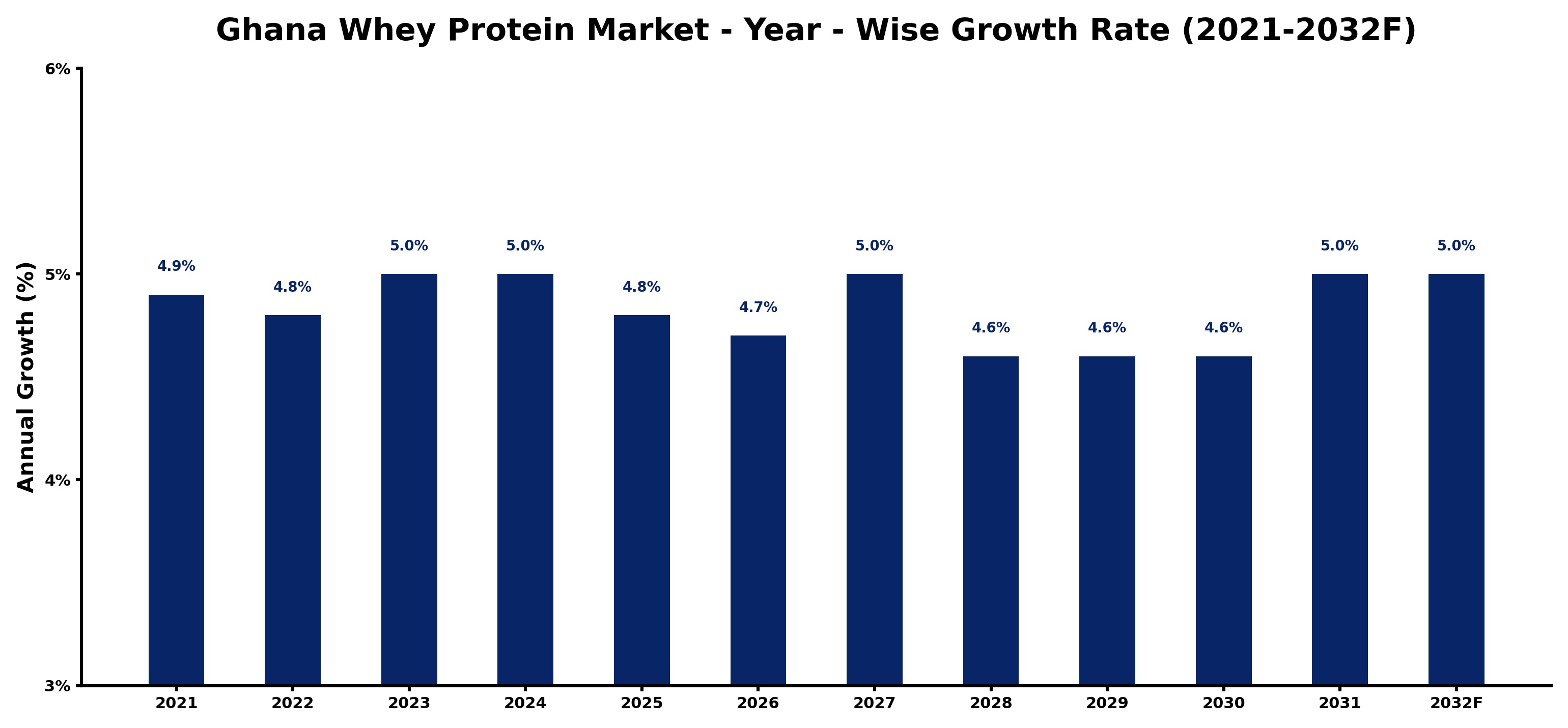
The table below presents the year‑wise growth rates along with the key drivers influencing the market
| Year | Growth Rate | Major Drivers |
| 2021 | 4.9% | Health consciousness among consumers |
| 2022 | 4.8% | Fitness culture promoted protein intake |
| 2023 | 5.0% | Increased awareness of nutrition benefits |
| 2024 | 5.0% | Rising demand for sports supplements |
| 2025 | 4.8% | Growth of e-commerce platforms |
| 2026 | 4.7% | Expansion of fitness centers nationwide |
| 2027 | 5.0% | Influencer marketing drove product visibility |
| 2028 | 4.6% | Diverse flavor offerings attracted buyers |
| 2029 | 4.6% | Sustainability trends influenced purchasing |
| 2030 | 4.6% | Collaborations with health professionals |
| 2031 | 5.0% | Increased availability of local brands |
| 2032 | 5.0% | Innovation in product formulations |
Note - Market size estimations and growth projections presented in this report are based on 6Wresearch’s advanced forecasting approach, validated with industry datasets as of June 2026.
Ghana Whey Protein Market Synopsis
The Ghana whey protein market is witnessing a remarkable evolution, transitioning from traditional dietary norms to a focus on health and fitness. This shift is particularly notable among younger consumers who are increasingly integrating whey protein products into their daily routines.
As the market expands, a diverse range of whey protein products is emerging, including flavored powders and convenient ready-to-drink options. These innovations not only cater to consumer preferences but also contribute to a vibrant competitive landscape that encourages continuous enhancement of product quality and accessibility.
Ghana Whey Protein Market Key Takeaways
- The market is projected to experience steady growth driven by increasing health consciousness among consumers.
- Product innovation is crucial, with flavored and ready-to-drink whey protein gaining traction.
- The growing fitness culture is a significant driver of demand for whey protein supplements.
- Government initiatives are supporting the growth and accessibility of whey protein products.
- Competition from alternative protein sources poses a challenge but also spurs innovation.
Evaluation of Restraints in Ghana Whey Protein Market
Despite the promising growth, the Ghana whey protein market faces several restraints that can hinder its full potential. One major limitation is the challenge of ensuring the purity and efficacy of whey protein products, which can significantly influence consumer trust. Additionally, concerns regarding product formulation and labeling can deter potential buyers, especially as consumers become more discerning. Moreover, competition from alternative protein supplements such as plant-based proteins introduces a dynamic where market players must innovate continuously to maintain relevance and appeal.
Ghana Whey Protein Market Trends
Current trends indicate a growing preference for clean label products among health-conscious consumers. They are increasingly seeking whey protein options that are not only effective but also free from artificial additives. Additionally, the rise of e-commerce platforms is transforming distribution channels, making whey protein products more accessible than ever. There is also a notable increase in targeted marketing strategies focused on fitness enthusiasts, highlighting the functional benefits of whey protein in muscle recovery and performance enhancement.
Ghana Whey Protein Market Opportunities
Significant growth opportunities exist in the Ghana whey protein market, particularly for companies willing to invest in product innovation and marketing. Expanding the range of whey protein products to include functional foods and snacks can capture a broader audience. Moreover, increasing partnerships with gyms and fitness centers can enhance brand visibility and encourage consumption. As the trend towards healthier lifestyles continues to rise, investing in educational campaigns about the benefits of whey protein can foster further market expansion.
Government Initiatives in the Ghana Whey Protein Market
The Ghana government recognizes the health and economic potential of the whey protein market, implementing various initiatives to stimulate growth. Policies aimed at promoting dairy farming and milk processing are critical in supporting local production of whey protein. Furthermore, the government provides technical assistance and training for improving whey protein extraction processes, as well as facilitating market access and distribution channels. These efforts collectively contribute to a supportive environment for the whey protein market's development.
Future Insights of the Ghana Whey Protein Market
Looking ahead to the period from 2026 to 2032, the Ghana whey protein market is poised for substantial growth. As the fitness industry continues to flourish, driven by rising disposable incomes and changing lifestyle choices, demand for whey protein products is expected to increase significantly. Innovations in product formulations, alongside heightened consumer awareness of nutrition, will further propel this market. Companies that adapt quickly to emerging trends and consumer preferences are likely to lead the market, securing their position in this dynamic landscape.
Ghana Whey Protein Market Latest Developments (May 2025 - June 2026)
Recent developments in the Ghana whey protein market reflect a growing emphasis on product quality and consumer education. Industry stakeholders are increasingly focusing on transparency in labeling and sourcing to build consumer trust. There has also been a noticeable increase in collaborative efforts between local producers and international suppliers aimed at enhancing product quality and expanding distribution networks, thus improving market accessibility for consumers.
Ghana Whey Protein Market - Key Attractiveness of the Report
- 10 Years of Market Numbers
- Historical Data Starting from 2022 to 2025
- Base Year: 2025
- Forecast Data until 2032
- Key Performance Indicators Impacting the Market
- Major Upcoming Developments and Projects
Key Highlights of the Report:
- Ghana Whey Protein Market Outlook
- Market Size of Ghana Whey Protein Market, 2025
- Forecast of Ghana Whey Protein Market, 2032
- Historical Data and Forecast of Ghana Whey Protein Revenues & Volume for the Period 2022-2032F
- Ghana Whey Protein Market Trend Evolution
- Ghana Whey Protein Market Drivers and Challenges
- Ghana Whey Protein Price Trends
- Ghana Whey Protein Porter's Five Forces
- Ghana Whey Protein Industry Life Cycle
- Historical Data and Forecast of Ghana Whey Protein Market Revenues & Volume By Type for the Period 2022-2032F
- Historical Data and Forecast of Ghana Whey Protein Market Revenues & Volume By Whey Protein Isolates for the Period 2022-2032F
- Historical Data and Forecast of Ghana Whey Protein Market Revenues & Volume By Whey Protein Concentrates for the Period 2022-2032F
- Historical Data and Forecast of Ghana Whey Protein Market Revenues & Volume By Whey Protein Hydrolysates for the Period 2022-2032F
- Historical Data and Forecast of Ghana Whey Protein Market Revenues & Volume By Application for the Period 2022-2032F
- Historical Data and Forecast of Ghana Whey Protein Market Revenues & Volume By Nutritional Supplements for the Period 2022-2032F
- Historical Data and Forecast of Ghana Whey Protein Market Revenues & Volume By Personal Care for the Period 2022-2032F
- Historical Data and Forecast of Ghana Whey Protein Market Revenues & Volume By Food & Beverages for the Period 2022-2032F
- Historical Data and Forecast of Ghana Whey Protein Market Revenues & Volume By Animal Feed & Pet Food for the Period 2022-2032F
- Ghana Whey Protein Import Export Trade Statistics
- Market Opportunity Assessment By Type
- Market Opportunity Assessment By Application
- Ghana Whey Protein Top Companies Market Share
- Ghana Whey Protein Competitive Benchmarking By Technical and Operational Parameters
- Ghana Whey Protein Company Profiles
- Ghana Whey Protein Key Strategic Recommendations






































