Ghana Zinc Sulphate Market Size, Share & Growth Rate
The Ghana Zinc Sulphate Market was estimated at USD 1181 Million in 2025 and is projected to reach USD 1680 Million by 2032, growing at a CAGR of 5.2% from 2026 to 2032. This growth trajectory is underpinned by increasing applications of zinc sulphate across agriculture, healthcare, and various industrial sectors. The rising recognition of zinc's pivotal role in addressing micronutrient deficiencies is driving demand, especially in agricultural practices aiming for higher yields and sustainability.
Ghana Zinc Sulphate Market Year-wise Growth Rate and Key Drivers
This graph highlights how the Ghana Zinc Sulphate Market has steadily grown over the years, supported by major growth factors.
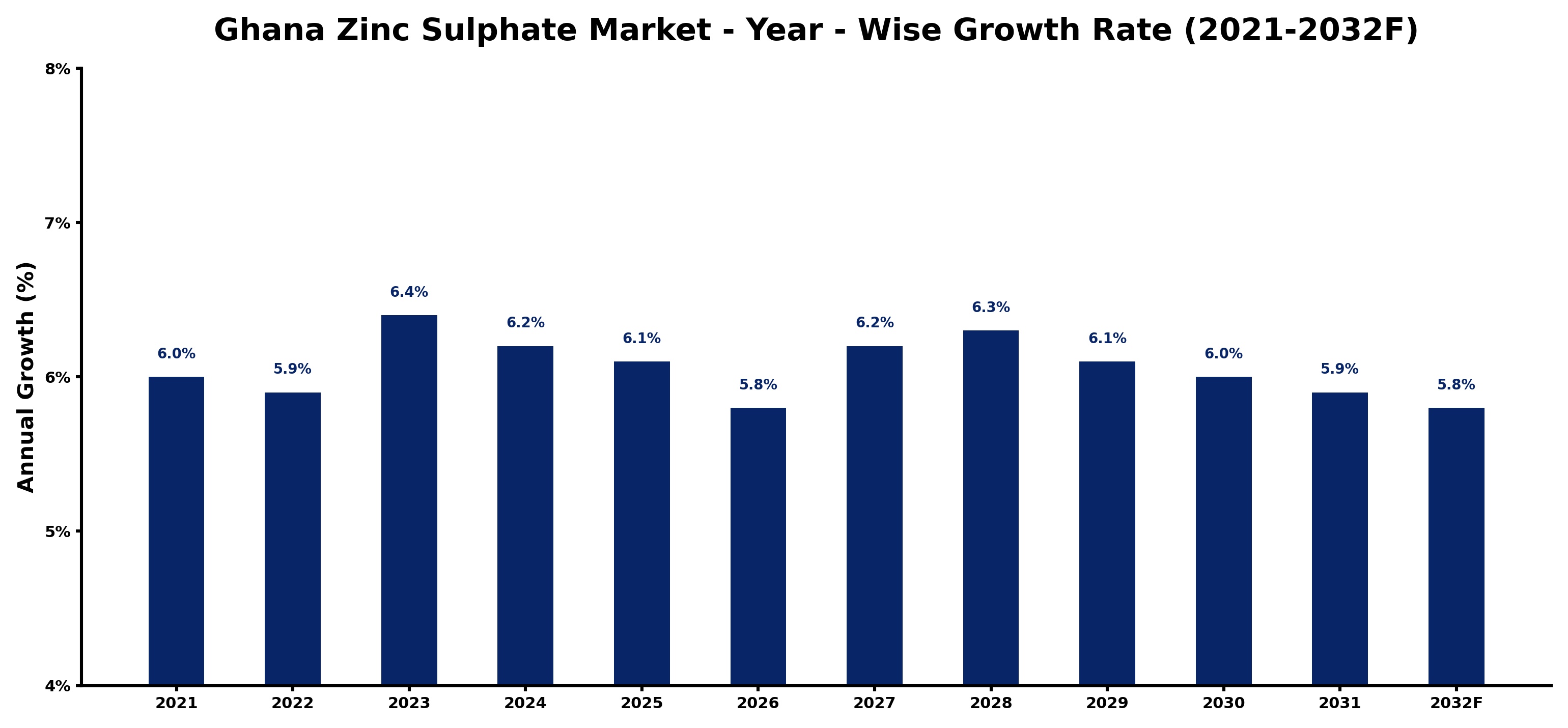
The table below presents the year‑wise growth rates along with the key drivers influencing the market
| Year | Growth Rate | Major Drivers |
| 2021 | 6.0% | Agricultural sector growth accelerated demand |
| 2022 | 5.9% | Increased awareness of micronutrients |
| 2023 | 6.4% | Farming technology advancements enhanced usage |
| 2024 | 6.2% | Rising fertilizer prices drove alternatives |
| 2025 | 6.1% | Health benefits of zinc emphasized |
| 2026 | 5.8% | Sustainable farming practices gained traction |
| 2027 | 6.2% | Government initiatives promoted zinc usage |
| 2028 | 6.3% | Crop yield improvements encouraged adoption |
| 2029 | 6.1% | Export opportunities expanded market reach |
| 2030 | 6.0% | Research funding increased product innovation |
| 2031 | 5.9% | Consumer education on fertilizers heightened |
| 2032 | 5.8% | Partnerships with agricultural cooperatives formed |
Note - Market size estimations and growth projections presented in this report are based on 6Wresearch’s advanced forecasting approach, validated with industry datasets as of June 2026.
Ghana Zinc Sulphate Market Synopsis
In Ghana, the zinc sulphate market is experiencing dynamic growth, particularly due to its use as a micronutrient fertilizer. Farmers are increasingly adopting zinc supplements to enhance soil fertility and crop resilience, reflecting a heightened awareness of nutrition in farming practices. Additionally, the demand for zinc sulphate in pharmaceuticals as a dietary supplement is strengthening its market presence, contributing to the overall growth.
Moreover, the industrial segment's utilization of zinc sulphate in water treatment and galvanizing processes is expanding. With a growing focus on environmental sustainability, industries are seeking efficient solutions that incorporate zinc sulphate, which is boosting its demand and acceptance. Overall, these trends depict a robust and optimistic outlook for the Ghana Zinc Sulphate Market.
Ghana Zinc Sulphate Market Key Takeaways
- The market is driven by increasing agricultural and industrial applications.
- Rising awareness of zinc deficiency in crops and livestock is propelling demand.
- Pharmaceutical applications are becoming a significant contributor to market growth.
- Government regulations aim to ensure product safety and efficacy.
- Innovative formulations are emerging to enhance the effectiveness of zinc sulphate.
Evaluation of Restraints in Ghana Zinc Sulphate Market
Despite the promising growth potential, the Ghana Zinc Sulphate Market faces significant restraints that could impede its progress. One primary concern is ensuring the purity and stability of sulphate in fertilizer and feed additive applications. Variability in product quality can lead to toxicity issues, which pose environmental risks and affect end-user acceptance. Additionally, the market is contending with competition from alternative zinc supplements, which can affect pricing strategies and overall market share. Addressing these challenges is crucial for maintaining healthy growth in this sector.
Ghana Zinc Sulphate Market Trends
Current trends in the Ghana Zinc Sulphate Market reflect a strong movement towards sustainable agriculture and environmentally friendly industrial practices. The adoption of precision farming techniques is becoming prevalent, with zinc sulphate being integrated into tailored nutrient management systems. Moreover, the growing interest in organic farming is prompting the exploration of organic forms of zinc supplements. Emerging technologies in product formulation, including slow-release and enhanced efficiency products, are also shaping the market's future, catering to the evolving demands of both farmers and industrial users.
Ghana Zinc Sulphate Market Opportunities
Significant opportunities lie ahead in the Ghana Zinc Sulphate Market, particularly in expanding agricultural innovations and improving public health strategies. As the country aims to improve food security, increasing investments in advanced agricultural practices that utilize zinc sulphate could yield high returns. Furthermore, collaborations between government bodies, NGOs, and private enterprises can enhance awareness and distribution of zinc supplements, promoting healthier farming and dietary practices. The potential for new research in zinc sulphate formulations presents an exciting avenue for growth and innovation within this landscape.
Government Initiatives in the Ghana Zinc Sulphate Market
The Ghanaian government is actively engaged in policies that support the zinc sulphate market, focusing on product safety, quality assurance, and environmental impact. Regulations are being implemented to certify manufacturers and suppliers, ensuring that they adhere to industry standards. Furthermore, the government incentivizes research and development in innovative zinc sulphate applications, aimed at fostering sustainable agricultural practices. These initiatives are vital for establishing a strong regulatory framework that encourages market growth while safeguarding public health and the environment.
Future Insights of the Ghana Zinc Sulphate Market
Looking ahead to 2026-2032, the Ghana Zinc Sulphate Market is poised for robust development, driven by continuing advancements in agricultural technology and increased consumer awareness about micronutrient deficiencies. The forecast indicates an expanding scope for both agricultural and industrial applications, with a particular emphasis on sustainability and innovation. As the market adapts to new challenges and embraces opportunities, stakeholders can expect enhanced product offerings that cater to the diverse needs of farmers, industrial users, and healthcare providers alike.
Ghana Zinc Sulphate Market Latest Developments (May 2025 - June 2026)
Recent developments within the Ghana Zinc Sulphate Market indicate a strategic shift towards greater collaboration among stakeholders. Efforts to bolster awareness regarding the importance of zinc in agricultural practices have intensified, with various campaigns launched to educate farmers. Additionally, advancements in production techniques are enabling manufacturers to produce higher-quality zinc sulphate. Innovative research initiatives focusing on enhancing the efficacy of zinc supplements are gaining traction, further reflecting the market's commitment to meeting emerging demands and challenges.
Ghana Zinc Sulphate Market - Key Attractiveness of the Report
- 10 Years of Market Numbers
- Historical Data Starting from 2022 to 2025
- Base Year: 2025
- Forecast Data until 2032
- Key Performance Indicators Impacting the Market
- Major Upcoming Developments and Projects
Key Highlights of the Report:
- Ghana Zinc Sulphate Market Outlook
- Market Size of Ghana Zinc Sulphate Market, 2025
- Forecast of Ghana Zinc Sulphate Market, 2032
- Historical Data and Forecast of Ghana Zinc Sulphate Revenues & Volume for the Period 2022-2032F
- Ghana Zinc Sulphate Market Trend Evolution
- Ghana Zinc Sulphate Market Drivers and Challenges
- Ghana Zinc Sulphate Price Trends
- Ghana Zinc Sulphate Porter's Five Forces
- Ghana Zinc Sulphate Industry Life Cycle
- Historical Data and Forecast of Ghana Zinc Sulphate Market Revenues & Volume By Type for the Period 2022-2032F
- Historical Data and Forecast of Ghana Zinc Sulphate Market Revenues & Volume By Zinc Sulphate Anhydrous for the Period 2022-2032F
- Historical Data and Forecast of Ghana Zinc Sulphate Market Revenues & Volume By Zinc Sulphate Hexahydrate for the Period 2022-2032F
- Historical Data and Forecast of Ghana Zinc Sulphate Market Revenues & Volume By Zinc Sulphate Heptahydrate for the Period 2022-2032F
- Historical Data and Forecast of Ghana Zinc Sulphate Market Revenues & Volume By Zinc Sulphate Monohydrate for the Period 2022-2032F
- Historical Data and Forecast of Ghana Zinc Sulphate Market Revenues & Volume By Application for the Period 2022-2032F
- Historical Data and Forecast of Ghana Zinc Sulphate Market Revenues & Volume By Agrochemicals for the Period 2022-2032F
- Historical Data and Forecast of Ghana Zinc Sulphate Market Revenues & Volume By Chemicals for the Period 2022-2032F
- Historical Data and Forecast of Ghana Zinc Sulphate Market Revenues & Volume By Pharmaceuticals for the Period 2022-2032F
- Historical Data and Forecast of Ghana Zinc Sulphate Market Revenues & Volume By Synthetic Fibers for the Period 2022-2032F
- Historical Data and Forecast of Ghana Zinc Sulphate Market Revenues & Volume By Water Treatment for the Period 2022-2032F
- Historical Data and Forecast of Ghana Zinc Sulphate Market Revenues & Volume By Others for the Period 2022-2032F
- Ghana Zinc Sulphate Import Export Trade Statistics
- Market Opportunity Assessment By Type
- Market Opportunity Assessment By Application
- Ghana Zinc Sulphate Top Companies Market Share
- Ghana Zinc Sulphate Competitive Benchmarking By Technical and Operational Parameters
- Ghana Zinc Sulphate Company Profiles
- Ghana Zinc Sulphate Key Strategic Recommendations






































