Carbon Credit Market Size & Growth Rate
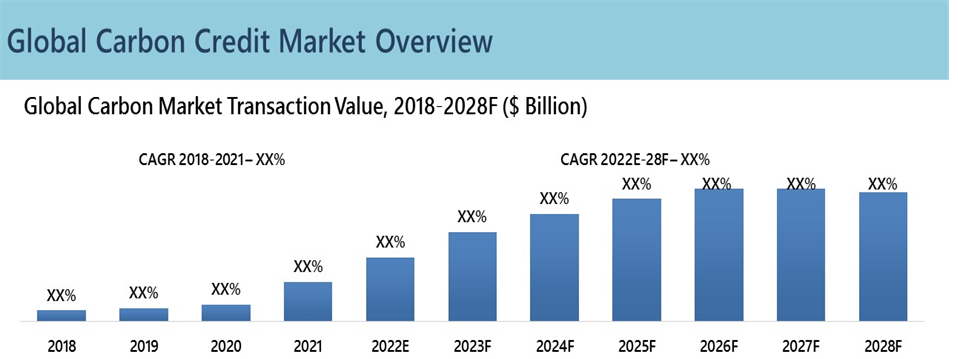
The Carbon Credit Market has seen significant growth and is projected grow at a CAGR of 9.9% from 2026 to 2032. This growth is driven by increasing awareness of climate change, regulatory frameworks like the Paris Agreement, and advancements in emission monitoring technologies.
Carbon Credit Market Highlights
| Report Name | Carbon Credit Market |
| Report Category / Coverage | Global |
| CAGR | 9.9% |
| Market Size | USD 500 Billion by 2032 |
| Growing Sector | Renewable Energy |
| Forecast Period | 2026-2032 |
Topics Covered in the Carbon Credit Market Report
Carbon Credit Market report thoroughly covers the by sector, by type, and by region. The market report provides an unbiased and detailed analysis of the ongoing market trends, opportunities/high growth areas, and market drivers which would help the stakeholders to devise and align their market strategies according to the current and future market dynamics.
Carbon Credit Market Size Analysis
The Carbon Credit Market has been experiencing significant growth over the past few years. As of 2025, the global market is valued at approximately $280 billion. Further, the Global Market is projected to expand at a CAGR of 9.9% from 2026 to 2032. Additionally, by 2032, the market size is expected to reach around $500 billion.
Carbon Credit Market Synopsis
The carbon credit market is an essential component of global efforts to mitigate climate change by reducing greenhouse gas emissions. It operates on the principle of capping the total level of greenhouse gases that can be emitted by covered entities, while allowing the buying and selling of emission permits to meet these limits. These credits are often generated through activities that lower or capture emissions, such as reforestation projects, renewable energy installations, and energy efficiency improvements. As industries and governments increasingly commit to carbon neutrality, the demand for carbon credits is expected to rise, fostering growth in the market. The market's effectiveness hinges on robust regulatory frameworks and accurate measurement of emission reductions to ensure that the credits represent real, verifiable carbon offsets.
According to 6Wresearch, the Carbon Credit Market revenue is expected to reach at a significant CAGR of 9.9% during the forecast period 2026-2032. The Carbon Credit Market is primarily driven by the increasing awareness of climate change and the urgent need to reduce greenhouse gas emissions globally. Regulatory frameworks, such as the Paris Agreement, have set stringent targets for emissions reductions, compelling companies and countries to seek ways to lower their carbon footprint. Advancements in technology have also enabled more efficient monitoring and reporting of emissions, facilitating the growth of this market. In addition, corporate social responsibility and consumer demand for sustainable practices encourage businesses to invest in carbon credits as a way to demonstrate their commitment to environmental stewardship.
Despite its growth potential, the Carbon Credit Market faces several challenges. One major issue is the lack of a standardized framework, which can lead to inconsistencies in the valuation and verification of carbon credits. This fragmentation can create uncertainties and reduce market trust. Additionally, there are concerns about the permanence and enforceability of emissions reductions, as well as the potential for greenwashing, where companies may falsely claim environmental benefits.
Carbon Credit Market Trends
- Increased Demand – There has been a significant rise in demand for carbon credits as more companies and countries commit to reducing their carbon footprints as part of the global effort to combat climate change.
- Voluntary Market Growth – The voluntary carbon market has seen substantial growth, with more organizations independently opting to purchase carbon credits to meet self-imposed sustainability goals.
- Technological Innovations - Advances in technology are playing a critical role in monitoring, reporting, and verifying emissions, enhancing market transparency and trust. This has resulted in a more efficient and reliable carbon market.
Investment Opportunities in the Carbon Credit Market
- Growing Demand for Sustainability – As awareness of climate change intensifies, there is a rising demand from corporations and governments for sustainable practices, leading to an increase in the purchase of carbon credits. This creates a growing market with significant potential for investment returns.
- Diverse Investment Options – The carbon credit market offers a range of investment vehicles such as futures, ETFs, and direct investments in carbon offset projects. This allows investors to diversify their portfolios based on their risk tolerance and strategic goals.
- Collaborative Initiatives - Companies across industries are forming partnerships and alliances to invest in carbon offset projects and achieve their emission reduction goals. Investing in such collaborative initiatives not only offers potential returns but also promotes sustainability efforts on a larger scale.
Leading Players of the Carbon Credit Market
The carbon credit market has been shaped significantly by several leading players, driving innovation and sustainability efforts globally. Key entities in this market include organizations like the European Union, which manages the EU Emissions Trading System, one of the largest carbon markets. Another prominent player is China, which has launched its own national carbon market, quickly becoming a central figure due to its scale and scope. In the private sector, companies like BP and Shell are actively trading carbon credits as part of their broader sustainability strategies, investing in various carbon reduction projects worldwide. Additionally, non-governmental organizations, such as Verra and The Gold Standard, play a pivotal role by certifying carbon offset projects, ensuring compliance with established standards, and enhancing market credibility. These players collectively contribute to shaping the dynamics and future trajectory of the carbon credit market.
Government Regulations Introduced in the Carbon Credit Market
The carbon credit market has seen an increasing number of government regulations aimed at enhancing transparency, accountability, and overall effectiveness in reducing greenhouse gas emissions. Governments worldwide are implementing measures to standardize carbon credit validation and certification processes, ensuring that carbon offsets are real, measurable, and contribute to genuine environmental benefits. Additionally, some regulations are designed to prevent double counting and ensure that the same emission reductions are not sold multiple times. There's also a focus on incentivizing projects that not only reduce emissions but also provide co-benefits such as promoting biodiversity and supporting local communities.
Future Insights of the Carbon Credit Market
The future of the carbon credit market appears promising as global priorities increasingly shift towards sustainability and reducing carbon footprints. With governments around the world tightening regulations on emissions and implementing carbon pricing mechanisms, the demand for carbon credits is expected to grow. Businesses will likely invest more in carbon offset projects to meet compliance requirements and demonstrate corporate social responsibility. Additionally, advancements in technology, such as blockchain, may enhance transparency and efficiency in carbon credit transactions, making the market more accessible and trustworthy. As more industries seek to achieve net-zero targets, the carbon credit market could play a pivotal role in facilitating a smoother transition to a low-carbon economy, promoting innovation in clean energy and conservation efforts.
Market Segmentation Analysis
The report offers a comprehensive study of the subsequent market segments and their leading categories.
Compliance to Dominate the Market - By type
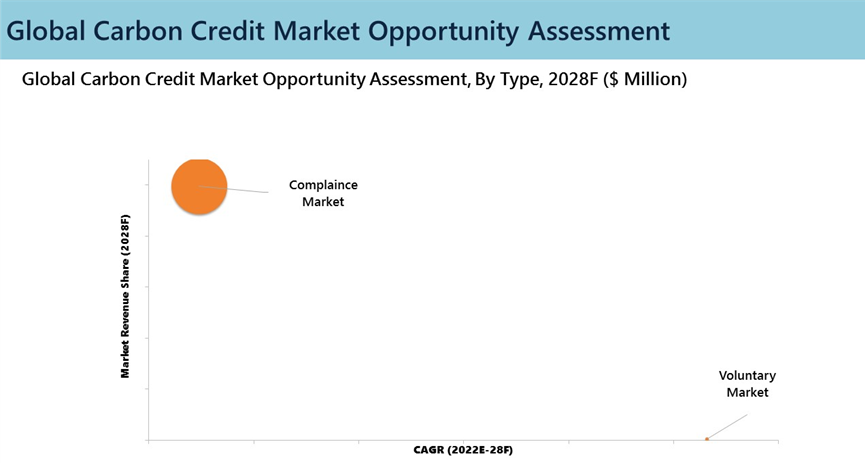
According to Ravi Bhandari, Research Head, 6wresearch, Compliance in the carbon credit market is crucial for ensuring the integrity and effectiveness of carbon offset programs. Companies and countries participating in this market must adhere to established standards and regulations to verify the legitimacy of the carbon credits they trade. These standards typically involve rigorous third-party audits and require comprehensive documentation to ensure that emission reductions are real, additional, and permanent. Compliance strengthens market confidence, encourages investments in sustainable projects, and ultimately helps achieve the overarching goal of reducing global greenhouse gas emissions.
Forestry and land use to dominate the market - By sectors
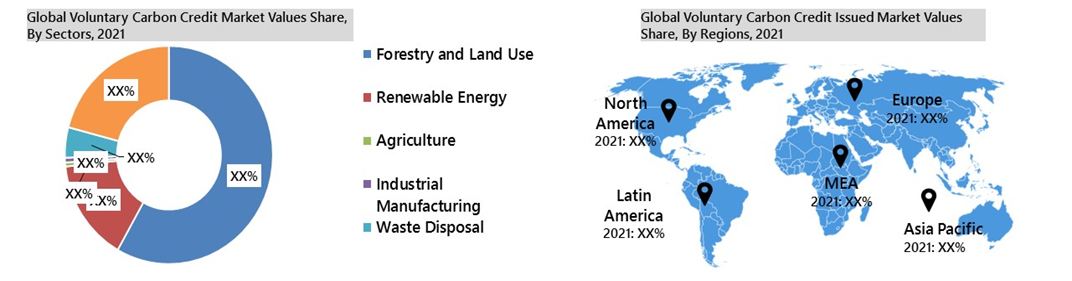
Forestry and land use play a pivotal role in the carbon credit market, offering a natural and effective means of offsetting carbon emissions. As trees grow, they absorb carbon dioxide from the atmosphere, storing it in their biomass—a process known as carbon sequestration. By preserving existing forests or establishing new ones, landowners can earn carbon credits that represent quantifiable emission reductions. These credits can be sold or traded within carbon markets, providing financial incentives for sustainable land management practices. Furthermore, responsible forestry not only contributes to carbon reduction but also supports biodiversity, soil health, and water quality, highlighting its multifaceted environmental benefits.
APAC to dominate the market – By region
The Asia-Pacific (APAC) region plays a pivotal role in the global carbon credit market, showing significant growth and potential in mitigating climate change. With countries like China, India, and Indonesia leading the way, APAC has been actively participating in carbon trading schemes and implementing policies to reduce greenhouse gas emissions. These efforts are part of broader initiatives to transition to a low-carbon economy while stimulating sustainable economic development. The region's diverse ecosystems and growing industrial sectors present both challenges and opportunities in the carbon credit market, where innovative solutions are essential to address environmental concerns.
Key Attractiveness of the Report
- 10 Years of Market Numbers.
- Historical Data Starting from 2022 to 2025.
- Base Year: 2025
- Forecast Data until 2032.
- Key Performance Indicators Impacting the Market.
- Major Upcoming Developments and Projects.
Key Highlights of the Report:
- Carbon Credit Market Overview
- Carbon Credit Market Outlook
- Carbon Credit Market Forecast
- Carbon Credit Market Ecosystem
- Historical Data and Forecast of Carbon Credit Market Revenues for the Period 2022-2032F
- Historical Data and Forecast of Carbon Credit Market Revenues, By Types, for the Period 2022-2032F
- Historical Data and Forecast of Carbon Credit Market Revenues, By Sector, for the Period 2022-2032F
- Historical Data and Forecast of Carbon Credit Market Revenues, By Region, for the Period 2022-2032F
- Market Drivers and Restraints
- Industry Life Cycle
- Porter’s Five Force Analysis
- Impact Analysis of COVID-19
- Carbon Credit Country Initiative and Regulations
- Competitive Benchmarking
- Company Profiles
- Key Strategic Recommendations
Market Covered
The market report has been segmented and sub segmented into the following categories:
By Types
- Compliance
- Voluntary
By Sectors
- Forestry and Land Use
- Renewable Energy
- Agriculture
- Industrial manufacturing
- Waste Disposal
- Others
By Region
- Asia Pacific
- Europe
- MEA
- North America
- Latin America