Greece Table Olives Market: Import Trend Analysis
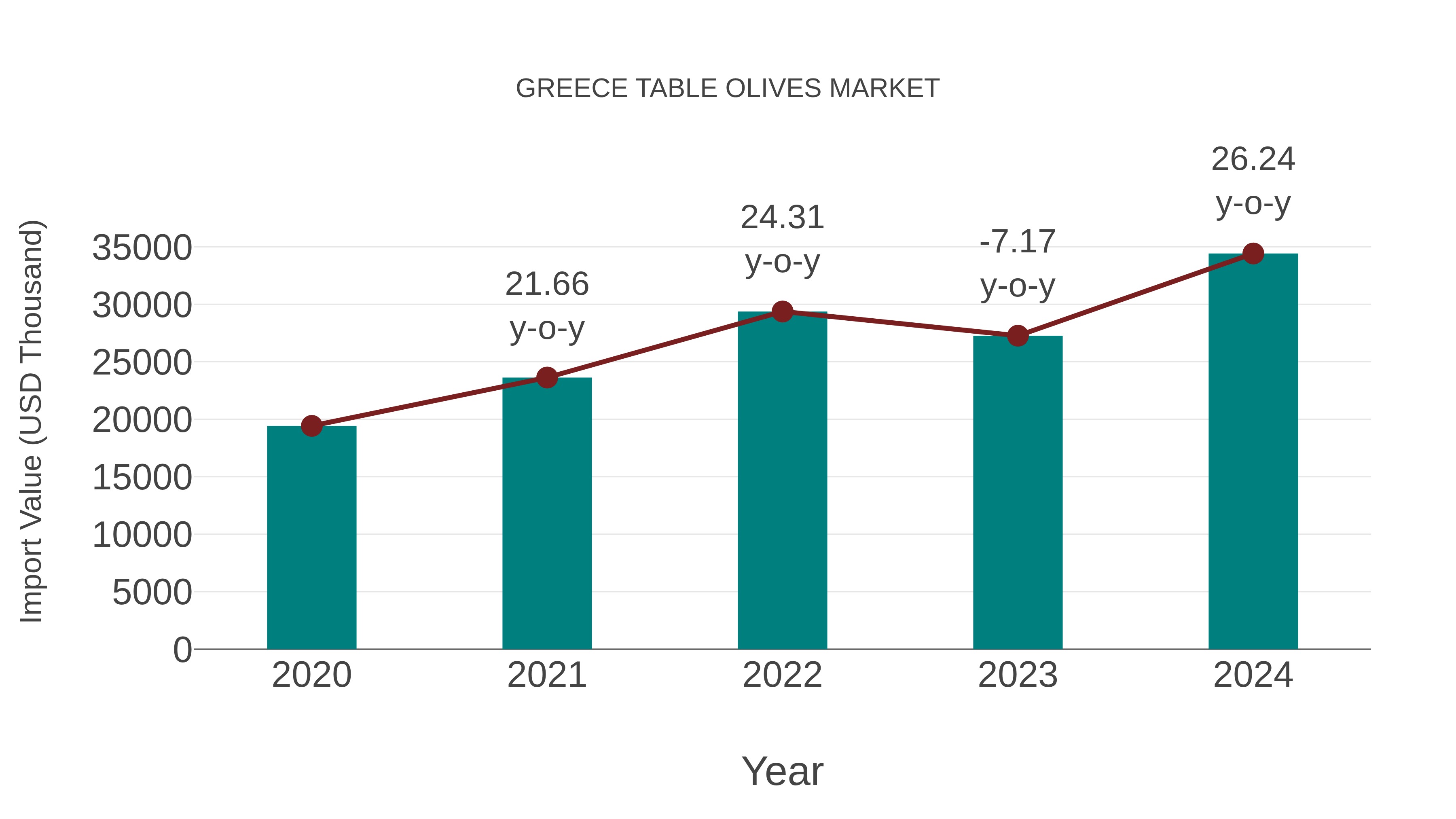
In the Greece table olives market, the import trend exhibited notable growth from 2023 to 2024, with a substantial increase of 26.24%. The compound annual growth rate (CAGR) for the period 2020-2024 stood at 15.38%. This upward momentum in imports could be attributed to shifting consumer preferences towards Mediterranean cuisine, driving increased demand for Greek table olives in international markets.
Greece Table Olives Market Synopsis
The Greece table olives market is a significant sector within the country`s agricultural industry, renowned for its high-quality olives and traditional cultivation methods. Greece is one of the largest producers of table olives globally, with Kalamata olives being a popular variety exported worldwide. The market is characterized by a strong domestic consumption of olives, as they are a staple in Greek cuisine, as well as a growing export market catering to international demand for premium olives. Major players in the market include both large-scale commercial producers and small family-owned olive farms, contributing to the diverse range of olive products available. With a focus on quality, authenticity, and sustainability, the Greece table olives market continues to thrive both locally and internationally.
Greece Table Olives Market Trends
The Greece Table Olives Market is experiencing a shift towards organic and gourmet varieties, catering to health-conscious consumers and those seeking premium products. There is a growing demand for innovative flavors and packaging formats to appeal to a younger demographic. Additionally, there is an opportunity for Greek table olive producers to increase their presence in international markets by leveraging the country`s reputation for high-quality olives. With consumers increasingly valuing authenticity and sustainability, there is potential for Greek table olives to position themselves as a premium, artisanal product in the global market. Producers can also explore diversification into value-added products such as olive oil-infused olives or olive tapenades to capitalize on the growing interest in Mediterranean cuisine.
Greece Table Olives Market Challenges
The Greece Table Olives Market faces several challenges, including intense competition from other olive-producing countries, fluctuating global olive oil prices, and the impact of weather conditions on olive yields. Additionally, the market is also confronted with issues related to sustainability and environmental concerns, as well as the need for technological advancements in production processes to improve efficiency and reduce costs. Furthermore, regulatory constraints and trade barriers can hinder the market`s growth potential. Overall, navigating these challenges requires strategic planning, innovation, and a strong focus on quality to maintain a competitive edge in the Greece Table Olives Market.
Greece Table Olives Market Investment Opportunities
The Greece Table Olives Market is primarily driven by factors such as increasing demand for healthy and natural food products, growing awareness about the nutritional benefits of table olives, and the rising popularity of Mediterranean cuisine worldwide. Additionally, the traditional methods of olive cultivation and production in Greece, known for their high quality and distinct flavor profile, contribute to the market growth. Export opportunities, particularly to countries with a strong preference for Mediterranean food, also play a significant role in driving the market. Furthermore, government initiatives to support olive farming and promote Greek olives internationally further boost the industry. Overall, the combination of health consciousness, culinary trends, unique product offerings, and export potential are the key drivers propelling the growth of the Greece Table Olives Market.
Greece Table Olives Market Government Polices
The Greece Table Olives Market is subject to various government policies aimed at regulating production, processing, and marketing of table olives. The European Union`s Common Agricultural Policy provides subsidies and support to olive producers in Greece, impacting pricing and production levels. Additionally, the Greek government has implemented quality control measures to ensure the authenticity and standards of table olives exported from the country. There are also regulations in place governing labeling, packaging, and marketing practices to protect consumers and maintain the reputation of Greek table olives in the global market. Overall, government policies play a significant role in shaping the Greece Table Olives Market by influencing production practices, quality standards, and market competitiveness.
Greece Table Olives Market Future Outlook
The future outlook for the Greece Table Olives Market appears positive, driven by increasing global demand for healthy and natural food products. Greece is a major producer of table olives, known for its high-quality varieties such as Kalamata and Halkidiki olives. The market is expected to benefit from growing consumer awareness of the health benefits of olives, including their high antioxidant content and potential role in preventing chronic diseases. Additionally, the trend towards Mediterranean cuisine and the rising popularity of plant-based diets are likely to further boost the demand for Greek table olives in both domestic and international markets. However, challenges such as climate change impacts on olive production and increasing competition from other olive-producing countries may require innovative strategies to sustain growth in the market.
Key Highlights of the Report:
- Greece Table Olives Market Outlook
- Market Size of Greece Table Olives Market, 2025
- Forecast of Greece Table Olives Market, 2032
- Historical Data and Forecast of Greece Table Olives Revenues & Volume for the Period 2022 - 2032F
- Greece Table Olives Market Trend Evolution
- Greece Table Olives Market Drivers and Challenges
- Greece Table Olives Price Trends
- Greece Table Olives Porter's Five Forces
- Greece Table Olives Industry Life Cycle
- Historical Data and Forecast of Greece Table Olives Market Revenues & Volume By Type for the Period 2022 - 2032F
- Historical Data and Forecast of Greece Table Olives Market Revenues & Volume By Black Olive for the Period 2022 - 2032F
- Historical Data and Forecast of Greece Table Olives Market Revenues & Volume By Green Olive for the Period 2022 - 2032F
- Historical Data and Forecast of Greece Table Olives Market Revenues & Volume By Application for the Period 2022 - 2032F
- Historical Data and Forecast of Greece Table Olives Market Revenues & Volume By Online Store for the Period 2022 - 2032F
- Historical Data and Forecast of Greece Table Olives Market Revenues & Volume By Supermarket for the Period 2022 - 2032F
- Historical Data and Forecast of Greece Table Olives Market Revenues & Volume By Convenience Store for the Period 2022 - 2032F
- Historical Data and Forecast of Greece Table Olives Market Revenues & Volume By Other for the Period 2022 - 2032F
- Greece Table Olives Import Export Trade Statistics
- Market Opportunity Assessment By Type
- Market Opportunity Assessment By Application
- Greece Table Olives Top Companies Market Share
- Greece Table Olives Competitive Benchmarking By Technical and Operational Parameters
- Greece Table Olives Company Profiles
- Greece Table Olives Key Strategic Recommendations






































