Hong Kong Molasses Market Top 5 Importing Countries and Market Competition (HHI) Analysis
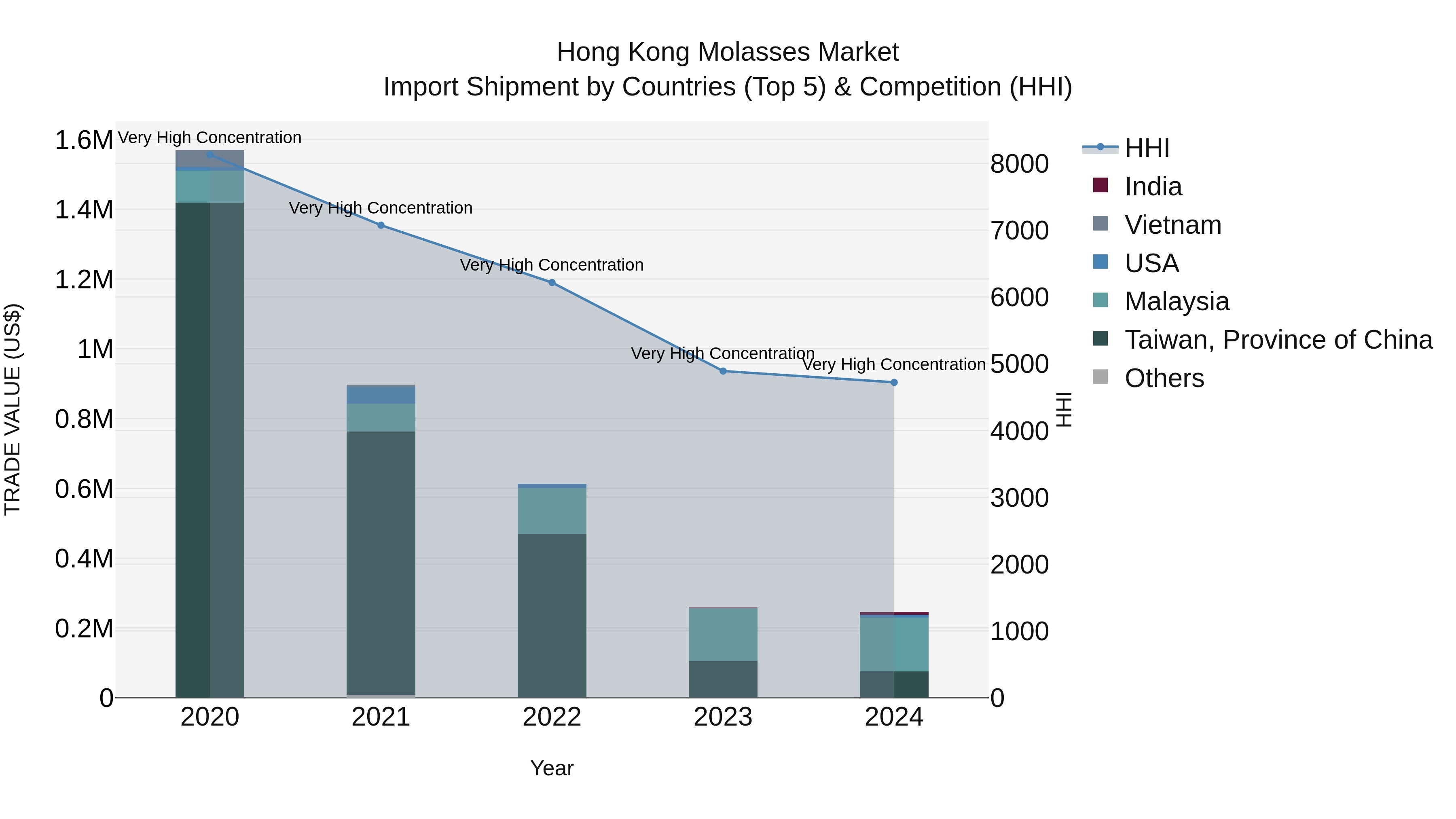
Despite a negative CAGR and declining growth rate in 2024, Hong Kong`s molasses import market continues to be dominated by a few key players. Malaysia, Taiwan, India, and the USA are significant exporters to Hong Kong, indicating a diverse source of molasses. The high HHI concentration suggests a competitive market environment, which could drive innovation and quality improvements among suppliers. Monitoring shifts in import trends and market dynamics will be crucial for stakeholders to adapt and capitalize on emerging opportunities in the evolving molasses trade landscape.
Hong Kong Molasses Market Synopsis
The molasses market in Hong Kong is expanding due to its use in food products, animal feed, and industrial applications. Molasses is a key ingredient in the production of sweeteners, alcoholic beverages, and biofuels, driving demand across various industries.
Drivers of the market
The molasses market in Hong Kong is driven by the increasing demand for natural sweeteners and functional ingredients in the food and beverage industry. Molasses is widely used as a sweetener, flavoring agent, and source of nutrients in various applications. The growing trend of clean label products and the rising popularity of organic and natural ingredients propel the demand for molasses. Additionally, the increasing use of molasses in the production of biofuels and animal feed further supports market growth.
Challenges of the market
The molasses market in Hong Kong is affected by fluctuating sugar prices, import dependencies, and limited domestic production capabilities. Additionally, environmental regulations related to the processing and disposal of molasses waste pose challenges for manufacturers, while competition from alternative sweeteners affects market demand.
Government Policy of the market
The molasses market in Hong Kong is influenced by government policies regulating the food and beverage industry, import-export controls, and environmental sustainability. Molasses, used in the production of rum, sweeteners, and animal feed, is subject to food safety regulations that ensure its quality and compliance with health standards. The government also imposes tariffs and regulations on the importation of molasses to safeguard domestic producers. Additionally, environmental policies encouraging the sustainable production of sugar and its by-products support eco-friendly molasses production practices, which are favored by manufacturers and consumers alike.
Key Highlights of the Report:
- Hong Kong Molasses Market Outlook
- Market Size of Hong Kong Molasses Market, 2024
- Forecast of Hong Kong Molasses Market, 2031
- Historical Data and Forecast of Hong Kong Molasses Revenues & Volume for the Period 2021-2031
- Hong Kong Molasses Market Trend Evolution
- Hong Kong Molasses Market Drivers and Challenges
- Hong Kong Molasses Price Trends
- Hong Kong Molasses Porter`s Five Forces
- Hong Kong Molasses Industry Life Cycle
- Historical Data and Forecast of Hong Kong Molasses Market Revenues & Volume By Source for the Period 2021-2031
- Historical Data and Forecast of Hong Kong Molasses Market Revenues & Volume By Sugarcane for the Period 2021-2031
- Historical Data and Forecast of Hong Kong Molasses Market Revenues & Volume By Sugarbeet for the Period 2021-2031
- Historical Data and Forecast of Hong Kong Molasses Market Revenues & Volume By Type for the Period 2021-2031
- Historical Data and Forecast of Hong Kong Molasses Market Revenues & Volume By Regular Molasses for the Period 2021-2031
- Historical Data and Forecast of Hong Kong Molasses Market Revenues & Volume By Blackstrap Molasses for the Period 2021-2031
- Historical Data and Forecast of Hong Kong Molasses Market Revenues & Volume By Nature for the Period 2021-2031
- Historical Data and Forecast of Hong Kong Molasses Market Revenues & Volume By Organic for the Period 2021-2031
- Historical Data and Forecast of Hong Kong Molasses Market Revenues & Volume By Conventional for the Period 2021-2031
- Historical Data and Forecast of Hong Kong Molasses Market Revenues & Volume By End-Use for the Period 2021-2031
- Historical Data and Forecast of Hong Kong Molasses Market Revenues & Volume By Industrial for the Period 2021-2031
- Historical Data and Forecast of Hong Kong Molasses Market Revenues & Volume By Commercial for the Period 2021-2031
- Historical Data and Forecast of Hong Kong Molasses Market Revenues & Volume By Household for the Period 2021-2031
- Historical Data and Forecast of Hong Kong Molasses Market Revenues & Volume By Sales Channel for the Period 2021-2031
- Historical Data and Forecast of Hong Kong Molasses Market Revenues & Volume By Direct for the Period 2021-2031
- Historical Data and Forecast of Hong Kong Molasses Market Revenues & Volume By Indirect for the Period 2021-2031
- Hong Kong Molasses Import Export Trade Statistics
- Market Opportunity Assessment By Source
- Market Opportunity Assessment By Type
- Market Opportunity Assessment By Nature
- Market Opportunity Assessment By End-Use
- Market Opportunity Assessment By Sales Channel
- Hong Kong Molasses Top Companies Market Share
- Hong Kong Molasses Competitive Benchmarking By Technical and Operational Parameters
- Hong Kong Molasses Company Profiles
- Hong Kong Molasses Key Strategic Recommendations






































