Hong Kong Naphtha Market Top 5 Importing Countries and Market Competition (HHI) Analysis
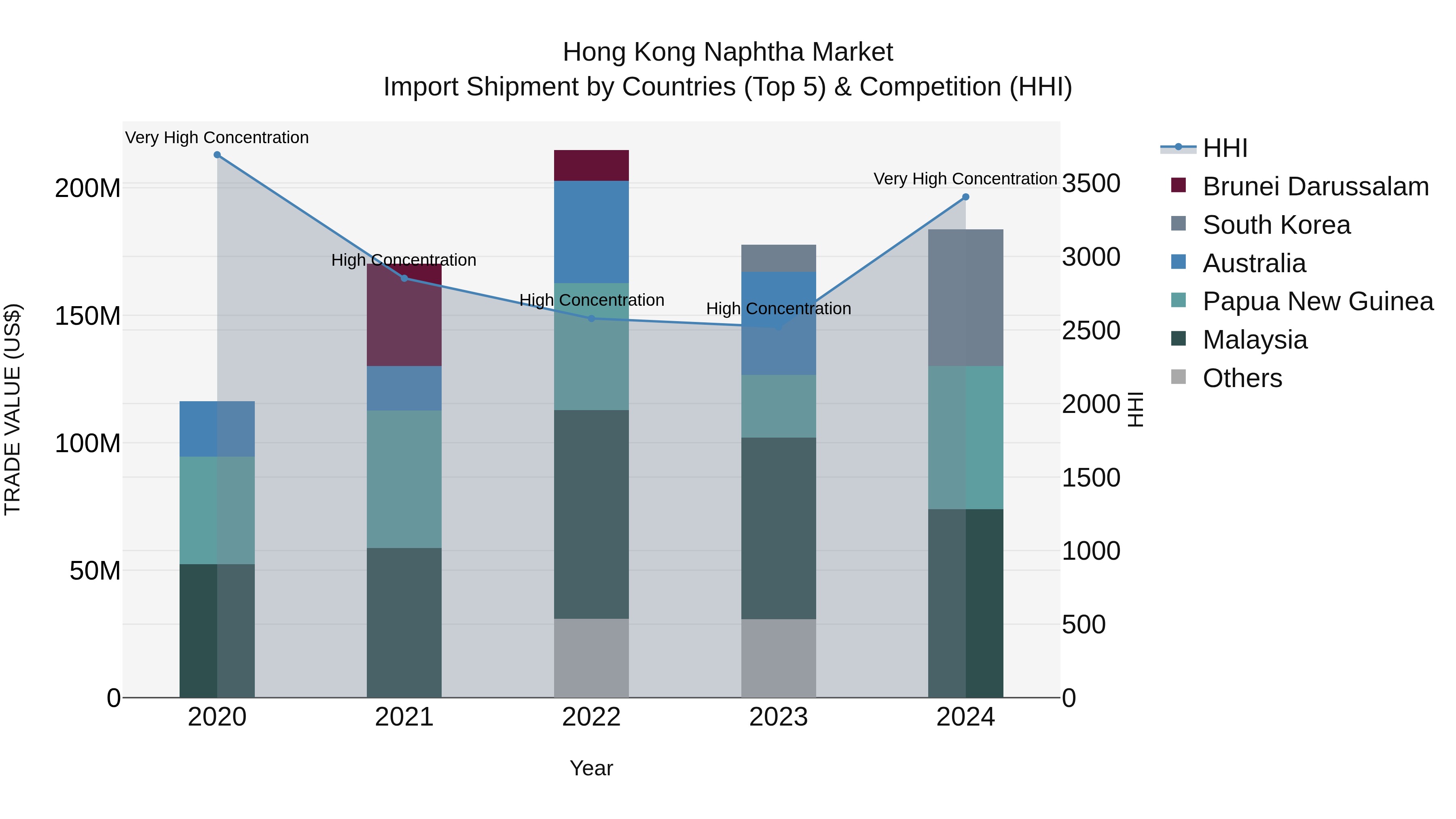
Hong Kong`s naphtha import market saw a notable increase in concentration in 2024, with top exporters being Malaysia, Papua New Guinea, South Korea, Thailand, and Indonesia. The high concentration levels indicate a significant market share held by these countries. The compound annual growth rate (CAGR) from 2020 to 2024 was robust at 12.11%, while the growth rate from 2023 to 2024 stood at 3.41%. This data suggests a strong and steady demand for naphtha imports in Hong Kong, with key suppliers maintaining their dominance in the market.
Hong Kong Naphtha Market Synopsis
The Hong Kong Naphtha Market is characterized by a steady demand primarily driven by the petrochemical industry for the production of ethylene and other chemicals. Hong Kong imports naphtha mainly from suppliers in the Asia-Pacific region, with South Korea, Japan, and Taiwan being key sources. The market is influenced by global crude oil prices, supply-demand dynamics, and geopolitical factors. The usage of naphtha in the region is expected to grow due to increasing petrochemical production capacity and the shift towards lighter feedstocks. However, environmental regulations and the push towards cleaner energy sources may impact the long-term outlook for naphtha consumption in Hong Kong. Overall, the market presents opportunities for suppliers to cater to the growing demand from the petrochemical sector while navigating regulatory challenges and market uncertainties.
Hong Kong Naphtha Market Trends
The Hong Kong naphtha market is currently experiencing a shift towards cleaner and more sustainable energy sources, driven by increasing environmental concerns and regulations. Demand for lighter naphtha grades is rising due to their use as feedstock for the petrochemical industry, particularly for the production of plastics and chemicals. Opportunities exist for market players to invest in upgrading refining capacities to produce higher-quality naphtha products and to explore partnerships with petrochemical companies for feedstock supply. Additionally, the growing trend towards electric vehicles and renewable energy sources may impact naphtha demand in the long term, prompting the industry to adapt and innovate. Overall, there is potential for growth and diversification in the Hong Kong naphtha market by aligning with sustainability goals and emerging industry trends.
Hong Kong Naphtha Market Challenges
In the Hong Kong Naphtha Market, challenges include fluctuations in global oil prices impacting naphtha prices, competition from alternative feedstocks like natural gas, and regulatory changes affecting the refining and petrochemical industries. Additionally, the market is sensitive to geopolitical tensions and trade disputes that can disrupt supply chains and impact demand. As a major importer of naphtha, Hong Kong is also vulnerable to currency fluctuations and changes in import/export policies. Companies operating in this market need to closely monitor these external factors, adapt to changing market conditions, and develop strategies to mitigate risks such as supply disruptions and price volatility to maintain a competitive edge in the industry.
Hong Kong Naphtha Market Investment Opportunities
The Hong Kong Naphtha Market is primarily driven by factors such as the demand from the petrochemical industry, which uses naphtha as a feedstock for producing various chemicals and plastics. Additionally, fluctuations in global crude oil prices impact naphtha prices, as naphtha is a refined product of crude oil. Economic growth and industrial activities in Hong Kong and the broader Asia-Pacific region also influence the demand for naphtha. Environmental regulations and policies promoting cleaner fuel alternatives may impact the naphtha market as well, leading to a shift towards cleaner energy sources. Market trends, supply chain dynamics, and geopolitical factors can also play a role in shaping the Hong Kong naphtha market landscape.
Hong Kong Naphtha Market Government Polices
The Hong Kong government has implemented policies to regulate the naphtha market in the region. These policies include monitoring naphtha imports and exports, setting quality standards for naphtha products, and implementing taxation measures on naphtha-related activities. Additionally, the government has encouraged the development of cleaner and more sustainable naphtha production processes to reduce environmental impact. The government aims to ensure a stable and competitive naphtha market in Hong Kong while also promoting environmental sustainability and compliance with international standards.
Hong Kong Naphtha Market Future Outlook
The future outlook for the Hong Kong Naphtha Market appears to be positive due to various factors, including the growing demand for petrochemical products in the region and increasing investments in infrastructure and industrial development. The market is expected to benefit from the rebound in global economic growth and the recovery of the manufacturing sector, leading to higher naphtha consumption for use in petrochemical production. Additionally, the shift towards cleaner energy sources and the implementation of stricter environmental regulations may drive the demand for naphtha as a feedstock for producing cleaner fuels. However, potential challenges such as fluctuations in crude oil prices and geopolitical tensions could impact market dynamics. Overall, the Hong Kong Naphtha Market is poised for growth in the coming years, supported by rising demand and evolving industry trends.
Key Highlights of the Report:
- Hong Kong Naphtha Market Outlook
- Market Size of Hong Kong Naphtha Market, 2024
- Forecast of Hong Kong Naphtha Market, 2031
- Historical Data and Forecast of Hong Kong Naphtha Revenues & Volume for the Period 2021- 2031
- Hong Kong Naphtha Market Trend Evolution
- Hong Kong Naphtha Market Drivers and Challenges
- Hong Kong Naphtha Price Trends
- Hong Kong Naphtha Porter's Five Forces
- Hong Kong Naphtha Industry Life Cycle
- Historical Data and Forecast of Hong Kong Naphtha Market Revenues & Volume By Application for the Period 2021- 2031
- Historical Data and Forecast of Hong Kong Naphtha Market Revenues & Volume By Chemicals for the Period 2021- 2031
- Historical Data and Forecast of Hong Kong Naphtha Market Revenues & Volume By Energy/Fuel for the Period 2021- 2031
- Historical Data and Forecast of Hong Kong Naphtha Market Revenues & Volume By Others for the Period 2021- 2031
- Hong Kong Naphtha Import Export Trade Statistics
- Market Opportunity Assessment By Application
- Hong Kong Naphtha Top Companies Market Share
- Hong Kong Naphtha Competitive Benchmarking By Technical and Operational Parameters
- Hong Kong Naphtha Company Profiles
- Hong Kong Naphtha Key Strategic Recommendations






































