Hong Kong Passenger Car Motor Oil Market Top 5 Importing Countries and Market Competition (HHI) Analysis
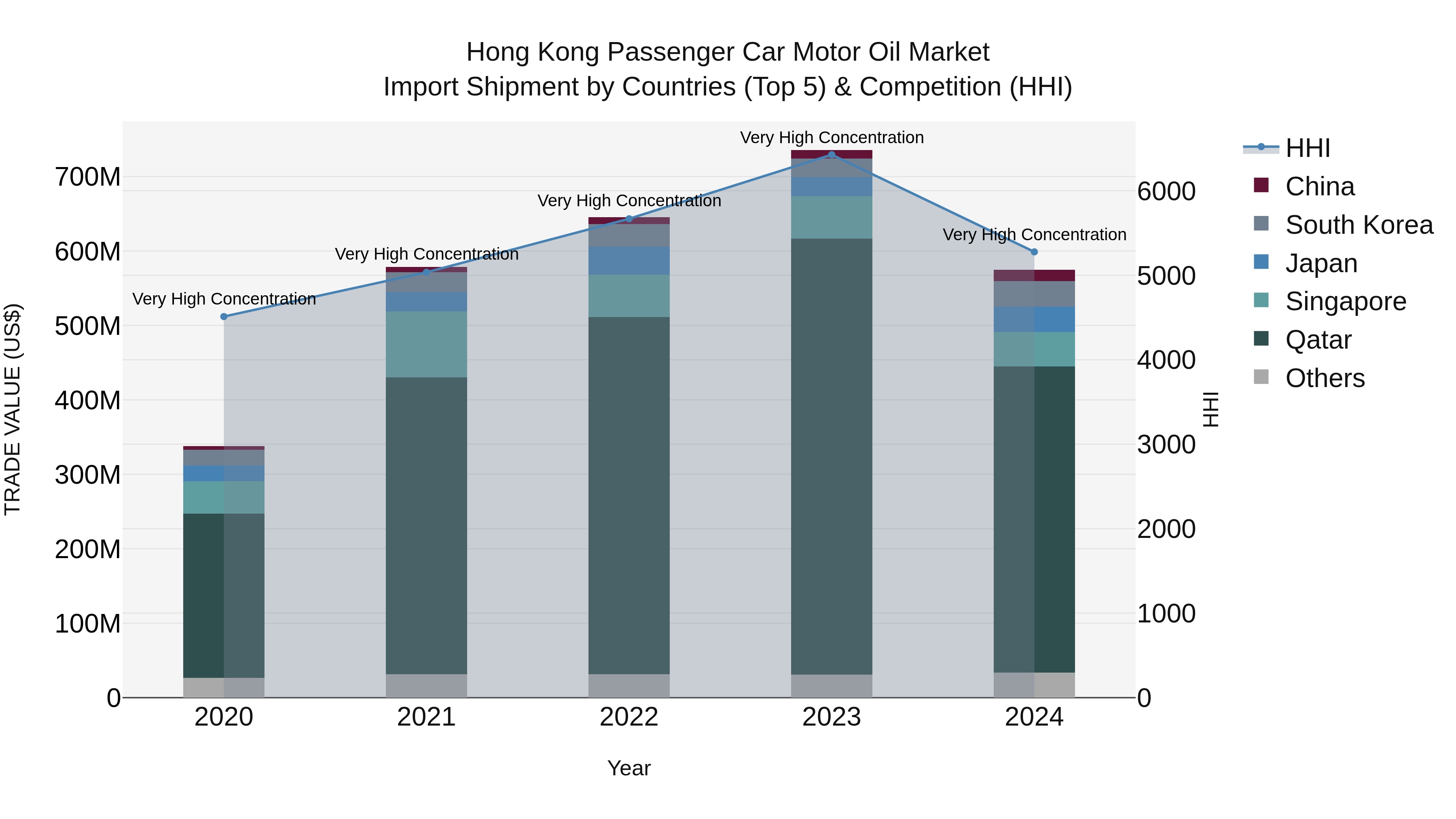
Hong Kong`s passenger car motor oil import shipments in 2024 continued to see a high level of concentration, with Qatar, Singapore, South Korea, Japan, and China being the top exporting countries. Despite a strong compound annual growth rate (CAGR) of 14.18% from 2020 to 2024, there was a notable decline in the growth rate from 2023 to 2024, with a decrease of -21.85%. This suggests a potential shift or temporary setback in the market dynamics, which could be influenced by various factors such as global economic conditions or changes in consumer preferences.
Key Highlights of the Report:
- Hong Kong Passenger Car Motor Oil Market Outlook
- Market Size of Hong Kong Passenger Car Motor Oil Market, 2025
- Forecast of Hong Kong Passenger Car Motor Oil Market, 2032
- Historical Data and Forecast of Hong Kong Passenger Car Motor Oil Revenues & Volume for the Period 2022 - 2032F
- Hong Kong Passenger Car Motor Oil Market Trend Evolution
- Hong Kong Passenger Car Motor Oil Market Drivers and Challenges
- Hong Kong Passenger Car Motor Oil Price Trends
- Hong Kong Passenger Car Motor Oil Porter's Five Forces
- Hong Kong Passenger Car Motor Oil Industry Life Cycle
- Historical Data and Forecast of Hong Kong Passenger Car Motor Oil Market Revenues & Volume By Type for the Period 2022 - 2032F
- Historical Data and Forecast of Hong Kong Passenger Car Motor Oil Market Revenues & Volume By Synthetic for the Period 2022 - 2032F
- Historical Data and Forecast of Hong Kong Passenger Car Motor Oil Market Revenues & Volume By Conventional for the Period 2022 - 2032F
- Historical Data and Forecast of Hong Kong Passenger Car Motor Oil Market Revenues & Volume By Semi-Synthetic for the Period 2022 - 2032F
- Historical Data and Forecast of Hong Kong Passenger Car Motor Oil Market Revenues & Volume By High-Mileage for the Period 2022 - 2032F
- Historical Data and Forecast of Hong Kong Passenger Car Motor Oil Market Revenues & Volume By Viscosity Grade for the Period 2022 - 2032F
- Historical Data and Forecast of Hong Kong Passenger Car Motor Oil Market Revenues & Volume By 5W-30 for the Period 2022 - 2032F
- Historical Data and Forecast of Hong Kong Passenger Car Motor Oil Market Revenues & Volume By 10W-40 for the Period 2022 - 2032F
- Historical Data and Forecast of Hong Kong Passenger Car Motor Oil Market Revenues & Volume By 15W-50 for the Period 2022 - 2032F
- Historical Data and Forecast of Hong Kong Passenger Car Motor Oil Market Revenues & Volume By 0W-20 for the Period 2022 - 2032F
- Historical Data and Forecast of Hong Kong Passenger Car Motor Oil Market Revenues & Volume By Application for the Period 2022 - 2032F
- Historical Data and Forecast of Hong Kong Passenger Car Motor Oil Market Revenues & Volume By High Performance for the Period 2022 - 2032F
- Historical Data and Forecast of Hong Kong Passenger Car Motor Oil Market Revenues & Volume By Standard Driving for the Period 2022 - 2032F
- Historical Data and Forecast of Hong Kong Passenger Car Motor Oil Market Revenues & Volume By Long Mileage for the Period 2022 - 2032F
- Historical Data and Forecast of Hong Kong Passenger Car Motor Oil Market Revenues & Volume By Fuel Efficiency for the Period 2022 - 2032F
- Historical Data and Forecast of Hong Kong Passenger Car Motor Oil Market Revenues & Volume By End Use for the Period 2022 - 2032F
- Historical Data and Forecast of Hong Kong Passenger Car Motor Oil Market Revenues & Volume By Car Owners for the Period 2022 - 2032F
- Historical Data and Forecast of Hong Kong Passenger Car Motor Oil Market Revenues & Volume By Dealerships for the Period 2022 - 2032F
- Historical Data and Forecast of Hong Kong Passenger Car Motor Oil Market Revenues & Volume By Service Centers for the Period 2022 - 2032F
- Historical Data and Forecast of Hong Kong Passenger Car Motor Oil Market Revenues & Volume By Automotive for the Period 2022 - 2032F
- Hong Kong Passenger Car Motor Oil Import Export Trade Statistics
- Market Opportunity Assessment By Type
- Market Opportunity Assessment By Viscosity Grade
- Market Opportunity Assessment By Application
- Market Opportunity Assessment By End Use
- Hong Kong Passenger Car Motor Oil Top Companies Market Share
- Hong Kong Passenger Car Motor Oil Competitive Benchmarking By Technical and Operational Parameters
- Hong Kong Passenger Car Motor Oil Company Profiles
- Hong Kong Passenger Car Motor Oil Key Strategic Recommendations






































