Hungary Automotive Reversing Radar Market: Import Trend Analysis
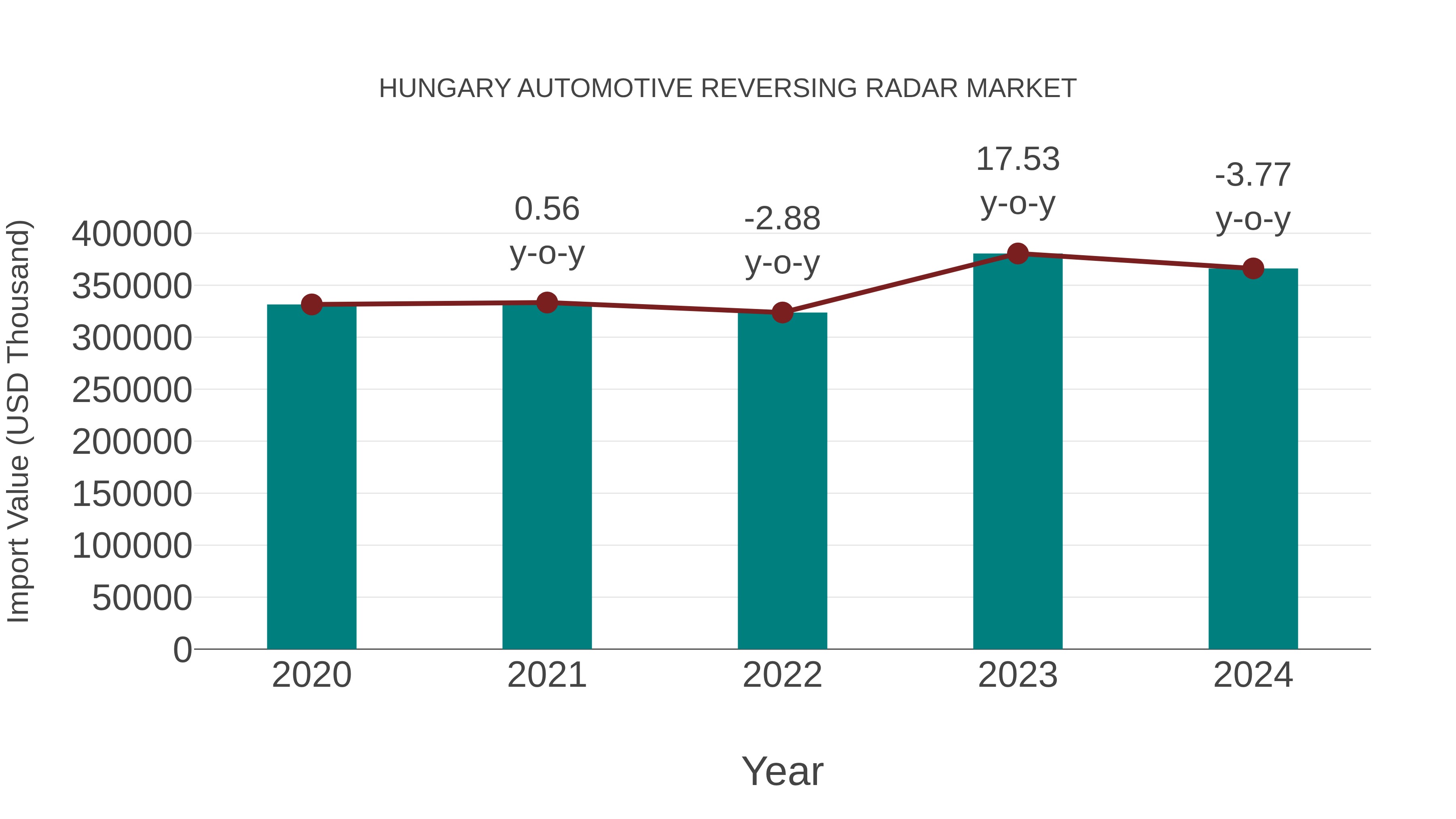
Hungary`s import trend for automotive reversing radars exhibited a decline in growth from 2023 to 2024, with a rate of -3.77%. However, the compound annual growth rate (CAGR) for the period from 2020 to 2024 stood at 2.52%. This dip in import momentum could be attributed to shifting consumer demand or changes in trade policies impacting market stability.
Hungary Automotive Reversing Radar Market Overview
Reversing radars are a specific type of automotive radar system designed to assist drivers in parking and maneuvering vehicles in tight spaces. In Hungary, the market for automotive reversing radars is growing in parallel with the broader automotive radar market. As vehicle safety regulations become more stringent, the demand for reversing radar systems is expected to increase, driving innovation and market competition.
Drivers of the market
The Hungary Automotive Reversing Radar market is driven by the growing demand for parking assistance systems and enhanced vehicle safety features, particularly in urban areas with limited parking space and high traffic congestion. Reversing radar systems utilize ultrasonic or electromagnetic sensors to detect obstacles and provide audible or visual alerts to drivers during parking maneuvers, thereby reducing the risk of collisions and property damage. Additionally, the integration of advanced features such as automatic braking and surround-view camera systems is further augmenting the adoption of automotive reversing radar systems in Hungary.
Challenges of the market
The automotive reversing radar market in Hungary faces challenges such as the limited adoption of advanced driver assistance systems (ADAS) in entry-level and mid-range vehicles due to cost concerns. Additionally, the reliance on radar-based sensors for proximity detection in parking and maneuvering applications necessitates robust testing and validation to ensure safety and reliability.
Government Policy of the market
In line with its commitment to improving road safety standards, the Hungary government has introduced regulations mandating the use of reversing radar systems in vehicles. Policies include certification requirements for radar manufacturers, public awareness campaigns to educate consumers about the benefits of reversing radar technology, and subsidies for vehicle owners retrofitting their vehicles with radar-based safety systems.
Key Highlights of the Report:
- Hungary Automotive Reversing Radar Market Outlook
- Market Size of Hungary Automotive Reversing Radar Market, 2025
- Forecast of Hungary Automotive Reversing Radar Market, 2032
- Historical Data and Forecast of Hungary Automotive Reversing Radar Revenues & Volume for the Period 2022-2032F
- Hungary Automotive Reversing Radar Market Trend Evolution
- Hungary Automotive Reversing Radar Market Drivers and Challenges
- Hungary Automotive Reversing Radar Price Trends
- Hungary Automotive Reversing Radar Porter's Five Forces
- Hungary Automotive Reversing Radar Industry Life Cycle
- Historical Data and Forecast of Hungary Automotive Reversing Radar Market Revenues & Volume By Type for the Period 2022-2032F
- Historical Data and Forecast of Hungary Automotive Reversing Radar Market Revenues & Volume By Ultrasonic for the Period 2022-2032F
- Historical Data and Forecast of Hungary Automotive Reversing Radar Market Revenues & Volume By Electromagnetic for the Period 2022-2032F
- Historical Data and Forecast of Hungary Automotive Reversing Radar Market Revenues & Volume By Application for the Period 2022-2032F
- Historical Data and Forecast of Hungary Automotive Reversing Radar Market Revenues & Volume By Passenger Vehicle for the Period 2022-2032F
- Historical Data and Forecast of Hungary Automotive Reversing Radar Market Revenues & Volume By Commercial Vehicle for the Period 2022-2032F
- Hungary Automotive Reversing Radar Import Export Trade Statistics
- Market Opportunity Assessment By Type
- Market Opportunity Assessment By Application
- Hungary Automotive Reversing Radar Top Companies Market Share
- Hungary Automotive Reversing Radar Competitive Benchmarking By Technical and Operational Parameters
- Hungary Automotive Reversing Radar Company Profiles
- Hungary Automotive Reversing Radar Key Strategic Recommendations






































