Hungary Bakeware Market Summary
The hungary bakeware market was estimated at USD 305 Million in 2025 and is projected to reach USD 420 Million by 2032, growing at a CAGR of 5.6% from 2026 to 2032.
Hungary Bakeware Market Year-wise Growth Rate and Key Drivers
This graph highlights how the Hungary Bakeware Market has steadily grown over the past five years, supported by major growth factors.
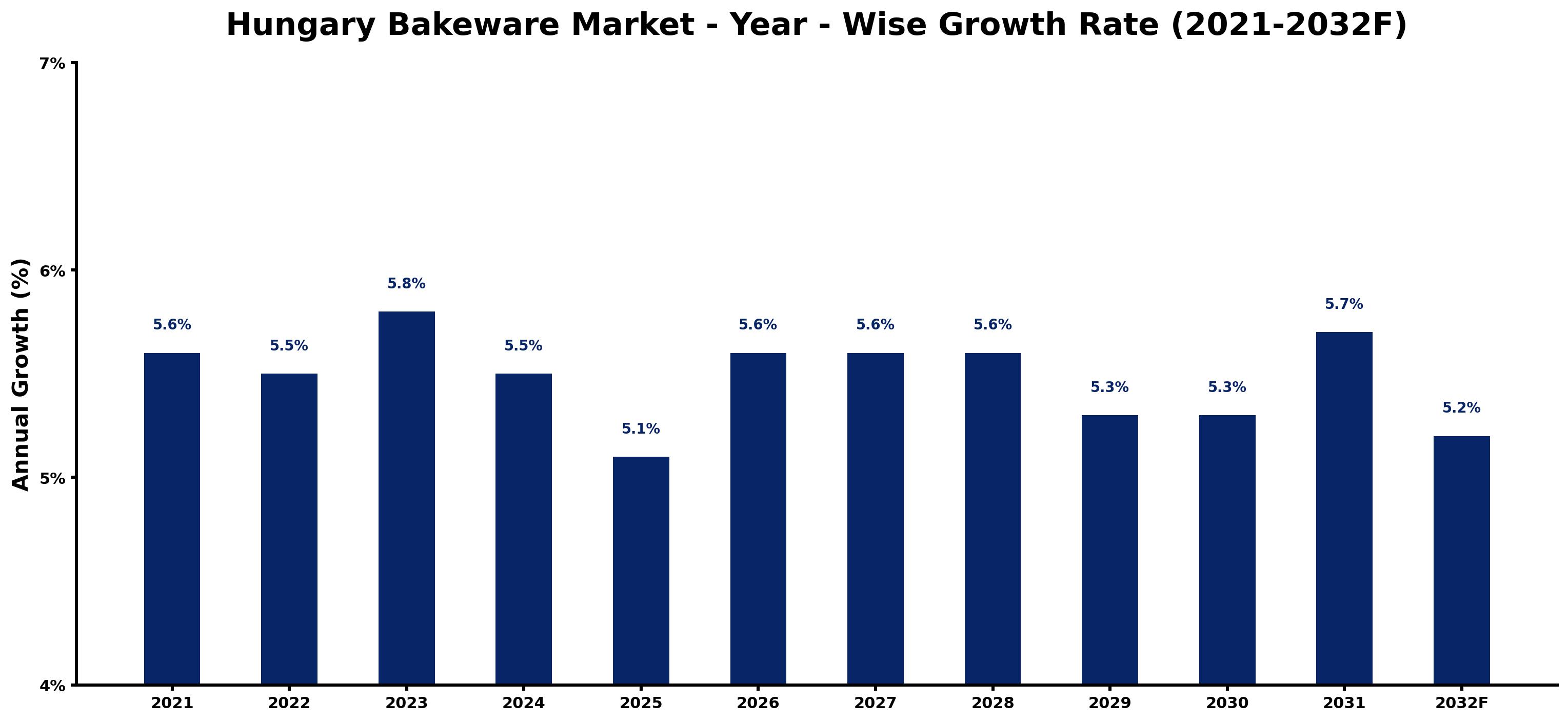
The table below presents the year wise growth rates along with the key drivers influencing the market
| Year | Growth Rate | Major Drivers |
| 2021 | 5.6% | Post-lockdown retail projects featured a surge in home baking interest. |
| 2022 | 5.5% | E-commerce platforms expanded significantly, improving accessibility to bakeware products. |
| 2023 | 5.8% | Sustainable materials gained traction, appealing to eco-conscious consumers in Hungary. |
| 2024 | 5.5% | Local craftsmanship initiatives showcased traditional baking techniques, enhancing market appeal. |
| 2025 | 5.1% | Health-conscious trends encouraged the use of non-stick and healthier baking options. |
| 2026 | 5.6% | Social media influencers popularized home baking, creating a vibrant community online. |
| 2027 | 5.6% | Innovative designs in bakeware attracted younger, trend-focused consumers in urban areas. |
| 2028 | 5.6% | Cross-generational cooking classes revived interest in traditional baking methods and tools. |
| 2029 | 5.3% | Expansion of local bakeries led to increased demand for specialized bakeware products. |
| 2030 | 5.3% | Rising disposable incomes allowed households to invest in high-quality bakeware essentials. |
| 2031 | 5.7% | Sustainability certifications improved product trust, encouraging consumer loyalty in bakeware. |
| 2032 | 5.2% | Technological integration in bakeware enhanced user experience, appealing to tech-savvy bakers. |
Note - Market size estimations and growth projections presented in this report are based on 6Wresearch's advanced forecasting approach, validated with industry datasets as of June 2026.
Hungary Bakeware Market Synopsis
The Hungary Bakeware Market is projected to reach 5.6% and witness significant growth during the forecast period (2026-2032). This growth is primarily fueled by an increasing interest in home baking, a rise in disposable incomes, and a notable trend where bakeware products are frequently gifted. Consumers are actively seeking a diverse array of bakeware items, which include baking pans, molds, sheets, and utensils, to meet their culinary needs. The burgeoning popularity of baking shows and social media influencers emphasizing homemade baked goods is creating a heightened demand for visually appealing and high-quality bakeware products. Furthermore, the market is increasingly leaning towards eco-friendly and sustainable options as consumers gravitate towards environmentally responsible products. Overall, the Hungary Bakeware Market is on a trajectory of expansion, as baking continues to be embraced as both a hobby and a means of self-expression.
Hungary Bakeware Market Growth Drivers
Several key drivers are paving the way for expansion in the Hungary Bakeware Market. Firstly, there is a noticeable increase in home baking activities, spurred by rising culinary interest among households. Secondly, consumers are benefiting from an increase in disposable income, which allows for investments in quality bakeware. Thirdly, the gifting of bakeware products is becoming a popular trend, particularly during festive seasons and special occasions. Fourthly, the influence of social media platforms showcasing baking artistry has led to an eagerness among individuals to recreate attractive baked goods at home. Finally, an increasing consumer consciousness regarding sustainability is shifting preferences toward innovative, eco-friendly bakeware solutions.
Hungary Bakeware Market Trends and Opportunities
In the Hungary Bakeware Market, notable trends are shaping consumer preferences. There exists a growing demand for versatile and multi-functional bakeware products that address varied baking needs. Non-stick coatings and silicone materials are becoming particularly popular due to their practicality in use and ease of cleaning. Additionally, the market is witnessing a shift towards sustainability, with consumers showing interest in bakeware crafted from recycled materials or that can be easily recycled. The trend of customization also plays a significant role, with consumers seeking bakeware items tailored to reflect personal taste and style. Furthermore, online retail channels are gaining traction, providing consumers with convenient access to a wider array of product options, which enhances the overall shopping experience.
Hungary Bakeware Market Challenges and Restraints
Despite its growth potential, the Hungary Bakeware Market faces several challenges. Increasing competition from both domestic and international manufacturers poses a threat to market share and price stability. Fluctuating raw material prices can impact production costs, thereby affecting pricing strategies for consumers. Additionally, as preferences shift toward healthier baking options, producers must navigate the complexities of evolving consumer demands. Strong regulations concerning product quality and safety standards can further complicate production processes and innovation for manufacturers. Lastly, rising energy and transportation costs challenge manufacturers in maintaining competitive pricing while ensuring product availability.
Hungary Bakeware Market Investment Opportunities
The Hungary Bakeware Market offers promising investment opportunities, particularly due to an expanding consumer base keen on home baking. Investors have the chance to capitalize on this trend by developing innovative, high-quality bakeware items such as cake pans, cookie sheets, and mixing bowls that cater to the evolving tastes of consumers. There is also a burgeoning market for eco-friendly and sustainable bakeware products, aligning with the growing environmental awareness among consumers. Furthermore, establishing collaborations with local manufacturers or distribution channels within Hungary can present unique avenues for introducing novel bakeware items, thereby enhancing business growth and profitability.
Hungary Bakeware Market Government Investment and Initiatives
Government policies impacting the Hungary Bakeware Market focus primarily on food safety regulations, import/export guidelines, and consumer protection laws. The Hungarian government enforces stringent food safety protocols that ensure all bakeware products adhere to health and safety standards. Import and export regulations facilitate the trade of bakeware items while ensuring compliance with international benchmarks. Additionally, consumer protection laws are in place to shield buyers from unfair practices and ensure the quality of bakeware products available in the market. These governmental frameworks play an integral role in fostering a competitive and safe environment for stakeholders within the bakeware sector.
Hungary Bakeware Market Latest Developments (May 2025 - June 2026)
Recent developments in the Hungary Bakeware Market from May 2025 to June 2026 reveal a dynamic shift toward innovation in product offerings. Manufacturers are increasingly focusing on integrating eco-friendly materials into their designs, reflecting the rising consumer desire for sustainability. There is also heightened activity in online retailing platforms, allowing consumers more accessible means to purchase diverse bakeware products. Furthermore, the influence of social media continues to bolster the home baking trend, with consumers eager to engage in baking experiences inspired by popular online content. Such developments are instrumental in shaping the future landscape of the Hungary Bakeware Market, as companies strive to meet the evolving needs of their customers.
Hungary Bakeware Market - Key Attractiveness of the Report
- 10 Years of Market Numbers
- Historical Data Starting from 2022 to 2025
- Base Year: 2025
- Forecast Data until 2032
- Key Performance Indicators Impacting the Market
- Major Upcoming Developments and Projects
Key Highlights of the Report:
- Hungary Bakeware Market Outlook
- Market Size of Hungary Bakeware Market, 2025
- Forecast of Hungary Bakeware Market, 2032F
- Historical Data and Forecast of Hungary Bakeware Revenues & Volume for the Period 2022-2032F
- Hungary Bakeware Market Trend Evolution
- Hungary Bakeware Market Drivers and Challenges
- Hungary Bakeware Price Trends
- Hungary Bakeware Porter's Five Forces
- Hungary Bakeware Industry Life Cycle
- Historical Data and Forecast of Hungary Bakeware Market Revenues & Volume By Product Type for the Period 2022-2032F
- Historical Data and Forecast of Hungary Bakeware Market Revenues & Volume By Ceramic for the Period 2022-2032F
- Historical Data and Forecast of Hungary Bakeware Market Revenues & Volume By Aluminium for the Period 2022-2032F
- Historical Data and Forecast of Hungary Bakeware Market Revenues & Volume By Cast Iron for the Period 2022-2032F
- Historical Data and Forecast of Hungary Bakeware Market Revenues & Volume By Stainless Steel for the Period 2022-2032F
- Historical Data and Forecast of Hungary Bakeware Market Revenues & Volume By Glass for the Period 2022-2032F
- Historical Data and Forecast of Hungary Bakeware Market Revenues & Volume By Others for the Period 2022-2032F
- Historical Data and Forecast of Hungary Bakeware Market Revenues & Volume By Applications for the Period 2022-2032F
- Historical Data and Forecast of Hungary Bakeware Market Revenues & Volume By Commercial for the Period 2022-2032F
- Historical Data and Forecast of Hungary Bakeware Market Revenues & Volume By Household for the Period 2022-2032F
- Hungary Bakeware Import Export Trade Statistics
- Market Opportunity Assessment By Product Type
- Market Opportunity Assessment By Applications
- Hungary Bakeware Top Companies Market Share
- Hungary Bakeware Competitive Benchmarking By Technical and Operational Parameters
- Hungary Bakeware Company Profiles
- Hungary Bakeware Key Strategic Recommendations






































