Hungary Christmas Tree Market: Import Trend Analysis
In 2024, Hungary`s import trend for the Christmas tree market experienced a slight decline, with a growth rate of -0.09% compared to the previous year. However, the compound annual growth rate (CAGR) from 2020 to 2024 stood at a steady 3.59%. This dip in import momentum might be attributed to shifting consumer preferences or changes in trade policies affecting the market.
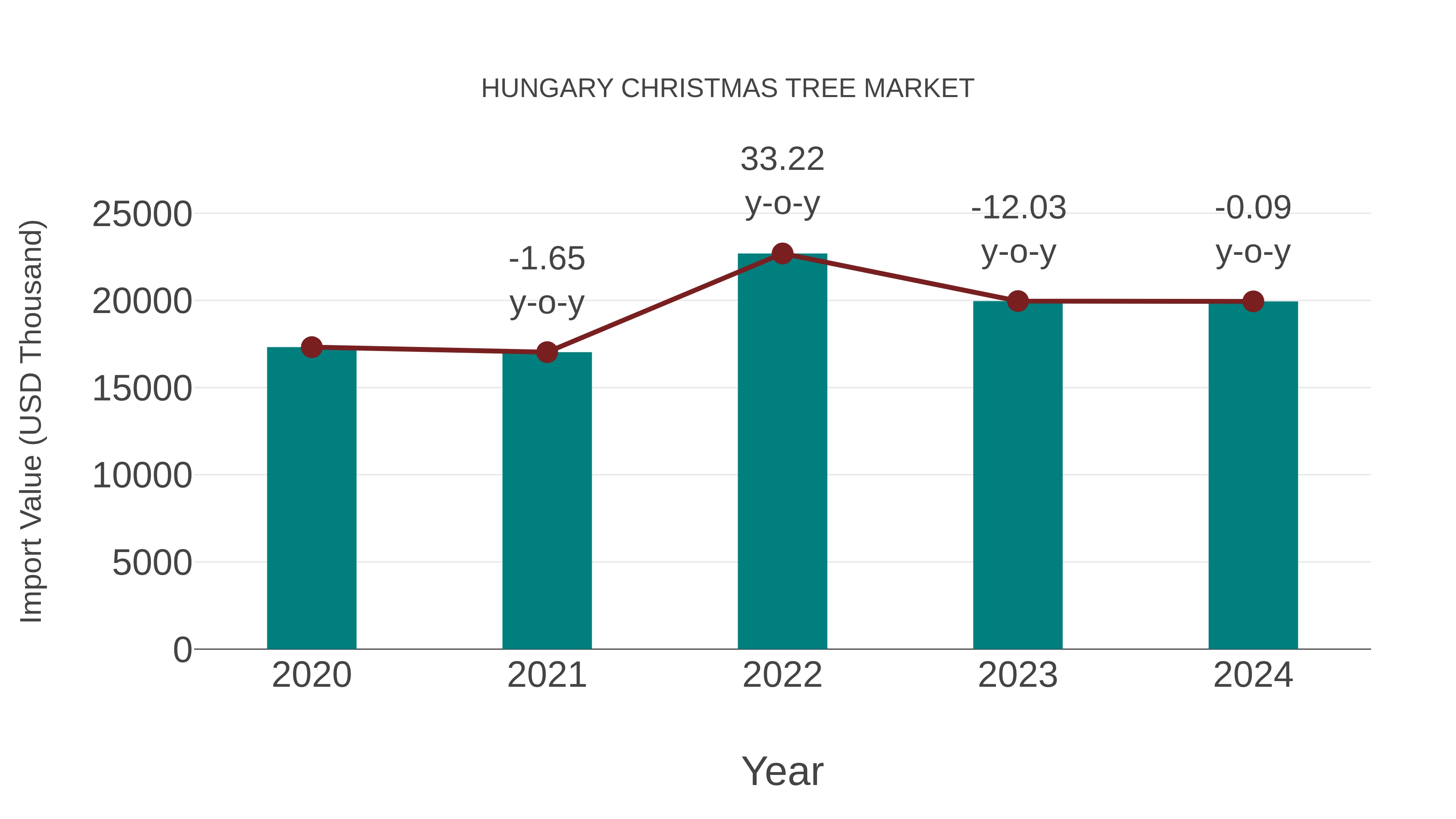
Hungary Christmas Tree Market Overview
The Christmas tree market in Hungary experiences seasonal fluctuations in demand, with peak sales observed during the holiday season. The market is characterized by a wide variety of Christmas tree species, including fir, spruce, and pine, catering to diverse consumer preferences. Artificial Christmas trees also contribute to market growth, offering convenience and reusability to consumers. Moreover, the growing popularity of eco-friendly and sustainably sourced Christmas trees has driven market innovation and product differentiation. Retailers often engage in promotional activities and festive events to attract customers and boost sales during the holiday season.
Drivers of the market
The Hungary Christmas tree market experiences seasonal fluctuations, with demand primarily driven by cultural traditions and festivities. Market growth is supported by the increasing adoption of artificial Christmas trees and the growing popularity of eco-friendly and sustainable options. However, challenges such as competition from imported trees and fluctuations in disposable incomes may impact market dynamics.
Challenges of the market
In Hungary, the Christmas tree market encounters challenges related to seasonal demand fluctuations and competition from artificial trees. Consumer preferences for convenience and environmental sustainability have led to a growing market for artificial trees, impacting the demand for natural Christmas trees. Moreover, factors such as weather conditions, pest infestations, and transportation costs pose challenges for Christmas tree growers and distributors in Hungary.
Government Policy of the market
In Hungary, the Christmas tree market operates under government policies aimed at promoting sustainable forestry practices, consumer safety, and fair trade. Regulatory agencies oversee tree harvesting, transportation, and sales to ensure compliance with standards that protect natural habitats and maintain biodiversity. The government also supports initiatives that promote the cultivation of Christmas trees as a means of rural development and environmental conservation.
Key Highlights of the Report:
- Hungary Christmas Tree Market Outlook
- Market Size of Hungary Christmas Tree Market, 2025
- Forecast of Hungary Christmas Tree Market, 2032
- Historical Data and Forecast of Hungary Christmas Tree Revenues & Volume for the Period 2022-2032F
- Hungary Christmas Tree Market Trend Evolution
- Hungary Christmas Tree Market Drivers and Challenges
- Hungary Christmas Tree Price Trends
- Hungary Christmas Tree Porter's Five Forces
- Hungary Christmas Tree Industry Life Cycle
- Historical Data and Forecast of Hungary Christmas Tree Market Revenues & Volume By Type for the Period 2022-2032F
- Historical Data and Forecast of Hungary Christmas Tree Market Revenues & Volume By Horizontal Tree for the Period 2022-2032F
- Historical Data and Forecast of Hungary Christmas Tree Market Revenues & Volume By Vertical Tree for the Period 2022-2032F
- Historical Data and Forecast of Hungary Christmas Tree Market Revenues & Volume By Location of Deployment for the Period 2022-2032F
- Historical Data and Forecast of Hungary Christmas Tree Market Revenues & Volume By Onshore for the Period 2022-2032F
- Historical Data and Forecast of Hungary Christmas Tree Market Revenues & Volume By Offshore for the Period 2022-2032F
- Hungary Christmas Tree Import Export Trade Statistics
- Market Opportunity Assessment By Type
- Market Opportunity Assessment By Location of Deployment
- Hungary Christmas Tree Top Companies Market Share
- Hungary Christmas Tree Competitive Benchmarking By Technical and Operational Parameters
- Hungary Christmas Tree Company Profiles
- Hungary Christmas Tree Key Strategic Recommendations






































