Hungary Cloud Security Market Size & Growth Rate (2026-2032)
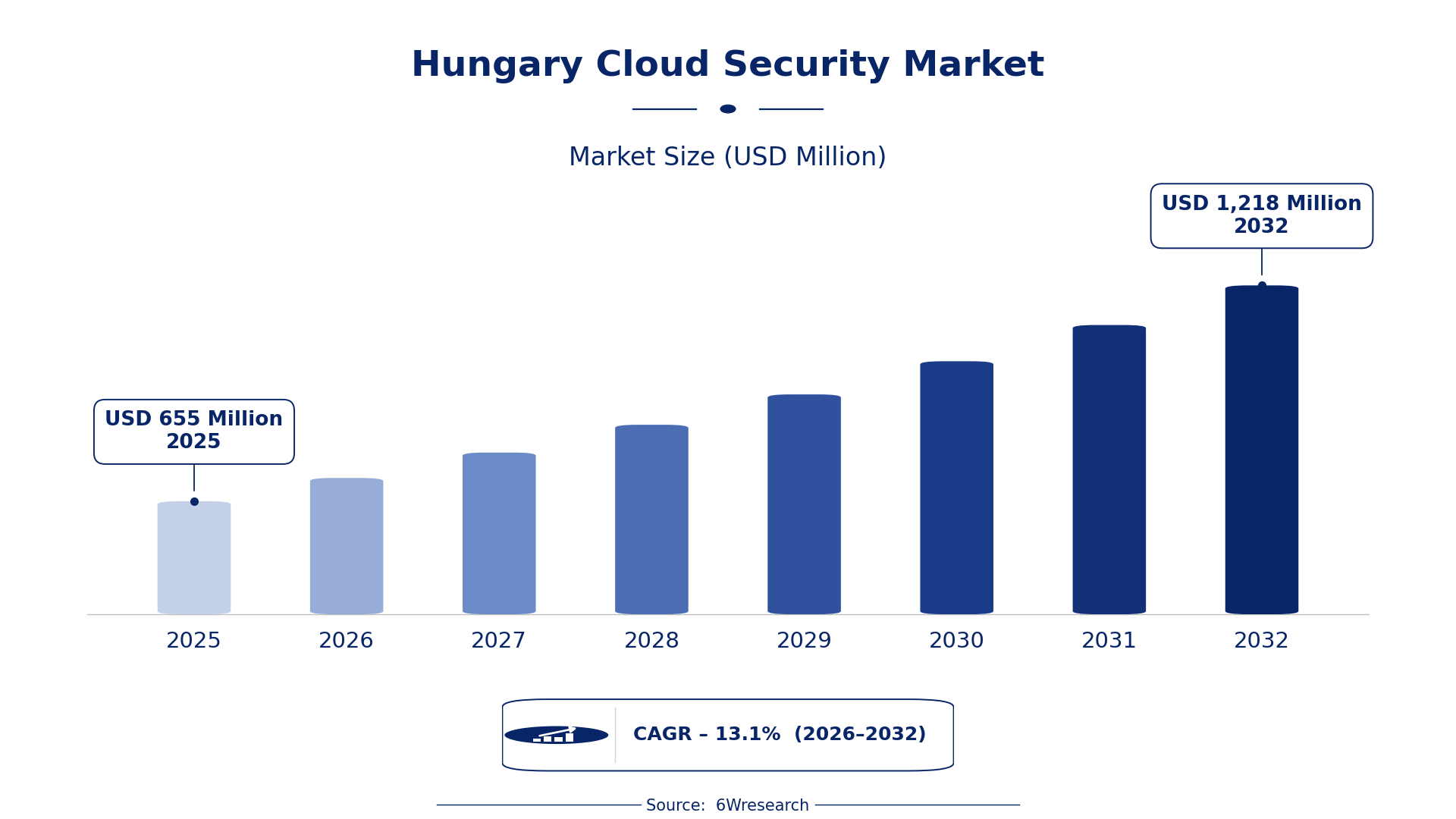
The Hungary Cloud Security Market was estimated at USD 655 Million in 2025 and is projected to reach USD 1218 Million by 2032, growing at a CAGR of 13.1% from 2026 to 2032.
Hungary Cloud Security Market Synopsis
As organizations in Hungary adopt more cloud-based solutions, the demand for comprehensive cloud security measures has surged. Companies are increasingly aware that traditional security protocols may not suffice in addressing the complexities of cloud environments.
To mitigate risks associated with data breaches and cyber threats, businesses are turning to advanced security solutions that cover a wide range of functionalities—from threat detection to identity management. This shift indicates a strong commitment to securing sensitive information in a cloud-driven economy.
Hungary Cloud Security Market Year-wise Growth Rate and Key Drivers
This graph illustrates the annual growth rates of the Hungary Cloud Security Market from 2021 to 2032, highlighting a steady upward trajectory and projected expansion over the forecast period.
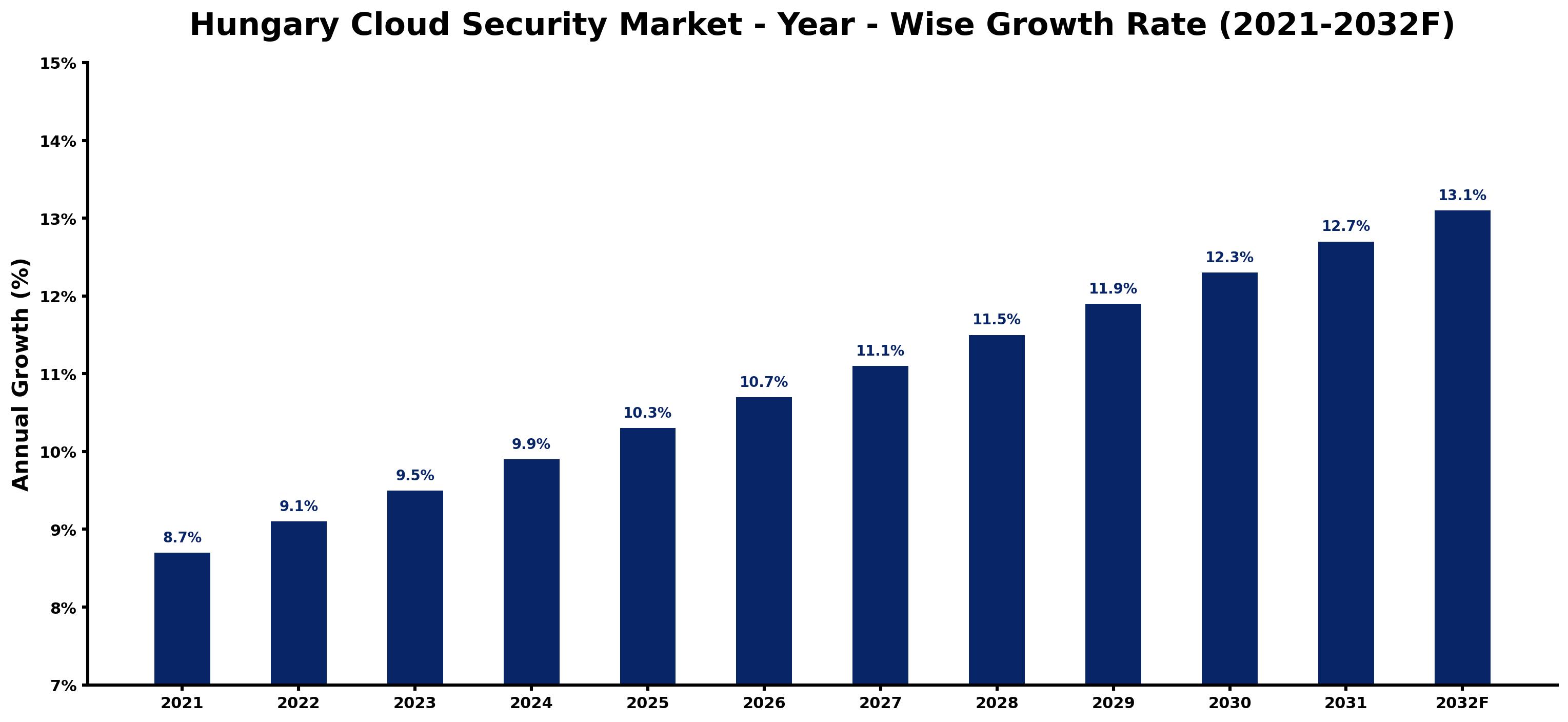
The table below presents the year‑wise growth rates along with the key drivers influencing the market
| Year | Growth Rate | Major Drivers |
| 2021 | 8.7% | Data protection regulations by National Data Protection Authority. |
| 2022 | 9.1% | Increased cybersecurity awareness after significant data breaches. |
| 2023 | 9.5% | Government incentives for digital transformation across sectors. |
| 2024 | 9.9% | Growth in e-commerce boosting cloud service requirements. |
| 2025 | 10.3% | Adoption of GDPR driving cloud security compliance needs. |
| 2026 | 10.7% | Investment in fintech solutions enhancing cloud security market. |
| 2027 | 11.1% | Local startups proliferating cloud-native security innovations. |
| 2028 | 11.5% | Rising cloud service usage in public administration. |
| 2029 | 11.9% | Expanding telemedicine services requiring robust cloud safeguards. |
| 2030 | 12.3% | Increased remote workforce enhancing cloud security demand. |
| 2031 | 12.7% | Partnerships between banks and cloud providers for security. |
| 2032 | 13.1% | National cybersecurity strategy prioritizing secure cloud resources. |
Note: Market size estimations and growth projections presented in this report are based on 6Wresearch's proprietary forecasting methodology, utilizing the latest available industry data, government publications, and primary research inputs.
Hungary Cloud Security Market Key Takeaways
Below are some of the specific key takeaways from the market, including:
- Growing emphasis on data protection due to increasing cyber threats.
- Demand for encryption and identity management solutions continues to rise.
- Compliance with stringent data protection regulations is critical for organizations.
- Cloud service providers are enhancing their security offerings to build trust.
- Government policies are shaping the regulatory framework for cloud security.
Evaluation of Restraints in Hungary Cloud Security Market
One of the primary challenges facing the Hungary Cloud Security Market is the rapid evolution of cyber threats. As organizations move their operations to the cloud, sophisticated attacks targeting these environments have emerged, putting sensitive data at risk. Additionally, businesses often struggle to keep pace with compliance demands stemming from stringent regulations, which can hinder their ability to adopt robust security measures. Trust remains a vital component; without transparency in cloud security offerings, many organizations hesitate to fully embrace these solutions. The balancing act between innovation and security is an ongoing struggle.
Hungary Cloud Security Market Trends
Several trends are influencing the Hungary Cloud Security Market. First, there’s a marked increase in the adoption of multi-cloud strategies among businesses seeking to diversify their infrastructure and reduce risks. Additionally, artificial intelligence (AI) and machine learning are increasingly being integrated into security solutions to enhance threat detection and response times. Another notable trend is the emphasis on user education and training programs, as organizations recognize that human error is often a significant vulnerability in cloud security.
Hungary Cloud Security Market Opportunities
Hungary’s cloud security sector presents several avenues for growth. Businesses are actively looking for integrated security solutions that offer end-to-end protection. Companies that can provide comprehensive services, including threat detection, compliance assurance, and incident response, are well-positioned to capitalize on this demand. Additionally, the ongoing digital transformation across sectors such as finance, healthcare, and manufacturing opens new doors for security solutions tailored to meet specific industry requirements.
Government Initiatives in the Hungary Cloud Security Market
The Hungarian government is taking proactive measures to enhance the security of cloud infrastructures. By implementing stringent regulatory standards, the government aims to create a safer environment for data storage and processing. These initiatives are vital for fostering a culture of trust and compliance among businesses. As the cloud security market expands, government policies play a crucial role in guiding best practices and encouraging investment in secure cloud solutions.
- A regulatory framework introduced in 2025 mandating compliance with industry-recognized security certifications for cloud service providers.
- Currently ongoing initiatives focus on enhancing cybersecurity education and training programs to build the skill sets of IT professionals.
- A national audit program, launched in early 2025, assesses cloud infrastructure to ensure adherence to security standards.
- Upcoming guidelines expected by late 2026 will outline best practices for cloud migration and secure cloud adoption strategies.
- Investment in a digital security awareness campaign that started in Q1 2026 aims to inform businesses about potential cyber threats.
Future Insights of the Hungary Cloud Security Market
Looking ahead to 2026-2032, the Hungary Cloud Security Market is set to evolve dramatically. As organizations become more reliant on cloud solutions, the demand for sophisticated security measures will intensify. Expect a surge in collaboration between technology providers and businesses, driving innovation in security solutions tailored to specific sector needs. The increasing frequency of regulatory updates will also prompt companies to stay agile and proactive in their security posture, ensuring that they are not only compliant but also resilient against emerging threats.
Hungary Cloud Security Market Latest Developments
Recent months have witnessed notable activity in the Hungary Cloud Security Market, reflecting the urgency for enhanced data protection measures. Organizations are increasingly adopting new security protocols and technologies to safeguard their cloud environments. As the threat landscape becomes more complex, the drive for innovation continues to gain momentum.
- A leading regional operator announced a major upgrade of its cloud security infrastructure in mid-2025, improving threat detection capabilities.
- Partnerships between cloud service providers and cybersecurity firms have gained traction, with initiatives that began in early 2025 still underway.
- A product launch in Q3 2026 introduced a new encryption service aimed at small and medium-sized enterprises.
- Ongoing development of a comprehensive incident response service to be rolled out by mid-2026 is generating significant interest.
- A major technology vendor is currently piloting an AI-driven security solution with select clients, expected to expand in late 2025.
Hungary Cloud Security Market - Key Attractiveness of the Report
- 10 Years of Market Numbers
- Historical Data Starting from 2022 to 2025
- Base Year: 2025
- Forecast Data until 2032
- Key Performance Indicators Impacting the Market
- Major Upcoming Developments and Projects
Key Highlights of the Report:
- Hungary Cloud Security Market Outlook
- Market Size of Hungary Cloud Security Market, 2025
- Forecast of Hungary Cloud Security Market, 2032
- Historical Data and Forecast of Hungary Cloud Security Revenues & Volume for the Period 2022-2032F
- Hungary Cloud Security Market Trend Evolution
- Hungary Cloud Security Market Drivers and Challenges
- Hungary Cloud Security Price Trends
- Hungary Cloud Security Porter's Five Forces
- Hungary Cloud Security Industry Life Cycle
- Historical Data and Forecast of Hungary Cloud Security Market Revenues & Volume By Application for the Period 2022-2032F
- Historical Data and Forecast of Hungary Cloud Security Market Revenues & Volume By Visibility for the Period 2022-2032F
- Historical Data and Forecast of Hungary Cloud Security Market Revenues & Volume By Risk Assessment for the Period 2022-2032F
- Historical Data and Forecast of Hungary Cloud Security Market Revenues & Volume By User for the Period 2022-2032F
- Historical Data and Forecast of Hungary Cloud Security Market Revenues & Volume By Data Governance for the Period 2022-2032F
- Historical Data and Forecast of Hungary Cloud Security Market Revenues & Volume By Vertical for the Period 2022-2032F
- Historical Data and Forecast of Hungary Cloud Security Market Revenues & Volume By BFSI for the Period 2022-2032F
- Historical Data and Forecast of Hungary Cloud Security Market Revenues & Volume By IT for the Period 2022-2032F
- Historical Data and Forecast of Hungary Cloud Security Market Revenues & Volume By ITeS for the Period 2022-2032F
- Historical Data and Forecast of Hungary Cloud Security Market Revenues & Volume By Retail for the Period 2022-2032F
- Historical Data and Forecast of Hungary Cloud Security Market Revenues & Volume By Organization Size for the Period 2022-2032F
- Historical Data and Forecast of Hungary Cloud Security Market Revenues & Volume By Large Enterprises for the Period 2022-2032F
- Historical Data and Forecast of Hungary Cloud Security Market Revenues & Volume By SMEs for the Period 2022-2032F
- Historical Data and Forecast of Hungary Cloud Security Market Revenues & Volume By Security Type for the Period 2022-2032F
- Historical Data and Forecast of Hungary Cloud Security Market Revenues & Volume By Perimeter Security for the Period 2022-2032F
- Historical Data and Forecast of Hungary Cloud Security Market Revenues & Volume By Network Security for the Period 2022-2032F
- Historical Data and Forecast of Hungary Cloud Security Market Revenues & Volume By Endpoint Security for the Period 2022-2032F
- Historical Data and Forecast of Hungary Cloud Security Market Revenues & Volume By Application Security for the Period 2022-2032F
- Historical Data and Forecast of Hungary Cloud Security Market Revenues & Volume By Others for the Period 2022-2032F
- Historical Data and Forecast of Hungary Cloud Security Market Revenues & Volume By Service Model for the Period 2022-2032F
- Historical Data and Forecast of Hungary Cloud Security Market Revenues & Volume By IaaS for the Period 2022-2032F
- Historical Data and Forecast of Hungary Cloud Security Market Revenues & Volume By PaaS for the Period 2022-2032F
- Historical Data and Forecast of Hungary Cloud Security Market Revenues & Volume By SaaS for the Period 2022-2032F
- Hungary Cloud Security Import Export Trade Statistics
- Market Opportunity Assessment By Application
- Market Opportunity Assessment By Vertical
- Market Opportunity Assessment By Organization Size
- Market Opportunity Assessment By Security Type
- Market Opportunity Assessment By Service Model
- Hungary Cloud Security Top Companies Market Share
- Hungary Cloud Security Competitive Benchmarking By Technical and Operational Parameters
- Hungary Cloud Security Company Profiles
- Hungary Cloud Security Key Strategic Recommendations






































