Hungary Cocoa Products Market Size (2020-2030)
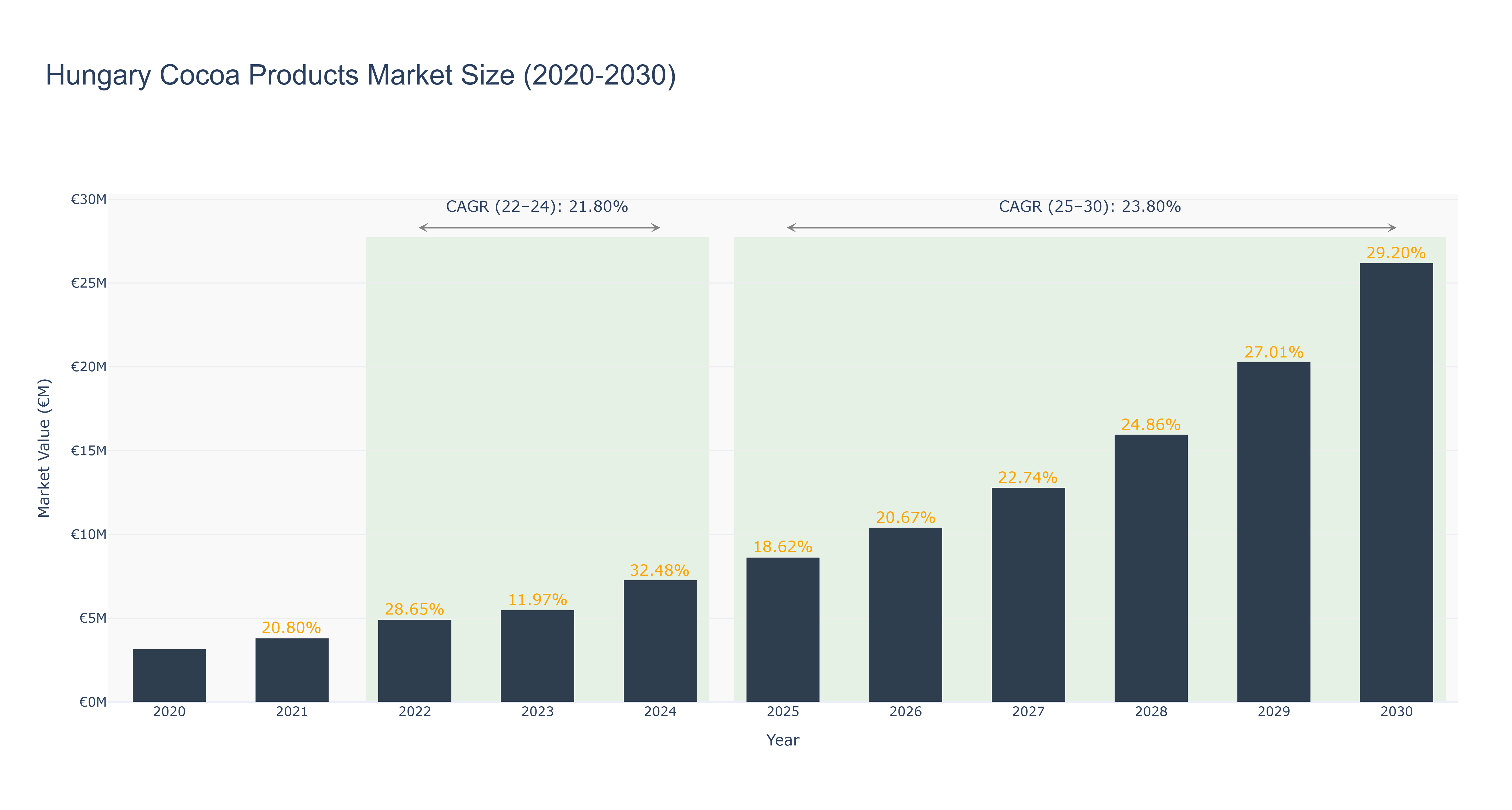
Hungary Cocoa Products Market has shown a consistent upward trend in market size over the years. The peak market size of €26.21 million is forecasted for 2030, with a CAGR of 29.20% from 2025 to 2030. The market experienced significant growth from 2020 to 2024, with the market size increasing from €3.16 million to €7.28 million, driven by increasing consumer demand for premium cocoa products. The CAGR from 2022 to 2024 was 21.80%. The recent market growth is attributed to innovative product offerings and expanding distribution channels. Looking ahead, Hungary is set to launch a national campaign promoting locally sourced cocoa products, aiming to further boost domestic consumption and export opportunities in the cocoa industry. This initiative aligns with the country's goal of enhancing its position in the global cocoa market.
Hungary Cocoa Products Market: Production & Trade Performance (2019-2025)
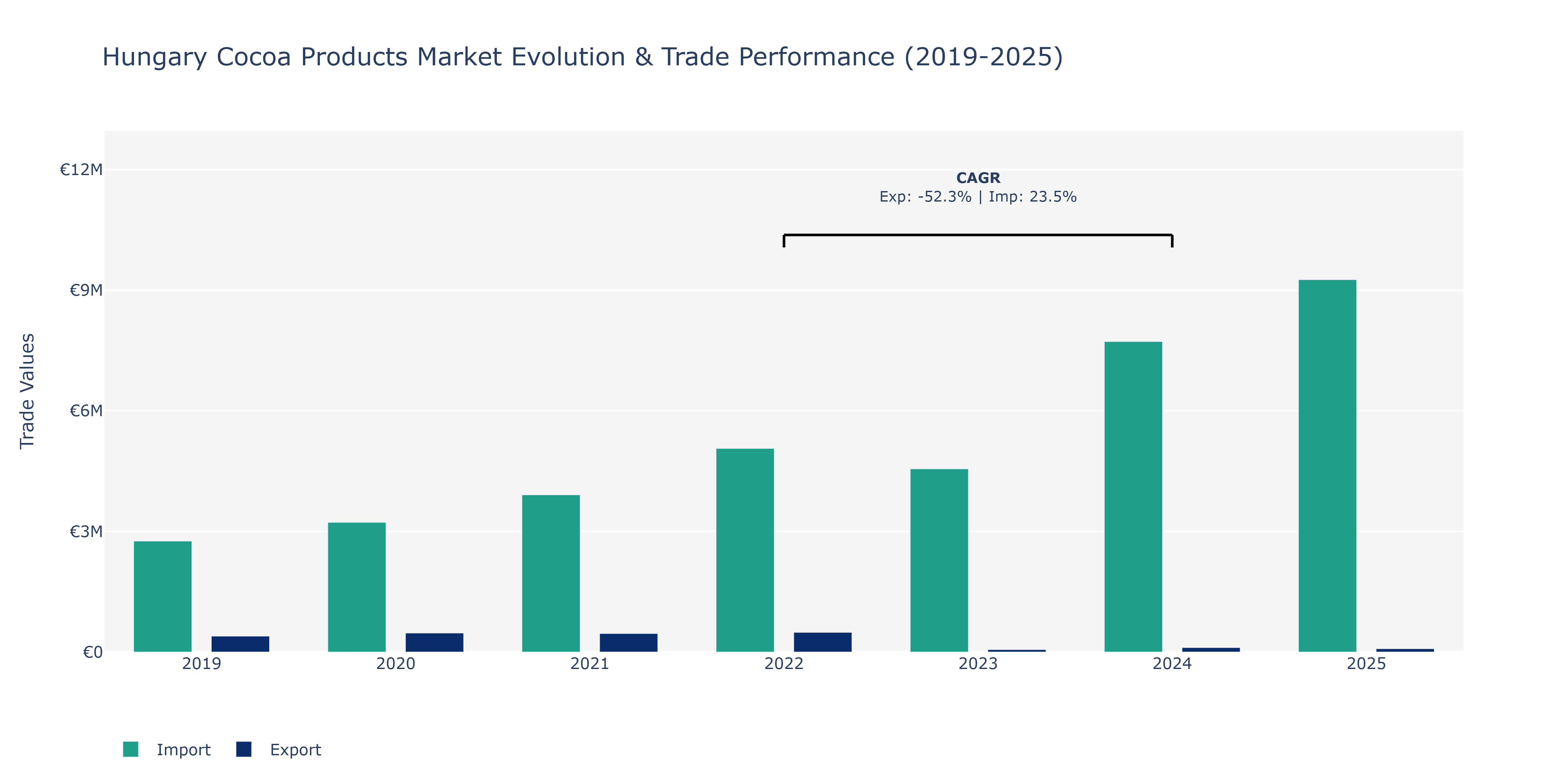
In the Hungary Cocoa Products Market, exports experienced fluctuations over the years, starting at €395.75 thousand in 2019, increasing by approximately €76.62 thousand in 2020, and then declining slightly to €460.34 thousand in 2021. A significant drop to €61.83 thousand was observed in 2023, before rebounding to €111.66 thousand in 2024. Similarly, imports showed a consistent upward trend, rising from €2.76 million in 2019 to €9.26 million in 2025. The peak point for imports was in 2024, reaching €7.72 million. These fluctuations in exports and the steady rise in imports can be attributed to several factors such as changes in consumer preferences, global cocoa prices, and trade agreements affecting supply chains. The surge in imports may indicate increasing domestic demand for cocoa products or fluctuations in domestic production capacities, while the export variations could be influenced by changes in international demand or trade policies.
Hungary Cocoa Products Market Overview
The cocoa products market in Hungary encompasses a wide range of goods, including chocolate bars, confectionery items, cocoa-based beverages, and baking ingredients. As consumer preferences shift towards premium and artisanal chocolate products, Hungary chocolatiers and manufacturers are diversifying their product portfolios to cater to niche market segments. Moreover, the growing awareness regarding the health benefits of dark chocolate and cocoa products is driving demand, with consumers seeking products with higher cocoa content and natural ingredients.
Drivers of the market
The cocoa products market in Hungary experiences growth driven by factors like the popularity of chocolate confectionery, the proliferation of cafes and bakeries offering cocoa-based treats, and the increasing availability of premium and organic cocoa products. Additionally, innovative product launches and marketing strategies by manufacturers stimulate consumer interest and drive market expansion.
Challenges of the market
Challenges in the Hungary Cocoa Products market revolve around consumer awareness and demand for ethically sourced and sustainably produced cocoa products. Meeting these expectations while balancing cost considerations presents a significant challenge for market players. Additionally, competition from alternative confectionery and snack products further intensifies market dynamics.
Government Policy of the market
The cocoa products market in Hungary is affected by government regulations governing food manufacturing, labeling, and advertising. Government policies aimed at ensuring consumer safety, promoting dietary guidelines, and preventing deceptive practices impact the production, marketing, and sale of cocoa products within the country. The Hungary government may also enact measures to support small and medium-sized enterprises in the cocoa products industry, encourage product innovation, and enforce compliance with nutritional standards. Additionally, policies addressing cultural heritage and culinary traditions contribute to the diversity and quality of cocoa products available in the Hungary market.
Key Highlights of the Report:
- Hungary Cocoa Products Market Outlook
- Market Size of Hungary Cocoa Products Market, 2021
- Forecast of Hungary Cocoa Products Market, 2028
- Historical Data and Forecast of Hungary Cocoa Products Revenues & Volume for the Period 2018 - 2028
- Hungary Cocoa Products Market Trend Evolution
- Hungary Cocoa Products Market Drivers and Challenges
- Hungary Cocoa Products Price Trends
- Hungary Cocoa Products Porter's Five Forces
- Hungary Cocoa Products Industry Life Cycle
- Historical Data and Forecast of Hungary Cocoa Products Market Revenues & Volume By Type for the Period 2018 - 2028
- Historical Data and Forecast of Hungary Cocoa Products Market Revenues & Volume By Cocoa Beans for the Period 2018 - 2028
- Historical Data and Forecast of Hungary Cocoa Products Market Revenues & Volume By Cocoa Butter for the Period 2018 - 2028
- Historical Data and Forecast of Hungary Cocoa Products Market Revenues & Volume By Cocoa Powder & Cake for the Period 2018 - 2028
- Historical Data and Forecast of Hungary Cocoa Products Market Revenues & Volume By Cocoa Paste & Liquor for the Period 2018 - 2028
- Historical Data and Forecast of Hungary Cocoa Products Market Revenues & Volume By Chocolate for the Period 2018 - 2028
- Historical Data and Forecast of Hungary Cocoa Products Market Revenues & Volume By Application for the Period 2018 - 2028
- Historical Data and Forecast of Hungary Cocoa Products Market Revenues & Volume By Confectionery for the Period 2018 - 2028
- Historical Data and Forecast of Hungary Cocoa Products Market Revenues & Volume By Food & Beverages for the Period 2018 - 2028
- Historical Data and Forecast of Hungary Cocoa Products Market Revenues & Volume By Cosmetics for the Period 2018 - 2028
- Historical Data and Forecast of Hungary Cocoa Products Market Revenues & Volume By Pharmaceutical for the Period 2018 - 2028
- Hungary Cocoa Products Import Export Trade Statistics
- Market Opportunity Assessment By Type
- Market Opportunity Assessment By Application
- Hungary Cocoa Products Top Companies Market Share
- Hungary Cocoa Products Competitive Benchmarking By Technical and Operational Parameters
- Hungary Cocoa Products Company Profiles
- Hungary Cocoa Products Key Strategic Recommendations






































