Hungary Coconut Products Market: Import Trend Analysis
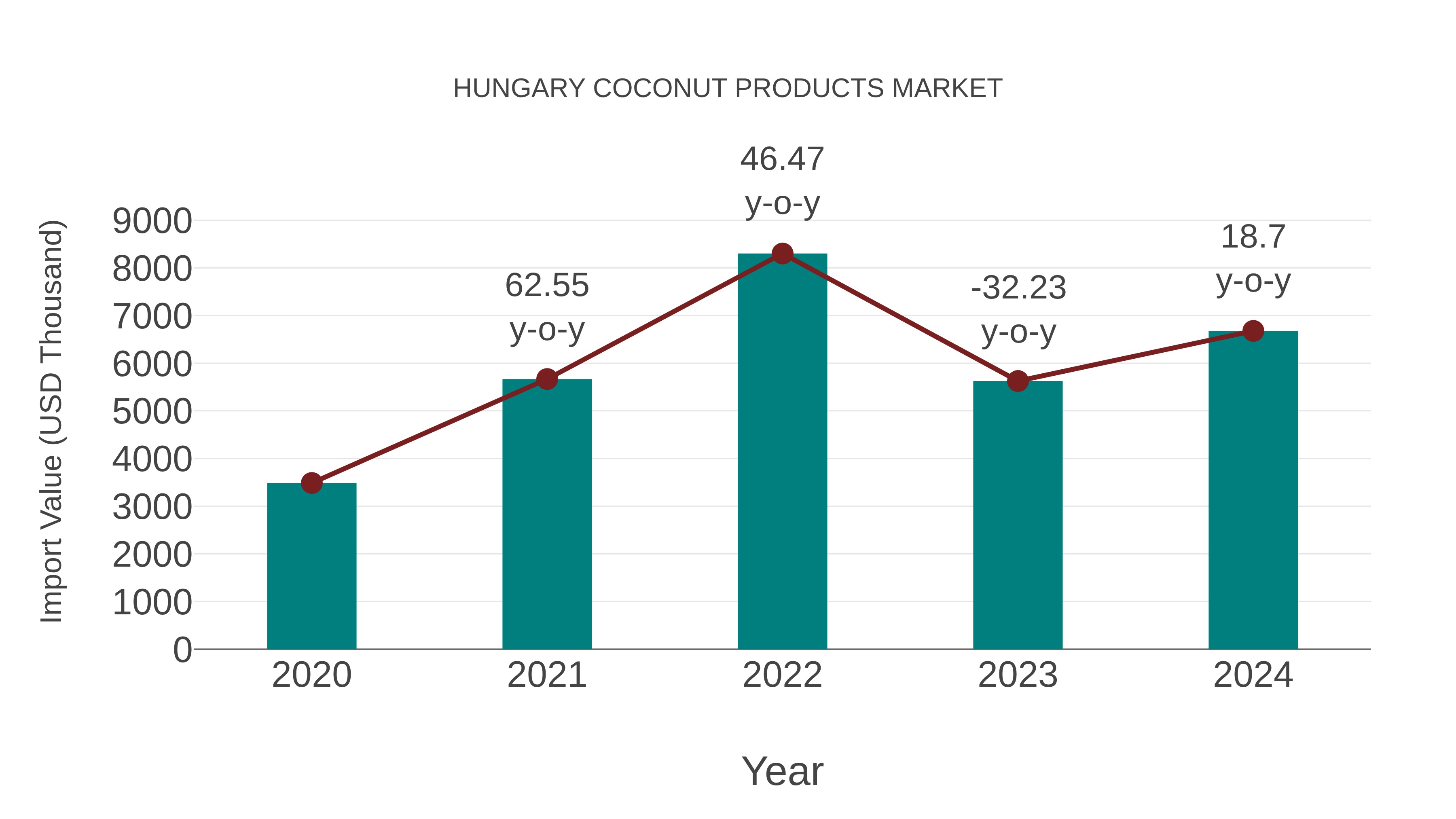
In the Hungary coconut products market, the import trend showed a notable growth rate of 18.7% from 2023 to 2024, with a compound annual growth rate (CAGR) of 17.64% for the period 2020-2024. This import momentum can be attributed to the increasing consumer demand for diverse and healthy food options, driving the market`s stability and expansion during this period.
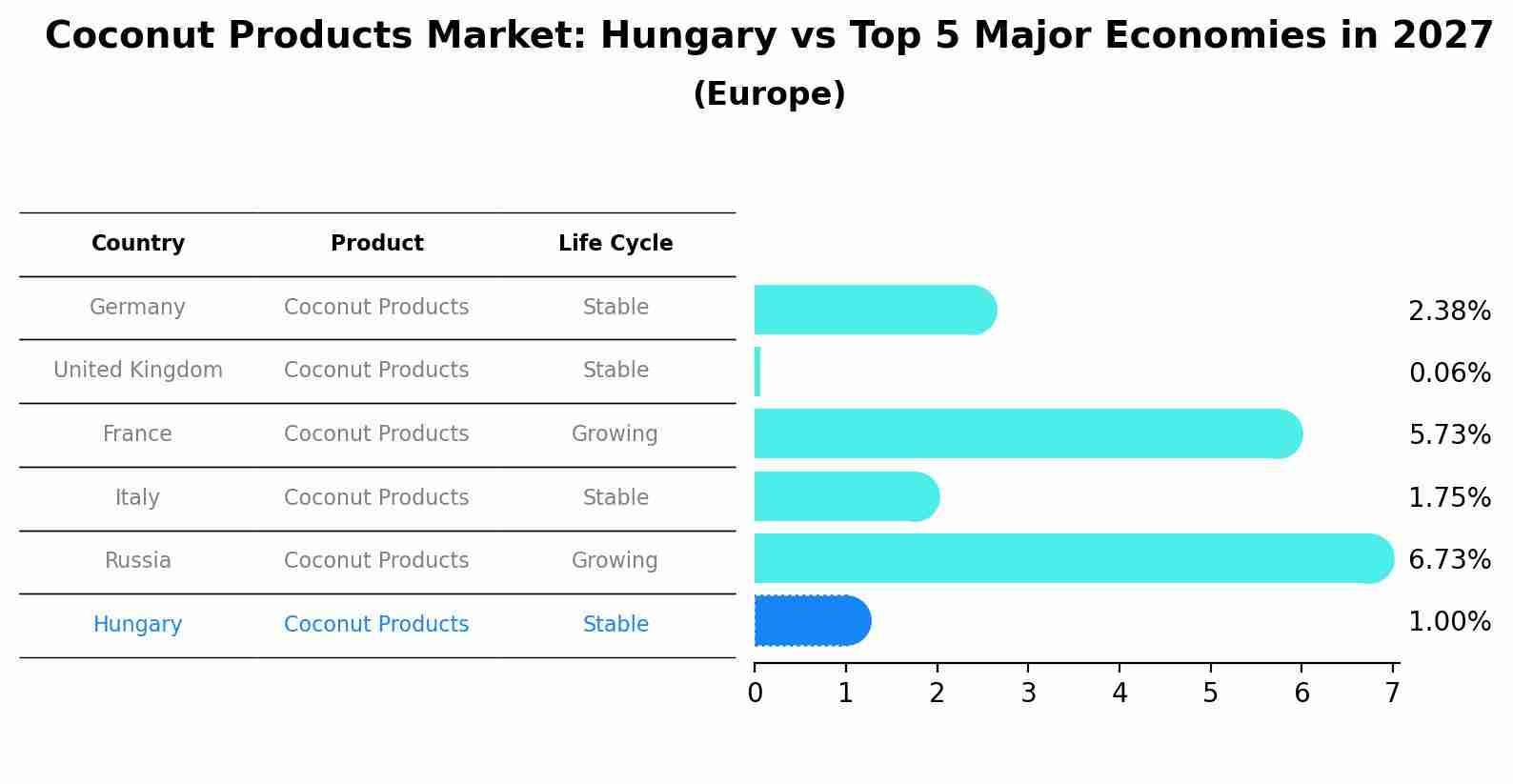
Coconut Products Market: Hungary vs Top 5 Major Economies in 2027 (Europe)
The Coconut Products market in Hungary is projected to grow at a stable growth rate of 1.00% by 2027, highlighting the country's increasing focus on advanced technologies within the Europe region, where Germany holds the dominant position, followed closely by United Kingdom, France, Italy and Russia, shaping overall regional demand.
Hungary Coconut Products Market Overview
The coconut products market in Hungary encompasses a wide range of goods derived from coconuts, including coconut water, coconut milk, coconut flour, and desiccated coconut. As consumers embrace healthier dietary choices and seek alternatives to traditional ingredients, the demand for coconut products continues to rise. Hungary retailers and manufacturers are expanding their product offerings to include a variety of coconut-based items to cater to diverse consumer preferences, thereby driving market growth.
Drivers of the market
The coconut products market in Hungary is influenced by the increasing popularity of plant-based diets, the rising demand for dairy alternatives, and the versatility of coconut-derived ingredients in culinary and cosmetic applications. Additionally, the growing availability of a wide range of coconut products, including coconut water, milk, and snacks, contributes to market growth.
Challenges of the market
Challenges in the Hungary Coconut Products market include supply chain disruptions and quality control issues, particularly for perishable coconut-based products. Additionally, market players may encounter regulatory challenges related to food safety standards and labeling requirements.
Government Policy of the market
The coconut products market in Hungary is shaped by government regulations governing food safety, labeling, and importation. Policies related to quality standards, packaging requirements, and trade agreements impact the availability and diversity of coconut products in the country. The Hungary government may also enact measures to support the importation of coconut products from sustainable sources, promote domestic production of coconut-based goods, and regulate the use of additives and preservatives. Additionally, policies addressing consumer preferences, cultural diversity, and culinary trends influence the marketing and distribution of coconut products in the Hungary market.
Key Highlights of the Report:
- Hungary Coconut Products Market Outlook
- Market Size of Hungary Coconut Products Market, 2021
- Forecast of Hungary Coconut Products Market, 2028
- Historical Data and Forecast of Hungary Coconut Products Revenues & Volume for the Period 2018 - 2028
- Hungary Coconut Products Market Trend Evolution
- Hungary Coconut Products Market Drivers and Challenges
- Hungary Coconut Products Price Trends
- Hungary Coconut Products Porter's Five Forces
- Hungary Coconut Products Industry Life Cycle
- Historical Data and Forecast of Hungary Coconut Products Market Revenues & Volume By Type for the Period 2018 - 2028
- Historical Data and Forecast of Hungary Coconut Products Market Revenues & Volume By Coconut Water for the Period 2018 - 2028
- Historical Data and Forecast of Hungary Coconut Products Market Revenues & Volume By Coconut Oil for the Period 2018 - 2028
- Historical Data and Forecast of Hungary Coconut Products Market Revenues & Volume By Coconut Milk for the Period 2018 - 2028
- Historical Data and Forecast of Hungary Coconut Products Market Revenues & Volume By Dried Coconut Products for the Period 2018 - 2028
- Historical Data and Forecast of Hungary Coconut Products Market Revenues & Volume By Others for the Period 2018 - 2028
- Historical Data and Forecast of Hungary Coconut Products Market Revenues & Volume By Application for the Period 2018 - 2028
- Historical Data and Forecast of Hungary Coconut Products Market Revenues & Volume By Food for the Period 2018 - 2028
- Historical Data and Forecast of Hungary Coconut Products Market Revenues & Volume By Beverage for the Period 2018 - 2028
- Historical Data and Forecast of Hungary Coconut Products Market Revenues & Volume By Cosmetics for the Period 2018 - 2028
- Historical Data and Forecast of Hungary Coconut Products Market Revenues & Volume By Others for the Period 2018 - 2028
- Historical Data and Forecast of Hungary Coconut Products Market Revenues & Volume By Form for the Period 2018 - 2028
- Historical Data and Forecast of Hungary Coconut Products Market Revenues & Volume By Solid for the Period 2018 - 2028
- Historical Data and Forecast of Hungary Coconut Products Market Revenues & Volume By Liquid for the Period 2018 - 2028
- Hungary Coconut Products Import Export Trade Statistics
- Market Opportunity Assessment By Type
- Market Opportunity Assessment By Application
- Market Opportunity Assessment By Form
- Hungary Coconut Products Top Companies Market Share
- Hungary Coconut Products Competitive Benchmarking By Technical and Operational Parameters
- Hungary Coconut Products Company Profiles
- Hungary Coconut Products Key Strategic Recommendations






































