Hungary Electronic Components Market: Import Trend Analysis
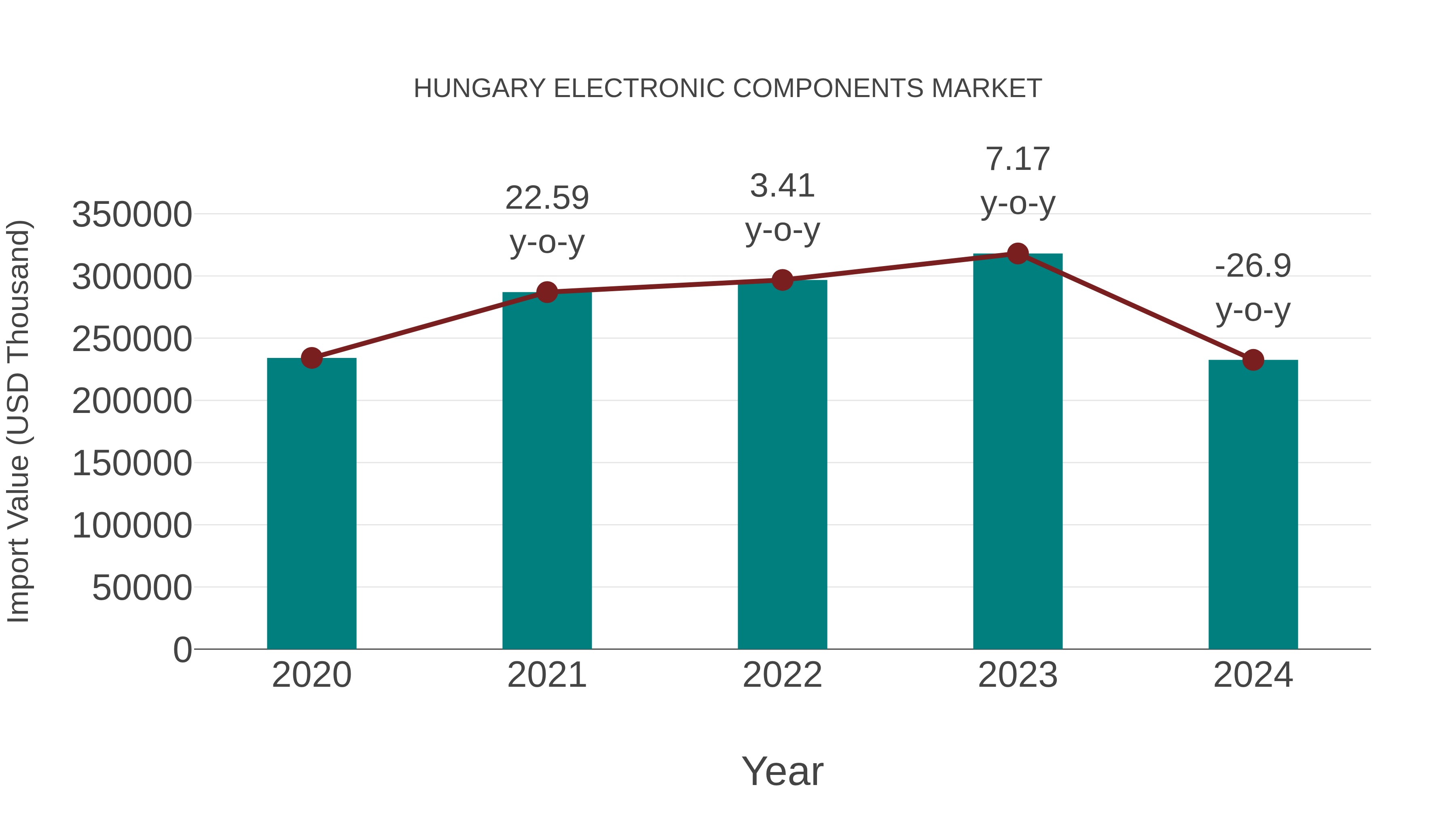
In the Hungary electronic components market, the import trend experienced a notable decline from 2023 to 2024, with a growth rate of -26.9%. The compound annual growth rate (CAGR) for the period of 2020-2024 stood at -0.17%. This downturn may be attributed to shifting demand patterns or changes in trade policies impacting market stability.
Hungary Electronic Components Market Highlights
| Report Name | Hungary Electronic Components market |
| Forecast period | 2025-2031 |
| Forecast size | USD 1.4 Billion – USD 2.7 Billion |
| CAGR | 7.5% |
| Growing Sector | Electronics |
Topics Covered in the Hungary Electronic Components Market Report
The Hungary Electronic Components market report thoroughly covers the market by type and by application. The report provides an unbiased and detailed analysis of the on-going market trends, opportunities/high growth areas, and market drivers which would help the stakeholders to devise and align their market strategies according to the current and future market dynamics.
Hungary Electronic Components Market Size & Analysis
In 2025, the Hungary Electronic Components market is valued at approximately $ 1.4 billion, with a projected compound annual growth rate (CAGR) of 7.5% over the next five years. Additionally, by 2031, the market is expected to reach around $ 2.7 billion. The electronics sector holds significant position in the overall market.
Hungary Electronic Components Market Synopsis
The Hungary electronic components market is experiencing robust growth, driven by the country’s strong industrial base, technological advancements, and its strategic position within the European Union. Hungary has become a significant hub for electronics manufacturing, particularly in the automotive, telecommunications, and consumer electronics sectors. The demand for electronic components, such as semiconductors, sensors, power management systems, and connectivity solutions, is increasing due to the rapid adoption of electric vehicles (EVs), the expansion of 5G infrastructure, and the ongoing industrial automation across various sectors. Hungary’s skilled workforce, competitive production costs, and favorable government policies that support innovation and R&D are contributing to the market’s growth, positioning the country as a key player in the European electronics supply chain. With increasing investments from global players and strong export potential, Hungary’s electronic components market is poised for sustained expansion in the coming years.
According to 6Wresearch, Hungary Electronic Components market size is projected to grow at a CAGR of 7.5% during 2025-2031. The growth of the Hungary electronic components market is driven by several key factors, including the country’s increasing focus on the automotive sector, particularly the production of electric vehicles (EVs) and automotive electronics. Hungary’s robust automotive manufacturing base, coupled with the global push towards greener transportation solutions, is creating strong demand for specialized components like electric drivetrains, battery management systems, and power electronics. Additionally, the ongoing expansion of 5G networks and the rapid adoption of Internet of Things (IoT) technologies are boosting demand for semiconductors, sensors, and connectivity solutions. Hungary's skilled workforce, favorable manufacturing costs, and strong research and development (R&D) infrastructure further support market growth.
However, the Hungary Electronic Components industry faces challenges such as global semiconductor shortages, which may disrupt supply chains, and the need for heavy investment in advanced manufacturing technologies to stay competitive. Moreover, the increasing regulatory pressure for sustainability and compliance with European Union standards adds complexity to manufacturing processes, requiring companies to invest in energy-efficient, eco-friendly components. Despite these challenges, Hungary’s strategic location within the EU, growing industrial automation, and expanding renewable energy projects provide a favorable environment for continued growth in the electronic components sector.
Hungary Electronic Components Market Trends
- Growth in Electric Vehicles (EVs) - Increased demand for electronic components in EVs, including power management systems, electric drivetrains, and battery management systems.
- Expansion of 5G Infrastructure - Rising demand for semiconductors, RF modules, antennas, and connectivity solutions to support 5G network rollout.
- Industrial Automation and Robotics - Increasing adoption of automation technologies driving the need for sensors, actuators, control systems, and robotics in manufacturing.
- IoT Adoption - Growth of smart homes, healthcare, and agriculture applications fueling demand for IoT components such as sensors, connectivity modules, and microcontrollers.
- Renewable Energy Integration - Growing investment in power electronics for solar, wind, and energy storage systems as Hungary strengthens its renewable energy sector.
Investment Opportunities in the Hungary Electronic Components Market
- Electric Vehicle (EV) Components - Investment in the production of automotive electronic components for EVs, including battery management systems, power electronics, and electric drivetrains.
- 5G Network Infrastructure - Opportunities in manufacturing and supplying components for 5G infrastructure, such as RF components, semiconductors, and antennas.
- Industrial Automation and Robotics - Investment in sensors, actuators, and control systems to support the growing demand for automation solutions across various industries.
- Internet of Things (IoT) - Growing market for IoT-based devices, offering investment potential in sensors, connectivity solutions, and microcontrollers.
- Renewable Energy Systems - Opportunities in power electronics for solar, wind, and energy storage systems as Hungary expands its renewable energy projects.
Key Players in the Hungary Electronic Components Market
Key companies in Hungary electronic components market include global and regional players that have established a strong presence due to the country’s robust manufacturing and technological capabilities. Notable companies include Siemens, which focuses on industrial automation and control systems, and Bosch, a leader in automotive electronics, including components for electric vehicles and advanced driver-assistance systems (ADAS). Honeywell also operates in Hungary, providing a wide range of components for aerospace, automotive, and industrial sectors.
Additionally, some of these players hold majority of the Hungary Electronic Components market share. Moreover, continental is a major player, particularly in the automotive sector, manufacturing sensors, connectivity solutions, and power electronics. Local companies like Graphisoft and Richter Gedeon contribute to the software and life sciences sectors, respectively, with an increasing focus on integrating electronic components into their operations.
Government Regulations in the Hungary Electronic Components Market
The Hungary government enforces a range of regulations that impact the electronic components market, primarily aligning with European Union standards and directives. These regulations focus on environmental sustainability, product safety, and quality standards, particularly through directives such as the RoHS (Restriction of Hazardous Substances) and WEEE (Waste Electrical and Electronic Equipment), which govern the production and disposal of electronic goods. Additionally, Hungary adheres to the EU's CE marking requirements, ensuring that electronic components meet safety, health, and environmental protection standards. Further, these initiatives have further boosted the Hungary Electronic Components market revenues.
Furthermore, the government also encourages the adoption of green technologies and energy-efficient solutions, offering incentives for companies investing in renewable energy and sustainable manufacturing practices. Furthermore, Hungary’s participation in the EU's Digital Single Market initiatives promotes the integration of digital technologies, IoT, and 5G infrastructure, while providing companies with access to cross-border trade opportunities.
Future Insights of the Hungary Electronic Components Market
The future of the Hungary electronic components market looks promising, with continued growth driven by advancements in automotive electronics, 5G infrastructure, and industrial automation. The transition towards electric vehicles (EVs) and autonomous driving technologies will continue to fuel demand for specialized components such as power electronics, sensors, and battery management systems. Additionally, Hungary’s strong position in the European Union will support its role as a key supplier for the region’s growing demand for semiconductors, IoT devices, and smart manufacturing solutions. The ongoing push for renewable energy and the integration of sustainable technologies will further drive investment in energy-efficient electronic components. As Hungary embraces digital transformation and smart technologies, particularly in automotive and industrial sectors, the market is poised for robust growth, with increased opportunities in both local production and export markets.
Electro Mechanic Category to Dominate the Market - By Type
According to Ravi Bhandari, Research Head, 6Wresearch, the electro-mechanic growth in the Hungary electronic components market is expected to accelerate, driven by the increasing demand for integrated solutions that combine mechanical systems with electronic control. As industries like automotive, industrial automation, and robotics evolve, there is a growing need for electro-mechanical components such as sensors, actuators, and control systems. This growth is particularly evident in Hungary’s automotive sector, where manufacturers are incorporating more sophisticated electronic-mechanical systems into electric vehicles (EVs), autonomous vehicles, and smart manufacturing. The demand for reliable and efficient electro-mechanical components, which bridge the gap between electrical and mechanical engineering, is being fueled by advancements in automation, renewable energy systems, and IoT technologies.
Automotive to Dominate the Market – By Application
The growth of the automotive application segment in the Hungary electronic components market is being propelled by the rapid transformation of the automotive industry, especially with the rise of electric vehicles (EVs) and advanced driver-assistance systems (ADAS). Hungary’s well-established automotive manufacturing base is increasingly shifting toward the production of EVs, which require specialized components such as battery management systems, power electronics, electric drivetrains, and charging infrastructure.
Additionally, as the industry embraces automation and autonomous driving technologies, there is a growing demand for sensors, cameras, and radar systems to support ADAS. Hungary's strategic position within the European Union, along with government incentives for sustainable technologies, has also led to increased investments in automotive R&D and component manufacturing, positioning the country as a key player in the European automotive supply chain.
Key Attractiveness of the Report
- 10 Years Market Numbers.
- Historical Data Starting from 2021 to 2024.
- Base Year - 2024.
- Forecast Data until 2031.
- Key Performance Indicators Impacting the Market.
- Major Upcoming Developments and Projects.
Key Highlights of the Report:
- Hungary Electronic Components Market Outlook
- Market Size of Hungary Electronic Components Market, 2025
- Forecast of Hungary Electronic Components Market, 2032
- Historical Data and Forecast of Hungary Electronic Components Revenues & Volume for the Period 2022-2032F
- Hungary Electronic Components Market Trend Evolution
- Hungary Electronic Components Market Drivers and Challenges
- Hungary Electronic Components Price Trends
- Hungary Electronic Components Porter's Five Forces
- Hungary Electronic Components Industry Life Cycle
- Historical Data and Forecast of Hungary Electronic Components Market Revenues & Volume By Types for the Period 2022-2032F
- Historical Data and Forecast of Hungary Electronic Components Market Revenues & Volume By Passive for the Period 2022-2032F
- Historical Data and Forecast of Hungary Electronic Components Market Revenues & Volume By Active for the Period 2022-2032F
- Historical Data and Forecast of Hungary Electronic Components Market Revenues & Volume By Electro Mechanic for the Period 2022-2032F
- Historical Data and Forecast of Hungary Electronic Components Market Revenues & Volume By Applications for the Period 2022-2032F
- Historical Data and Forecast of Hungary Electronic Components Market Revenues & Volume By Automotive for the Period 2022-2032F
- Historical Data and Forecast of Hungary Electronic Components Market Revenues & Volume By Communications for the Period 2022-2032F
- Historical Data and Forecast of Hungary Electronic Components Market Revenues & Volume By Industrial for the Period 2022-2032F
- Historical Data and Forecast of Hungary Electronic Components Market Revenues & Volume By Computing Applications for the Period 2022-2032F
- Historical Data and Forecast of Hungary Electronic Components Market Revenues & Volume By Others for the Period 2022-2032F
- Hungary Electronic Components Import Export Trade Statistics
- Market Opportunity Assessment By Types
- Market Opportunity Assessment By Applications
- Hungary Electronic Components Top Companies Market Share
- Hungary Electronic Components Competitive Benchmarking By Technical and Operational Parameters
- Hungary Electronic Components Company Profiles
- Hungary Electronic Components Key Strategic Recommendations
Market Covered
The report offers a comprehensive study of the subsequent market segments:
By Types
- Passive
- Active
- Electro Mechanic
By Applications
- Automotive
- Communications
- Industrial
- Computing Applications
- Others






































