Hungary Emollient Market: Import Trend Analysis
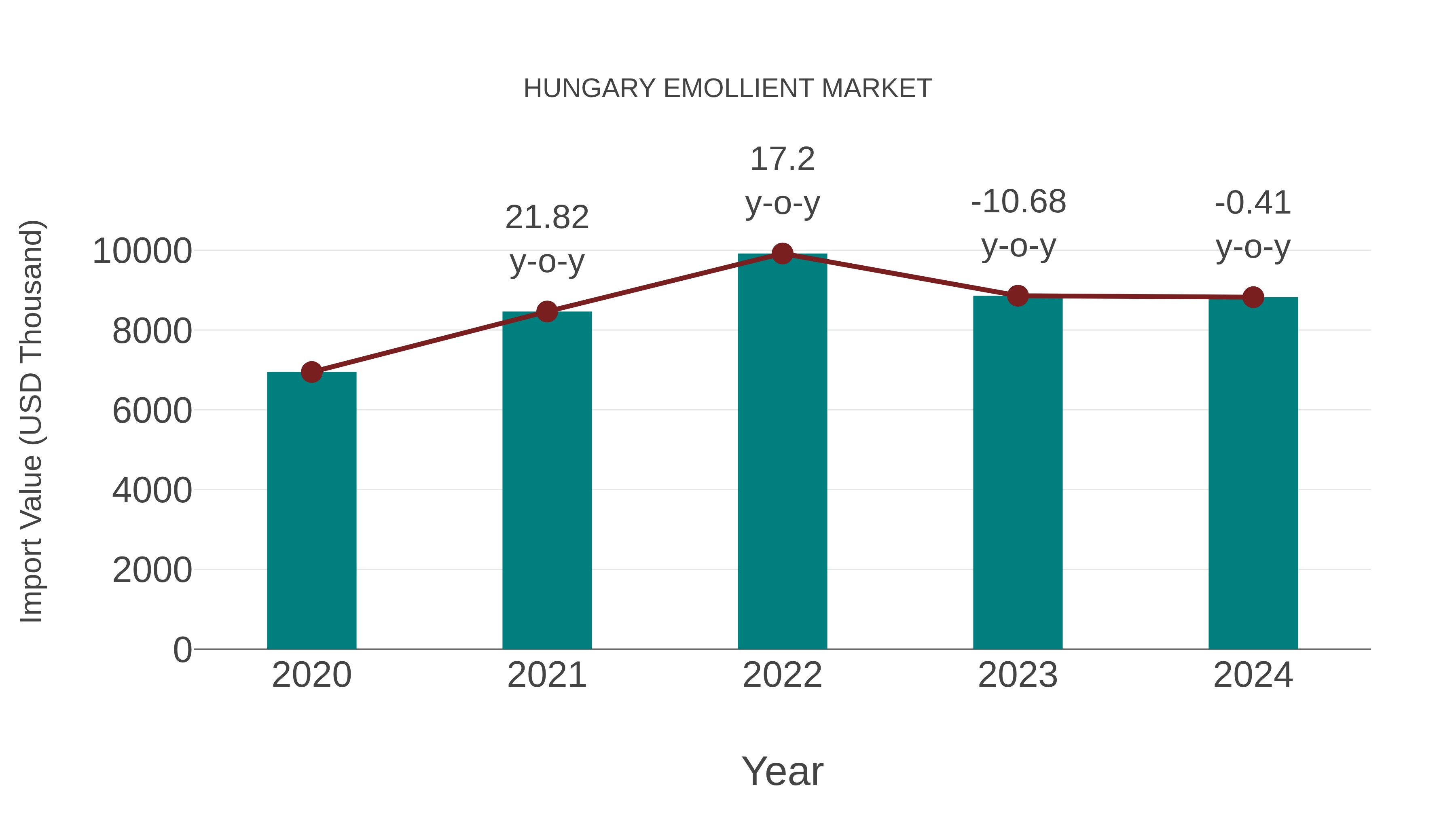
In the Hungary emollient market, the import trend experienced a slight decline from 2023 to 2024, with a growth rate of -0.41%. However, the compound annual growth rate (CAGR) for the period 2020-2024 stood at a healthy 6.16%. This dip in import momentum could be attributed to shifts in demand dynamics or changes in trade policies impacting market stability.
Hungary Emollient Market Overview
The Hungary Emollient Market is experiencing steady growth driven by increasing awareness regarding skin health and cosmetic products. Emollients are essential in skincare products for their moisturizing and protective properties, attracting consumers looking for products that offer hydration and nourishment. Key players in the Hungarian market are focusing on product innovation, incorporating natural and organic ingredients to cater to the growing demand for clean beauty products. The market is also witnessing a shift towards sustainable and eco-friendly emollients, in line with the global trend towards environmentally conscious consumer choices. With a strong presence of both domestic and international skincare brands, the Hungary Emollient Market is poised for further expansion as consumers seek high-quality products that address their skincare needs effectively.
Hungary Emollient Market Trends and Opportunities
The Hungary Emollient Market is experiencing a growing demand for natural and organic emollients due to increasing consumer preference for clean and sustainable beauty products. With a focus on ingredients like plant-based oils, shea butter, and natural waxes, companies are introducing innovative formulations to cater to this trend. Additionally, there is a rising awareness of the importance of skincare and haircare routines, driving the demand for emollients in various personal care products. Opportunities exist for market players to expand their product offerings with specialized emollients targeting specific skin and hair concerns, as well as to capitalize on the growing e-commerce channel for reaching a wider consumer base. Strategic partnerships with local distributors and retailers can also help in penetrating the Hungarian market effectively.
Hungary Emollient Market Challenges
In the Hungary Emollient Market, some key challenges include increasing competition from international brands, price sensitivity among consumers, and regulatory hurdles related to ingredient safety and labeling requirements. Local emollient manufacturers are facing pressure to innovate and differentiate their products in order to compete with well-established global brands that have higher brand recognition and marketing budgets. Additionally, the price sensitivity of Hungarian consumers poses a challenge for emollient companies to maintain competitive pricing while ensuring product quality. Moreover, complying with strict regulations on ingredient safety and labeling can be burdensome for local manufacturers, requiring them to invest in research and development to meet the standards set by regulatory bodies. Overall, navigating these challenges requires a strategic approach to product development, marketing, and compliance to succeed in the Hungary Emollient Market.
Hungary Emollient Market Drivers
The Hungary Emollient Market is primarily driven by increasing awareness among consumers regarding skincare and the importance of hydration for healthy skin. The growing demand for natural and organic ingredients in skincare products is also a key driver, as consumers are becoming more conscious about the ingredients they apply on their skin. Additionally, the rising prevalence of skin conditions such as eczema and psoriasis is fueling the demand for emollients that can provide relief and soothe irritated skin. Furthermore, the influence of social media and beauty influencers promoting skincare routines and products is contributing to the market growth by influencing consumer preferences and purchase decisions. Overall, these factors are driving the Hungary Emollient Market towards steady growth and innovation in product formulations.
Hungary Emollient Market Government Policy
Government policies related to the Hungary Emollient Market focus on ensuring product safety, quality, and compliance with regulations. The Hungarian government has implemented strict guidelines for the manufacturing, labeling, and distribution of emollient products to protect consumer health and prevent misleading claims. Companies operating in the emollient market are required to adhere to these regulations, which include obtaining necessary licenses, conducting product testing, and disclosing ingredients accurately. Additionally, there are controls in place to monitor advertising practices and ensure that products meet established standards for efficacy and safety. Overall, the government policies aim to promote transparency, consumer trust, and the overall well-being of the Hungarian population when it comes to using emollient products.
Hungary Emollient Market Future Outlook
The Hungary Emollient Market is poised for steady growth in the coming years, driven by increasing consumer awareness about the benefits of emollients in skincare products. The market is expected to witness a rise in demand for natural and organic emollients due to the growing preference for clean beauty products. Additionally, the rising disposable income levels and changing lifestyle patterns among the Hungarian population are likely to contribute to the market`s expansion. Key players in the industry are focusing on product innovation and development to cater to the evolving consumer preferences, thereby creating opportunities for market growth. However, regulatory challenges and fluctuating raw material prices may pose some limitations to the market`s growth trajectory. Overall, the Hungary Emollient Market is anticipated to experience positive growth prospects in the foreseeable future.
Key Highlights of the Report:
- Hungary Emollient Market Outlook
- Market Size of Hungary Emollient Market, 2025
- Forecast of Hungary Emollient Market, 2032
- Historical Data and Forecast of Hungary Emollient Revenues & Volume for the Period 2022 - 2032F
- Hungary Emollient Market Trend Evolution
- Hungary Emollient Market Drivers and Challenges
- Hungary Emollient Price Trends
- Hungary Emollient Porter's Five Forces
- Hungary Emollient Industry Life Cycle
- Historical Data and Forecast of Hungary Emollient Market Revenues & Volume By Type for the Period 2022 - 2032F
- Historical Data and Forecast of Hungary Emollient Market Revenues & Volume By Esters for the Period 2022 - 2032F
- Historical Data and Forecast of Hungary Emollient Market Revenues & Volume By Fatty Alcohols for the Period 2022 - 2032F
- Historical Data and Forecast of Hungary Emollient Market Revenues & Volume By Fatty Acids for the Period 2022 - 2032F
- Historical Data and Forecast of Hungary Emollient Market Revenues & Volume By Ethers for the Period 2022 - 2032F
- Historical Data and Forecast of Hungary Emollient Market Revenues & Volume By Silicones for the Period 2022 - 2032F
- Historical Data and Forecast of Hungary Emollient Market Revenues & Volume By Others for the Period 2022 - 2032F
- Historical Data and Forecast of Hungary Emollient Market Revenues & Volume By Form for the Period 2022 - 2032F
- Historical Data and Forecast of Hungary Emollient Market Revenues & Volume By Solid for the Period 2022 - 2032F
- Historical Data and Forecast of Hungary Emollient Market Revenues & Volume By Liquid for the Period 2022 - 2032F
- Historical Data and Forecast of Hungary Emollient Market Revenues & Volume By Application for the Period 2022 - 2032F
- Historical Data and Forecast of Hungary Emollient Market Revenues & Volume By Skin Care for the Period 2022 - 2032F
- Historical Data and Forecast of Hungary Emollient Market Revenues & Volume By Hair Care for the Period 2022 - 2032F
- Historical Data and Forecast of Hungary Emollient Market Revenues & Volume By Deodorants for the Period 2022 - 2032F
- Historical Data and Forecast of Hungary Emollient Market Revenues & Volume By Oral Care for the Period 2022 - 2032F
- Historical Data and Forecast of Hungary Emollient Market Revenues & Volume By Others for the Period 2022 - 2032F
- Hungary Emollient Import Export Trade Statistics
- Market Opportunity Assessment By Type
- Market Opportunity Assessment By Form
- Market Opportunity Assessment By Application
- Hungary Emollient Top Companies Market Share
- Hungary Emollient Competitive Benchmarking By Technical and Operational Parameters
- Hungary Emollient Company Profiles
- Hungary Emollient Key Strategic Recommendations






































