Hungary Ethyl Alcohol Market Size (2020-2030)
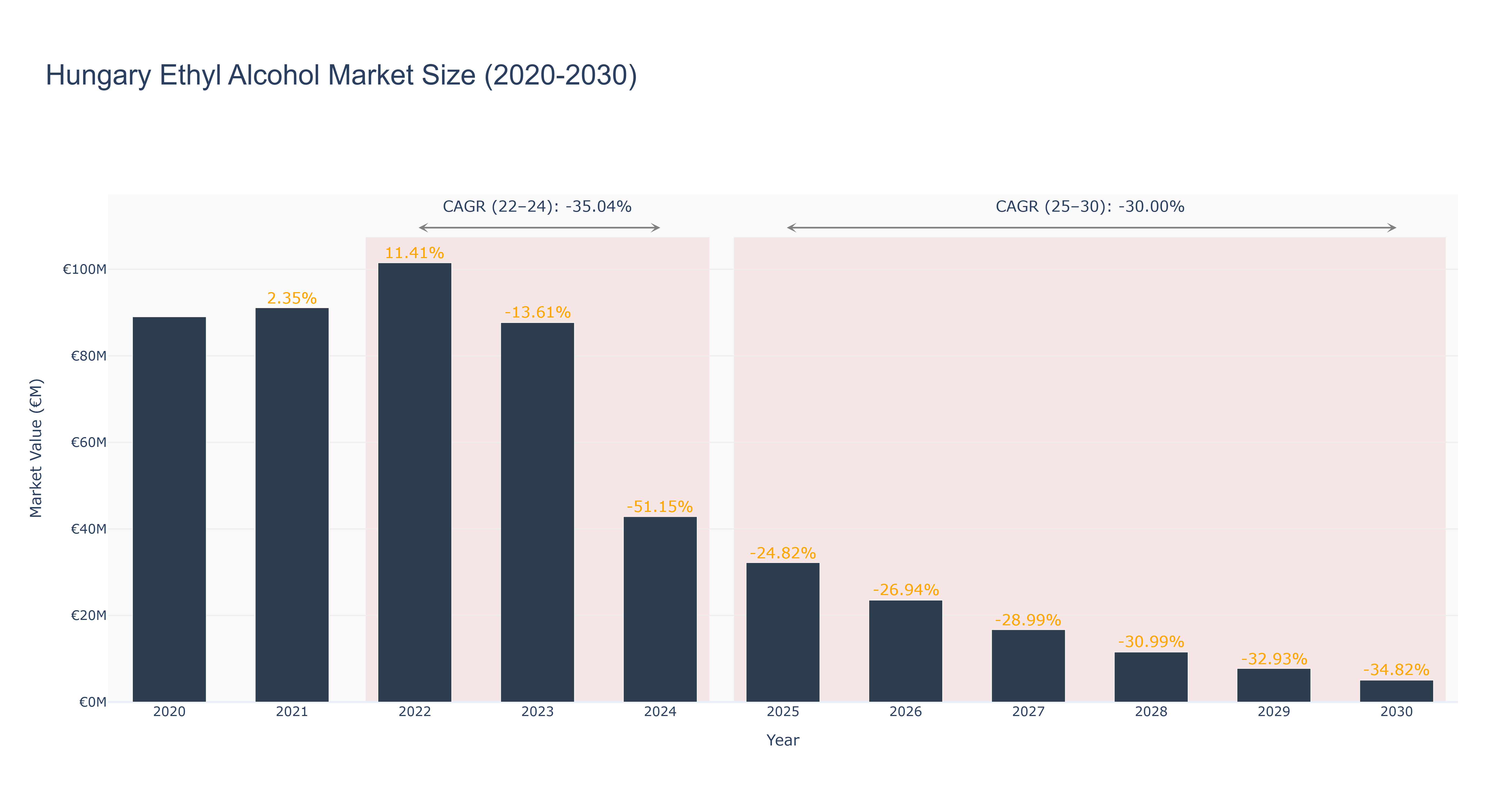
Hungary Ethyl Alcohol Market has witnessed a significant decline in market size over the years. The peak market size of €101.49 million was recorded in 2022, followed by a sharp decrease to €42.83 million in 2024. The forecasted market size is expected to continue this downward trend, reaching €5.04 million by 2030. The CAGR values reflect the drastic decline, with a -35.04% CAGR from 2022 to 2024 and a -30.0% CAGR from 2025 to 2030. The market's downturn can be attributed to various factors such as changing consumer preferences, regulatory challenges, and economic uncertainties. Looking ahead, Hungary is focusing on sustainability initiatives in the alcohol industry, promoting eco-friendly production methods and exploring new export markets to revitalize the sector. Industry drivers for the Hungary Ethyl Alcohol Market include increasing awareness about health and wellness, stringent government regulations on alcohol consumption, and shifting consumer preferences towards premium and craft spirits. Moving forward, the market is expected to see advancements in sustainable production practices, introduction of innovative product offerings, and collaborations with international partners to expand market reach and drive growth.
Hungary Ethyl Alcohol Market: Production & Trade Performance (2019-2025)
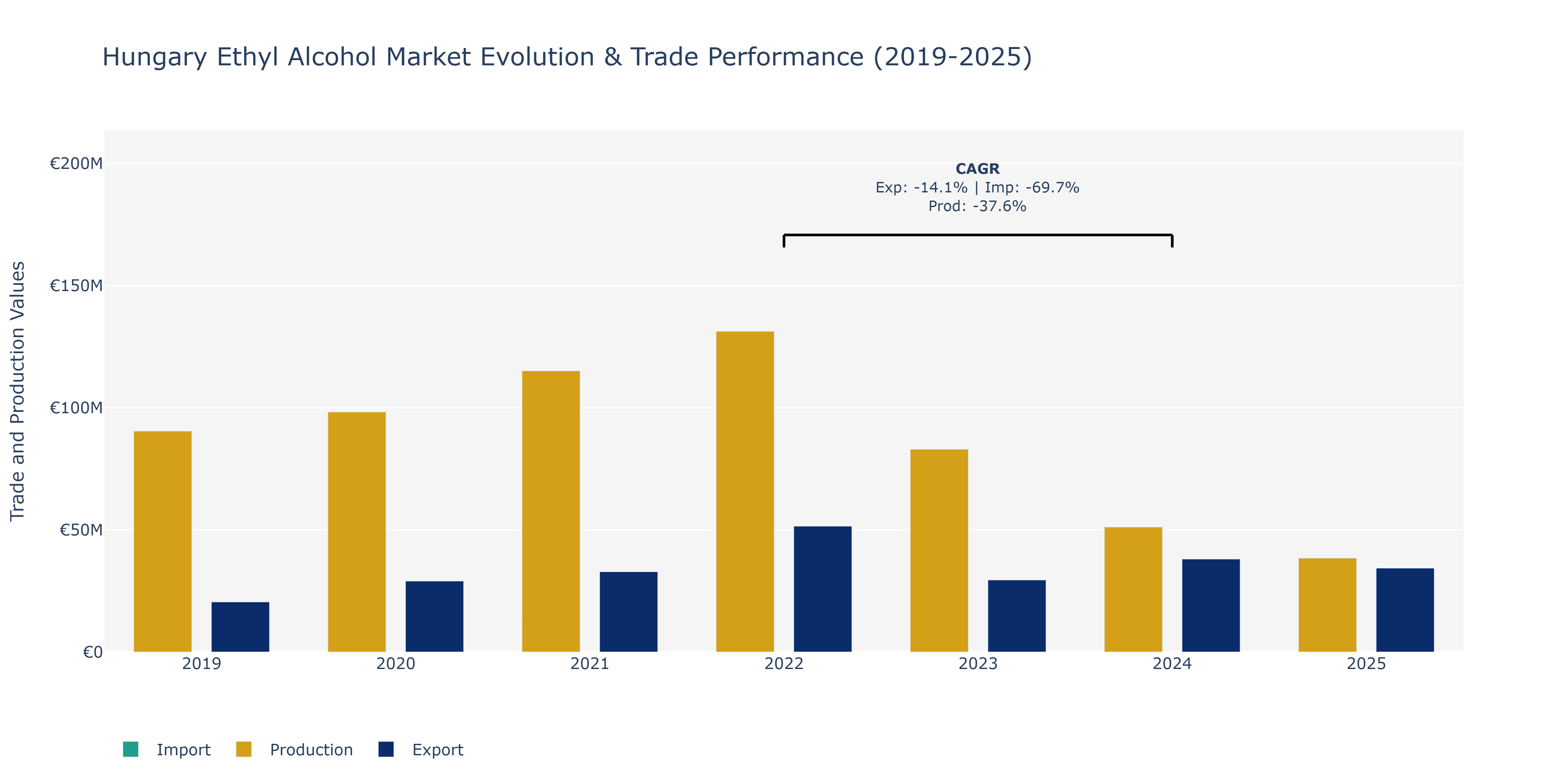
In the Hungary Ethyl Alcohol Market, from 2019 to 2025, exports experienced fluctuations. The peak point was observed in 2022 at approximately €51.56 million, followed by a decline in 2023 and a slight recovery in 2024 and 2025. Imports saw a notable decrease from €19.79 million in 2019 to around €1.45 million in 2025. Production levels also fluctuated, reaching their highest value in 2021 at about €115.15 million, with a significant drop by 2025. The shifts in exports and production could be attributed to changes in global demand, supply chain disruptions, and regulatory developments impacting the alcohol industry. The dramatic decline in imports might be influenced by shifts in sourcing strategies, trade agreements, or domestic production capacity expansions. These movements highlight the market's sensitivity to external factors and the need for adaptable strategies in the ethanol sector.
Hungary Ethyl Alcohol Market Overview
The Hungary Ethyl Alcohol Market is experiencing steady growth driven by various factors such as increasing demand from the pharmaceutical and food & beverage industries. Ethyl alcohol, commonly known as ethanol, is widely used in the production of hand sanitizers, disinfectants, alcoholic beverages, and as a solvent in pharmaceuticals. The market is also influenced by the growing trend towards the use of bio-based and eco-friendly products, leading to a rise in the consumption of ethyl alcohol derived from renewable sources. Key players in the Hungary Ethyl Alcohol Market include distilleries, chemical companies, and ethanol producers. Government regulations and policies regarding the production and consumption of ethyl alcohol also play a significant role in shaping the market dynamics. Overall, the Hungary Ethyl Alcohol Market is poised for further growth in the coming years.
Hungary Ethyl Alcohol Market Trends
The Hungary Ethyl Alcohol Market is experiencing several key trends. Firstly, there is a growing demand for ethyl alcohol as a raw material in the production of hand sanitizers and disinfectants due to the ongoing COVID-19 pandemic. This has led to an increase in production and sales of ethyl alcohol in the country. Additionally, there is a rising interest in using ethyl alcohol in the pharmaceutical and cosmetic industries for various applications. Furthermore, there is a shift towards the use of renewable and sustainable sources of ethyl alcohol, such as bioethanol, driven by increasing environmental concerns and regulations. Overall, the Hungary Ethyl Alcohol Market is witnessing a surge in demand driven by the pandemic, expanding application areas, and a growing focus on sustainability.
Hungary Ethyl Alcohol Market Challenges
In the Hungary Ethyl Alcohol Market, some of the key challenges faced include fluctuating raw material prices, stringent regulations governing alcohol production and distribution, increasing competition from imported ethanol products, and changing consumer preferences towards healthier and more sustainable options. Additionally, the market is also impacted by economic uncertainties and currency fluctuations, which can affect demand and pricing dynamics. Companies operating in this market need to navigate these challenges by investing in innovation, sustainable production practices, and efficient supply chain management to stay competitive and meet evolving consumer demands while ensuring compliance with regulatory requirements.
Hungary Ethyl Alcohol Market Investment Opportunities
The Hungary Ethyl Alcohol Market presents several investment opportunities, driven by the increasing demand for ethanol across various industries. One promising area is the production of bioethanol, which is used as a renewable fuel source in the automotive sector, supported by government initiatives to reduce carbon emissions. Additionally, the pharmaceutical and cosmetic industries are also significant consumers of ethyl alcohol, creating a stable demand for high-quality ethanol products. Investing in ethanol production facilities or technology advancements to improve production efficiency and quality could be lucrative in the Hungary Ethyl Alcohol Market. Furthermore, exploring export opportunities to neighboring countries could further expand the market reach and profitability for investors in this sector.
Hungary Ethyl Alcohol Market Government Policy
The Hungarian government has implemented various policies related to the ethyl alcohol market, including regulations on production, labeling, and distribution. The government imposes excise duties on ethyl alcohol products to control consumption and ensure tax revenues. Additionally, there are strict quality control measures in place to ensure the safety and purity of ethyl alcohol products. The government also regulates advertising and marketing practices to prevent misleading information and protect consumers. Overall, the government`s policies aim to promote a competitive and transparent ethyl alcohol market while safeguarding public health and ensuring compliance with legal standards.
Hungary Ethyl Alcohol Market Future Outlook
The future outlook for the Hungary Ethyl Alcohol Market appears promising, with factors such as increasing demand from various industries including pharmaceuticals, cosmetics, and food & beverage driving market growth. The growing popularity of ethyl alcohol as a key ingredient in hand sanitizers and disinfectants due to the ongoing focus on hygiene and sanitation is expected to further boost market demand. Additionally, the rising trend of using ethyl alcohol in the energy sector for biofuel production presents new opportunities for market expansion. However, challenges such as fluctuating raw material prices and regulatory constraints may impact market growth. Overall, with the increasing applications and demand for ethyl alcohol across multiple industries, the Hungary Ethyl Alcohol Market is anticipated to witness steady growth in the coming years.
Key Highlights of the Report:
- Hungary Ethyl Alcohol Market Outlook
- Market Size of Hungary Ethyl Alcohol Market, 2021
- Forecast of Hungary Ethyl Alcohol Market, 2031
- Historical Data and Forecast of Hungary Ethyl Alcohol Revenues & Volume for the Period 2018 - 2031
- Hungary Ethyl Alcohol Market Trend Evolution
- Hungary Ethyl Alcohol Market Drivers and Challenges
- Hungary Ethyl Alcohol Price Trends
- Hungary Ethyl Alcohol Porter's Five Forces
- Hungary Ethyl Alcohol Industry Life Cycle
- Historical Data and Forecast of Hungary Ethyl Alcohol Market Revenues & Volume By Grade for the Period 2018 - 2031
- Historical Data and Forecast of Hungary Ethyl Alcohol Market Revenues & Volume By Food Grade for the Period 2018 - 2031
- Historical Data and Forecast of Hungary Ethyl Alcohol Market Revenues & Volume By Industrial Grade for the Period 2018 - 2031
- Historical Data and Forecast of Hungary Ethyl Alcohol Market Revenues & Volume By Pharmaceutical Grade for the Period 2018 - 2031
- Historical Data and Forecast of Hungary Ethyl Alcohol Market Revenues & Volume By Lab Grade for the Period 2018 - 2031
- Historical Data and Forecast of Hungary Ethyl Alcohol Market Revenues & Volume By End-user Industry for the Period 2018 - 2031
- Historical Data and Forecast of Hungary Ethyl Alcohol Market Revenues & Volume By Automotive and Transportation for the Period 2018 - 2031
- Historical Data and Forecast of Hungary Ethyl Alcohol Market Revenues & Volume By Food and Beverage for the Period 2018 - 2031
- Historical Data and Forecast of Hungary Ethyl Alcohol Market Revenues & Volume By Pharmaceutical for the Period 2018 - 2031
- Historical Data and Forecast of Hungary Ethyl Alcohol Market Revenues & Volume By Cosmetics and Personal Care (Includes hand-Sanitizer) for the Period 2018 - 2031
- Historical Data and Forecast of Hungary Ethyl Alcohol Market Revenues & Volume By Other End-user Industries for the Period 2018 - 2031
- Hungary Ethyl Alcohol Import Export Trade Statistics
- Market Opportunity Assessment By Grade
- Market Opportunity Assessment By End-user Industry
- Hungary Ethyl Alcohol Top Companies Market Share
- Hungary Ethyl Alcohol Competitive Benchmarking By Technical and Operational Parameters
- Hungary Ethyl Alcohol Company Profiles
- Hungary Ethyl Alcohol Key Strategic Recommendations






































