Hungary Fire Sprinkler Market: Import Trend Analysis
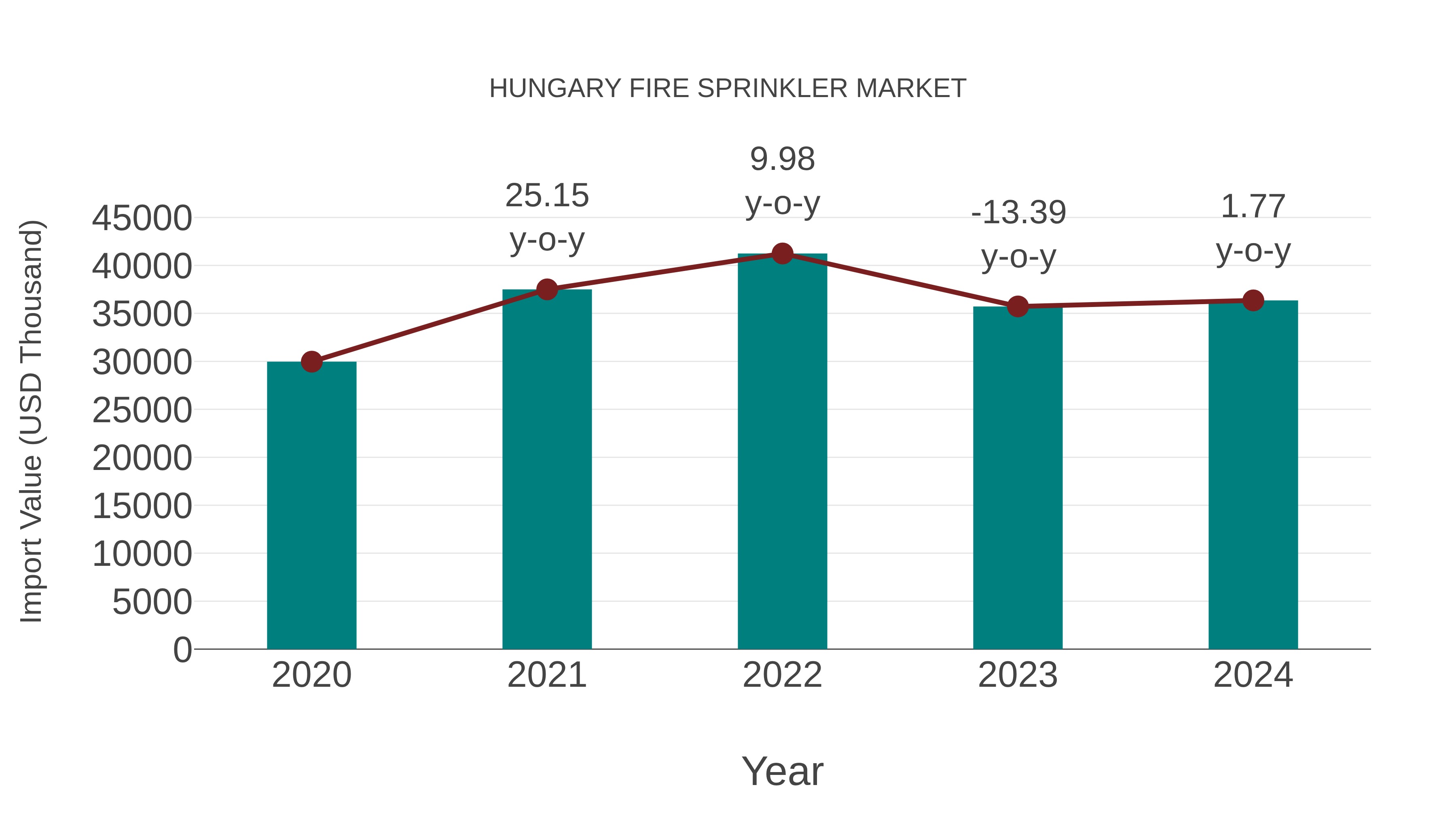
In the Hungary fire sprinkler market, the import trend exhibited a growth rate of 1.77% from 2023 to 2024, with a compound annual growth rate (CAGR) of 4.95% from 2020 to 2024. This upward trajectory can be attributed to increasing demand for fire safety equipment in commercial and residential construction projects, driving sustained import momentum in the market.
Hungary Fire Sprinkler Market Overview
The Hungary Fire Sprinkler Market is experiencing steady growth driven by increasing awareness about fire safety measures in commercial and residential buildings. Strict regulations mandating the installation of fire sprinkler systems in new constructions and the retrofitting of existing buildings are major factors fueling market demand. The market is characterized by the presence of both domestic and international manufacturers offering a wide range of products catering to various end-user segments. Technological advancements such as smart fire sprinkler systems and the integration of IoT are further propelling market growth. Key players in the Hungary Fire Sprinkler Market include Tyco Fire Protection Products, Viking Group, and Honeywell International. The market is expected to continue its growth trajectory due to the rising emphasis on building safety standards and regulations in the country.
Hungary Fire Sprinkler Market Trends and Opportunities
The Hungary Fire Sprinkler Market is experiencing steady growth due to increasing awareness about fire safety regulations and the importance of fire protection systems. The market is witnessing a shift towards incorporating advanced technologies such as smart fire sprinkler systems and cloud-based monitoring solutions to enhance efficiency and effectiveness. Additionally, the growing construction industry in Hungary is providing opportunities for the expansion of the fire sprinkler market, especially in commercial and residential sectors. With a focus on sustainability and energy efficiency, there is a rising demand for eco-friendly fire sprinkler systems using materials that are environmentally friendly. Overall, the Hungary Fire Sprinkler Market is poised for continued growth driven by technological advancements and the need for improved fire safety measures in various industries.
Hungary Fire Sprinkler Market Challenges
In the Hungary Fire Sprinkler Market, some challenges include low awareness among the general population about the importance of fire sprinkler systems in buildings, leading to a lack of demand for such systems. Additionally, there may be resistance from building owners or developers due to perceived high initial costs of installing fire sprinklers. Regulatory hurdles and inconsistencies in building codes across different regions within Hungary can also pose challenges for manufacturers and suppliers operating in the market. Furthermore, competition from alternative fire suppression systems and technologies can impact the market share of fire sprinkler systems. Overall, addressing these challenges requires educating stakeholders about the benefits of fire sprinklers, promoting regulatory harmonization, and developing cost-effective solutions to drive adoption in the Hungary Fire Sprinkler Market.
Hungary Fire Sprinkler Market Drivers
The Hungary Fire Sprinkler Market is primarily driven by stringent fire safety regulations and building codes, mandating the installation of fire sprinkler systems in commercial and residential buildings. Increasing awareness about the importance of fire protection measures, coupled with the rising number of fire incidents in the region, has led to a growing demand for fire sprinkler systems. Additionally, advancements in technology, such as the development of smart fire sprinkler systems with monitoring capabilities, are further fueling market growth. The construction boom in Hungary, particularly in sectors like hospitality, healthcare, and residential construction, is also contributing to the expansion of the fire sprinkler market as developers seek to ensure the safety of their properties and occupants.
Hungary Fire Sprinkler Market Government Policies
In Hungary, government policies related to the fire sprinkler market are primarily governed by the National Fire Protection Code. These regulations outline the requirements for the installation, maintenance, and inspection of fire sprinkler systems in various types of buildings to ensure fire safety and protection of lives and properties. Additionally, there are specific standards set by the Hungarian Authority for Consumer Protection related to the certification and quality control of fire sprinkler systems to guarantee their efficiency and reliability. Compliance with these regulations is mandatory for building owners and operators, and non-compliance may result in fines or penalties. The government also offers incentives and subsidies for the installation of fire sprinkler systems in certain buildings to promote fire prevention and safety measures.
Hungary Fire Sprinkler Market Future Outlook
The Hungary fire sprinkler market is expected to show steady growth in the coming years due to increasing awareness of fire safety measures and stringent government regulations. Factors such as urbanization, industrialization, and the rising number of commercial and residential construction projects are driving the demand for fire sprinkler systems. The market is also likely to benefit from technological advancements in sprinkler system design and integration with smart building solutions. Additionally, the growing emphasis on minimizing property damage and ensuring occupant safety will further boost the adoption of fire sprinkler systems in Hungary. Overall, the Hungary fire sprinkler market is projected to experience a positive trajectory with opportunities for growth and innovation in the foreseeable future.
Key Highlights of the Report:
- Hungary Fire Sprinkler Market Outlook
- Market Size of Hungary Fire Sprinkler Market, 2025
- Forecast of Hungary Fire Sprinkler Market, 2032
- Historical Data and Forecast of Hungary Fire Sprinkler Revenues & Volume for the Period 2022 - 2032F
- Hungary Fire Sprinkler Market Trend Evolution
- Hungary Fire Sprinkler Market Drivers and Challenges
- Hungary Fire Sprinkler Price Trends
- Hungary Fire Sprinkler Porter's Five Forces
- Hungary Fire Sprinkler Industry Life Cycle
- Historical Data and Forecast of Hungary Fire Sprinkler Market Revenues & Volume By Type for the Period 2022 - 2032F
- Historical Data and Forecast of Hungary Fire Sprinkler Market Revenues & Volume By Products for the Period 2022 - 2032F
- Historical Data and Forecast of Hungary Fire Sprinkler Market Revenues & Volume By Services for the Period 2022 - 2032F
- Historical Data and Forecast of Hungary Fire Sprinkler Market Revenues & Volume By Application for the Period 2022 - 2032F
- Historical Data and Forecast of Hungary Fire Sprinkler Market Revenues & Volume By Residential for the Period 2022 - 2032F
- Historical Data and Forecast of Hungary Fire Sprinkler Market Revenues & Volume By Commercial for the Period 2022 - 2032F
- Historical Data and Forecast of Hungary Fire Sprinkler Market Revenues & Volume By Industrial for the Period 2022 - 2032F
- Historical Data and Forecast of Hungary Fire Sprinkler Market Revenues & Volume By Component for the Period 2022 - 2032F
- Historical Data and Forecast of Hungary Fire Sprinkler Market Revenues & Volume By Stop Valve for the Period 2022 - 2032F
- Historical Data and Forecast of Hungary Fire Sprinkler Market Revenues & Volume By Alarm Valve for the Period 2022 - 2032F
- Historical Data and Forecast of Hungary Fire Sprinkler Market Revenues & Volume By Fire Sprinkler Head for the Period 2022 - 2032F
- Historical Data and Forecast of Hungary Fire Sprinkler Market Revenues & Volume By Alarm Test Valve for the Period 2022 - 2032F
- Historical Data and Forecast of Hungary Fire Sprinkler Market Revenues & Volume By Motorized Alarm Bell for the Period 2022 - 2032F
- Historical Data and Forecast of Hungary Fire Sprinkler Market Revenues & Volume By Technology for the Period 2022 - 2032F
- Historical Data and Forecast of Hungary Fire Sprinkler Market Revenues & Volume By Active fire protection for the Period 2022 - 2032F
- Historical Data and Forecast of Hungary Fire Sprinkler Market Revenues & Volume By Passive fire protection for the Period 2022 - 2032F
- Hungary Fire Sprinkler Import Export Trade Statistics
- Market Opportunity Assessment By Type
- Market Opportunity Assessment By Application
- Market Opportunity Assessment By Component
- Market Opportunity Assessment By Technology
- Hungary Fire Sprinkler Top Companies Market Share
- Hungary Fire Sprinkler Competitive Benchmarking By Technical and Operational Parameters
- Hungary Fire Sprinkler Company Profiles
- Hungary Fire Sprinkler Key Strategic Recommendations






































