Hungary Flower and Ornamental Plants Market: Import Trend Analysis
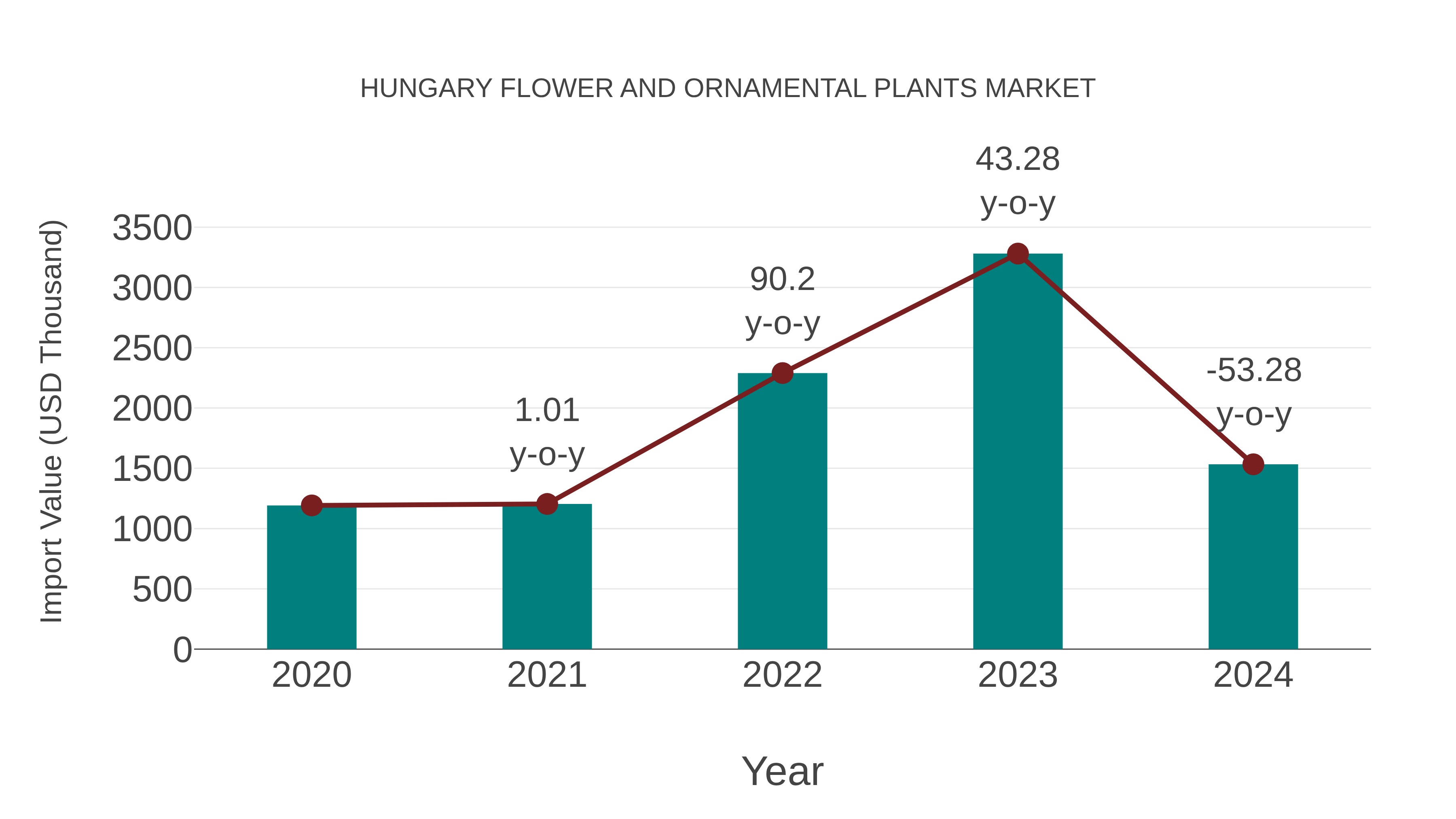
Hungary`s import trend for flower and ornamental plants in 2024 experienced a notable decline of -53.28% compared to the previous year, with a compound annual growth rate (CAGR) of 6.49% from 2020 to 2024. This significant drop in import momentum in 2024 could be attributed to shifts in consumer preferences, changes in trade policies, or market instability affecting demand for these products.
Hungary Flower and Ornamental Plants Market Synopsis
The Hungary flower and ornamental plants market is expected to grow at a CAGR of 8.3% during the forecast period 2020-2026. The growing trend among urban population towards purchasing ornamental flowers, plants, and other products for decorating their homes has created demand in the market. Increasing consumer expenditure on home decorative items such as indoor plants, artificial flowers, potted herbs, seasonal flowers has propelled the growth of this market over the years. Moreover escalating trend of gifting floral arrangements or bouquets as gifts is also a major factor driving the Hungary flower and ornamental plants market growth Additionally improving economic conditions due to rising disposable incomes are projected to contribute significantly towards industry expansion over the forecast timeframe. Availability of various artificial flowers that require less maintenance cost compared with real ones is anticipated to offer lucrative opportunities in near future for players operating in this space
Key Highlights of the Report:
- Hungary Flower and Ornamental Plants Market Outlook
- Market Size of Hungary Flower and Ornamental Plants Market, 2019
- Forecast of Hungary Flower and Ornamental Plants Market, 2026
- Historical Data and Forecast of Hungary Flower and Ornamental Plants Revenues & Volume for the Period 2016 - 2026
- Hungary Flower and Ornamental Plants Market Trend Evolution
- Hungary Flower and Ornamental Plants Market Drivers and Challenges
- Hungary Flower and Ornamental Plants Price Trends
- Hungary Flower and Ornamental Plants Porter's Five Forces
- Hungary Flower and Ornamental Plants Industry Life Cycle
- Historical Data and Forecast of Hungary Flower and Ornamental Plants Market Revenues & Volume By Product Type for the Period 2016 - 2026
- Historical Data and Forecast of Hungary Flower and Ornamental Plants Market Revenues & Volume By Potted Plants for the Period 2016 - 2026
- Historical Data and Forecast of Hungary Flower and Ornamental Plants Market Revenues & Volume By Cut Flowers for the Period 2016 - 2026
- Historical Data and Forecast of Hungary Flower and Ornamental Plants Market Revenues & Volume By Application for the Period 2016 - 2026
- Historical Data and Forecast of Hungary Flower and Ornamental Plants Market Revenues & Volume By Home for the Period 2016 - 2026
- Historical Data and Forecast of Hungary Flower and Ornamental Plants Market Revenues & Volume By Commercial for the Period 2016 - 2026
- Hungary Flower and Ornamental Plants Import Export Trade Statistics
- Market Opportunity Assessment By Product Type
- Market Opportunity Assessment By Application
- Hungary Flower and Ornamental Plants Top Companies Market Share
- Hungary Flower and Ornamental Plants Competitive Benchmarking By Technical and Operational Parameters
- Hungary Flower and Ornamental Plants Company Profiles
- Hungary Flower and Ornamental Plants Key Strategic Recommendations






































