Hungary Functional Apparel Market Size, Share & Growth Rate
The Hungary Functional Apparel Market was estimated at USD 1256 Million in 2025 and is projected to reach USD 1835 Million by 2032, growing at a CAGR of 5.6% from 2026 to 2032. This robust growth trajectory reflects the increasing consumer awareness regarding health and fitness, alongside a rising demand for versatile clothing suitable for various activities. The market is further fueled by advancements in textile technology, which enable manufacturers to create garments that not only perform better but also align with consumers' style preferences.
Hungary Functional Apparel Market Year-wise Growth Rate and Key Drivers
This graph highlights how the Hungary Functional Apparel Market has steadily grown over the years, supported by major growth factors.
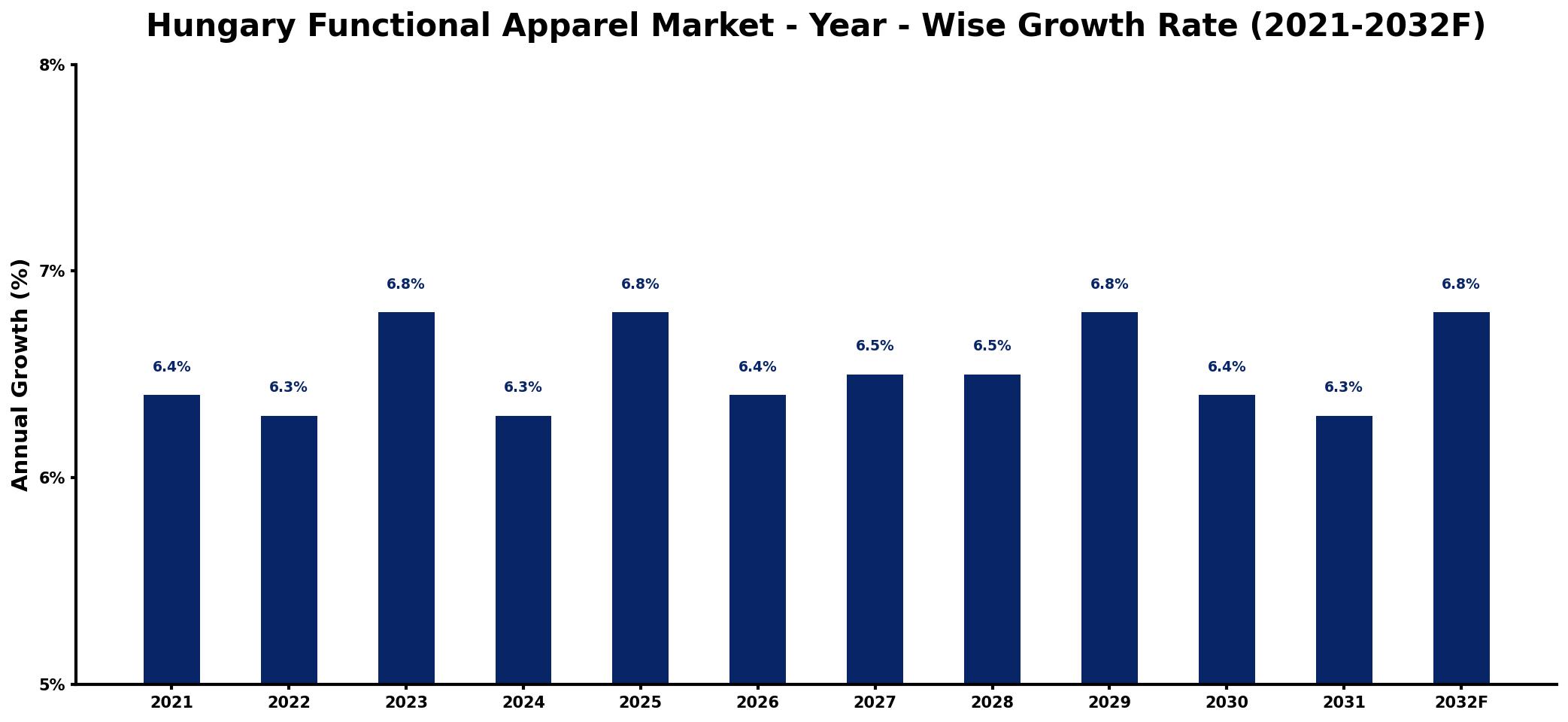
The table below presents the year‑wise growth rates along with the key drivers influencing the market
| Year | Growth Rate | Major Drivers |
| 2021 | 6.4% | Increase in health awareness initiatives |
| 2022 | 6.3% | Growth in outdoor recreational activities |
| 2023 | 6.8% | Rising popularity of fitness trends |
| 2024 | 6.3% | Expansion of e-commerce platforms |
| 2025 | 6.8% | Investment in sustainable materials |
| 2026 | 6.4% | expanding healthcare application demand |
| 2027 | 6.5% | increased overall sector activity |
| 2028 | 6.5% | Demand for versatile performance gear |
| 2029 | 6.8% | Surge in sports participation rates |
| 2030 | 6.4% | rising procurement volume requirements |
| 2031 | 6.3% | rising end-use demand growth |
| 2032 | 6.8% | rising demand from electronics |
Note: Market size estimations and growth projections presented in this report are based on 6Wresearch's proprietary forecasting methodology, utilizing the latest available industry data, government publications, and primary research inputs.
Hungary Functional Apparel Market Synopsis
In Hungary, the functional apparel sector is witnessing a notable transformation, with consumers increasingly gravitating towards clothing that supports an active lifestyle. The demand for performance-driven apparel, featuring qualities like moisture-wicking and UV protection, is on the rise, indicating a shift in consumer priorities toward health, comfort, and practicality.
As outdoor activities gain popularity, the market encompasses a broad range of products, from athletic wear to specialized outdoor gear. This diversity allows brands to cater to the unique needs of various consumer segments, which is vital for sustained growth in this dynamic landscape.
Hungary Functional Apparel Market Key Takeaways
- The growing health consciousness among consumers is driving demand for functional apparel that enhances performance.
- Technological advancements in fabric innovation are playing a crucial role in the market's evolution.
- Increased participation in sports and outdoor activities is propelling the need for versatile functional clothing.
- Government support for innovation and sustainability is contributing to market competitiveness.
- Consumer preferences are shifting towards eco-friendly and ethically sourced materials.
Evaluation of Restraints in Hungary Functional Apparel Market
Despite the promising growth potential, the Hungary Functional Apparel Market faces significant challenges. Meeting the diverse demands for high-performance features, such as moisture-wicking and odor resistance, while ensuring garments remain stylish and affordable poses a constant balancing act for manufacturers. This complexity is compounded by the increasing emphasis on sustainability, requiring brands to innovate while adhering to ethical sourcing practices. As consumer expectations rise, companies must strategically navigate these obstacles to maintain market relevance and profitability.
Hungary Functional Apparel Market Trends
A prominent trend within the Hungary Functional Apparel Market is the growing popularity of athleisure wear, which blends performance and casual style, catering to consumers who prioritize comfort in their everyday wardrobe. Additionally, technological integration, such as smart textiles that monitor health metrics, is gaining traction, indicating a shift towards more intelligent apparel solutions. Furthermore, the focus on sustainable materials and ethical production practices is reshaping consumer preferences, prompting brands to adapt their offerings accordingly.
Hungary Functional Apparel Market Opportunities
Significant growth opportunities lie in the expansion of online retail channels, which have become increasingly vital for reaching a broader audience. Furthermore, niche markets, such as adaptive apparel for individuals with disabilities or specialized gear for extreme sports, present untapped potential. As Hungary continues to embrace outdoor activities, brands that innovate in performance-driven clothing and sustainability can capture a larger share of this evolving market.
Government Initiatives in the Hungary Functional Apparel Market
The Hungarian government is actively promoting growth in the functional apparel sector through various initiatives aimed at fostering innovation and sustainability. Financial incentives for research and development in textile production encourage companies to invest in advanced technologies, while collaborations with research institutions aim to enhance product quality and market competitiveness. Regulatory measures are also in place to ensure compliance with environmental standards, further supporting the industrys alignment with global sustainability trends.
Future Insights of the Hungary Functional Apparel Market
Looking forward to 2026-2032, the Hungary Functional Apparel Market is poised for substantial growth driven by ongoing trends in health, wellness, and sustainability. As consumers increasingly prioritize functional benefits, brands that effectively leverage technology and innovation will thrive. The integration of smart textiles and eco-friendly materials will likely become mainstream, ultimately enhancing product appeal and driving consumer loyalty. As competitive dynamics evolve, businesses that stay ahead of consumer expectations will secure a solid foothold in this promising market.
Hungary Functional Apparel Market Latest Developments (2025 - 2026)
Recent developments in the Hungary Functional Apparel Market indicate a strong shift toward collaboration between brands and technology firms to enhance garment performance. Several companies are exploring partnerships focused on smart textile innovations, allowing for better integration of health-monitoring capabilities into apparel. Moreover, there is a marked increase in consumer advocacy for sustainable practices, prompting brands to overhaul their sourcing and production methods, aligning closely with global sustainability movements.
Hungary Functional Apparel Market - Key Attractiveness of the Report
- 10 Years of Market Numbers
- Historical Data Starting from 2022 to 2025
- Base Year: 2025
- Forecast Data until 2032
- Key Performance Indicators Impacting the Market
- Major Upcoming Developments and Projects
Key Highlights of the Report:
- Hungary Functional Apparel Market Outlook
- Market Size of Hungary Functional Apparel Market, 2025
- Forecast of Hungary Functional Apparel Market, 2032
- Historical Data and Forecast of Hungary Functional Apparel Revenues & Volume for the Period 2022-2032F
- Hungary Functional Apparel Market Trend Evolution
- Hungary Functional Apparel Market Drivers and Challenges
- Hungary Functional Apparel Price Trends
- Hungary Functional Apparel Porter's Five Forces
- Hungary Functional Apparel Industry Life Cycle
- Historical Data and Forecast of Hungary Functional Apparel Market Revenues & Volume By Product Type for the Period 2022-2032F
- Historical Data and Forecast of Hungary Functional Apparel Market Revenues & Volume By Sportswear for the Period 2022-2032F
- Historical Data and Forecast of Hungary Functional Apparel Market Revenues & Volume By Activewear for the Period 2022-2032F
- Historical Data and Forecast of Hungary Functional Apparel Market Revenues & Volume By Protective Clothing for the Period 2022-2032F
- Historical Data and Forecast of Hungary Functional Apparel Market Revenues & Volume By Others for the Period 2022-2032F
- Historical Data and Forecast of Hungary Functional Apparel Market Revenues & Volume By Application for the Period 2022-2032F
- Historical Data and Forecast of Hungary Functional Apparel Market Revenues & Volume By Sports Industry for the Period 2022-2032F
- Historical Data and Forecast of Hungary Functional Apparel Market Revenues & Volume By Outdoor Clothing for the Period 2022-2032F
- Historical Data and Forecast of Hungary Functional Apparel Market Revenues & Volume By Healthcare sector for the Period 2022-2032F
- Historical Data and Forecast of Hungary Functional Apparel Market Revenues & Volume By Distribution Channel for the Period 2022-2032F
- Historical Data and Forecast of Hungary Functional Apparel Market Revenues & Volume By Offline Store for the Period 2022-2032F
- Historical Data and Forecast of Hungary Functional Apparel Market Revenues & Volume By Online Store for the Period 2022-2032F
- Hungary Functional Apparel Import Export Trade Statistics
- Market Opportunity Assessment By Product Type
- Market Opportunity Assessment By Application
- Market Opportunity Assessment By Distribution Channel
- Hungary Functional Apparel Top Companies Market Share
- Hungary Functional Apparel Competitive Benchmarking By Technical and Operational Parameters
- Hungary Functional Apparel Company Profiles
- Hungary Functional Apparel Key Strategic Recommendations






































