Hungary Glycolic Acid Market: Import Trend Analysis
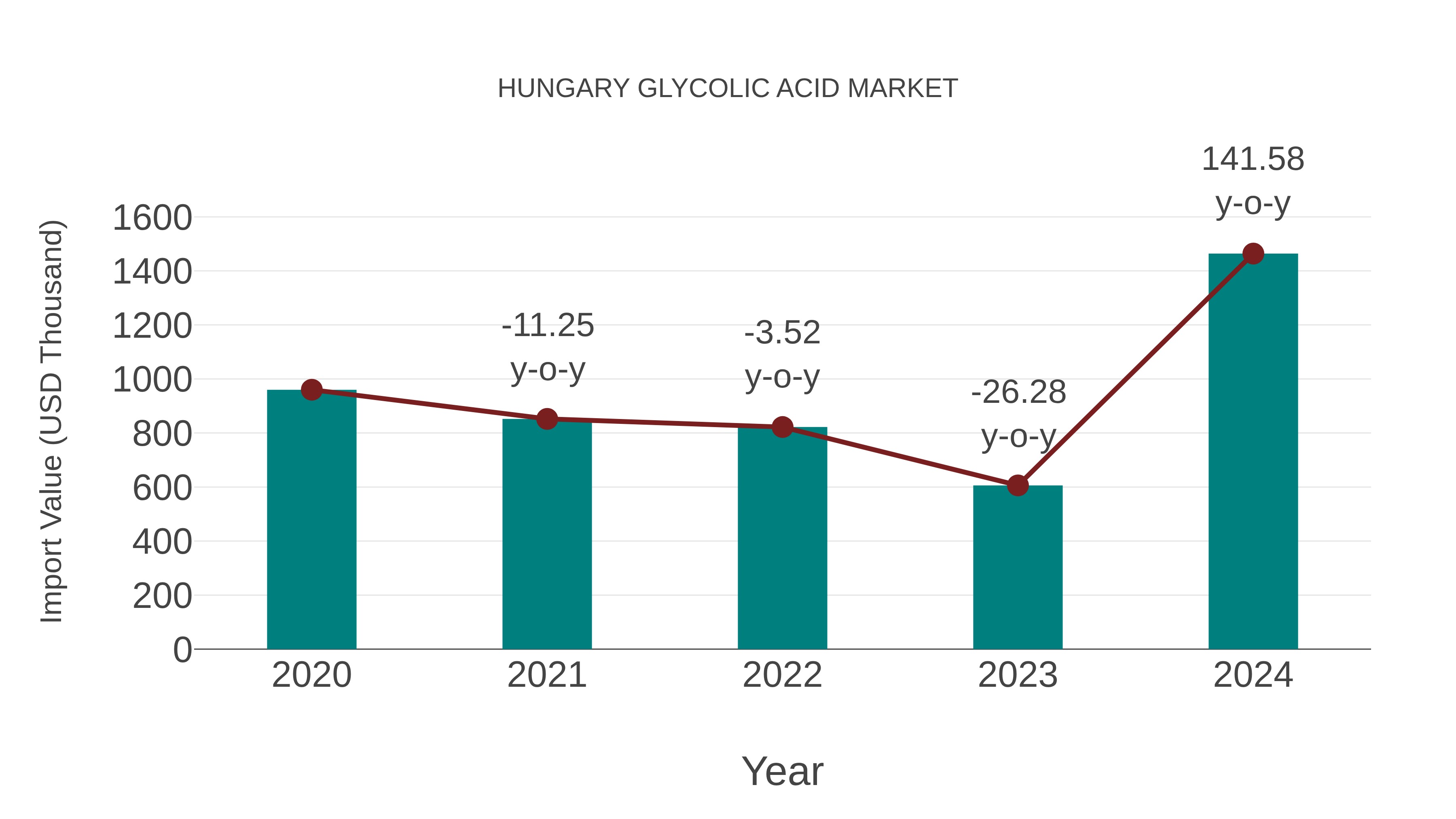
In the Hungary glycolic acid market, the import trend exhibited a notable growth rate of 141.58% from 2023 to 2024, with a compound annual growth rate (CAGR) of 11.13% from 2020 to 2024. This significant surge in imports can be attributed to a substantial shift in demand dynamics within the market, reflecting evolving consumer preferences or increased industrial applications.
Hungary Glycolic Acid Market Overview
Glycolic acid, a type of alpha hydroxy acid (AHA), is utilized in skincare formulations, chemical peels, and industrial processes in Hungary. It is valued for its exfoliating, anti-aging, and skin brightening properties. The glycolic acid market is driven by the growing skincare industry, increasing consumer awareness of skincare ingredients, and advancements in cosmetic formulations.
Drivers of the market
The Hungary glycolic acid market is driven by factors such as increasing demand for skincare and cosmetic products, as well as industrial applications such as cleaning agents and chemical synthesis. Glycolic acid, a type of alpha hydroxy acid (AHA), is renowned for its exfoliating, anti-aging, and skin rejuvenating properties, making it a key ingredient in various skincare formulations. Moreover, its role as a chemical intermediate in industries such as pharmaceuticals, textiles, and agriculture further stimulates market growth.
Challenges of the market
In the Hungary glycolic acid market, challenges include optimizing production processes to ensure cost-effectiveness and environmental sustainability, addressing regulatory requirements regarding product purity and safety, and meeting diverse customer demands across industries such as cosmetics, textiles, and healthcare. Manufacturers must focus on innovation, quality assurance, and market diversification to overcome these challenges and maintain competitiveness in the market.
Government Policy of the market
In alignment with Hungary commitment to fostering innovation and sustainability in the chemical industry, the government supports the growth of the glycolic acid market by promoting research, investment, and collaboration. Policies aim to create a conducive regulatory environment for glycolic acid production and utilization, including standards for product quality, safety, and environmental sustainability. Additionally, the government provides financial incentives and support programs for businesses to invest in glycolic acid production technologies, including grants for research and development, equipment purchase, and market expansion initiatives. By promoting the growth of the glycolic acid market, the government aims to enhance the competitiveness of Hungary chemical manufacturers, support innovation, and contribute to economic growth and sustainability.
Key Highlights of the Report:
- Hungary Glycolic Acid Market Outlook
- Market Size of Hungary Glycolic Acid Market, 2025
- Forecast of Hungary Glycolic Acid Market, 2032
- Historical Data and Forecast of Hungary Glycolic Acid Revenues & Volume for the Period 2022-2032F
- Hungary Glycolic Acid Market Trend Evolution
- Hungary Glycolic Acid Market Drivers and Challenges
- Hungary Glycolic Acid Price Trends
- Hungary Glycolic Acid Porter's Five Forces
- Hungary Glycolic Acid Industry Life Cycle
- Historical Data and Forecast of Hungary Glycolic Acid Market Revenues & Volume By Grade for the Period 2022-2032F
- Historical Data and Forecast of Hungary Glycolic Acid Market Revenues & Volume By Cosmetic for the Period 2022-2032F
- Historical Data and Forecast of Hungary Glycolic Acid Market Revenues & Volume By Technical for the Period 2022-2032F
- Historical Data and Forecast of Hungary Glycolic Acid Market Revenues & Volume By Application for the Period 2022-2032F
- Historical Data and Forecast of Hungary Glycolic Acid Market Revenues & Volume By Personal Care & Dermatology for the Period 2022-2032F
- Historical Data and Forecast of Hungary Glycolic Acid Market Revenues & Volume By Industrial for the Period 2022-2032F
- Historical Data and Forecast of Hungary Glycolic Acid Market Revenues & Volume By Household for the Period 2022-2032F
- Hungary Glycolic Acid Import Export Trade Statistics
- Market Opportunity Assessment By Grade
- Market Opportunity Assessment By Application
- Hungary Glycolic Acid Top Companies Market Share
- Hungary Glycolic Acid Competitive Benchmarking By Technical and Operational Parameters
- Hungary Glycolic Acid Company Profiles
- Hungary Glycolic Acid Key Strategic Recommendations






































